You can build a complete bird garden in a weekend using basic tools, a handful of native plants, a birdbath, a feeder or two, and at least one DIY nesting box. If you want the same idea with a controlled, enclosed space, learn how to make a bird aviary in Minecraft next bird garden. If you want a more bird-focused DIY upgrade, use the same principles to learn how to make a bird aviary that’s safe and species-friendly bird garden. The secret is thinking like a bird: every element you add should give them food, clean water, shelter, or a safe place to raise young. A bird room plan follows the same logic, but it’s designed for indoor comfort, safe materials, and easy cleaning how to build a bird room. If you're in Australia, you can use the same four habitat essentials and adapt them to local species and regulations to build an aviary. Get those four things right and birds will move in fast.
How to Build a Bird Garden: Step-by-Step DIY Guide
Start with a simple plan that matches your yard and your goals
Before you buy a single board or bag of seed, spend ten minutes sketching your yard on paper. Mark where the sun hits, where there's existing shade, where your windows are, and where you spend time outdoors. This isn't a landscaping exercise, it's a practical checklist. You want to know what you have to work with and what you want to attract.
Ask yourself three questions: What birds are already in my area? What do they need most (food, cover, nesting sites)? And what do I actually have space and budget for right now? A tiny urban backyard can still support chickadees, finches, and robins with a couple of feeders, a native shrub, and a nesting box. A larger suburban lot can go further with a brush pile, a water feature, and several species-specific birdhouses. Either way, the approach is the same: start small, add as you go, and build toward the four core habitat elements that every bird needs.
Write down the three or four species you most want to attract. This matters because it drives every decision that follows, from entrance-hole diameter on your nesting box to which native plants you prioritize. The U.S. Fish and Wildlife Service frames this well: a backyard bird habitat is simply a safe, nourishing space that provides food, water, shelter, and cover. That's your entire plan in four words.
Pick the right spot, layout, and safe design principles
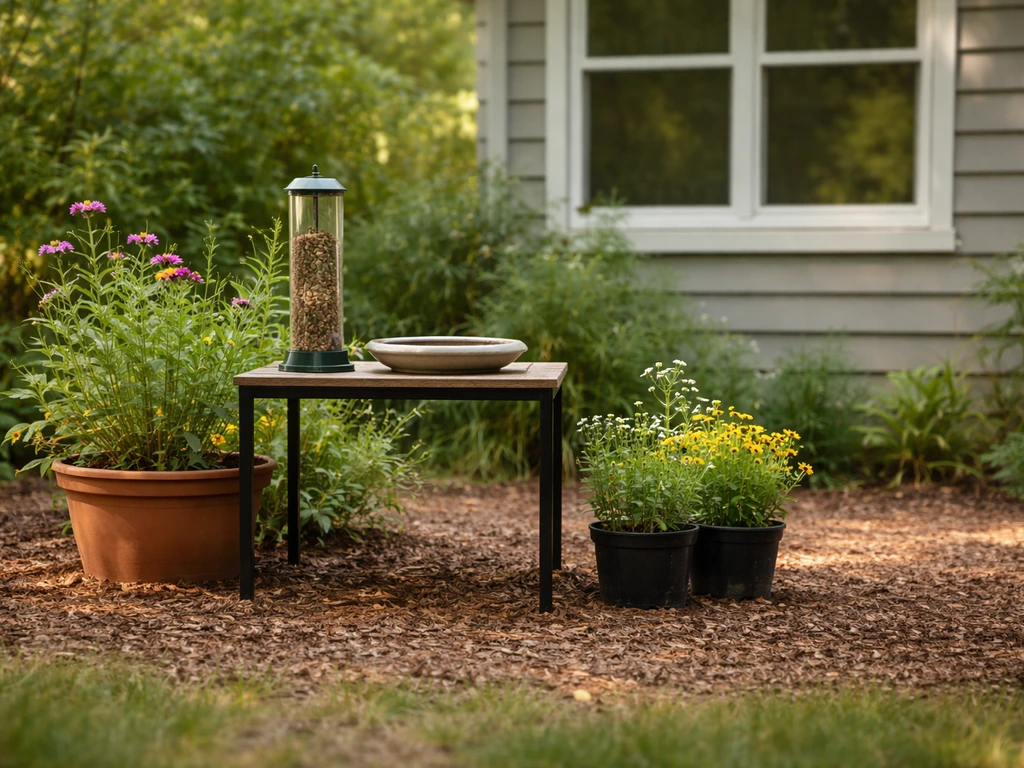
Placement is probably the single most overlooked part of setting up a bird garden, and it's where a lot of people make avoidable mistakes early on. The biggest hazard is windows. Audubon notes that placing feeders and birdbaths within about 3 to 30 feet of a window is blank" rel="noopener noreferrer">especially dangerous because flushed birds can build speed for a fatal crash. Birds don't see glass as a barrier, and collisions kill hundreds of millions of birds every year in North America. Audubon's rule is simple: blank" rel="noopener noreferrer">put feeders and birdbaths either within 3 feet of a window (so a bird that startles can't build up enough speed to be hurt) or more than 30 feet away from any window (so they have room to fly safely). If you’re setting up a bird aviary, insulation and draft control are also important for keeping birds comfortable and safe through cold weather how to insulate a bird aviary. That middle zone, roughly 4 to 29 feet, is the danger zone. Avoid it.
Get into the habit of checking your windows from the outside two or three times a week, especially during spring and fall migration. Look for feather smudges, oily imprints, or small feathers stuck to the glass. Those are signs you have a collision problem and need to relocate a feeder or add window film. Catching it early saves birds.
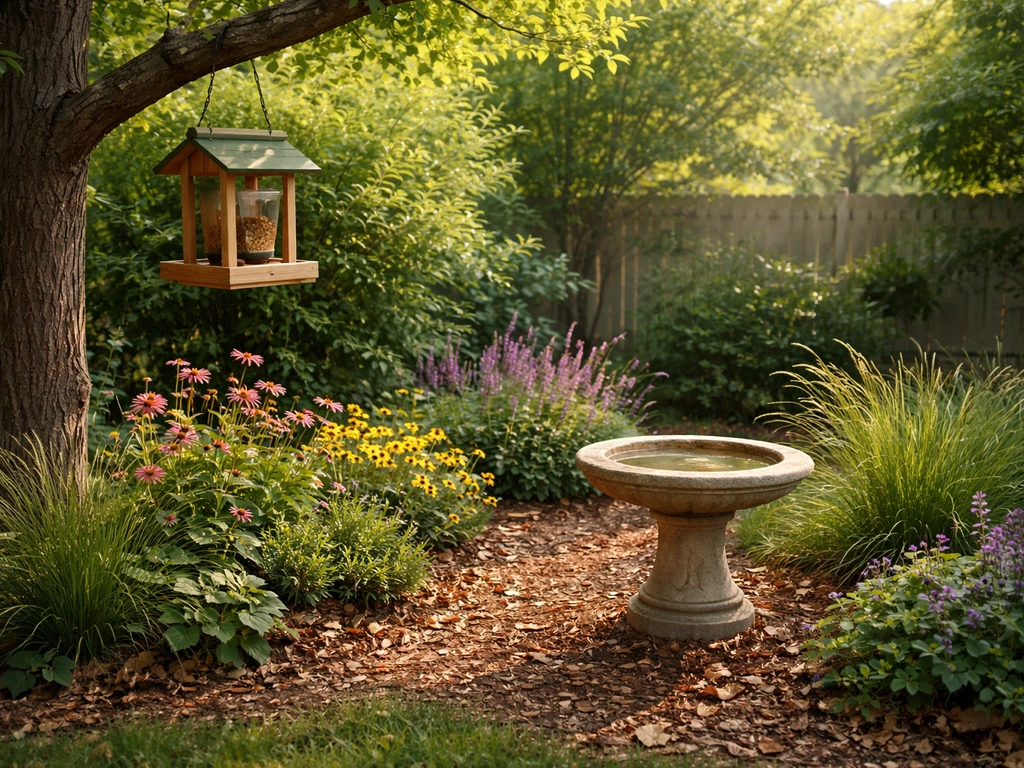
For layout, think in layers the way a forest works: tall trees or large shrubs in the back, medium shrubs in the middle, low ground cover or unmowed patches at the front. This layered structure gives birds places to perch, hide from predators, forage for insects, and shelter from weather. Place feeders and nesting boxes in open areas where birds can see approaching cats or hawks, but close enough to shrubs that they can escape quickly. A general rule: nesting boxes should be 6 to 10 feet from the nearest dense shrub cover, not right inside it.
Cats are the other major safety issue. If you have outdoor cats, or your neighbors do, predator guards on nesting boxes and poles are non-negotiable. Cornell's NestWatch program puts it plainly: predator guards protect nest boxes and keeping cats indoors is one of the most effective things you can do for birds. More on that in the nesting box section.
Plant selection for local birds (food, cover, and year-round support)
Native plants are the engine of a bird garden. They're not just nice to have. The National Park Service notes that it takes millennia for specialized relationships between insects and plants to develop, and that non-native ornamentals contribute almost nothing to local food webs. Since insects, especially caterpillars, are the primary food for nearly all baby birds during breeding season, this really matters. You're not just planting for seeds and berries. You're planting to feed the insects that feed the birds.
Start by looking up Audubon's native plant database and entering your zip code. It will show you which native plants in your region support the most bird and insect species. Focus your first choices on a few high-value plants rather than spreading your budget thin. A single native oak supports hundreds of caterpillar species. A patch of native coneflowers feeds finches through fall and winter. A native serviceberry or dogwood provides fruit in early summer when other food is scarce.
The goal is to have something blooming, fruiting, or seeding in every season. Plan it out before you plant. Audubon's South Carolina chapter phrases it well: aim for tasty treats in every season. That might look like early spring catkins, summer berries, fall seed heads, and winter fruit from native hollies. You don't need dozens of plants to pull this off. Four or five well-chosen natives can cover the full calendar.
- Native oaks (Quercus spp.): support more caterpillar species than almost any other tree, invaluable for breeding birds
- Native coneflowers (Echinacea spp.): seed heads feed finches, chickadees, and sparrows through fall and winter
- Native serviceberry (Amelanchier spp.): one of the first fruits of the season, loved by thrushes and waxwings
- Native dogwood (Cornus spp.): high-fat berries that fuel migrating birds in fall
- Native sunflowers (Helianthus spp.): seeds for goldfinches and other seed-eaters, and great for insect habitat
- Native grasses and sedges: ground-level cover and seeds, important for sparrows and juncos
- Native hollies (Ilex spp.): persistent winter berries for bluebirds, robins, and cedar waxwings
Leave your seed heads standing through winter instead of cutting everything back in fall. The NPS recommends leaving dead plant stems and seed heads because they provide food and shelter for insects and birds alike. It also means less work for you, which is a bonus.
Add food and water the right way
Feeders: placement, types, and safe setup
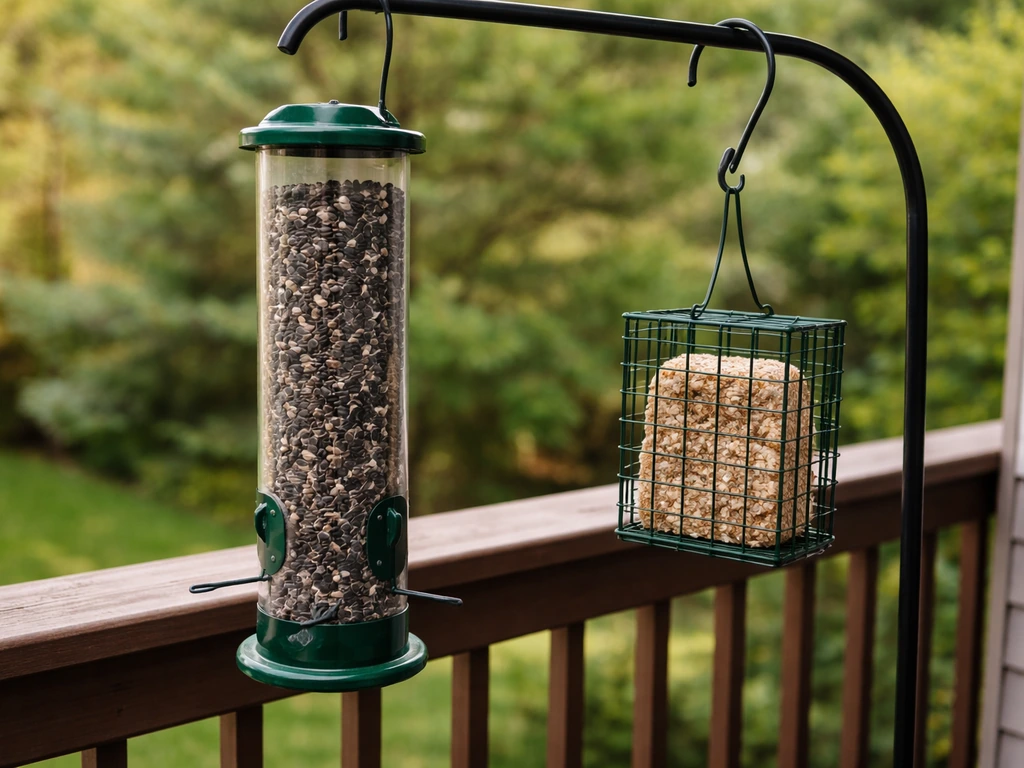
A tube feeder filled with black-oil sunflower seed is the best all-around starting point because it attracts the widest variety of birds and is easy to clean. Add a suet cage in fall and winter for woodpeckers, nuthatches, and wrens. If you want to attract hummingbirds, a simple nectar feeder (one part white sugar to four parts water, no red dye needed) will do the job. Platform feeders at ground level bring in sparrows, towhees, and doves that prefer to eat low.
Remember the window placement rule above: either within 3 feet or beyond 30 feet from any window. Place feeders on poles with baffles rather than hanging them from tree branches where cats can climb up, and position them where you can see them from indoors for easy enjoyment and monitoring.
Cleaning is non-negotiable. Project FeederWatch recommends cleaning seed feeders about every two weeks under normal conditions, and more often during warm, humid weather or any time you notice sick birds. Rake up hulls and seed waste under feeders regularly to prevent disease buildup on the ground. Diseases like salmonellosis and avian pox can spread through dirty feeders, and it's completely preventable with a quick scrub. Use a 10-percent bleach solution, rinse thoroughly, and let the feeder dry before refilling. Feeders that come apart easily (tube feeders with removable base caps, for example) make this much faster.
Water: birdbaths and keeping things clean
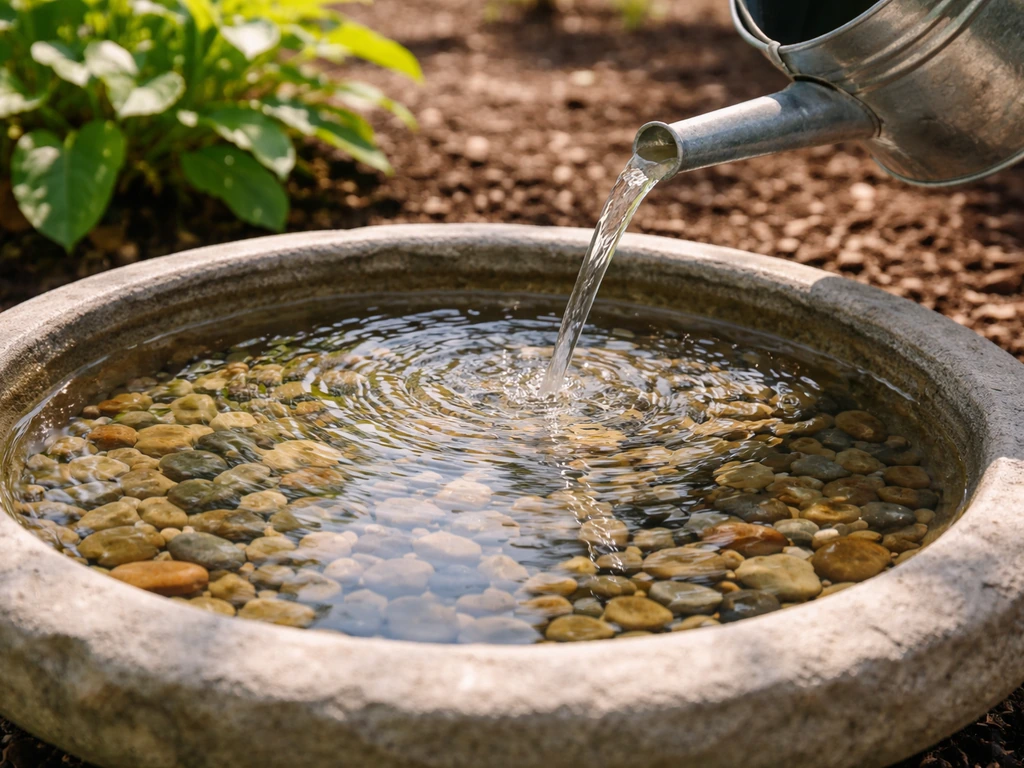
A birdbath is one of the highest-impact additions you can make to a bird garden, sometimes more attractive to birds than a feeder. Keep the water shallow (1 to 2 inches is ideal) and rough-bottomed so birds can grip it. Place it in a spot with some open ground around it so birds can see predators approaching, but near a shrub they can retreat to quickly.
Change the water every day or every other day. This isn't optional: stagnant water grows algae, breeds mosquitoes, and harbors bacteria within 48 hours in warm weather. If you see cloudy water or any black mold, dump it immediately, scrub the basin, and refill. Adding a small solar-powered dripper or wiggler is a great upgrade because moving water attracts far more birds and stays cleaner longer. It's a simple addition that makes a real difference.
Build DIY bird housing and nesting spots
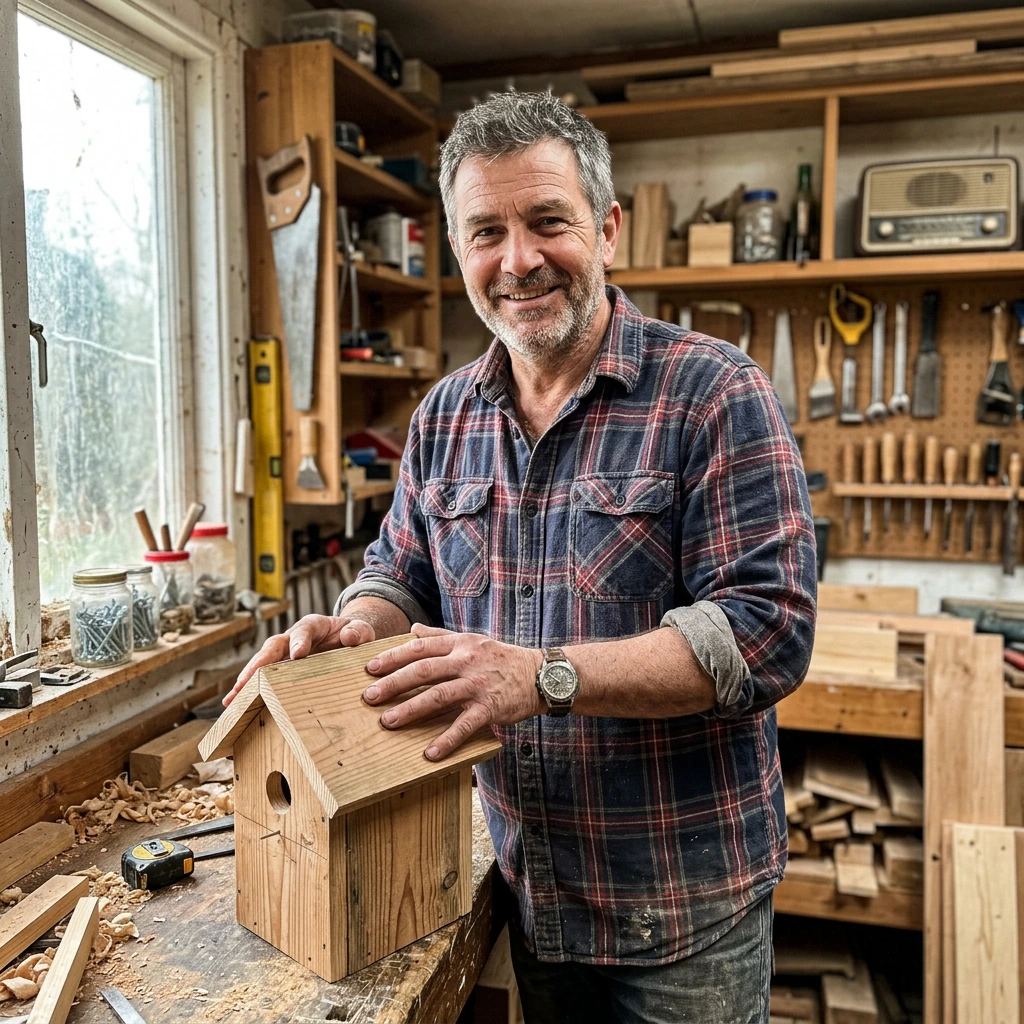
This is where the hands-on building really starts, and it's easier than most people expect. The key principle is to build for specific species, not generic 'birds.' Entrance hole diameter is everything. A 1.5-inch hole admits Eastern bluebirds and blocks European starlings. A wood duck box needs an oval entrance 3 inches high by 4 inches wide, with the bottom of that opening 18 inches above the floor of the box. Get the size right and you'll attract the bird you want while keeping unwanted guests out. If you want to attract cavity nesters faster, focus on how to build a bird condo with the right entrance size and placement for your target species. Get it wrong and you've basically built a house sparrow or starling apartment complex.
The USGS recommends making the entrance hole as close to exactly 1.5 inches as you can for bluebird boxes. Use a hole saw bit and measure twice. For other species, download Audubon's birdhouse and nesting size chart and match your dimensions to the bird you're targeting. The Alaska Department of Fish and Game puts it well: always build for the specific species present in your region and habitat. A box that's wrong by even a quarter inch can determine whether your target species uses it or not.
Basic birdhouse build: what you need
- Untreated cedar or pine, 3/4-inch thick (cedar lasts longer outdoors and doesn't need paint or stain)
- Exterior wood screws, 1.5 to 2 inches long (screws hold better than nails through weather cycles)
- A hole saw bit in the correct diameter for your target species
- Drill and basic hand tools
- One side panel hinged or removable for annual cleanout
- Small drainage holes in the floor (four 1/4-inch holes in the corners)
- Ventilation gaps at the top of the side walls (leave a 1/4-inch gap at the top, or drill 1/4-inch holes)
- No perch below the entrance hole (perches help predators, not birds)
Mount nesting boxes on a smooth metal pole with a stovepipe baffle or a cone baffle to stop raccoons and cats. NestWatch is specific about this: predator guards are a key feature of any good nest box setup. Screw the box to the pole rather than hanging it so it stays stable in wind. Face the entrance hole away from the prevailing wind direction, ideally northeast to southeast in most of North America, to keep rain out and morning sun in.
If you want to go further and build a more elaborate structure for keeping birds, projects like a walk-in bird aviary or a multi-unit bird condo are natural next steps from here. They follow the same core principles but with more materials and planning involved.
Species entrance-hole reference
| Species | Entrance Hole Diameter | Box Floor Size (approx.) | Mounting Height |
|---|---|---|---|
| Eastern Bluebird | 1.5 inches | 5x5 inches | 4-6 feet |
| Black-capped Chickadee | 1.125 inches | 4x4 inches | 4-8 feet |
| House Wren | 1.25 inches | 4x4 inches | 5-10 feet |
| Wood Duck | 3x4 inch oval | 10x18 inches | 4-6 feet above water |
| Downy Woodpecker | 1.25 inches | 4x4 inches | 8-20 feet |
| American Kestrel | 3 inches | 9x9 inches | 10-30 feet |
Enrichment and habitat add-ons: repurposed structures, shelter, and safe materials
Once you've got the basics covered, habitat add-ons are some of the most satisfying parts of building a bird garden because most of them cost almost nothing and take an afternoon. A brush pile is the best example. Stack cut branches, woody stems, and leaf debris in a back corner of your yard. The FWS notes that brush piles, stacked wood, rock walls, and fallen logs provide habitat for insects and certain ground-nesting or shelter-seeking birds like thrashers, wrens, and towhees. It looks 'messy' to some people but it's genuinely functional habitat.
Leave a section of your lawn unmowed. Even a 4-by-8-foot patch left wild creates microhabitat that supports ground-foraging birds and the insects they eat. The FWS specifically mentions unmowed 'wild zones' as a beginner-friendly addition. You can edge it neatly to make it look intentional. Add a low stake with a small sign that says 'wildlife habitat' if your neighbors are curious.
Repurposed materials work great here. An old wooden pallet stood upright and filled with straw and brush makes a shelter wall. Stacked terracotta pots create insect habitat that also attracts the birds that eat those insects. An old hollow log laid on the ground mimics fallen timber habitat. The key is avoiding treated lumber, painted surfaces with lead-based or oil-based paint, and any material with chemical residue. Untreated wood, natural fiber, clay, stone, and natural rope are all safe. Avoid galvanized wire near nesting areas (the zinc coating can be problematic) and never use materials that trap or entangle, like loose string or synthetic netting.
A simple dust bath area is another easy add-on that most people skip. Find a sunny spot, clear a small patch about 2 feet square, loosen the soil, and mix in some fine sand. Many birds including sparrows, wrens, and quail use dust baths to manage feather parasites. It takes five minutes to set up and birds will find it on their own.
Maintenance and troubleshooting so birds actually move in
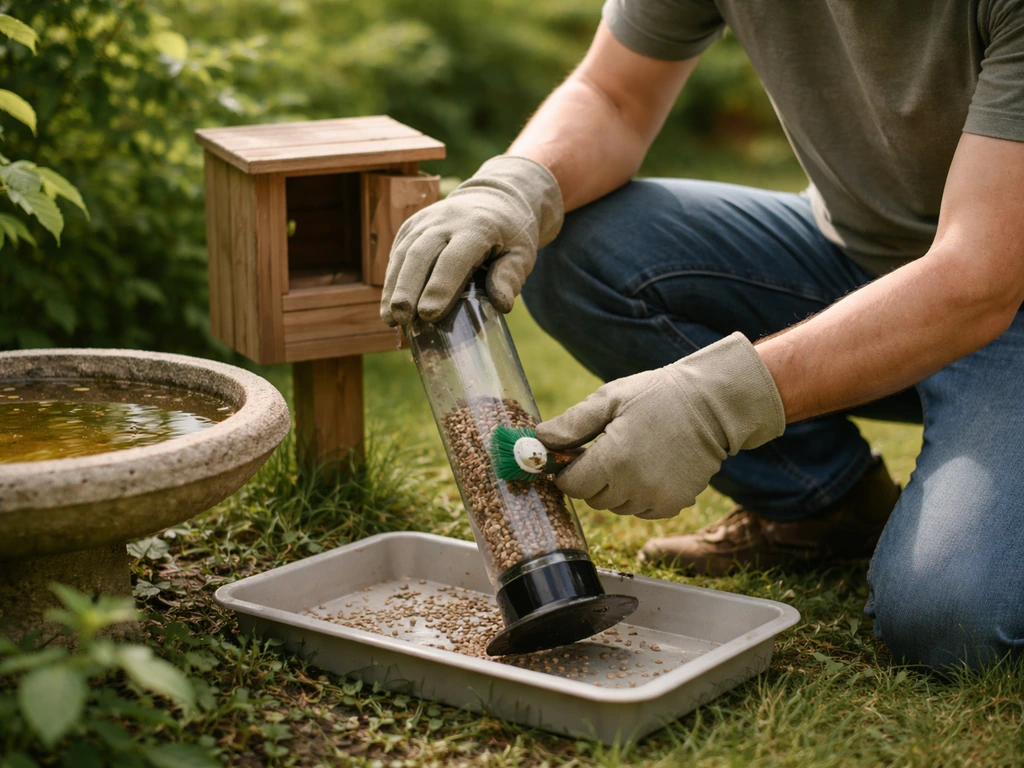
The most common reason a bird garden doesn't work isn't design, it's neglect. A dirty feeder, a stagnant birdbath, or a nest box that was never cleaned out from last year will actively discourage birds. Build a simple maintenance schedule and stick to it.
| Task | Frequency | Why it matters |
|---|---|---|
| Refill seed feeders | Every 2-3 days or as needed | Wet or moldy seed can sicken birds |
| Clean seed feeders | Every 2 weeks (more in hot/humid weather) | Prevents salmonellosis and other feeder diseases |
| Rake seed hulls under feeders | Weekly | Reduces ground-level disease and rodent attraction |
| Change birdbath water | Daily or every other day | Prevents mosquitoes, algae, and bacteria |
| Scrub birdbath basin | Weekly | Removes biofilm and algae buildup |
| Replace hummingbird nectar | Every 3-5 days (every 1-2 days in heat) | Fermented sugar water harms hummingbirds |
| Clean out nest boxes | Once per year, late fall or early winter | Removes parasites and old nesting material |
| Check windows for collision signs | 2-3 times per week | Lets you catch and fix collision hotspots early |
If birds aren't visiting your feeders after a week or two, don't panic. Birds need time to find new food sources and they're cautious about unfamiliar setups. Check that your feeder is visible from perching spots, that the seed is fresh (old seed smells rancid and birds can detect it), and that there's no cat activity nearby. Adding a birdbath near the feeder often helps because moving to investigate water is lower-risk than approaching a new food source.
If birds visit your feeder but won't use your nest box, the most common fixes are: relocating the box (too close to the feeder is a problem, birds don't want to nest right next to a busy feeding station), adding a predator guard if you haven't already, or double-checking the entrance hole diameter against your target species chart. Once you have feeders, water, and nesting boxes dialed in, a bird hotel is essentially the same idea, but focused on adding multiple species-friendly nesting spots nest box. Boxes that bake in full afternoon sun can also get too hot. A north or east-facing entrance in a spot with morning sun and afternoon shade is usually ideal.
Finally, give it a full season before judging success. Some birds, especially bluebirds and swallows, scout nest boxes in late winter for the following spring's nesting. Plant your natives this year, build your boxes this season, and expect things to really click into place in year two. Every yard I've set up has followed that pattern: a trickle of visitors at first, then a reliable community of birds that treat the space as home. Stay patient, keep things clean, and they will come.
FAQ
I only have a tiny space. How do I start a bird garden with the minimum setup?
If you have only one feeder and a small yard, prioritize the “core four” in miniature: place a tube feeder near cover (but not in the window danger zone), add a shallow birdbath with daily water changes, include one properly sized nesting box, and plant one high-value native shrub for shelter. Adding more seed without increasing shelter and nesting options is the fastest way to get low visitation.
What should I do if birds stop coming in certain seasons?
Plan for seasonal food gaps. For example, in fall and winter add suet or seed heads left standing, in spring keep nectar or early-bloom natives available, and in summer emphasize fruiting natives plus insect-supporting plants. The easiest mistake is relying on one type of food that works only part of the year.
How do I adjust care in hot summers or rainy periods?
Bad weather doesn’t have to break your bird garden, but water and cleaning matter more. During heat, clean the feeder on the schedule you can actually maintain and replace birdbath water daily. During storms, remove wet, spoiled seed right after rain and check feeders for standing water in caps and bases.
My neighborhood has cats. What changes make the biggest difference for nesting safety?
Use baffles and placement to reduce cat access, but also design for “escape routes.” Position shrubs so birds can move from open ground into cover within a few seconds, and keep nesting boxes mounted on poles with proper predator guards. Even a great box placement can fail if cats can reach the pole or wait near it.
Can I build a bird garden in a place with limited ground access (like a patio or balcony)?
Yes, but follow the same species planning. If you want specific cavity nesters, your birdhouse dimensions and entrance size must match the target species, and you still need predator guards and appropriate placement away from traffic at feeders. For open-atmosphere visitors, focus on window-safe feeder placement and a shallow water source with rough surfaces.
If birds visit my feeder but never nest in the box, what should I troubleshoot first?
The birdhouse and nesting box guidance depends on which species you want to attract, but there are a few universal checks: mount securely, orient the entrance to reduce rain and excessive afternoon sun, and ensure the box is not directly over a feeder or walkway. If you get activity but no nesting, re-check entrance size, height, and how close the box is to dense cover and predator paths.
What should I do if I notice sick birds or unusual mortality around my feeder?
If you see dead birds or multiple birds looking unwell, pause refilling, remove leftover seed, and thoroughly scrub all feeding surfaces. Replace paper liners if your feeder has them, and switch to fresh seed after cleaning. Avoid “spot cleaning” only the visible area, residue in ports and crevices can keep spreading disease.
Do I need to rely on window film, or should I move feeders too?
Window film can reduce risk, but placement still matters. If you’re using the within-3-feet or beyond-30-feet rule, birds have either enough space to slow down safely or they are very close to avoid high-speed collisions. If birds keep colliding, reposition the feeder, increase visibility from outside (so birds detect it earlier), and test window film on the most affected panes.
How long should I wait before deciding the bird garden isn’t working?
Start feeders after you have at least one reliable water point and nearby cover. Birds can investigate quickly, but they may take days to a couple of weeks to commit. A practical approach is to begin with a tube feeder plus a birdbath, then add the nesting box once you know the birds you want are showing interest.
How often should I clean the feeder and the birdbath if my climate is humid?
Use a simple schedule tied to weather: clean seed feeders about every two weeks under normal conditions, more often in warm, humid weather, and anytime you see moldy seed or clumping. For birdbaths, keep the daily or every-other-day water change rule, and scrub the basin if water looks cloudy or has visible growth.
What’s the most common reason birdhouses attract the wrong species?
Most problems come from mismatch. Birdhouse entrance diameter and overall box dimensions must match the species you are targeting, and even small errors can invite competitors. Also confirm placement height, baffle type, and orientation, because a “correct” hole size on the wrong pole can still reduce occupancy.
Can I use a fountain or dripper instead of a traditional birdbath?
Yes, but you need to ensure the design is safe and species-appropriate. Replacing open-ground water with a small dripper can work, yet birds still need a safe, shallow landing zone, and you still have to keep moving water clean. Avoid fully enclosed or too-deep water features that birds cannot access confidently.
I haven’t seen any birds yet. What should I check first?
If you have no birds at all after two weeks, check three things: feeder visibility from perching spots, freshness of seed (birds avoid rancid seed), and any cat or hawk pressure causing avoidance. Then add one more element, usually a native shrub for cover or a second water option, before changing everything at once.
What’s the best way to expand my plant list without wasting money?
Starting with a few high-value natives is better than planting many random ones. For example, choose plants that provide caterpillar host support for spring and summer, plus fruiting or seeding plants for fall and winter. The fastest improvement usually comes from adding one more native shrub that offers cover rather than adding more types of feeders.
How do I set up a dust bath so birds actually use it?
For dust baths, keep it simple and safe: use a sunny, open spot with nearby cover for quick escape, and avoid treated soils or materials that could irritate birds. If you don’t see birds using it, don’t disturb the area constantly, many birds will test it after they’re already using your feeders and water.
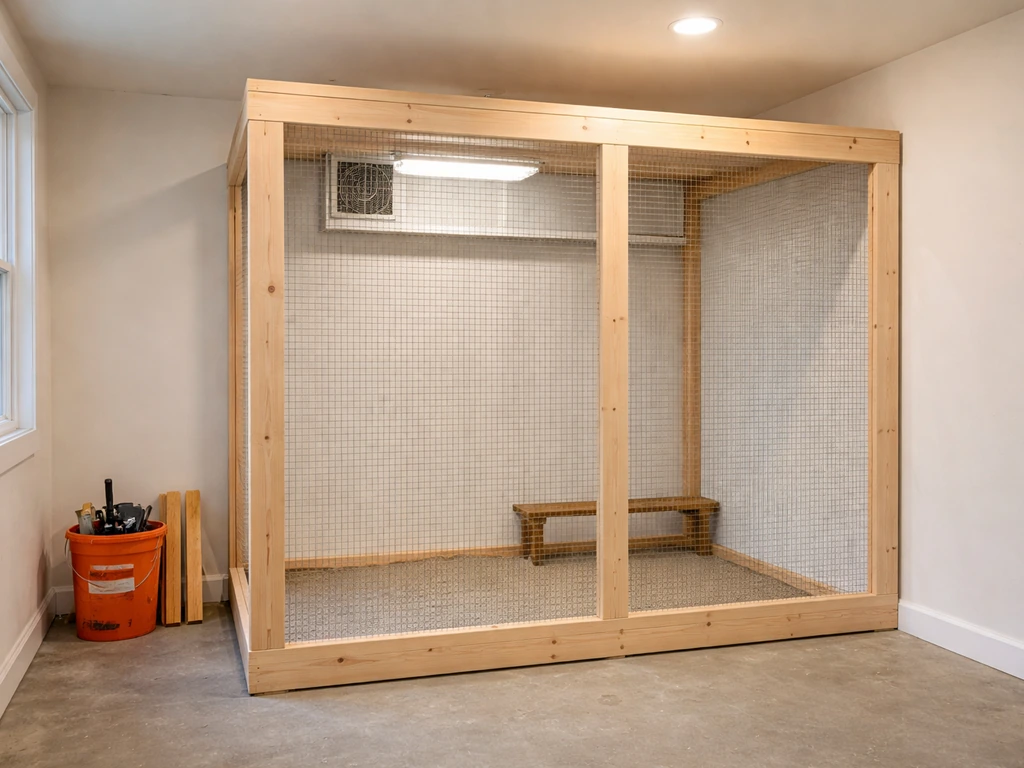
DIY step-by-step plan to build a safe indoor bird room, from layout and materials to ventilation, cages, and enrichment.
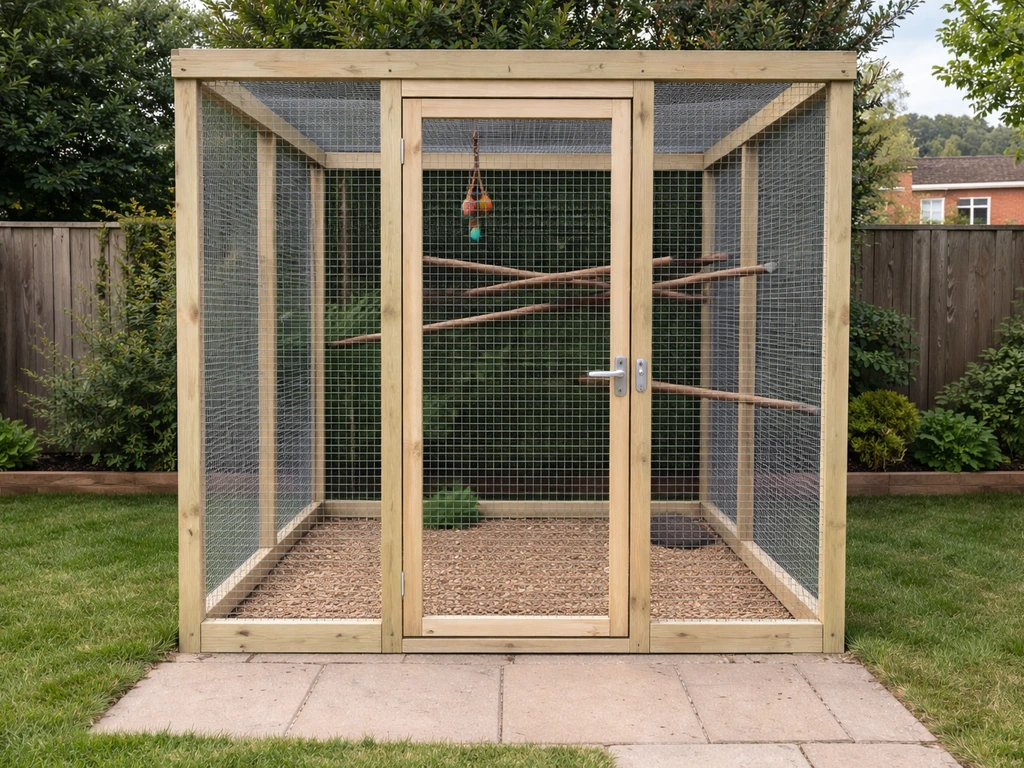
Step-by-step DIY guide to build a safe small bird aviary, from planning and materials to wiring, doors, and maintenance.
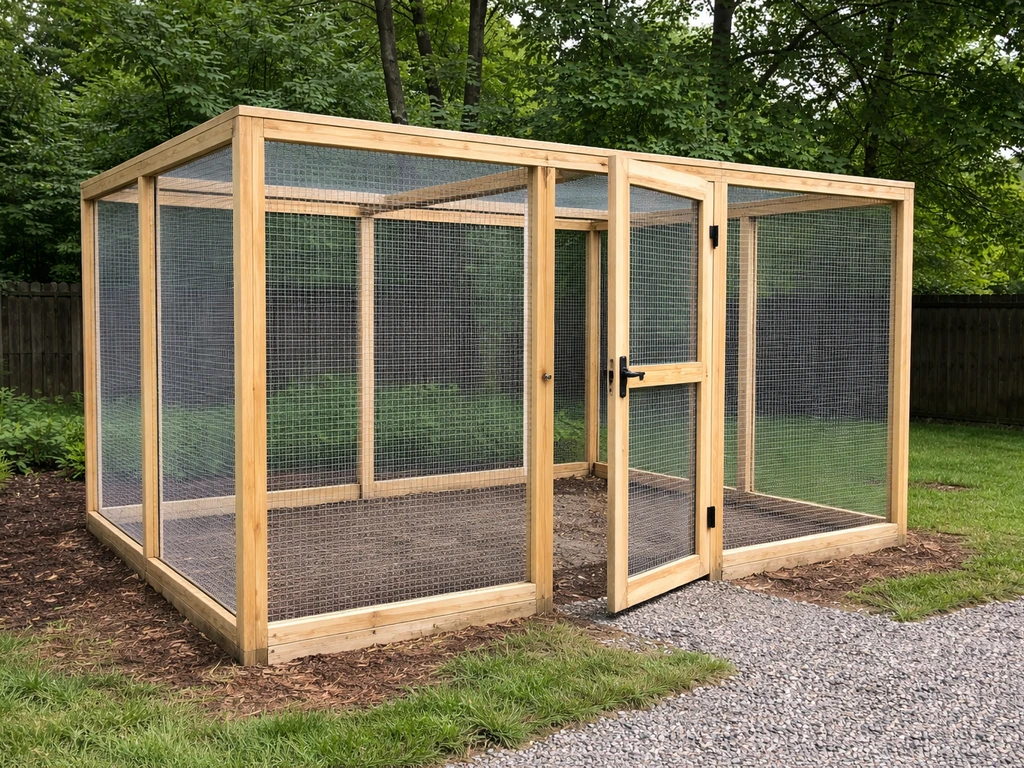
Step-by-step plans to build indoor or outdoor wood bird aviary, from sizing and airflow to secure doors and finishing.