You can build a simple one-way bottle bird trap using a large plastic bottle, a craft knife, some tape, and basic bait in about 20 minutes. If you want a rope-style setup instead, follow the steps in our guide on how to make bird trap with rope. If you want the quickest option, follow these simple instructions for how to make a bird trap easy. The design works on the same funnel principle used in commercial live traps: birds walk in through a narrow inward-pointing entrance and struggle to find their way back out. It works best for ground-foraging birds like house sparrows that follow a food trail into a confined space. Before you cut anything, though, read the legal and ethical section below, because trapping the wrong species, even accidentally, can carry real legal consequences in the US and UK.
How to Make a Bird Trap Out of a Bottle Safely

What you need before you start
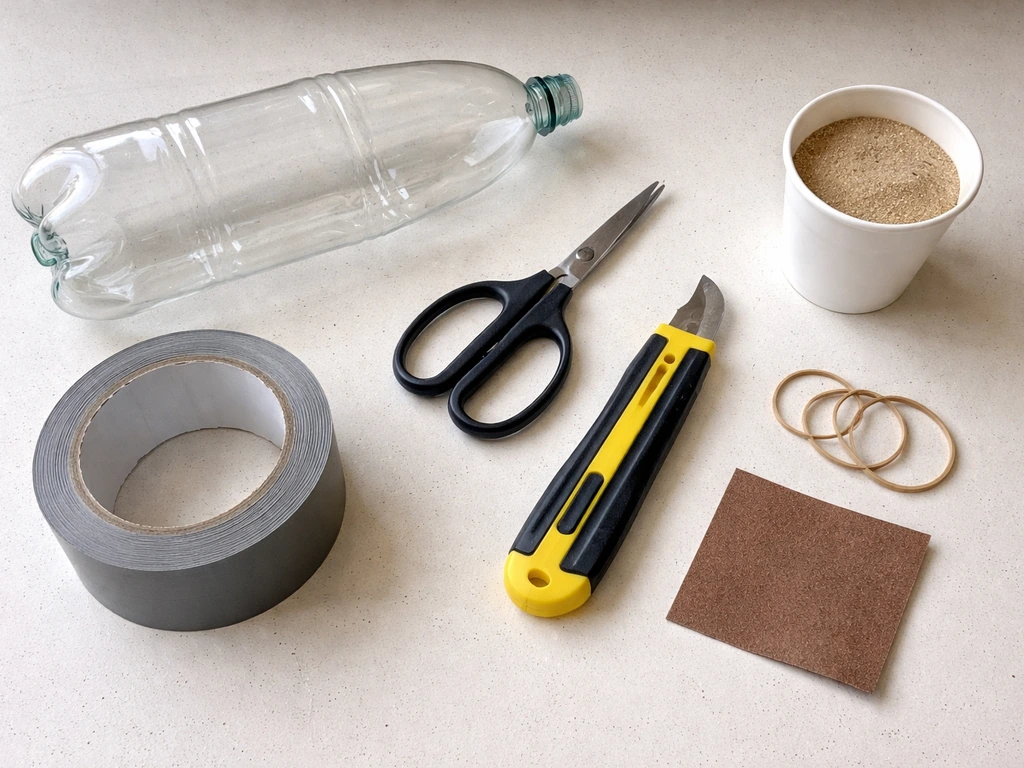
Everything on this list is either something you probably already have or can pick up cheaply. I've built versions of this trap using stuff pulled straight from the recycling bin, and it works just as well as one made with fresh materials.
- One large plastic bottle (2-liter soda bottle works well; bigger is better for birds larger than a sparrow)
- Sharp craft knife or scissors
- Strong waterproof tape (duct tape or packing tape)
- A thin bamboo skewer or short wooden dowel (for the perch/trigger, optional)
- Sandpaper or a lighter to smooth cut edges so there are no sharp plastic burrs
- Bait: cracked corn, millet, or small bread pieces
- A short length of thin string or wire if you want to anchor the trap
- Marker pen for measuring and marking cut lines
That's genuinely it. No glue gun required, no special hardware. The craft knife is the only tool that needs a bit of care, and you can swap it for heavy scissors if that's what you have.
How the bottle trap actually works
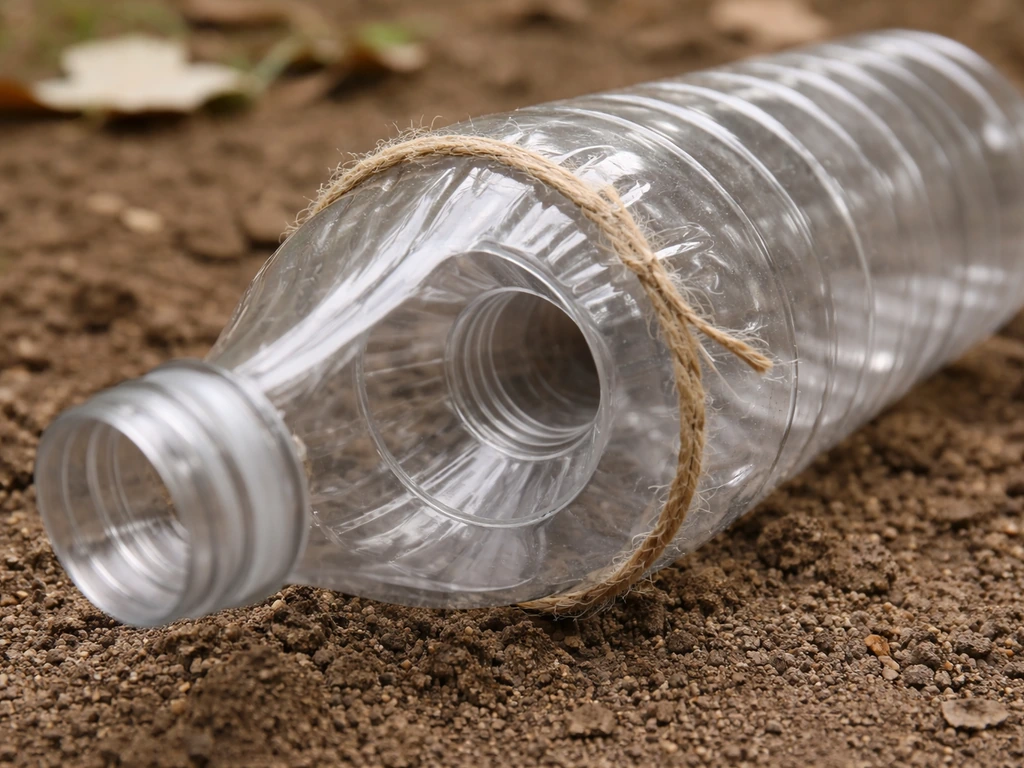
The whole design is a funnel trap adapted to work inside a bottle. Here's the logic: you cut off the neck end of the bottle, invert it, and push that inverted neck section back inside the body of the bottle. The neck now points inward, creating a narrow cone-shaped entrance. A bird can push through the flexible plastic tip of the funnel from outside, but once it's inside the larger bottle chamber, it can't easily locate that same small hole to push back out through. It keeps looking along the walls of the bottle rather than finding the centre funnel exit.
This is the same geometry used in commercial funnel traps and sparrow traps referenced by extension wildlife programs. The entry opening should be around 3 to 4 cm in diameter for house sparrows or small finches. If you're targeting slightly larger birds, go up to 5 cm. Anything much bigger and the bird can spin around and find the exit too easily. Airflow is important too: you need to punch several small ventilation holes (about 5mm each) in the lower walls of the bottle so air circulates. A sealed bottle gets hot fast in sunlight and can kill a trapped bird within minutes, which is both inhumane and defeats the entire purpose.
Step-by-step build: the plastic bottle funnel trap
- Rinse the bottle and remove any labels. Dry it completely so your tape sticks properly.
- Mark a cut line around the bottle about one-third of the way down from the cap end. This separates the neck/funnel section from the body.
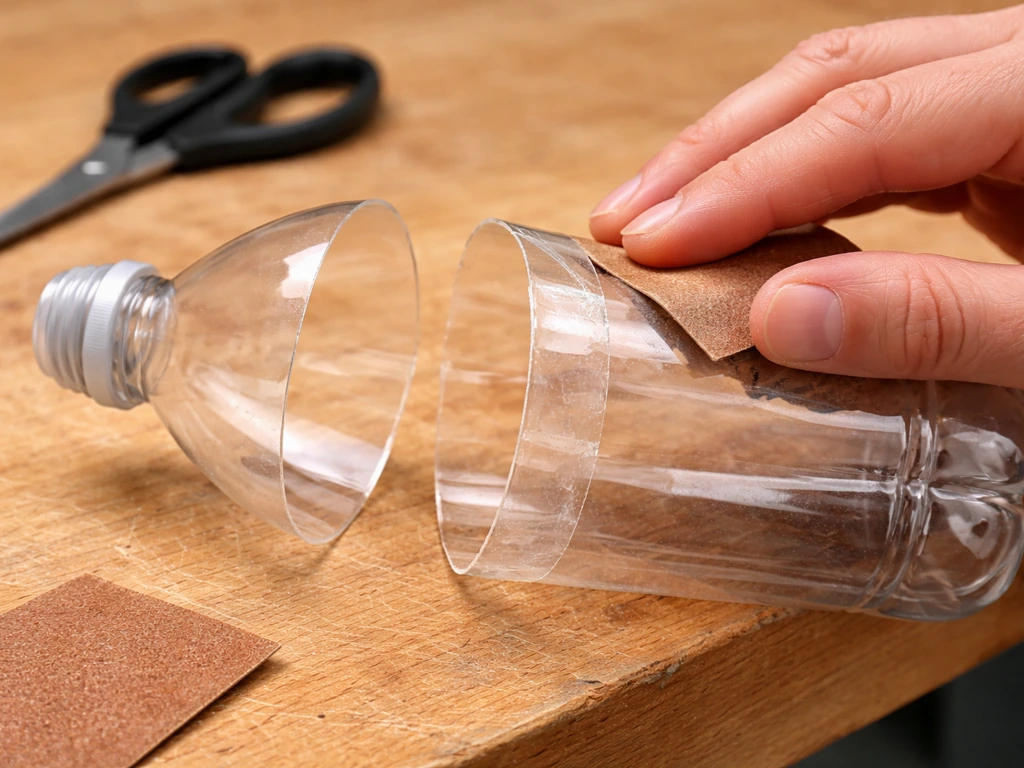
- Use your craft knife to cut along that line, giving you two pieces: a shorter funnel piece (the neck end) and a longer body piece.
- Remove the bottle cap from the neck piece and set it aside. Use sandpaper or briefly run a lighter along all cut edges to remove sharp plastic burrs. This is not optional if you care about not injuring a bird.
- Invert the neck piece (funnel) so the open cut end faces outward and the bottle opening (narrow end) points inward. Insert it into the open top of the body piece, narrow tip pointing down into the bottle.
- Adjust the funnel so its cut rim sits flush with or just below the top rim of the body. The narrow bottle-neck opening should be centered roughly 2 to 3 cm below the top of the body chamber.
- Tape around the joined rim firmly with duct tape to hold both pieces together. Press the tape down tightly all the way around so there are no gaps birds can squeeze out through.
- Punch 6 to 8 ventilation holes along the lower half of the body using the tip of your craft knife or a heated skewer. Space them evenly around the circumference.
- Place bait (cracked corn or millet works well) inside the body through the funnel entrance before closing. You can also tape a small bait piece just inside the funnel entrance to draw birds in.
- Lay the trap on its side on the ground. This is a ground-level trap for walking/hopping birds. Make sure the funnel entrance faces horizontally outward, not upward, so birds can walk straight in.
First time I made one of these I forgot to smooth the cut edges and ended up with a jagged ring of plastic right at the entry point. No bird was going near it, and honestly, I wouldn't have either. Take the 60 seconds to run sandpaper over every cut. It also makes the funnel entrance more flexible and easier for a bird to push through.
The legal stuff you actually need to know
This is the part most DIY guides skip over, and it's the most important section here. In the United States, the Migratory Bird Treaty Act (MBTA) protects a very long list of bird species at the federal level (codified in 50 CFR § 10.13). Trapping, capturing, or harming most wild birds without authorization is a federal offense, and that applies to accidental capture too. House sparrows, European starlings, and feral pigeons are not protected under the MBTA, which is why extension programs like Kansas State University Extension discuss trapping methods specifically for house sparrows. But almost every other songbird you're likely to encounter in a backyard is protected. If there's any chance your trap could catch a protected species, don't set it.
In the UK, the government distinguishes between trap types and requires proper authorization for trapping even pest species like house sparrows in food premises. Natural England is the body to contact for official guidance before using any funnel or sparrow trap commercially. Individual states and counties in the US have their own additional requirements: Massachusetts, for example, requires trap registration and completion of a licensed Trapper Education course before you can legally trap. Check your local and state/county wildlife regulations before you put this trap in the ground.
The U.S. Fish & Wildlife Service also makes clear that if you find an injured or orphaned bird, the right move is to contact a federally permitted rehabilitator, not to attempt DIY capture and care. Audubon gives the same advice: if a bird is bleeding or has a broken wing, call a wildlife rehabilitation center, don't improvise.
How to handle and release a bird safely
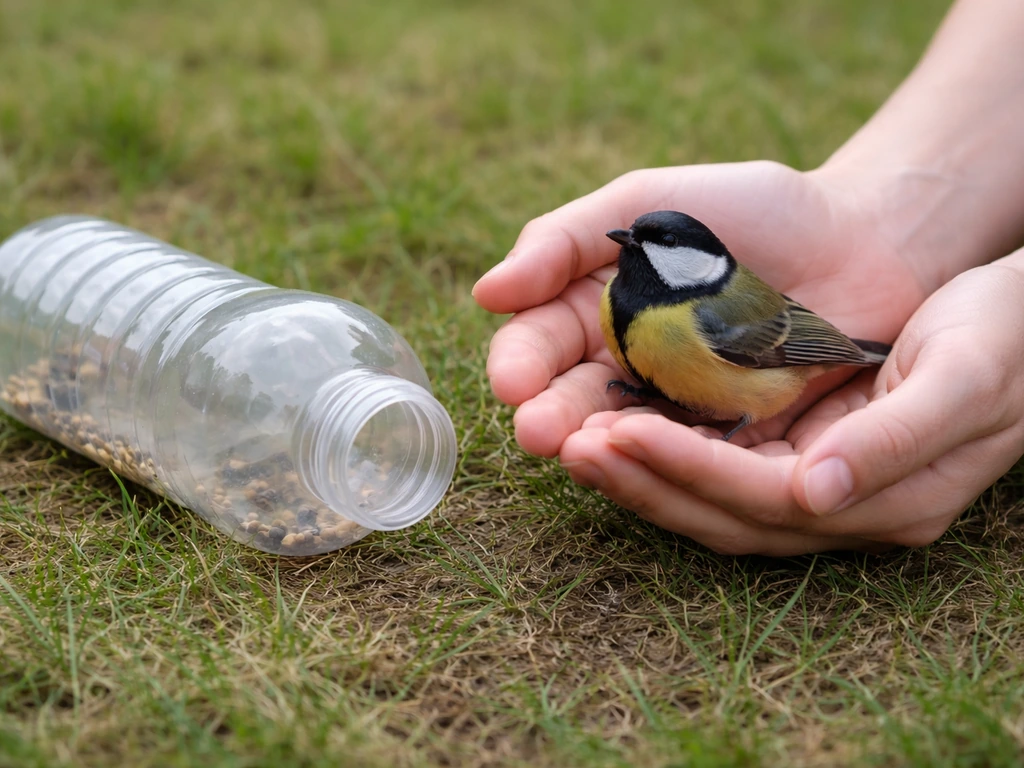
If you've caught a bird and it's healthy and uninjured, here's how to release it without causing harm.
- Check the trap at least twice a day: once in the morning and once in the evening. This is the minimum safe frequency for any live trap. Leaving a bird trapped for hours in heat, cold, or without water causes serious stress and can kill it.
- Carry the trap to a quiet spot away from people, pets, and traffic before opening it.
- Wear light gardening gloves to protect your hands and reduce the bird's exposure to oils and contaminants on your skin.
- Peel back the tape seal slowly and remove the funnel section. Don't shake or invert the bottle.
- Hold the open end of the bottle pointing toward low shrubs or grass. Most birds will exit on their own within a few seconds. Don't reach in and grab unless absolutely necessary.
- If the bird seems lethargic, is bleeding, or can't fly, do not attempt further DIY care. Contact a licensed wildlife rehabilitator immediately.
One thing worth knowing: even if a bird appears physically fine after being caught by a cat or caught in a trap, internal injuries are common. The Wildlife Rescue League notes that cat-caught birds often need medical attention even when no external wounds are visible. When in doubt, call a rehabilitator.
Where to place the trap and how to improve your catch rate
Placement makes or breaks this kind of trap. The single biggest thing you can do to improve catch rates comes directly from K-State Extension's guidance on house sparrow trapping: prebait the area for one to two weeks before you even set the trap. Penn State Extension notes that blank" rel="noopener noreferrer">funnel traps are the most effective house sparrow traps. K-State Extension also emphasizes pre-baiting or trap-wary acceptance tactics so birds are more likely to enter traps prebait the area for one to two weeks. Put cracked corn or millet in the spot you plan to set the trap, but don't put the trap there yet. Let the birds learn that this location means food. Once they're coming reliably, introduce the trap. The birds already trust the location and will walk right in for the bait.
- Place the trap on flat, stable ground where target birds are already active (under bird feeders is ideal)
- Position the funnel entrance facing away from direct wind so birds don't feel a draft when approaching
- Keep the trap in partial shade to prevent overheating, especially in warm weather
- Add a small scattering of bait just outside the entrance to create a trail leading in
- Check that the trap doesn't rock or shift: a wobbly trap spooks birds, so place it on firm ground or anchor it lightly with a short wire stake
- Keep foot traffic and noise to a minimum near the trap while it's set
K-State Extension also makes an honest point worth repeating: trapping is not always the right solution and often doesn't provide satisfactory results on its own. If catching a specific bird is genuinely important (for example, to assist a sick individual or manage a localized problem), combining trap placement with professional advice usually gets better outcomes than DIY placement alone. If you're also exploring other simple trap designs, methods using a box or sticks follow a similar bait-and-funnel logic and can be worth comparing for different bird sizes and environments. If you're also exploring other simple trap designs, like sticks, you can use the same bait-and-funnel logic for a sturdier setup box or sticks. If you specifically want a box-based setup, you can adapt the same bait-and-funnel idea to learn how to make bird trap with box.
When it's not working: common problems and fixes
Birds won't go near the trap
This is the most common problem, and the fix is almost always prebaiting. If you placed the trap immediately without prebaiting, birds haven't learned to trust that spot. Remove the trap, scatter bait in the location daily for a week, then reintroduce the trap. Also check that there are no sharp edges visible at the entrance, because birds are cautious about new objects and any glinting plastic edges will put them off.
Birds enter but escape
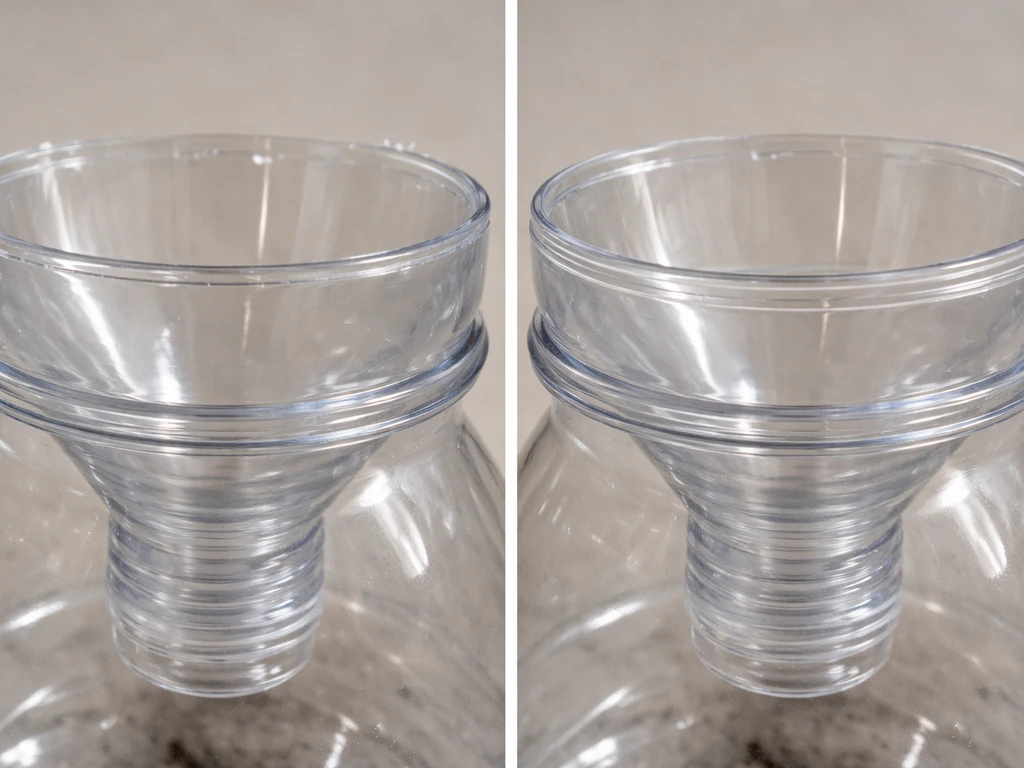
The funnel fit is probably too loose. If the inverted neck section isn't pushed far enough into the body, the gap between the funnel rim and the bottle walls is wide enough for a bird to squeeze back out sideways. Push the funnel deeper into the body (about 3 to 4 cm past the opening edge) and retape. The inner opening of the funnel should also be small enough that the bird has to actively push through, not just drift back out. If it's a larger bird, the 2-liter bottle may just be too small: try a 3-liter or 4-liter water jug instead.
The bird gets stuck or injured inside
Plastic burrs on cut edges are the most common cause of minor injuries inside the trap. If you skipped the sanding step, take the trap apart, smooth every cut surface thoroughly, and rebuild. A bird that's wedged in the funnel neck is usually struggling against a tight fit: enlarge the funnel opening slightly (no more than 1 cm at a time) and test with your hand first. If a bird is stuck and you can see it, release the tape seal from the top and open the trap wide rather than trying to pull the bird through the funnel.
You're catching the wrong species
Non-target capture is a real and documented problem. MSPCA-Angell reports that unintended species are captured at surprisingly high rates in trapping operations, sometimes nearly two non-target animals for every target one. If you're repeatedly catching birds you didn't intend to, stop using the trap. This isn't just a nuisance: catching a protected species is a legal issue. Consider whether trapping is actually the right method for your situation, and reach out to your local animal control or a wildlife conservation officer, as K-State Extension recommends, before continuing.
Trap gets jammed or collapses
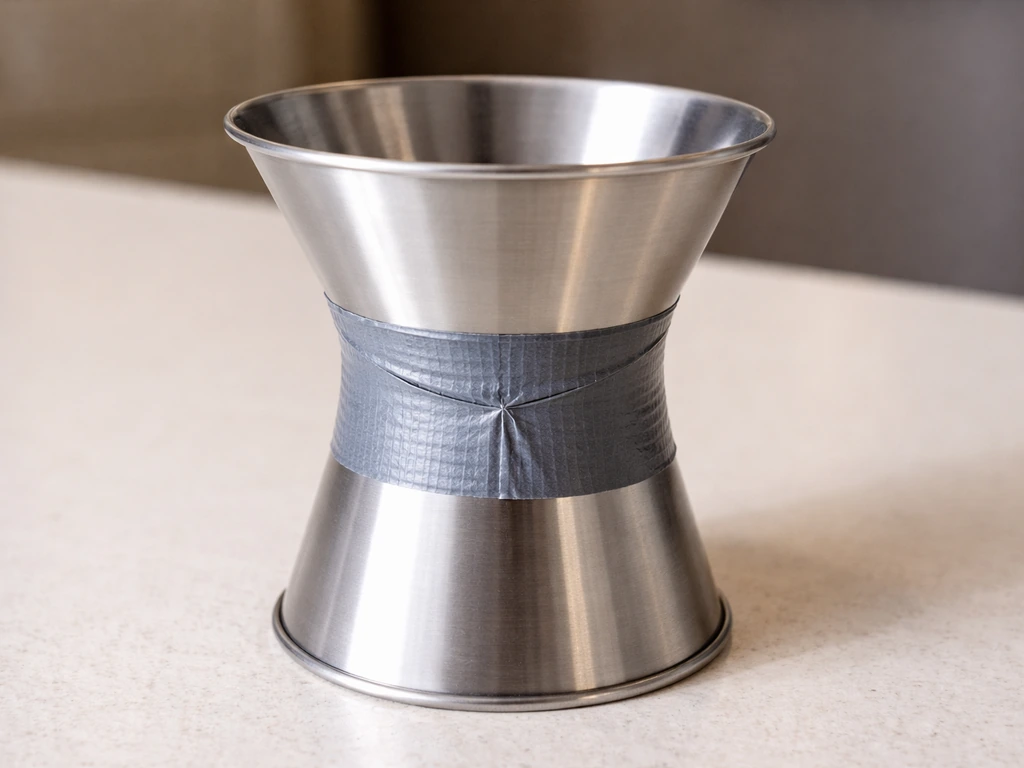
If the tape seal fails or the funnel collapses inward after a day or two, the tape wasn't pressed down firmly enough on the initial build. Use a full wrap of duct tape (two full rotations around the join) rather than a few strips. In wet weather, the bottle can warp slightly, which loosens the funnel. Either weight the trap with a small stone on top or reinforce the join with an additional wrap of waterproof tape before setting it out again.
FAQ
How can I test the bottle trap fit before baiting it?
Do a dry-run with your hand first. Insert your fingers from the outside to confirm the funnel lets something pass inward but that it is difficult to reverse out. If the gap between the funnel rim and bottle wall is visible from the outside, push the funnel deeper and retape before adding bait.
Where should the ventilation holes go, and how many is enough?
Yes, use ventilation holes, but place them in the lower chamber walls, not near the entrance so birds do not escape immediately. Also avoid making large holes that create escape routes, 5 mm holes in multiple spots are usually safer than one big opening.
How often should I check the trap to keep it safe?
Move it out of direct sun and check frequently. A bottle trap can heat up quickly even with ventilation, and trapped birds can worsen fast if the trap is left unattended, especially during warm afternoons.
What bait should I use, and how much should I put out?
Avoid using raw, fresh bait that can spoil in heat. Choose bait that matches the target bird diet (commonly cracked corn or millet for house sparrows), and use only a small amount so you are not drawing larger, non-target birds.
If a bird is alive and not visibly injured, what should I do next?
If you catch a bird and it seems uninjured, still treat it as potentially stressed or hurt internally. Keep it in a quiet, dark container with ventilation, minimize handling time, and contact a licensed wildlife rehabilitator for guidance rather than continuing DIY care.
What should I do if the tape seal fails or the funnel shifts after a day?
If the funnel collapses or the tape fails, stop setting it and rebuild. Common causes are insufficient tape pressure at the seam, bottle warping from moisture, or a funnel pushed in too shallow; reinforce with a full wrap of waterproof tape and ensure the funnel sits 3 to 4 cm into the body.
How do I reduce the chance of catching the wrong species?
If you keep catching non-target species, remove the trap and switch strategy. Reduce or stop trapping, adjust placement away from mixed-species foraging paths, and consult local wildlife professionals, because repeat bycatch increases the risk of capturing protected birds.
How do I choose the right bottle size and entrance diameter for the bird I'm targeting?
Yes, if the opening is too wide or the bottle is oversized for the target, birds can turn and escape. For house sparrows, keeping the entrance around 3 to 4 cm usually helps; for larger birds, a bottle may be the wrong size, and the trap may need redesign rather than just bigger openings.
What is the safest way to remove a bird if it’s wedged in the funnel neck?
If a bird gets stuck in the funnel neck, do not pull it through forcefully. Release the tape seal from the top and open the trap wide so you can free the bird without tearing skin or causing wing entanglement.
How long should I prebait before setting the trap?
If you only prebait for a short time, birds may not associate that spot with food yet, leading to low catch rates. A typical approach is daily baiting at the location for about one to two weeks, then introducing the trap once visits are consistent.
Can I use this trap where pets or other animals might get nearby?
No, do not set the trap in a way that could trap other animals, like pets or wildlife that roam there. Place it where you cannot reasonably expect cats or dogs to access it, and keep the area clear of hazards that could entangle animals.

Step-by-step humane stick bird trap plan, with legal safety notes, setup tips, and humane release guidance.
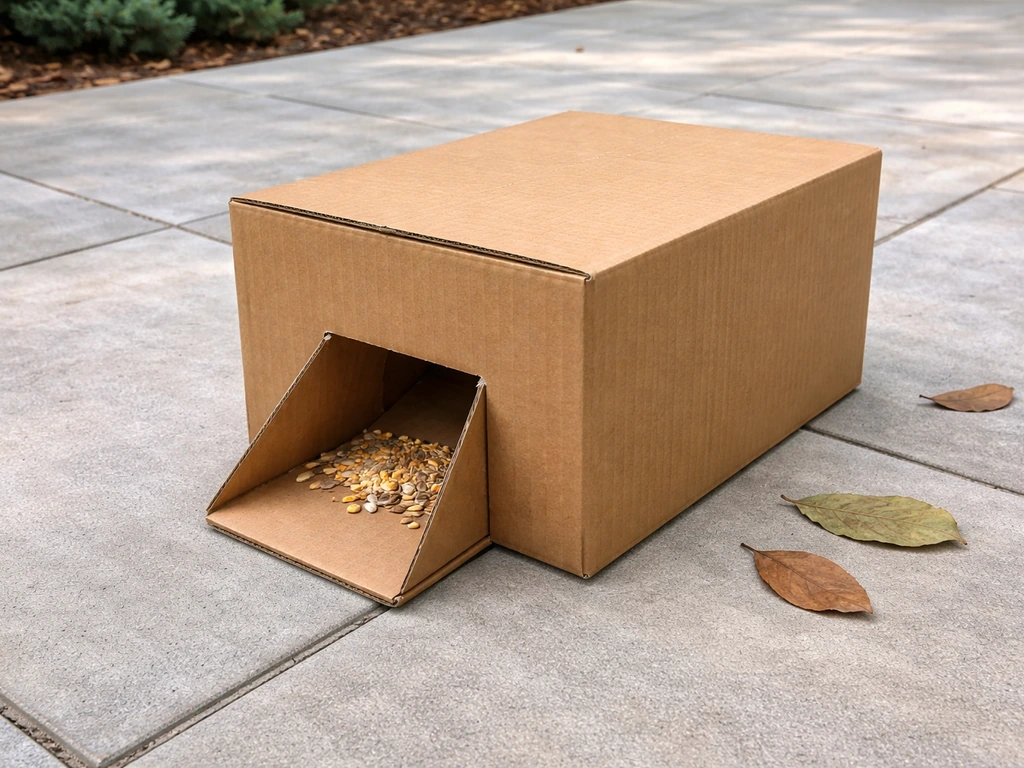
Step-by-step DIY guide to build a humane cardboard box bird trap, with door, bait, escape-proofing, and release tips.
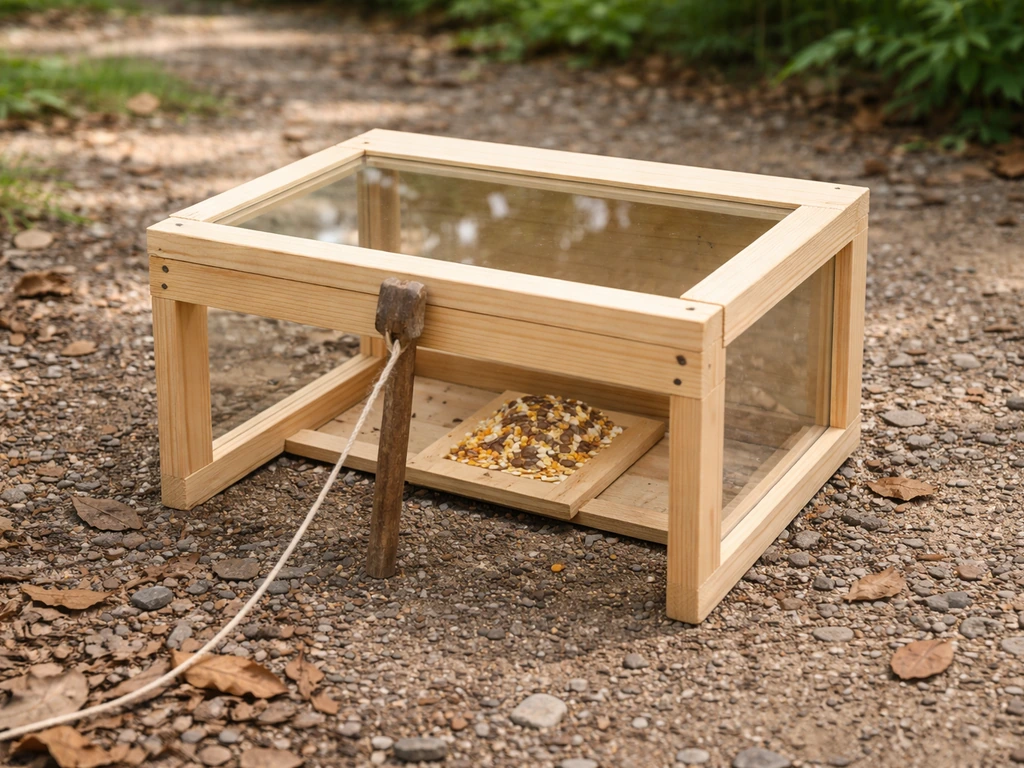
Step by step DIY guide to make an easy small bird trap, choose humane type, place it safely, and troubleshoot.