You can build a simple, humane bird trap at home using materials you probably already have, like a cardboard box, some sticks, a piece of string, and a handful of birdseed. The basic concept hasn't changed in centuries: create an enclosed space the bird will want to enter, give it a trigger mechanism you control, and check it frequently so any caught bird stays safe. That said, "simple" doesn't mean "do whatever you want." Before you cut a single piece of wood or string up a bottle, you need to be clear on why you're trapping, which type of trap fits that goal, and what the law in your state actually allows. Let's work through all of it.
How to Make a Bird Trap Easy: Simple DIY Steps
Marcus Thornton
8 Apr 2026
Decide your goal and choose the right trap type
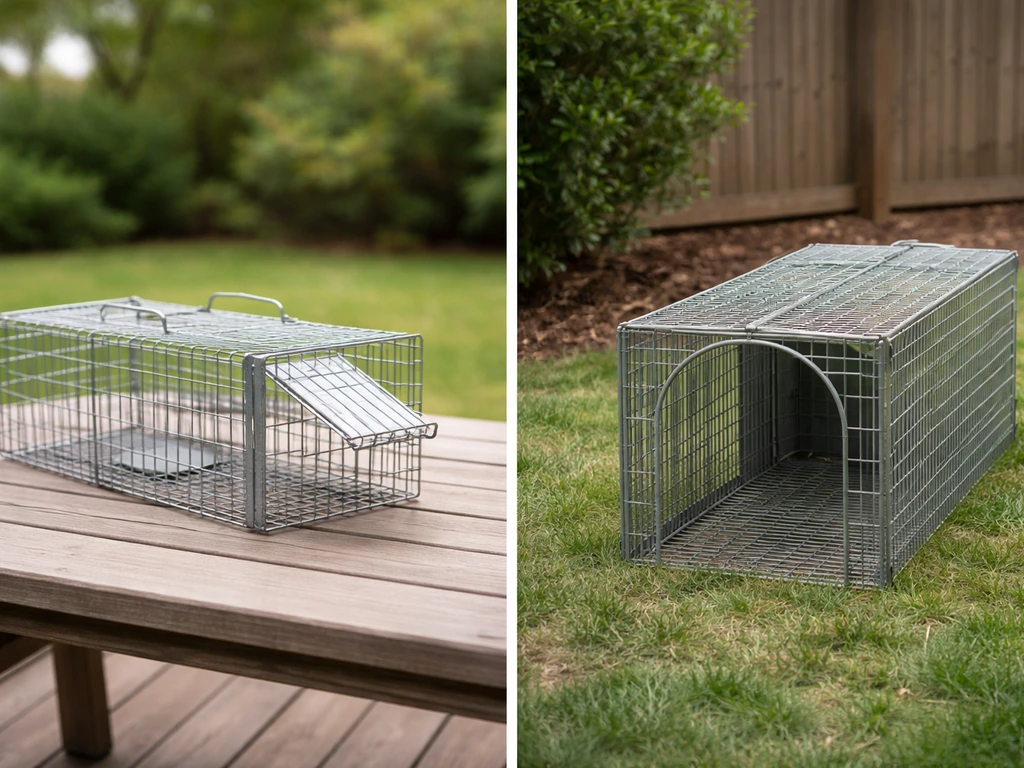
The trap design that works best depends entirely on what you're trying to accomplish. Most backyard situations fall into one of three categories: you want to catch a wild bird to observe it briefly and release it on-site, you want to relocate a nuisance bird that's causing real damage, or you need to catch a pet bird or escaped domestic bird that's landed in your yard. Each of these calls for a different approach, and some of them carry legal restrictions that matter a lot.
For quick, on-site catch-and-release or catching an escaped pet, a simple box or bottle trap is your easiest option. For nuisance birds you're hoping to relocate, pause right here: New York, Washington, Pennsylvania, and many other states explicitly prohibit releasing a captured animal off the property where it was caught without a permit. Florida's Fish and Wildlife Conservation Commission requires that any live-captured nuisance wildlife be released legally or humanely euthanized within 24 hours of capture. In other words, trapping a starling and driving it to a park across town is almost certainly illegal where you live. Always check your state's rules before you set anything.
For most backyard birders on this site, the practical goal is humane short-term capture for observation, banding assistance, or releasing a bird that's gotten into a structure. With that in mind, a box trap or a stick-and-string trap are the two easiest starting points. If you want more detail on each style, the guide on how to make a bird trap with a box walks through that design specifically, and it's a great companion to what we're building here.
Materials and basic tools for a simple homemade bird trap
One of the best things about this project is that almost nothing on the materials list costs money if you're willing to repurpose. Here's what you'll need for the easiest version of the stick-and-box style trap, which is the design we'll build step by step below.
- A sturdy cardboard box or wooden crate (roughly 12 x 12 x 12 inches minimum for small birds like sparrows or finches; go bigger for pigeons or doves)
- One straight, dry stick or wooden dowel, approximately 6 to 8 inches long
- 10 to 15 feet of lightweight string or twine (cotton works well; avoid wire or fishing line)
- Bait: birdseed mix, millet, cracked corn, or a piece of fruit depending on your target species
- A flat surface to prop the box on, such as a smooth patio stone or a scrap piece of plywood
- Optional: a small piece of screen or hardware cloth if you want better ventilation inside the box
- Optional: zip ties or tape to keep the box corners from collapsing under load
For tools, you need almost nothing: scissors or a knife to cut the string, and maybe a small drill or a nail and hammer if you want to punch ventilation holes in the box. That's genuinely it. If you want to level up the build a little, a staple gun helps keep the screen in place, and a measuring tape keeps your proportions consistent. But I've built working versions of this trap with just scissors and a box I found in the recycling bin, so don't let a limited tool kit stop you.
One thing I want to address directly: glue traps. You might have seen them sold online or in stores, and there are even tutorials for making a homemade version. Avoid them completely. Animal protection organizations, including MSPCA-Angell, advise against glue traps because they cause serious animal harm and are difficult to use humanely [avoid them completely](https://www.
mspca. org/animal_protection/glue-traps/). The U. S.
Fish and Wildlife Service explicitly prohibits the use of adhesive traps for capturing migratory birds under permit frameworks, and PETA's documentation notes that using glue traps for wild bird control is illegal in the U. S. Even where they're technically sold legally, they cause serious harm, they're nearly impossible to use humanely, and they're not appropriate for any backyard bird situation.
The guide on how to make a bird glue trap covers why this method is discouraged and what to do instead if you've already encountered one.
Step-by-step build for an easy small bird trap at home
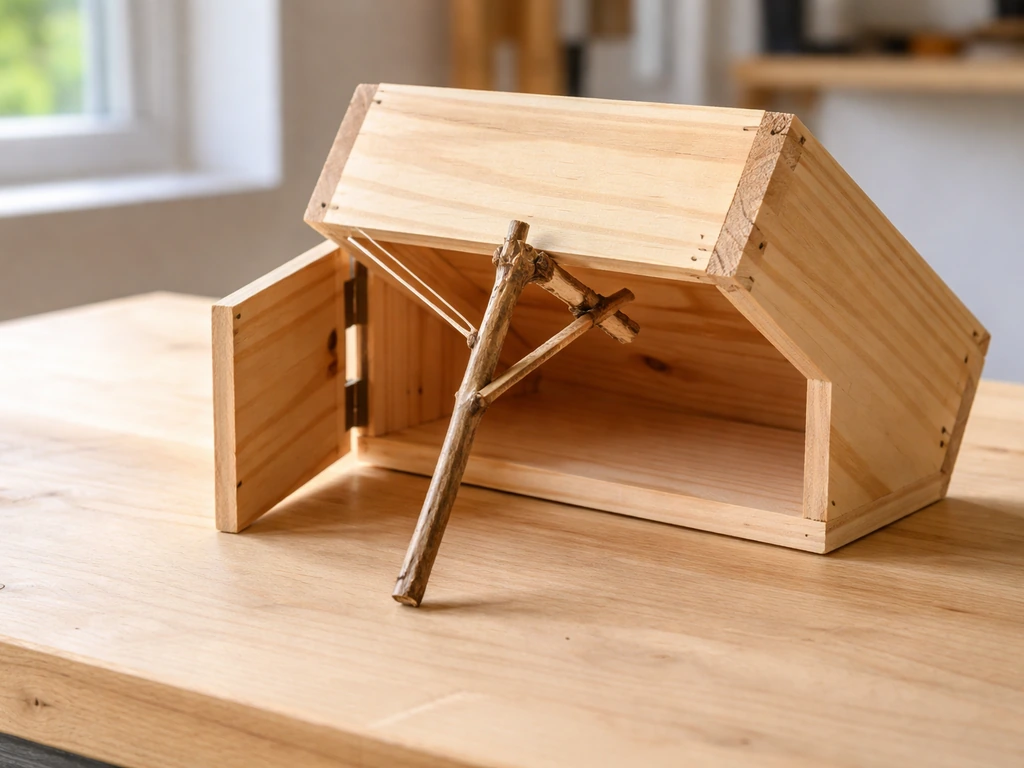
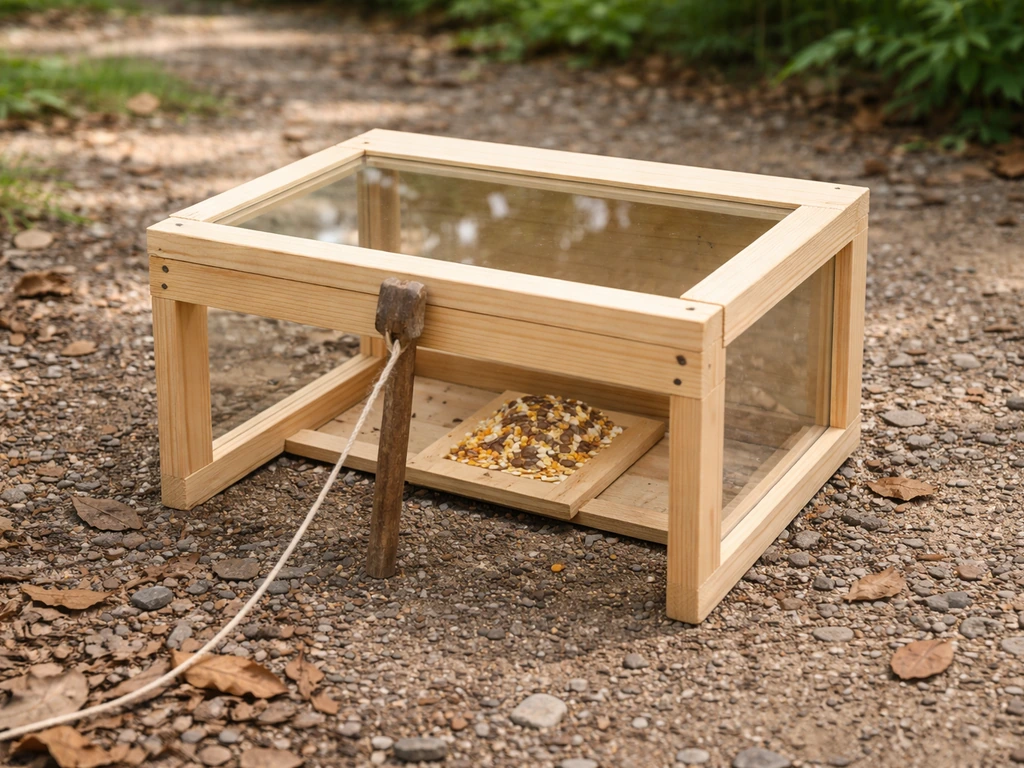
This is the classic propped-box trap, sometimes called a figure-four trap or just a stick trap. It's the simplest build I know of that actually works reliably for small birds. The version below uses a box and a single prop stick with a string trigger. You stay at a distance holding the string, and when the bird is under the box eating the bait, you pull the string and the box drops.
- Prepare the box: Take your cardboard box or wooden crate and punch or drill 6 to 8 small ventilation holes (about 1/4 inch diameter each) in the top and sides. This keeps air flowing for any bird inside. If you're using cardboard, reinforce the corners with tape so the box holds its shape when it drops. Flip the box upside down so the open end faces the ground.
- Set up the prop stick: Sharpen or notch one end of your 6 to 8 inch stick very slightly so the string can grip it without slipping. This stick is going to hold one corner of the box up at an angle. You want the box propped about 4 to 5 inches off the ground on one side, enough for a small bird to walk under comfortably.
- Tie the string: Tie one end of your string to the top of the stick (near the end that contacts the box). Run the string out about 10 to 15 feet to where you'll be hiding or waiting. Don't pull it taut yet; just lay it loosely on the ground so it doesn't startle birds approaching the area.
- Position the bait: Scatter a small amount of bait (birdseed, millet, or crumbled crackers) in a trail leading toward the box, then place a slightly larger amount directly under the propped box opening. The trail encourages the bird to approach; the bait pile under the box is what keeps it there long enough for you to trigger the trap.
- Prop the box: Place the stick so the notched end contacts the edge of the upside-down box at an angle, holding one corner off the ground. The box should be stable but easy to collapse with a gentle tug on the string. Test this a few times with no bird present until you're confident a firm pull will knock the stick free and drop the box cleanly.
- Take your position: Move to your hiding spot (behind a window, around a corner, or behind a bush) while holding your string loosely. Give the area 10 to 30 minutes for birds to relax and return. Sudden movements or nearby noise will keep them away.
- Trigger and check immediately: When a bird is fully under the box eating the bait, pull the string firmly and steadily. Go to the box within 30 seconds. Approach calmly, slide a stiff piece of cardboard under the edge of the box to prevent the bird from escaping as you lift it, and then carefully retrieve the bird with both hands in a secure but gentle grip.
If you'd rather work with natural materials you find outdoors, the approach using branches and cordage is very similar in concept. The guide on how to make a bird trap with sticks goes deeper into the figure-four trigger system and other stick-based designs that work well in a yard or garden setting.
Placement, bait, and set-up tips for higher success
The most common reason a simple trap fails isn't the build; it's the placement. Birds are creatures of habit. They feed in places they already feel safe, along routes they already travel. If you watch your yard for even one morning before setting the trap, you'll notice patterns: which spot the sparrows hit first, where the pigeons congregate, which fence post gets the most traffic. Set your trap in that spot, not somewhere more convenient for you.
Flat, open ground works better than tall grass because birds can see the bait trail clearly and don't feel ambushed. Placing the trap near an existing feeding station or feeder is smart, since birds already associate that location with food. Avoid spots right next to walls or dense bushes on all sides; birds like to feel they have an escape route, and a trap set in a corner will make them nervous even if they can't articulate why.
For bait, match it to the species you're trying to catch. Millet and cracked corn work well for sparrows, finches, and doves. Suet or mealworms attract robins and other insect-eaters. Fruit pieces (grapes cut in half, apple chunks) are good for starlings and mockingbirds. Washington Department of Fish and Wildlife recommends placing a small amount of bait just outside the trap entrance to draw birds in before they discover the main bait pile inside. That outside trail is what converts a curious bird into a committed one.
String or rope traps are another option where the trigger mechanism uses a loop or noose rather than a dropping box. If you're interested in that style, the article on how to make a bird trap with rope covers that design in detail, including how to size the loop correctly for different species so it's effective but not harmful.
One often-overlooked tip: pre-bait the location for two or three days before you set the trap. Just scatter seed in the area without setting any trigger mechanism. Once birds are comfortable eating there regularly, your success rate when you do set the trap goes way up. I've seen this turn a completely ignored spot into an active feeding site within 48 hours.
Safety, legal considerations, and humane handling and release
This is where I want to be really direct with you, because this part matters more than any clever build technique. The legal landscape around bird trapping in the U.S. is genuinely complex, and "I didn't know" is not a defense that helps you after the fact.
Most wild birds in the U.S., including virtually every songbird you'll see in your backyard, are protected under the Migratory Bird Treaty Act. Capturing, possessing, or transporting them without a federal permit is a federal offense. The U.S. Fish and Wildlife Service is clear that even activities on private property require regulatory authority in most capture scenarios, and there are only very limited circumstances where migratory bird capture is authorized without a permit. If you're trapping on or near a National Wildlife Refuge, additional refuge-specific permits may be required on top of state licensing.
The practical takeaway: if your goal is short-term, on-property capture and immediate release (for example, catching a bird that got into your garage and releasing it outside), you're in far safer legal territory than if you're planning to trap, transport, and release elsewhere. Check your state wildlife agency's website before you set any trap. Several states, including New York and Washington, explicitly prohibit releasing captured animals off your property.
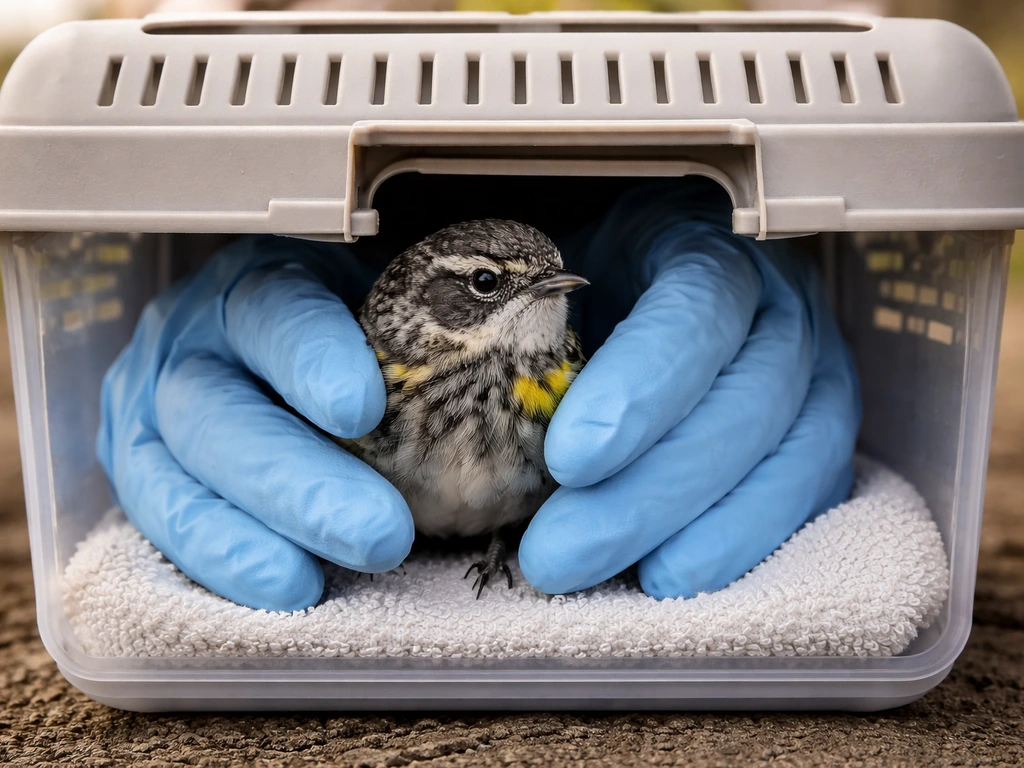
On the humane handling side, the rules are clear regardless of what you're legally allowed to do. The USFWS explicitly states that frightening a captured migratory bird is not humane and is not authorized under any service permit. When you retrieve a bird from a trap, move slowly and speak quietly. Cup the bird gently in both hands with the wings held against its body, and keep it in a dark, ventilated container if you need to hold it briefly.
Never leave a captured bird in a trap unattended in hot sun or cold temperatures. The minimum standard for trap checking, according to wildlife rehabilitation guidance, is twice daily (morning and evening), but honestly, with a simple backyard trap like this, you should be watching it the entire time it's set. The moment you can't watch it, close the trap.
If you accidentally catch a migratory bird that's injured or in distress, the right call is to contact a licensed wildlife rehabilitator. Tufts Wildlife Clinic also advises contacting a wildlife rehabilitator right away when you find sick or injured birds, and to handle transport carefully to reduce stress and other risks contact a licensed wildlife rehabilitator. In Massachusetts and most other states, rehabilitators must hold federal migratory bird rehabilitation permits to legally care for these birds, which means they're the qualified people to handle the situation. Your state wildlife agency's website will have a directory of licensed rehabilitators near you.
For anyone wanting to understand what separates genuinely good homemade trap designs from problematic ones before they commit to a build, the roundup at best bird trap homemade is worth reading first. It looks at several common DIY approaches and compares their humaneness, effectiveness, and legal standing side by side.
Maintenance, troubleshooting, and when to switch designs
A box trap is low-maintenance, but it's not zero-maintenance. After each use, clean out any leftover bait so it doesn't attract rodents or mold. If you're using a cardboard box, inspect the corners after every session since moisture and weight weaken them fast. A wooden crate version will outlast cardboard by months and is worth the small upgrade if you plan to use the trap more than once or twice.
The most common failure point is the prop stick slipping before you pull the string. This usually means the notch or contact point isn't secure enough, or the string angle is pulling the stick sideways instead of straight down. Fix it by cutting a small groove into the box edge where the stick contacts it, so the stick seats into the groove instead of resting on a flat surface. That small change makes the trigger much more stable and reliable.
Another common issue is birds eating the outside bait trail without ever going under the box. This usually means the box is too small, feels too dark or enclosed, or the bait pile inside isn't visible from the entrance. Try lifting the prop end a bit higher (5 to 6 inches instead of 4), and move some of the inside bait closer to the entrance so it's visible from outside. Birds won't walk into a space they can't see into.
If the box trap isn't producing results after several sessions in the same location, it's time to try a different design rather than keep repeating the same approach. A bottle trap works differently and can be more effective for very small birds like sparrows in tight spaces. If you haven't tried it yet, the article on how to make a bird trap out of a bottle is worth a look as your next option. It uses a plastic bottle with a funnel entrance, which works on a different principle than the drop-box and sometimes catches birds that have learned to avoid the box style.
Here's a quick comparison of the most common easy trap types so you can decide when to switch and what to switch to:
| Trap Type | Best For | Easiest Materials | Main Weakness |
|---|---|---|---|
| Box/crate drop trap | Small to medium birds, sparrows, doves, pigeons | Cardboard box or wooden crate, stick, string | Birds may avoid enclosed dark spaces |
| Stick-and-string (figure-four) | Ground-feeding birds, open yard settings | Sticks, natural cordage, flat bait surface | Trigger can be unstable in wind |
| Bottle funnel trap | Very small birds like sparrows and finches | Plastic bottle, scissors, bait | Small capacity, harder to retrieve bird |
| Rope/loop trap | Perching birds, birds using a specific landing spot | Cordage, anchor point, bait perch | Risk of injury if loop sized incorrectly |
My honest recommendation: start with the box trap because it's the safest for the bird, the easiest to trigger from a distance, and the easiest to open and release quickly. If it's not working after three or four real attempts with proper pre-baiting and good placement, try the bottle funnel trap next. And if you keep striking out, that's usually a sign that placement or bait choice needs more attention before the trap design does. Go back to watching where birds actually feed in your yard and reset from there.
Finally, always remember that the goal here is a quick, safe, humane interaction, not a prolonged capture. The faster you can check the trap, handle the bird, and complete the release or intended purpose, the better the outcome for the bird and the less legal and ethical risk you carry. Set the trap only when you're actively watching, check it constantly, and release any non-target bird immediately. That's really the whole philosophy in one sentence.
FAQ
Can I use an easy DIY bird trap to catch and keep a bird as a pet?
Yes, but only if you can confirm the bird is an allowed exception (such as a true escaped domestic bird) and you can meet every local and state requirement. If you cannot confidently identify the bird as non-migratory or domestic, treat it as protected and contact a licensed wildlife rehabilitator rather than trying to keep it or relocate it.
What ground conditions make a simple box trap fail, and how can I prevent that?
If you want the trap to drop quickly, avoid placing it on soft or uneven ground. Hard, level surfaces keep the prop contact point from shifting as the bird lands on or near the box, which reduces slip failures and reduces how long the bird struggles inside.
How long is it okay to leave a homemade trap set before checking it?
Do not leave the trap unattended, even for short periods. If you must step away, close the trap or remove it and re-set only when you can monitor continuously, because heat and cold can make stress and injury escalate quickly in a small enclosure.
What should I do if I catch an unknown bird species or one that looks unhealthy?
If you accidentally catch a bird you cannot safely identify, the safest move is to stop handling it and call a licensed wildlife rehabilitator. Incorrect handling, like trying to release it immediately from inside a container without calming it first, can injure the bird and may worsen stress.
How do I handle repeated non-target captures with an easy bird trap?
For non-target birds, the key is minimizing time in the trap and avoiding repeated re-baiting in the same spot. Remove the bait after a non-target capture, reset with fresh bait tailored to your target species, and consider changing placement to reduce the chance of repeated catches of different species.
My trap baited the area, but birds won’t enter under the box. What’s the most likely fix?
If you find that birds keep eating the bait trail but never enter, adjust two things at once: increase the visibility of the interior bait from the entrance, and raise the prop end slightly (within the range the article already recommends) so the drop height and entry path feel natural to the bird.
How can I tell whether my trap failure is from the trigger design versus a placement problem?
If the prop slips before you pull, secure the contact so it can only release when the trigger string is tensioned directly downward. A small groove or seat at the contact point helps, but also make sure the string is aligned so sideways force does not push the stick out of position.
Does pre-baiting increase the risk of attracting rodents, and how do I prevent that?
Pre-baiting can increase success, but you can accidentally attract rodents if bait is left too long. After each session, remove leftover seed and clean sticky debris so the area becomes less appealing to rats and mice, which can increase risk to any trapped bird.
How long can I realistically reuse a cardboard-box bird trap?
Cardboard works, but it degrades fast when it gets damp or heavily pecked. If there is any moisture from irrigation or weather, switch to a more durable material like a wooden crate version, and inspect corners and seams before every use.
What if I’m trapping an escaped pet or domestic bird, can I relocate it safely and legally?
Yes, and it matters legally and humanely. If your goal is to catch an escaped pet bird, relocation may still be restricted depending on where the bird is returned and who can legally possess it. When in doubt, contact local animal control or a wildlife rehabilitator before transporting any bird.
Next Articles
How to Build a Chimney Swift Bird House DIY Guide
Step-by-step DIY plans to build a chimney swift bird house, with correct dimensions, placement, and weatherproofing for
How to Build an Oriole Bird House: Step-by-Step DIY
Step-by-step DIY for building an oriole bird house with right dimensions, weatherproofing, predator-safe placement, and
How to Build a Chickadee Bird House Step by Step
Step-by-step DIY chickadee bird house with cut list, chickadee entry sizing, ventilation, drainage, and mounting tips.