Making your garden bird friendly comes down to four things: food, clean water, shelter, and safety. Get those four right and birds will find you fast. This guide walks you through every practical step, from choosing the right feeder to building your own nesting box, so you can start today with whatever time and budget you have.
How to Make a Garden Bird Friendly: DIY Steps and Care
Marcus Thornton
17 Apr 2026
What birds actually need from your garden
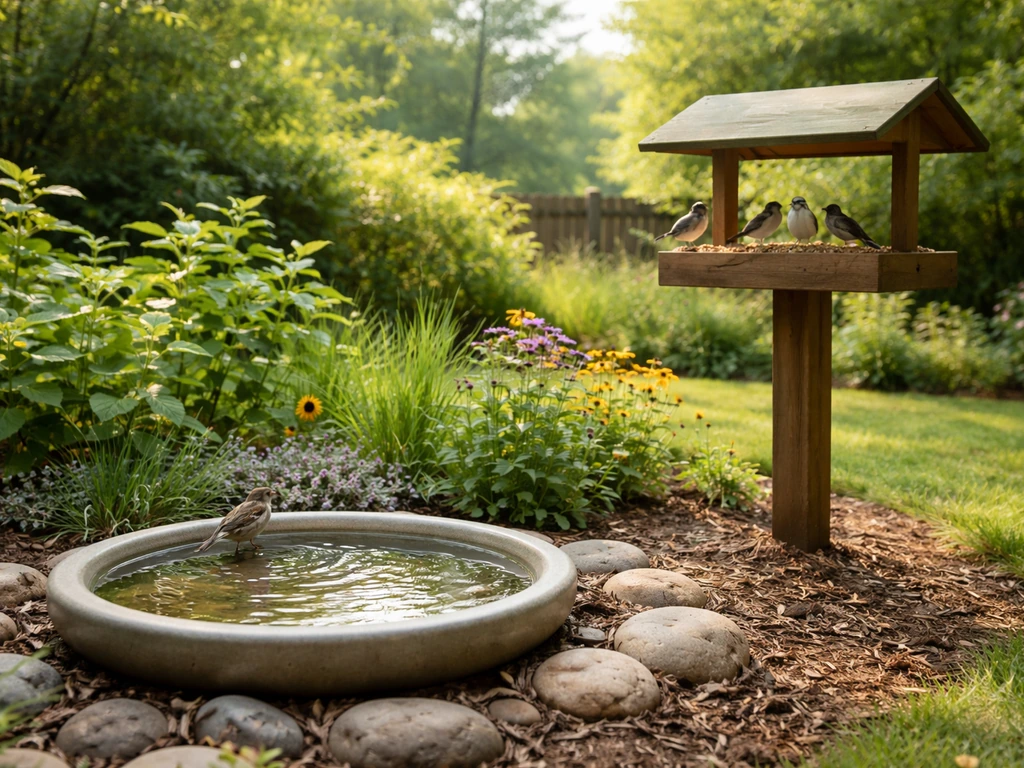
Before you spend a cent, it helps to think like a bird. Birds are scanning your yard for three things: somewhere safe to eat, somewhere to drink and bathe, and somewhere to shelter or raise chicks. If any one of those is missing or feels unsafe, they'll move on. The good news is that you don't need a huge garden or a big budget. A single well-placed feeder, a shallow dish of fresh water, and one or two dense shrubs can turn even a small urban backyard into a reliable stopover. Scale up from there as you go.
Native plants are the backbone of a truly bird-friendly space. They provide natural food (berries, seeds, insects) and cover that exotic ornamentals simply can't match. When you layer native ground cover, mid-height shrubs, and taller trees together, you create what ecologists call structural diversity, and birds love it. If you want to take this concept further and design the space as a genuine refuge rather than just a feeding station, take a look at how to make a bird sanctuary in your backyard for a deeper dive into habitat planning.
Food and water: the fastest wins
Choosing and placing feeders
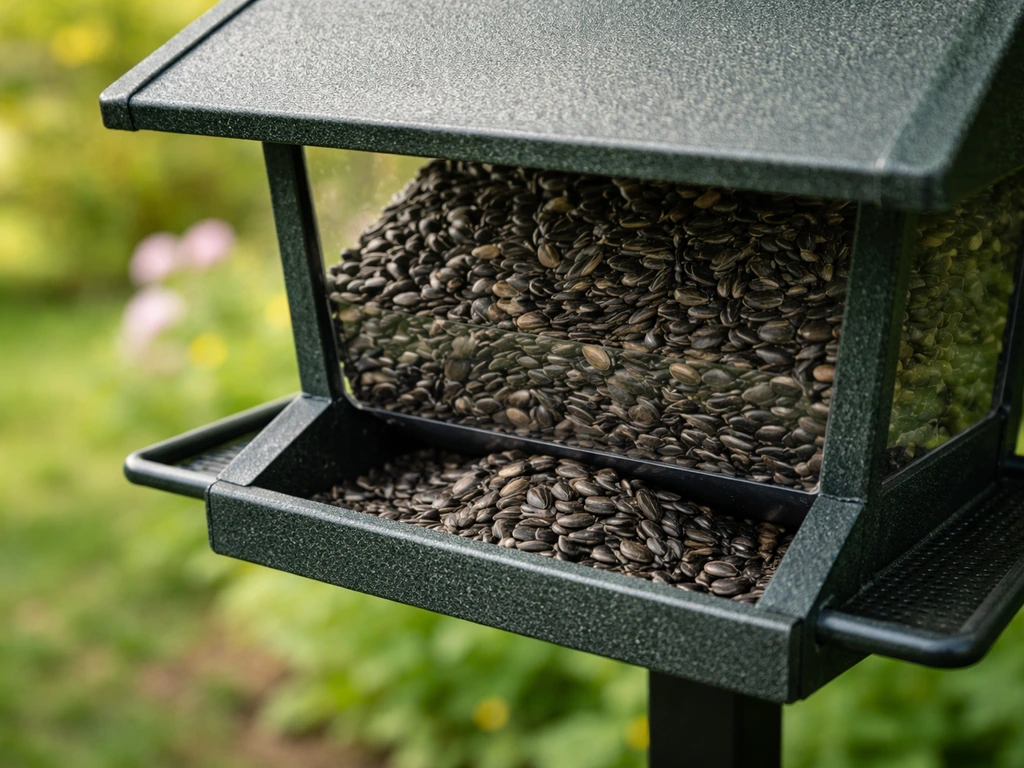
If you're only going to put out one feeder, fill it with black-oil sunflower seed. It really is the best all-around attractant you can buy, and it appeals to cardinals, chickadees, finches, nuthatches, and more. For a wider range of species, add a suet cage (woodpeckers and nuthatches go crazy for it, especially in winter) and a nyjer tube feeder for goldfinches. One important note on nyjer: feed it on its own, not mixed with other seeds, because birds will toss the filler seed onto the ground to get to the nyjer, which creates waste and can attract rodents.
Feeder style matters too. Hopper feeders protect seed from rain and keep it dry longer, which helps prevent the mold that can make birds sick. Tube feeders are also reasonably weather-resistant and work well for smaller species. Place feeders about 10 to 12 feet from low shrubs or a brush pile so birds have a nearby safe spot to retreat to when spooked, but keep the immediate feeding area clear so you can spot seed that's gone wet or moldy.
Speaking of which, clean your feeders every two weeks at minimum, and give them a proper scrub with a diluted chlorine solution whenever the seed looks clumped or the surfaces feel grimy. Dirty feeders spread disease quickly, and it's the most overlooked part of backyard bird feeding.
Native plants as a living pantry
Feeders are a great supplement, but native plants do the heavy lifting year-round. Berry-producing shrubs like native viburnums, elderberries, and serviceberries feed birds from late summer into winter. Seed-producing grasses and coneflowers feed sparrows and finches through autumn. Flowering natives attract insects, and insects are what most bird parents feed their nestlings, even species you'd normally think of as seed eaters. If you plant even a small cluster of natives, you're adding a food source that refreshes itself every season without any restocking on your part.
Clean, shallow water every day
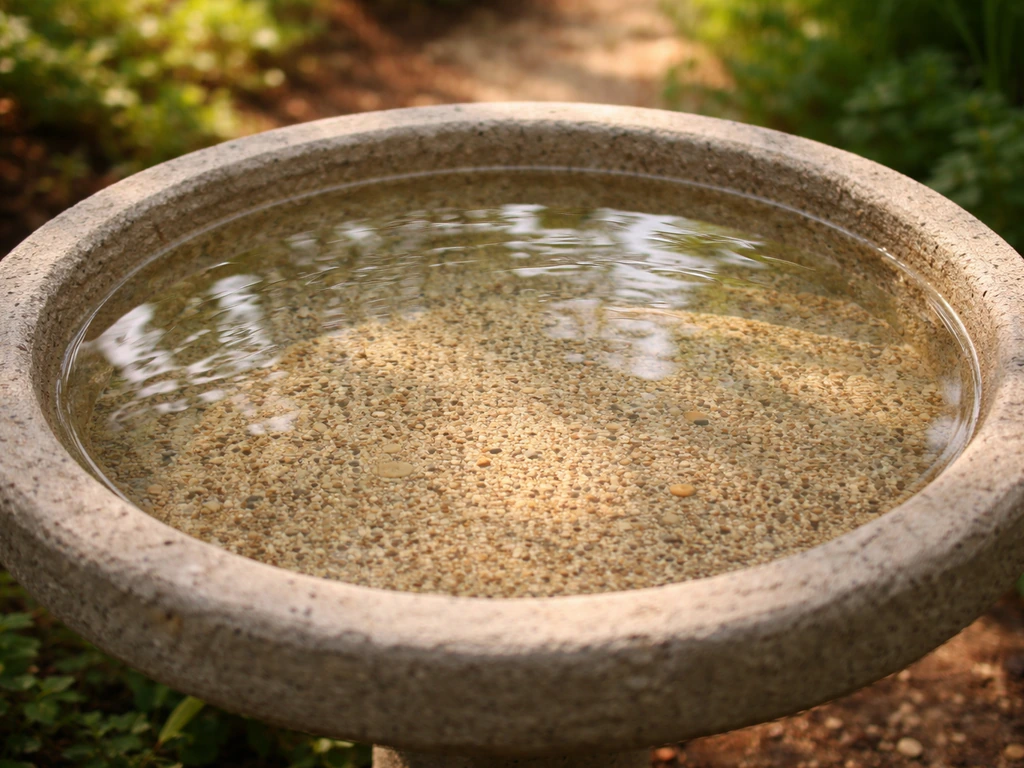
A birdbath is one of the highest-value additions you can make, and the rules for it are simple: keep it shallow and keep it clean. Aim for a depth of no more than 2 to 3 inches. That might sound almost too shallow, but it lets small birds stand comfortably and bathe safely without the risk of getting in over their heads. A large, flat rock placed in the center of a deeper bath works perfectly as a stepping stone.
Refresh the water two to three times a week at minimum, and scrub the basin weekly with fresh cool water to stop algae and bacteria from building up. If you're not sure where to start with providing water in a DIY way, the guide on how to make bird water features some practical homemade options.
Shelter and nesting habitat: where birds sleep and raise young
Trees, shrubs, and brush piles
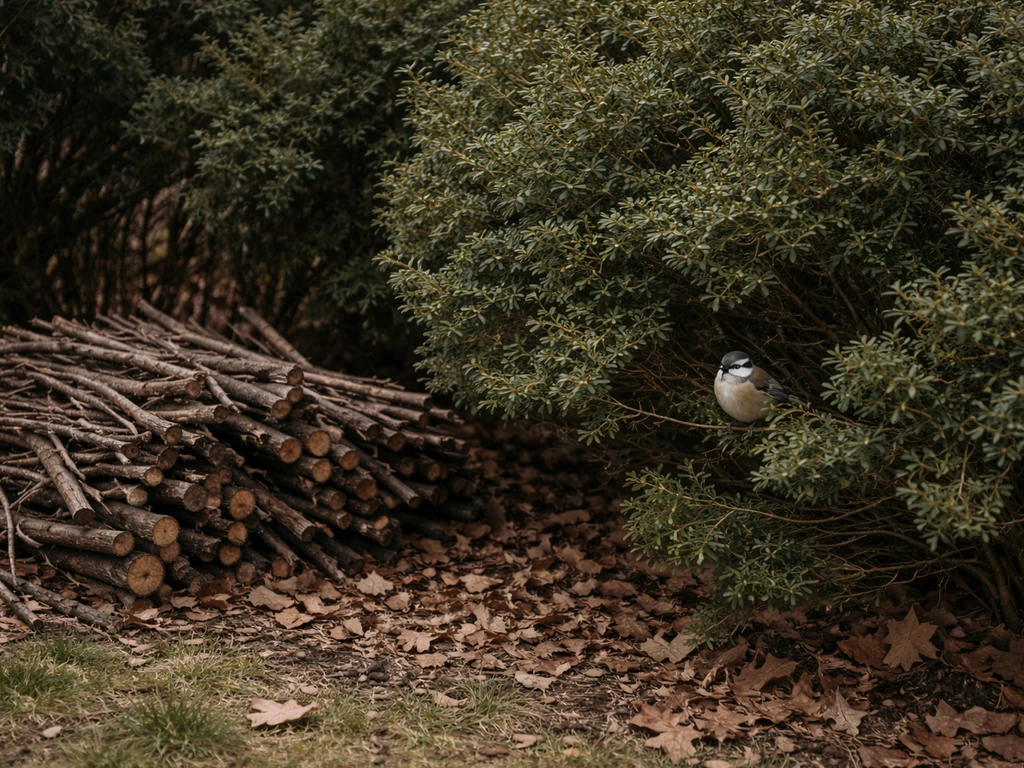
Dense evergreen shrubs are probably the single most underrated bird-friendly addition to a garden. They provide wind protection in winter and safe roosting spots year-round. Holly, juniper, and native conifers are all excellent choices. Brush piles, which are just loosely stacked branches and woody debris in a corner of the yard, create instant ground-level habitat for sparrows, towhees, and wrens. Don't tidy them away. Dead trees (often called snags), if they're not a safety risk to your property, are incredibly valuable. Woodpeckers excavate cavities in them, and those cavities get reused by a long list of other species for years afterward.
Nest boxes for cavity-nesting birds
If your garden doesn't have mature trees with natural cavities, a nest box fills that gap for species like bluebirds, chickadees, wrens, and swallows. The key details that most people get wrong are entrance hole diameter and mounting height. A 1. 5-inch entrance hole suits chickadees and house wrens, while bluebirds need a slightly larger 1.
5-inch opening (Eastern) or 1. 5625-inch opening (Western or Mountain). Mount boxes for bluebirds at roughly 4 to 6 feet off the ground in an open area facing a field or lawn. Wrens prefer slightly lower placement near shrubby cover.
Getting these dimensions right is the difference between a box that gets used every season and one that just sits empty. Predator guards are non-negotiable: a hardware-cloth tube or a conical baffle on the post keeps raccoons and snakes from raiding the box and killing the chicks inside.
Making your yard safer for birds
Window collisions
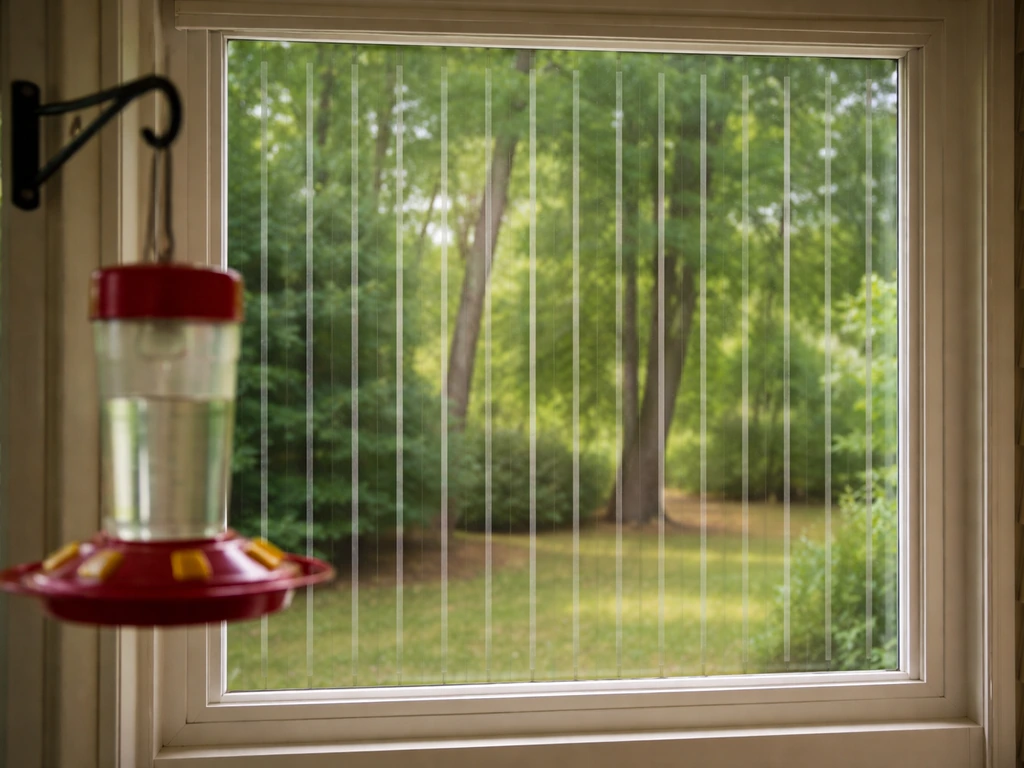
Window strikes kill a staggering number of birds every year, and the frustrating part is that most of them are completely preventable. The two best placement rules: keep feeders either within 3 feet of a window (so birds can't build up enough speed for a fatal impact) or more than 30 feet away.
That 3-foot zone sounds counterintuitive, but it works. For windows that can't be moved, apply visual markers on the outside of the glass. Decals, UV-reflective tape, closely spaced vertical cords, or frosted window film all break up the reflection that birds mistake for open sky. Even a bird that appears unharmed after a strike may have internal injuries that kill it hours later, so it's worth treating every window near your garden as a potential hazard and addressing it.
Cats
This is the one where I'll be direct: keeping cats indoors is the only truly effective way to protect birds from cat predation. The U. S. Geological Survey also warns that [cats allowed to roam freely can have serious impacts on bird populations and recommends keeping cats indoors](https://www.
usgs. gov/news/volcano-watch-does-your-cat-eat-birds) to protect birds. Outdoor cats, even well-fed ones, are instinctive hunters, and the toll they take on bird populations is enormous. If you have cats or neighbors do, a catio (an enclosed outdoor cat run) is the best compromise: the cats get fresh air and stimulation, and the birds get a fighting chance.
Raised feeders, thorny shrubs around feeder bases, and placing nest boxes away from fence lines all reduce (but don't eliminate) the risk. But the honest truth is that no amount of garden design fully compensates for a free-roaming cat.
Pesticides and lawn chemicals
Pesticides hit birds in two ways: directly (birds can ingest treated insects or seeds) and indirectly (by killing the insect populations that birds and their chicks depend on). The fix is straightforward but does require a mindset shift. Tolerate a little leaf damage. Embrace caterpillars. Let some areas of lawn go slightly wild. If you do need to treat a pest problem, use targeted, spot-based treatments rather than blanket spraying, and avoid systemic insecticides like neonicotinoids, which persist in plant tissue and affect the insects birds eat.
Garden layout ideas to attract specific birds
How you arrange your garden elements matters almost as much as what you include. Birds feel more confident feeding when they have clear sightlines to spot predators and a quick escape route to cover. Here's a layout approach that works well for most backyard sizes:
- Place feeders 10 to 12 feet from a dense shrub or brush pile so birds can move quickly between feeding and cover.
- Put your birdbath in a slightly more open area, maybe 6 to 10 feet from shrubs, so birds can see approaching threats while bathing.
- Position nest boxes on open-faced poles facing east or southeast (morning sun warms the box without overheating it in the afternoon), away from heavy foot traffic.
- Layer native plantings from low ground cover up through mid-height shrubs to canopy trees if space allows, creating habitat layers for different species.
- Keep a brush pile or log pile in a quieter corner of the garden for ground-feeding species and insects.
- If you have a fence line, plant native climbing plants or berry shrubs along it to create a living corridor birds can travel through safely.
For ground-feeding birds like juncos, doves, and sparrows, scatter millet or cracked corn directly on the ground or on a low tray feeder. For tree-clinging species like woodpeckers and creepers, suet cages or log feeders drilled with holes and packed with suet mix work brilliantly. Hummingbirds are almost entirely attracted by red tubular flowers (salvia, trumpet vine, bee balm) and nectar feeders, so a dedicated corner planted with those natives does more for hummingbirds than a feeder alone.
DIY projects to build a proper bird haven
This is where it gets fun. Once your garden basics are in place, building your own structures gives you total control over dimensions, materials, and placement, and it's genuinely satisfying to watch a bird move into a box you built yourself. Here are the projects I'd prioritize, roughly in order of complexity:
- Simple platform feeder: A flat piece of untreated cedar or pine with drainage holes drilled in the corners and a small lip around the edge to stop seed blowing off. Mount it on a post or hang it from a branch. An afternoon's work with a saw and drill.
- Suet log feeder: Drill 1.5-inch holes into a short log section, fill with homemade or commercial suet mix, and hang it vertically. Woodpeckers and nuthatches will find it within days.
- Basic nest box: Untreated pine or cedar, 3/4 inch thick, cut to species-specific dimensions. The entrance hole diameter is the critical measurement. A 1.5-inch hole for chickadees, slightly larger for bluebirds. Rough up the inside below the entrance hole so fledglings can grip when climbing out. Leave out a perch rod under the hole, which only helps predators.
- Predator guard baffle: A simple stovepipe baffle or cone of sheet metal mounted below a nest box on the pole. Takes about an hour to make from hardware store materials and dramatically improves nesting success.
- Brush pile shelter: Not a construction project but a deliberate build. Stack logs first, then add branches, then pack the gaps with smaller twigs and leaves. Think of it as a loose cabin structure, not just a heap.
If you want a structured starting point for your first nest box build, the guide on how to make a bird base covers foundational construction concepts that apply across multiple project types. For anyone building in a region with harsh winters, pairing your nest boxes with a proper roosting structure makes a real difference to survival rates. The detailed walkthrough on how to build a winter bird shelter is worth reading before the cold season hits.
Materials and tools to keep on hand
You don't need a fully equipped workshop for any of these projects. A jigsaw or hand saw, a power drill with a set of spade bits (for entrance holes), exterior-grade screws, and sandpaper cover 90% of what you'll need. Cedar and untreated pine are the go-to materials for nest boxes and feeders because they hold up outdoors without needing paint or stain. Avoid pressure-treated lumber inside any structure birds enter, since the chemical preservatives can harm eggs and chicks. Repurposed wood from old pallets or fence boards works well as long as it was never treated with preservatives.
Comparing common feeder types
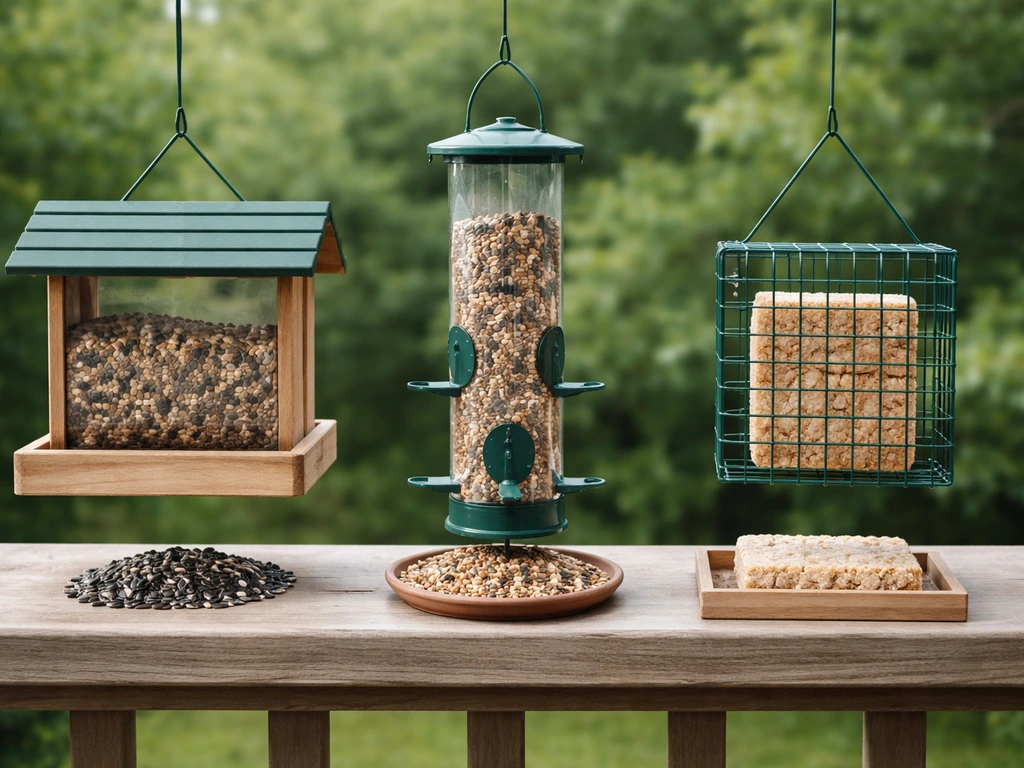
| Feeder Type | Best Seed/Food | Target Species | Weather Resistance | Cleaning Ease |
|---|---|---|---|---|
| Hopper feeder | Black-oil sunflower, mixed seed | Cardinals, chickadees, jays, finches | Good (covered seed hopper) | Moderate (remove seed, scrub, rinse) |
| Tube feeder | Sunflower, nyjer (separate) | Finches, chickadees, nuthatches | Good (narrow openings) | Easy (twist apart, brush inside) |
| Suet cage | Suet cakes or homemade suet mix | Woodpeckers, nuthatches, creepers | Fair (expose suet to elements) | Very easy (open cage, rinse) |
| Platform/tray feeder | Millet, cracked corn, mixed seed | Sparrows, juncos, doves, towhees | Poor (open to rain) | Easy but frequent needed |
| Nyjer sock/tube | Nyjer (thistle) seed only | Goldfinches, siskins, redpolls | Fair (sock absorbs moisture) | Easy (replace sock or rinse tube) |
Ongoing care: what to do after setup
Cleaning schedule
The setup is the exciting part, but the ongoing care is what keeps your garden genuinely healthy for birds. For feeders, commit to a clean every two weeks: empty out any remaining seed, scrub all surfaces with a 10% chlorine bleach solution (1 part bleach to 9 parts water), rinse thoroughly, and let the feeder dry completely before refilling. Never refill a wet feeder because wet seed grows mold fast, and moldy seed can kill birds. Do a more thorough deep clean whenever seed looks clumped, the feeder smells off, or you notice birds avoiding it.
Seasonal timing
Spring is the most important season to get right. Clean out nest boxes in late winter before birds start scouting for sites, usually by late February or early March depending on your region. Remove old nesting material, scrub the interior, and check for damage. Don't start supplemental feeding for the first time in spring and then stop suddenly in early summer: birds that have come to rely on your feeders can struggle if you remove the food source during the nesting period when they're burning extra energy. If you want to reduce summer feeding, taper off gradually rather than stopping cold.
Monitoring and adjusting
Keep a basic log of what species visit and when. It takes five minutes with your phone and it quickly tells you whether your setup is working. If you're only seeing house sparrows and starlings, you may need to switch seed types or adjust feeder height and placement. If nest boxes aren't being used after two seasons, try moving them or adjusting the entrance hole diameter for a different target species.
The garden is an ongoing project, not a one-time installation, and small tweaks often make a big difference. Most importantly, enjoy it. Watching a bird investigate a feeder you built, or carry nesting material into a box you hung yourself, is one of the more quietly satisfying things you can do in an afternoon.
FAQ
How do I tell when feeder seed is bad and needs to be thrown out?
Most birds avoid greasy, moldy, or stale food. If you see clumping, a sour smell, or a dusty surface on seed, dump it and clean the feeder first, then refill. For sunflower seed, you can usually keep feeding if it stays dry and the feeder is scrubbed on schedule, but discard any visibly wet seed, even if it was only damp overnight.
Will a birdbath work in summer heat, and how often should I clean it?
Yes, but treat it like a wildlife safety issue. Offer water in a way that is hard to fall into, keep it shallow, and change it frequently. In hot weather, algae and bacteria build faster, so plan to refresh more than the usual 2 to 3 times per week, and scrub any basin that gets slick or green.
Can I place a feeder next to a deck railing or near a structure, and what placement mistakes should I avoid?
Avoid putting perches or open platforms directly above the feeder, since they can create ambush spots for cats and some predators. Instead, keep a clear retreat path to cover, and use placement rules that reduce surprise from above, for example positioning feeders so birds can drop into shrubs immediately when spooked.
What feeder mistakes stop the right birds from coming, especially with nyjer or mixed seed?
Use a simple species-based approach. Start with black-oil sunflower for generalists, add suet for woodpeckers and nuthatches, and use nyjer only for goldfinches because it attracts lots of waste seed and can bring rodents if mixed. If you want finches, keep nyjer feeders separate and keep the ground under the feeder clean.
Why might birds stop using a feeder even though I keep it stocked and clean?
Birds can be lured away from feeders if there are too many unsafe hiding places nearby. Remove dense cover right at the feeding station, while still keeping some nearby refuge 10 to 12 feet away. Also avoid planting thick, low cover immediately under feeders, since it can become a predator staging area.
Do weatherproof feeders eliminate the need for cleaning?
It can help, but only if the design truly keeps seed dry. Hopper feeders with good drainage are a good start, and you still need cleaning, because rain and condensation can create mold inside even weather-resistant feeders. If your area gets heavy storms, check your feeder more frequently than the every-two-weeks minimum.
When should I clean nest boxes if I want to avoid disrupting nesting birds?
Yes, spring timing matters for both disease control and nesting success. Empty and scrub boxes late winter before birds begin scouting, then leave them alone during active nesting. If you notice a problem mid-season, such as heavy parasites, switch to targeted cleanup only, avoiding repeated disturbance that can trigger nest abandonment.
What should I adjust first if my nest box is still empty after one season?
If you install a box that is not being used, the most common issue is the entrance hole size, mounting height, or placement relative to cover. For a quick adjustment, verify the target species opening size and move the box closer to the type of cover that species prefers (more open for some bluebirds, closer to shrubs for wrens). Avoid frequent moving once you find a good spot.
How do I know my nest box predator guard is actually doing its job?
Yes, especially in regions with raccoons or snakes. Predator guards work best when installed correctly, a baffle needs to be sized so it blocks access to the post, and a hardware-cloth tube needs to fully prevent climbing. Even with guards, place boxes away from easy climbing routes like fences and nearby branches.
Can I stop feeding in summer, and what’s the best way to reduce it without harming birds?
Tapering feeding is safest because birds can become reliant during nesting. If you want to stop supplemental food in early summer, reduce gradually over a few weeks rather than abruptly. Keep water available if possible, since water is less likely to cause the same dependency issues as seed.
What should I do during heat waves, heavy rain, or storms when birds are using my feeders?
Offer fewer, cleaner choices during heat waves and storms. Keep feeders in good condition, remove any visibly wet or moldy seed, and prioritize water and native plant habitat. If you get extreme weather, birds may pause visiting, so try not to panic-fill feeders without checking cleanliness first.
What information should I track in my bird-watching log to improve my setup?
Yes. A simple log can help you spot patterns, but also record changes in weather and your own actions. If you notice a sudden drop in visits after changing seed type or moving a feeder, that usually indicates the birds were responding to the change rather than a sudden habitat issue.
Is it better to clean up a yard completely to protect birds, or can I leave habitat items like brush piles?
Don’t over-sanitize your yard. The goal is to prevent disease from feeders and water sources, not to remove all natural habitat. For example, you can leave brush piles and snags if they are safe, while still cleaning feeders regularly and removing only wet or moldy seed.
Next Articles
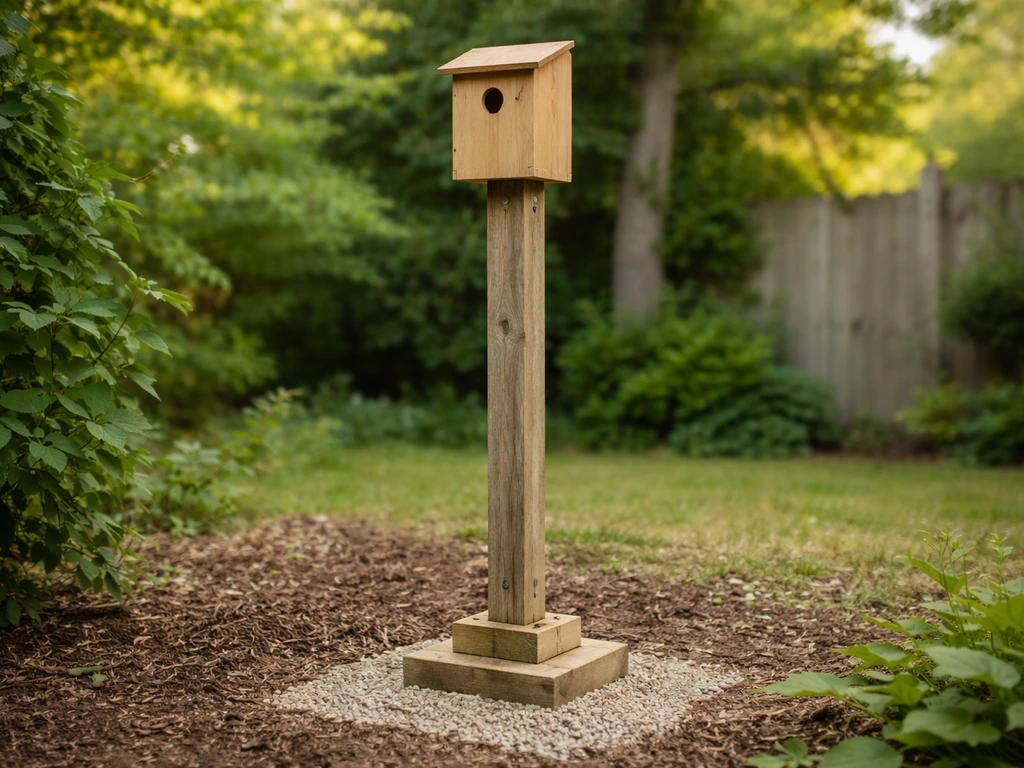
How to Make a Bird Base: DIY Stand for Birdhouses
Step-by-step DIY guide to build a sturdy birdhouse base stand, choose materials, weatherproof safely, and place it corre
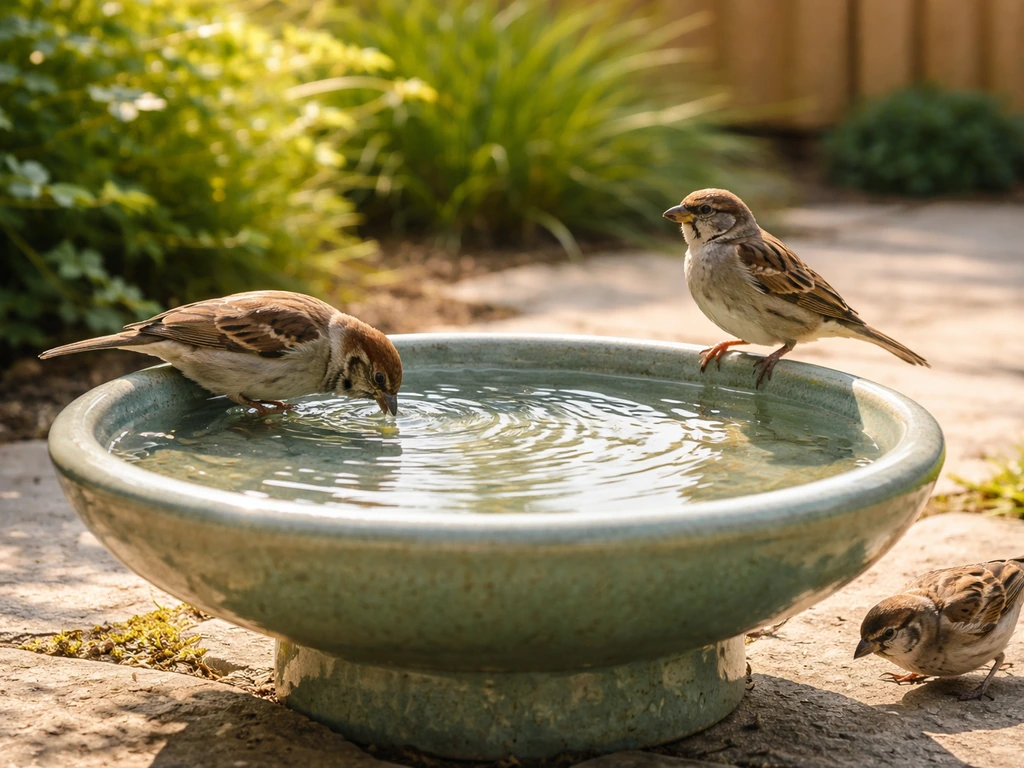
How to Make Bird Water and Get Birds to Drink Fast
DIY steps to make bird water and get birds drinking fast with safe setup, placement, and troubleshooting fixes.
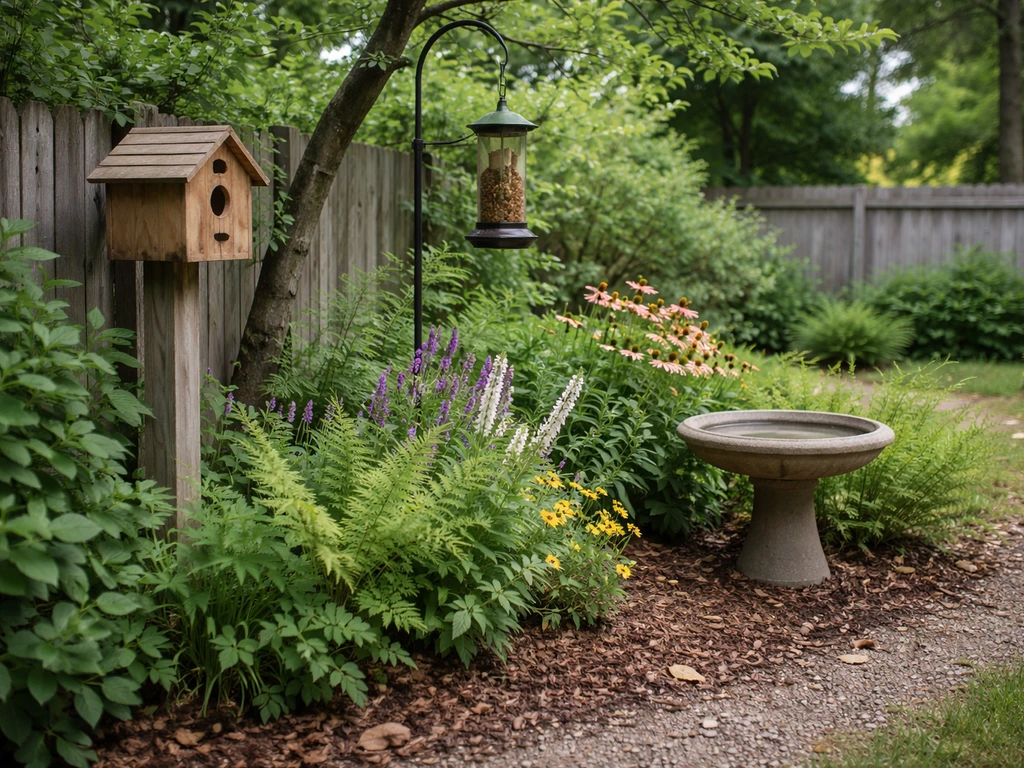
How to Make a Bird Sanctuary in Your Backyard
Step-by-step DIY plan to create a backyard bird sanctuary with feeders, baths, nesting boxes, native plants, safety, and