Making your home bird friendly comes down to four things done well: reliable food, clean water, safe shelter, and nesting sites that match the birds actually living near you. Layer those basics with a few DIY builds (a feeder, a nesting box, a simple shelter) and a handful of safety fixes (window treatments, predator guards, chemical-free zones), and you will genuinely transform your yard into a place local birds return to every season. The projects here are real builds you can start this weekend, most with basic tools and materials you probably already have.
How to Make Your Home Bird Friendly with DIY Steps
Marcus Thornton
29 May 2026
Start with the basics: food, water, shelter, and nesting

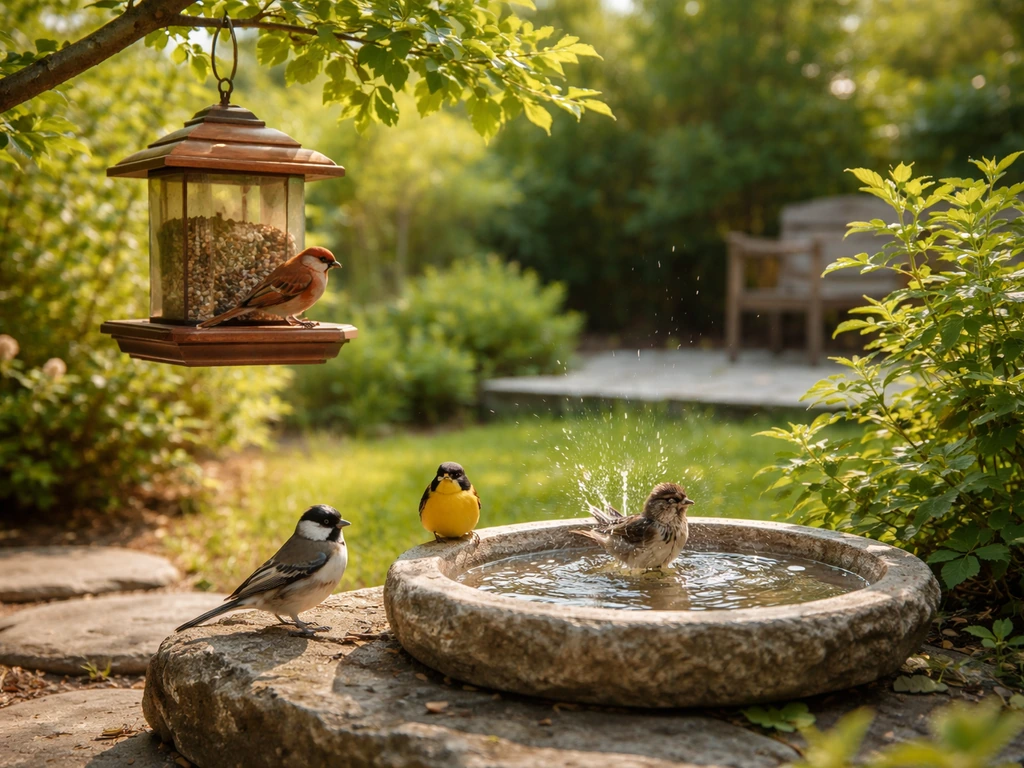
Before you build anything, it helps to think like a bird scouting a new territory. They need food they can find reliably, water they can drink and bathe in safely, cover they can retreat into, and somewhere to raise young. If your yard checks all four boxes, birds will stay. If it only checks one or two, they will visit and move on.
Food: native plants first, feeders second
The single best food source you can add is native plants. Native shrubs, seed-bearing grasses, and berry producers feed birds all year without any maintenance from you. Sunflowers, coneflowers, and native serviceberry are a good starting point almost anywhere in North America. Feeders supplement that natural food supply and let you attract specific species, but they should not be your only strategy. Spread your feeders out across different parts of the yard rather than clustering them. Audubon specifically recommends this because concentrated feeding creates disease pressure and drives competition that stresses smaller birds.
Water: keep it shallow, keep it moving
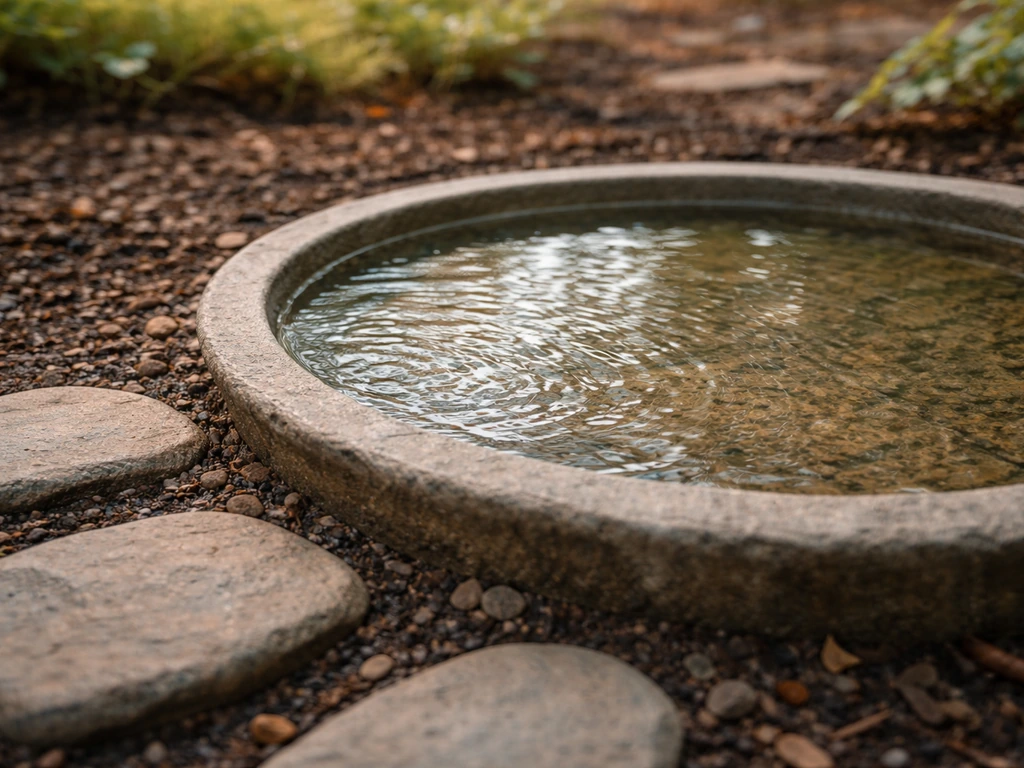
A shallow bird bath is one of the easiest wins in your whole setup. The sweet spot for depth is about half an inch to one inch at the shallow edge, stepping down to roughly one and a half to two inches toward the center. That range lets small songbirds stand and bathe without feeling out of their depth (literally). A drip line or small solar fountain adds movement, which birds notice from a distance. Like feeders, multiple smaller water sources scattered around the yard beat one big central bath. Clean and refill at minimum once a week by scrubbing with a stiff brush to prevent algae and bacteria buildup.
Shelter and nesting sites
Dense shrubs, brush piles, and standing dead tree trunks (snags) provide the kind of cover birds use year-round. If you have a dead or dying tree that is not a safety hazard, leaving it standing is one of the most bird-friendly decisions you can make. Cavity-nesting species like chickadees, nuthatches, and bluebirds rely on natural cavities in snags. If you do not have snags, built nesting boxes do the same job, and building them yourself is one of the most satisfying projects on this site.
DIY bird-safe upgrades around the home
A yard full of feeders and birdhouses means nothing if birds are getting hurt near your windows, eating poisoned food sources, or getting ambushed by predators. These safety fixes are not glamorous builds, but they matter more than any feeder you will ever hang.
Fixing window strike hazards
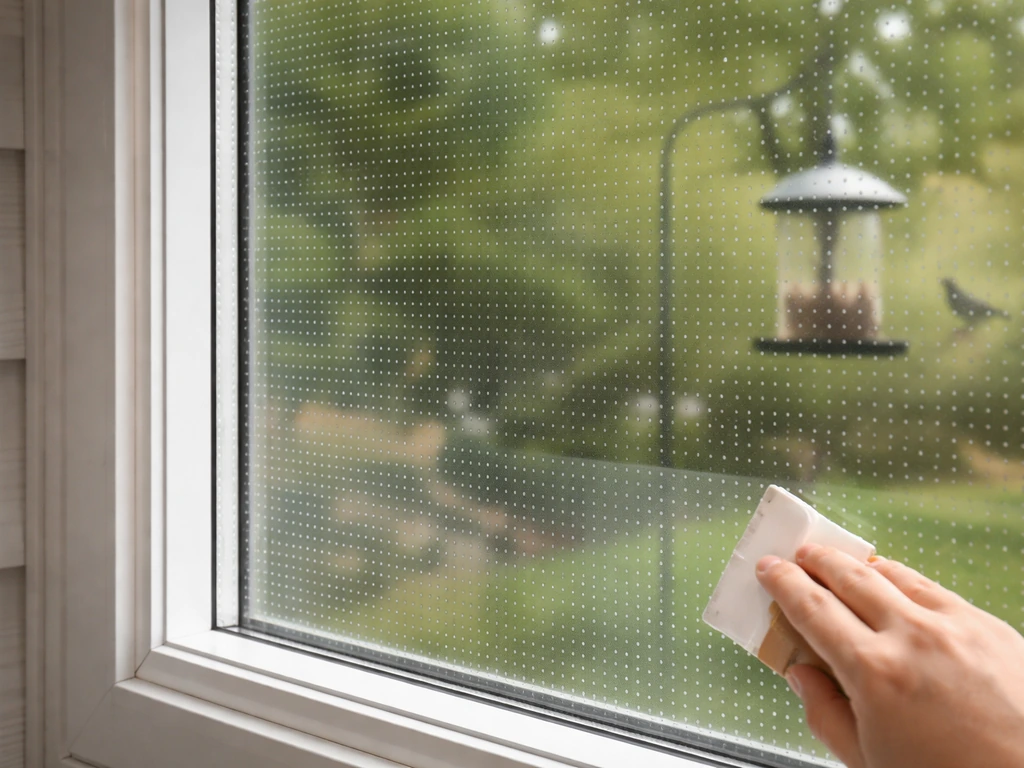
Window strikes kill enormous numbers of birds every year, and the frustrating part is that most standard window decals do not work because people use too few of them. A single hawk silhouette sticker in the center of a large window does almost nothing. The research is clear: deterrent patterns need to be dense, with markers no more than 2 to 4 inches apart across the entire glass surface. For hummingbirds, that spacing tightens even further to a 2 by 2 inch grid because of how they perceive openings.
Your DIY options here are genuinely good. Exterior window film with a dot or stripe pattern cut to the right spacing is effective and inexpensive. You can also hang exterior netting stretched taut about 3 inches or more away from the glass. Birds hit the net instead of the glass and bounce off safely. For windows directly facing feeders, consider repositioning the feeder to within 3 feet of the glass (so a strike happens at low speed) or more than 30 feet away (so the flight path does not aim at the window at all).
Chemicals to avoid in a bird-friendly yard
Two chemical categories do serious damage to backyard bird populations. First, avoid CCA-treated lumber for any bird structure you build. Chromated copper arsenate leaches arsenic and chromium into surrounding material over time, and you absolutely do not want that in a birdhouse, feeder, or perch. Use untreated cedar, pine, or Douglas fir instead.
Second, be very careful with rodenticides. Anticoagulant rat baits do not just kill rodents. Raptors and other wildlife that eat poisoned prey are exposed to the same toxin. If you have a rodent problem near feeders (spilled seed is a common cause), the better fix is reducing seed waste and storing seed in sealed containers, not putting out bait.
Neonicotinoid pesticides are another concern worth knowing about. Studies have found genotoxic, behavioral, and reproductive effects in birds exposed to treated seeds or sprayed plants, so keeping your yard pesticide-free or using targeted, bird-safe alternatives protects the animals you are trying to attract.
Predator management
Cats are the most straightforward predator risk to manage: keep them indoors, especially when feeders are active. If you have outdoor cats or neighborhood cats coming through, feeder placement becomes critical. Position feeders with clear sightlines so birds can spot a stalking cat before it gets close, and avoid putting feeders directly against dense ground-level cover where a cat could hide. A metal baffle mounted below the feeder pole stops most climbing predators including squirrels and raccoons. Cone-shaped baffles work well on single poles, and you can make a simple version from a large metal mixing bowl or sheet metal cut and shaped into a cone.
Choose and build bird housing
This is where the DIY side of a bird-friendly yard gets really satisfying. A well-built nesting box does everything a natural cavity does, and you can tune it for the species you actually want to attract. The key insight that most people miss is that dimensions matter. Each species has its own preferred cavity size, entrance hole diameter, and mounting height. A one-size-fits-all birdhouse often ends up being used by house sparrows, which compete aggressively with native cavity nesters.
Species-specific dimensions: what actually matters
The entrance hole diameter is the single most important dimension because it controls which species can enter. A 1 1/8 inch hole is right for house wrens. A 1 1/2 inch hole fits black-capped chickadees and Carolina chickadees. Eastern bluebirds need a 1 1/2 inch hole too, but a larger interior floor space (around 4 by 4 inches versus the wren's smaller box).
Tree swallows use a 1 1/2 inch hole as well, while larger birds like wood ducks need a dramatically bigger opening. Interior height matters too: the entrance should sit roughly 6 to 8 inches above the floor so nestlings cannot fall out prematurely. Mounting height varies by species, with most small songbird boxes going up between 5 and 10 feet, though some species like bluebirds do best on posts in open fields at around 5 to 6 feet.
| Species | Entrance Hole Diameter | Floor Size (approx.) | Mounting Height |
|---|---|---|---|
| House Wren | 1 1/8 inch | 4 x 4 inches | 5–10 feet |
| Black-capped / Carolina Chickadee | 1 1/8–1 1/4 inch | 4 x 4 inches | 5–15 feet |
| Eastern Bluebird | 1 1/2 inch | 4 x 4 to 5 x 5 inches | 5–6 feet on post |
| Tree Swallow | 1 1/2 inch | 5 x 5 inches | 5–10 feet |
| Downy Woodpecker | 1 1/4 inch | 4 x 4 inches | 8–20 feet |
Building tips for a solid nesting box
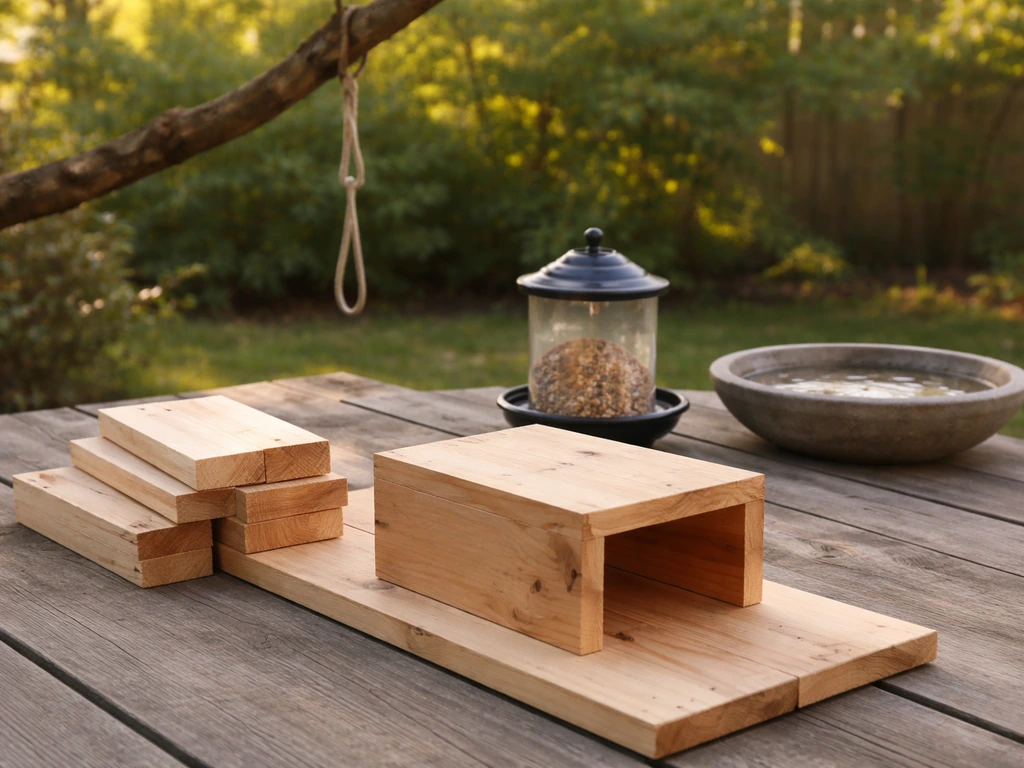
Use untreated cedar or pine at least 3/4 inch thick. Thinner wood overheats in summer and rots faster in rain. Rough up the inside of the front panel below the entrance hole with a chisel or coarse sandpaper so nestlings can grip it when they are ready to fledge. Drill four small drainage holes in the floor corners and a few ventilation holes near the top of the side panels.
Do not add a perch below the entrance hole. Perches are unnecessary for cavity nesters and actually help predators get a foothold. Make one side panel or the roof hinged for easy cleaning. Paint or stain the exterior only (never the interior), and use natural earth tones that blend with the environment rather than bright colors that attract attention.
Placement matters almost as much as dimensions. Face the entrance hole away from prevailing wind and rain, typically toward the east or southeast in most of North America. Mount boxes on smooth metal poles rather than trees where possible, and add a predator baffle below the pole. Space multiple boxes at least 25 to 50 feet apart for most small species to reduce territorial conflict.
Build feeders and feeding systems
Building your own feeder is one of the easiest entry-point projects on this site, and it lets you tailor the design for the birds you want. Different species feed differently, so the feeder style genuinely changes who shows up.
Which feeder type for which birds
- Tube feeders with small ports suit finches, chickadees, and nuthatches. Fill them with black-oil sunflower seeds or nyjer (thistle) for goldfinches.
- Hopper or platform feeders attract a wider variety including cardinals, jays, and mourning doves. Easy to build from scrap lumber with a simple roof overhang to keep seed dry.
- Suet cage feeders are dead-simple to build and attract woodpeckers, nuthatches, and creepers. A basic wire mesh cage nailed to a wood backing is all you need.
- Ground feeders (a flat tray or shallow platform on a low mount) attract thrushes, towhees, and sparrows that prefer feeding low.
- Hummingbird feeders need smooth surfaces that are easy to clean thoroughly because nectar ferments fast, especially in warm weather.
Placement and cleaning
Place feeders near cover like shrubs or small trees so birds have somewhere to retreat quickly, but keep enough open space around the feeder that birds can see predators approaching. Spreading feeders across different areas of the yard rather than bunching them together reduces disease transmission and competition. For cleaning, scrub feeders with a 9-to-1 water-to-bleach solution, rinse thoroughly, and let them air dry completely before refilling. Hummingbird feeders need cleaning every 3 to 5 days in warm weather. Standard seed feeders need a scrub at least once every two weeks, more often if you notice wet or clumped seed at the bottom. Empty and clean birdbaths at least once a week.
Add enrichment and bird toy projects
Wild birds do not need toys the way pet birds do, but they absolutely respond to enrichment built into their environment. The goal is supporting natural behaviors: foraging, bathing, perching, preening, and territory display. The projects that work best are ones that create opportunities for those behaviors rather than trying to entertain birds on human terms.
Foraging and natural behavior projects
- Log feeders: drill 1-inch diameter holes about 1 inch deep into a hanging log and pack them with suet or peanut butter mixed with cornmeal. Woodpeckers and nuthatches will work the log the same way they work a real tree.
- Brush pile shelter: stack branches, logs, and garden debris in a corner of the yard to create cover that wrens, sparrows, and thrushes use for foraging through leaf litter.
- Dust bath area: a shallow tray or low-edged garden bed filled with fine dry soil or sand gives birds a place to dust-bathe, which helps control parasites naturally.
- Berry-bearing native shrubs: planting native elderberry, viburnum, or dogwood creates a seasonal foraging station that requires zero maintenance from you after establishment.
- Moving water features: a drip tube hung over a birdbath or a small recirculating pump creates the sound and movement that attracts birds that ignore still water.
If you want to go further with habitat projects, building a dedicated wild bird shelter or a small pond adds significant enrichment value. To get started with a bird sanctuary model, plan your layout around the same habitat essentials: food sources, clean water, safe shelter, and nesting spots habitat projects. If you want to go beyond feeders and nesting boxes, follow a simple plan to make a wild bird shelter that fits your yard and local species.
A pond does not need to be large: even a shallow, planted container pond provides drinking water, bathing access, and insects that birds hunt near the water surface. These bigger habitat builds are worth planning as a next step once your feeders and nesting boxes are in place.
If you mean pet birds too: making your bird's space safer and more engaging
If you searched for how to make your bird friendly and you are thinking about a pet parrot, canary, or other captive bird, the same DIY mindset applies. The goal is creating an environment that supports natural behaviors and reduces stress, because a bird that feels safe is a bird that becomes genuinely interactive and trusting.
Safety fixes for pet bird spaces
- Avoid non-stick (PTFE) cookware near bird spaces. Overheated non-stick coatings release fumes that are toxic to birds at very low concentrations.
- Remove or cover standing water hazards like open toilet bowls, full sinks, and vases.
- Check all perches, toys, and cage accessories for sharp edges, loose wire, or zinc and lead hardware, all of which are toxic if chewed.
- Avoid scented candles, aerosol sprays, and air fresheners in rooms where birds spend time.
- Use untreated natural wood for any DIY perches or play stands. Safe wood options include apple, willow, birch, and manzanita.
DIY enrichment for pet birds
Foraging toys are the single best enrichment category for most pet birds because foraging is what they spend most of their waking hours doing in the wild. The simplest version: wrap a small amount of food in a piece of paper or tuck it into a paper cup.
More involved builds include wooden puzzle boxes with sliding doors or removable pegs, natural rope and branch tangles hung from a play stand, and shreddable toys made from untreated palm leaves, cork, or soft wood blocks. Rotate enrichment items regularly so the novelty does not wear off. A play stand built from natural branches and wooden dowels gives birds outside-the-cage time, which dramatically improves their wellbeing and makes them more comfortable being handled.
Maintenance and seasonal plan
The difference between a yard that birds visit once and a yard they call home is consistent maintenance. None of these tasks are heavy, but they need to happen on a schedule. Here is how to break it down by season.
Seasonal maintenance calendar
| Season | Task |
|---|---|
| Late winter / early spring | Clean and inspect all nesting boxes before breeding season begins. Replace any damaged wood. Put up new boxes by late February to early March for early nesters. |
| Spring | Begin regular feeder cleaning every two weeks. Start hummingbird feeders when first arrivals appear in your area. Refresh birdbath water weekly and check drip systems. |
| Summer | Clean hummingbird feeders every 3–5 days in hot weather. Monitor nesting boxes from a distance (do not open during active nesting). Refill water sources more frequently in heat. |
| Fall | After fledging season ends, clean out nesting boxes thoroughly with a brush and mild bleach solution, rinse and dry. Leave boxes up through winter for roosting. |
| Winter | Keep feeders stocked, especially suet and high-fat seeds. Break ice in birdbaths or use a small birdbath heater. Check structures after storms for damage. |
Cleaning nesting boxes the right way
Wait until you are confident the last brood of the season has fledged, generally September or later depending on your region, before cleaning out nesting boxes. Remove all old nesting material (wearing gloves, as old nests can carry mites and lice), scrub the interior with a stiff brush, and rinse with a dilute bleach solution. Let it dry completely in the open air before closing it back up. Leaving cleaned boxes up over winter gives birds a roosting spot on cold nights, which is genuinely valuable habitat you are already providing.
Your starting checklist
If you are starting from scratch today, here is the order I would tackle things. Get a birdbath and a basic seed feeder up first because the return is immediate and it costs almost nothing. Then pick one nesting box project matched to a species you have seen in your area and build it before spring.
If you want the full guide, start with a simple plan for how to make a bird habitat that matches local species and seasons. While you are working on that, handle the window safety fix on your biggest picture window using dense decal or film patterns. From there, every other project you add, from a log suet feeder to a brush pile shelter to a full pond build, layers onto a foundation that is already working.
If you are ready to go beyond a simple birdbath, learn how to make a bird pond that stays shallow, clean, and safe for the species you want to attract a full pond build.
- Set up a shallow birdbath and refill/scrub it weekly.
- Hang at least one feeder with black-oil sunflower seed near cover.
- Apply dense window deterrent patterns (2–4 inches apart) on large glass panels facing feeders or open sky.
- Build or buy one species-matched nesting box and mount it before breeding season.
- Add a predator baffle to your feeder pole.
- Remove or avoid CCA-treated wood, rodenticides, and neonicotinoid pesticides from your yard.
- Build a log suet feeder or brush pile as your first enrichment project.
- Clean feeders on a schedule: seed feeders every two weeks, hummingbird feeders every 3–5 days in warm weather.
- Clean out nesting boxes each fall after the last brood fledges.
- Add native plants and water features as long-term habitat investments.
FAQ
What if I cannot clean the birdbath every week, will birds still use my yard?
A good rule is to choose the birdbath you can maintain. If you cannot scrub and refill weekly, focus on planting natives first and use water movement from a small, easily cleaned drip line instead. Stagnant, dirty water becomes a disease and algae problem, which can repel birds even when the rest of your yard is great.
Can I attract a specific bird species, or do I just get whatever shows up?
Yes, but only if the plants and feeder styles are aligned. To attract a specific species, install the right feeder type (for example, suet for insect-eaters, tube feeders for finches) and pair it with a matching native plant that provides their preferred food. Also avoid putting all feeders right next to each other, because high density feeding increases competition and stress for smaller birds.
Why do window stickers sometimes not work, even when they look like there are a lot of them?
Window decals and standard stickers fail when they are too sparse. The practical fix is to cover the bird’s likely flight path across the full window using a dense dot or stripe pattern, or use exterior netting placed several inches away from the glass. If you only treat one small area, birds can still fly through the untreated zones.
Should I add a perch under a nesting box to make it easier for birds?
Avoid perches under entrance holes if you are trying to attract native cavity nesters. A perch can help predators by giving them a stable launch point and foothold. If you need an observation style feature, place it away from the box and do not add “landing ledges” directly below the entrance.
What direction should I face a nesting box, and does it matter in rainy climates?
It depends on the location and the species you are targeting. Many small songbird and cavity boxes do best with the entrance facing away from prevailing storm winds and rain, commonly toward the east or southeast in much of North America. If you get heavy afternoon storms, test placement before committing, because orientation affects how fast the interior dries after rain.
How can I reduce predator risk if I have cats and also want to keep my yard habitat natural?
If you must remove a problematic animal, do it in a way that does not reduce habitat you are providing. For cats, the most effective strategy is indoor confinement or restricting outdoor access with a supervised schedule. For other predators, use the right baffles on feeder poles and ensure feeders are positioned with open sightlines, so birds can detect stalkers early.
What should I do about rats or mice under feeders without harming birds?
Rodents and birds often use the same food sources, so controlling seed waste is the safest first move. Use sealed seed storage, clean up spills under feeders, and consider feeder designs with trays or guards that reduce access to fallen seed. Then, if there is still a serious rodent issue, choose non-poison control methods rather than bait near feeding areas.
How often should I maintain everything in a bird-friendly yard during the year?
Don’t treat the birds as a one-season project. The schedule is biggest after nesting, when you clean boxes once the final brood has fledged, typically late summer or early fall depending on your region. Ongoing maintenance like scrubbing feeders and refilling baths prevents algae and bacterial buildup that can deter birds during peak breeding months.
How do I know when to change enrichment items, and what is unsafe for pet birds?
Rotate enrichment so it stays interesting, but avoid over-frequent changes that interrupt routines. For outdoor habitat, enrichment is mainly structural (branches for perching, water sources, dense cover). For pet birds, foraging items can be rotated, but ensure the materials are safe, untreated, and sized so they cannot be swallowed.
Do I really need a large pond to help birds, or can a small one work?
Insects and natural cover often matter more than you think. If you are adding a pond or small water feature, keep it shallow enough for small birds to stand and include plants or a simple edge that creates landing and bathing access. Even a compact container pond can boost insect activity, which supports the food web birds rely on.
Next Articles
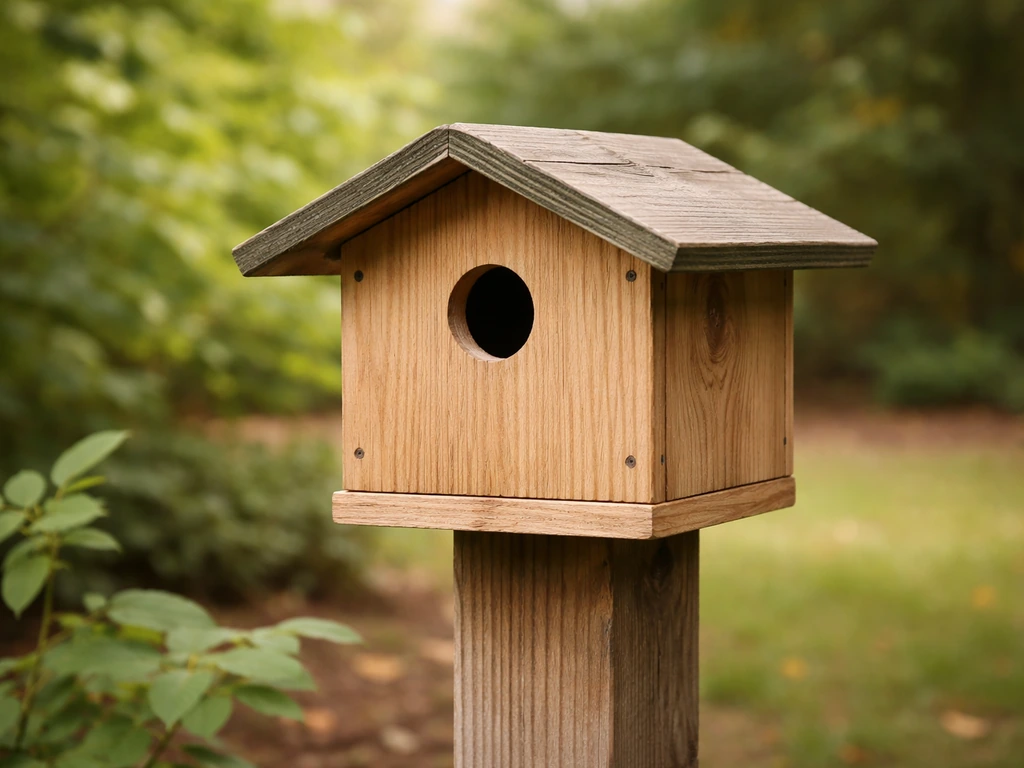
How to Make a Wild Bird Shelter: Simple DIY Plans
Step-by-step DIY plans to build a weatherproof wild bird shelter, including safe materials, placement, and do’s/don’ts.
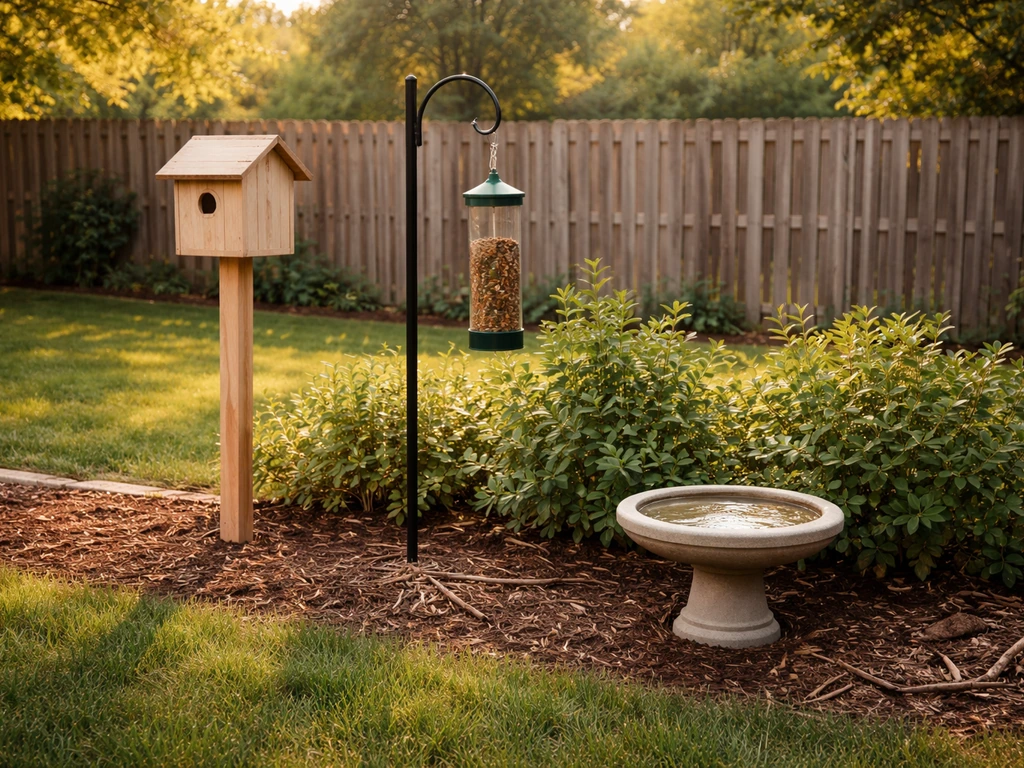
How to Make a Bird Habitat: DIY Backyard Guide
Step-by-step DIY backyard bird habitat plan: nesting, shelter, feeders, placement tips, and simple maintenance.
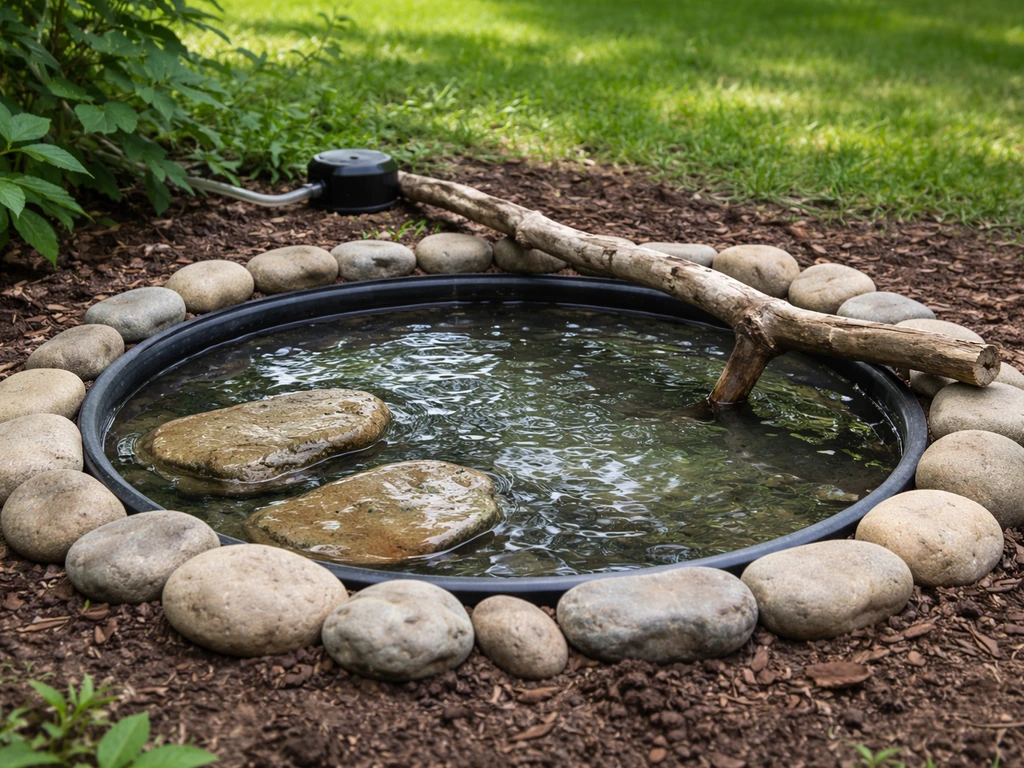
How to Make a Bird Pond: Simple DIY Guide for Beginners
Step-by-step how to make a bird pond with liner or bowl, bird-safe edges, simple filtration, and easy upkeep for year-ro