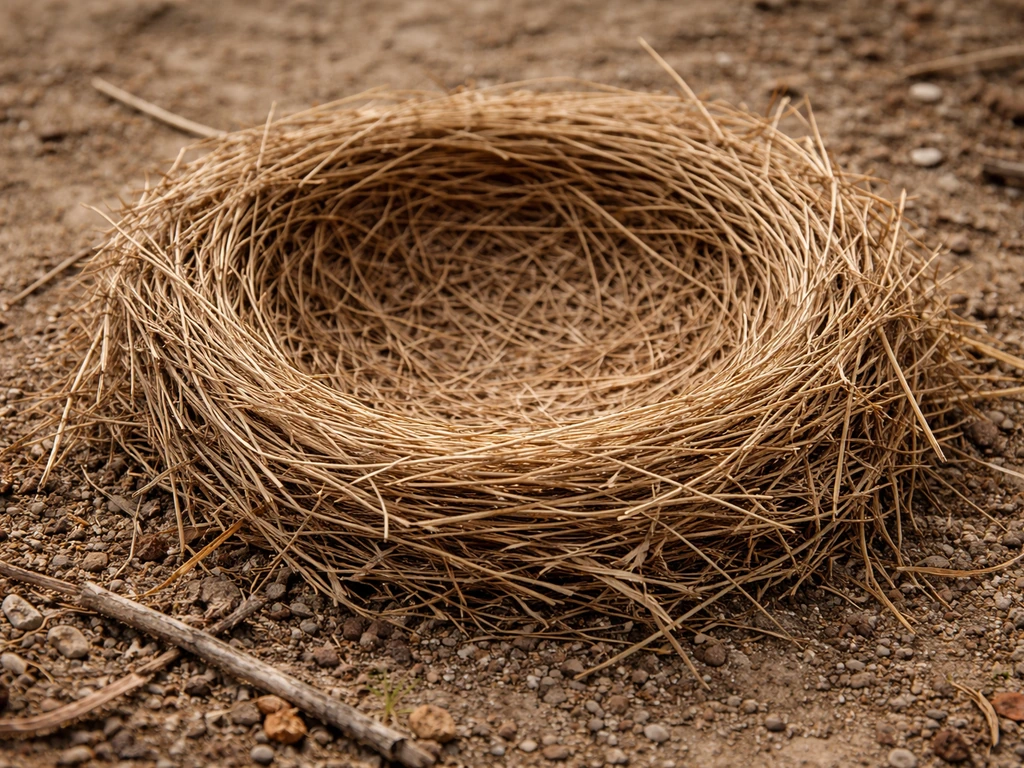
You can make a simple, functional grass nest by gathering dry, untreated grass, coiling and weaving it into a cupped bowl shape roughly 4 to 6 inches across, and securing it in a sheltered spot in your yard at the right height for the species you want to attract. The whole project takes under an hour, costs nothing if you have a lawn, and genuinely works, robins, song sparrows, and house finches have used hand-formed grass nests placed in the right location.
How to Make a Bird Nest with Grass: Step-by-Step
Marcus Thornton
30 Apr 2026
Choosing the right grass (and what to avoid)
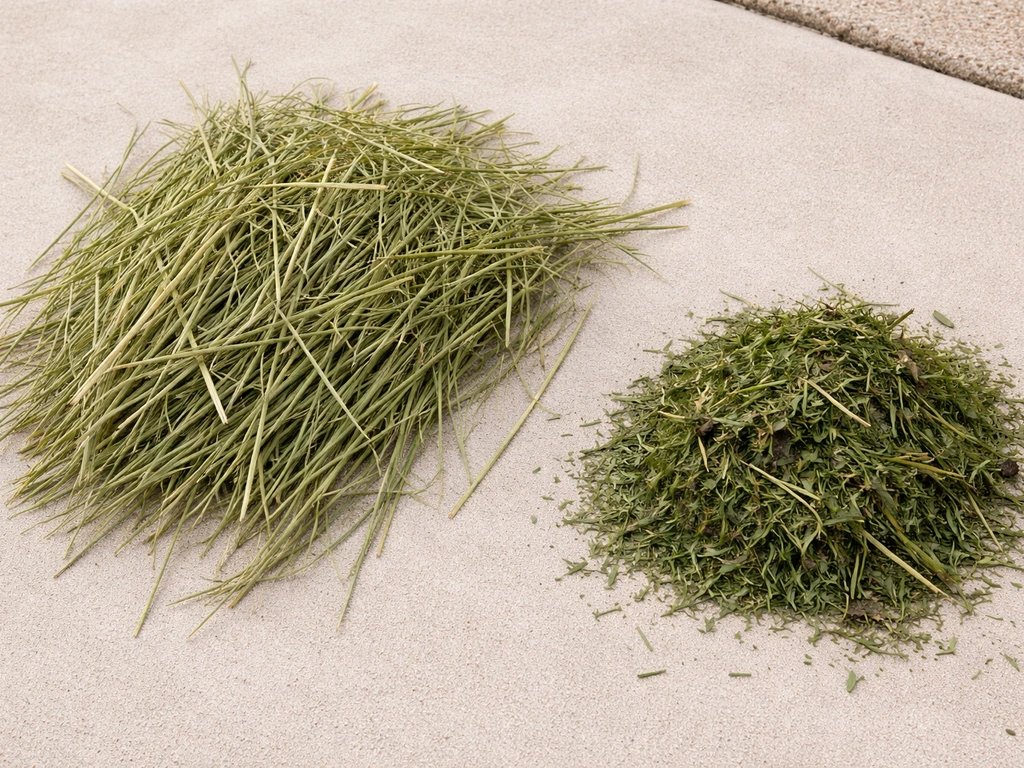
Not all grass is safe for nesting. Your goal is dry, chemical-free, flexible stems that birds can weave into or that you can shape yourself. Long-stemmed dried grasses work best: ornamental grasses like fountain grass or pampas grass, dried meadow grass, timothy hay, or even long blades from an unmanaged lawn edge. The key is that the material is completely dry before you use it. Fresh green grass shrinks dramatically as it dries, which collapses the nest structure and creates mold, I learned that the hard way after my first attempt turned into a soggy, flattened disc within a week.
The single most important thing to avoid is treated grass. Lawn clippings from a yard that has been fertilized, herbicided, or pesticide-sprayed are genuinely dangerous for nesting birds and their chicks. Even residue from a treatment applied weeks earlier can concentrate in nest material. If you're not 100% sure your lawn is chemical-free, collect grass from a roadside verge, a wildflower meadow, or buy a small bale of timothy hay from a pet supply store for a dollar or two.
- Good choices: dried ornamental grass, timothy hay, dried meadow grass, long untreated lawn grass, dried straw
- Decent supplemental materials: thin twigs, dried moss, plant fibers, coconut fiber (plain, uncolored)
- Avoid: freshly cut green grass (molds and shrinks), chemically treated lawn clippings, synthetic fibers, dryer lint (holds moisture and harbors bacteria), human or pet hair longer than 2 inches (can tangle around legs)
Making a nest vs. offering nesting material, which one do you actually need?
There are really two different projects here, and it's worth deciding which one fits your goal before you start. Most wild birds prefer to build their own nests because the construction process is part of how they bond, assess the site, and create a structure perfectly sized for their body. So for the majority of backyard birds, the most effective thing you can do is offer loose nesting material in a clean, accessible spot and let them do the building.
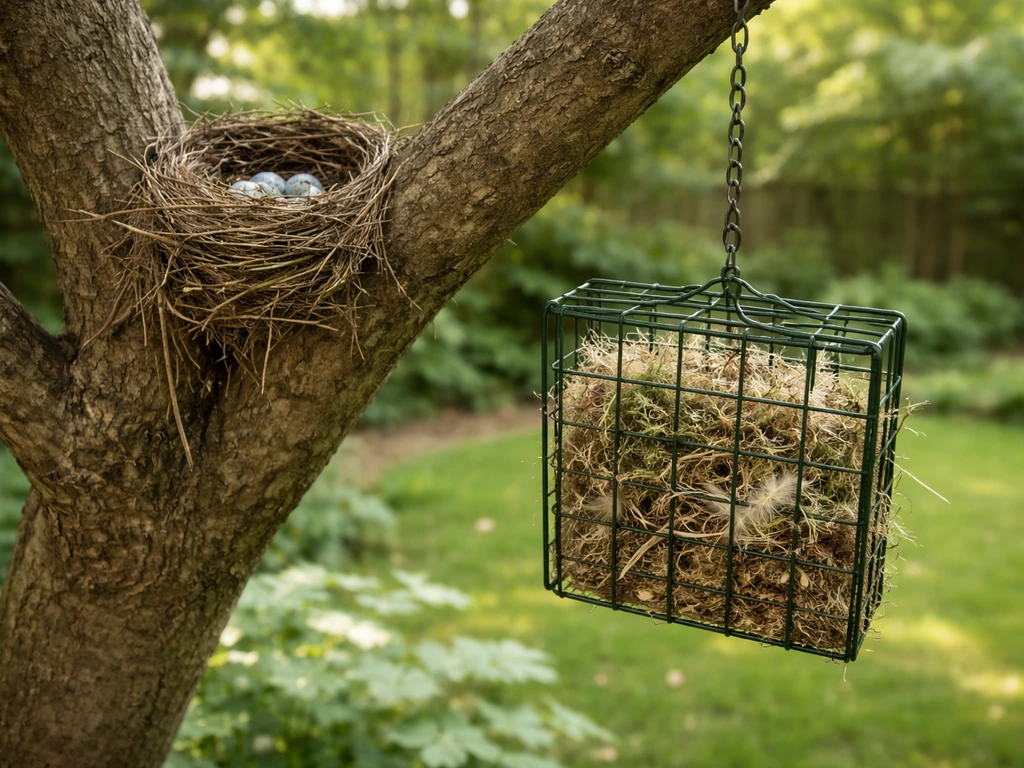
If you want to do more than just attract birds, you can also follow a simple grass-and-nest building guide to create the right nest shape offer loose nesting material. A clean suet cage stuffed with dried grass, hung in a visible shrub from late March through June, is simple and effective, and it's the approach recommended by wildlife organizations for reducing risks to birds.
That said, building a pre-formed nest structure absolutely has its place. If you are making a model of a bird nest for a craft or display, a pre-formed structure can also help you get the look right build a pre-formed nest structure. If you're setting up a nesting platform for robins or mourning doves (species that use open platform nests), providing a base structure really does help.
It also makes sense if you're creating a craft or display nest, a nest for a captive or rehabilitating bird, or a teaching project, all of which are valid reasons. If you're making a fake bird nest for a craft or display, you can use the same nest-shaping ideas without using real nesting materials. The step-by-step below covers building a proper formed structure, but I'll also note where you can stop early and just offer the material instead.
Timing matters too. The nesting season in most of the U.S. runs from roughly late March through August, with peak nest-building activity in April and May. That means right now (late April) is actually the best possible time to put out material or set up a nest platform. You're not too late, many species raise two or even three broods, so mid-season offerings still get used.
Step-by-step: building a grass nest from scratch
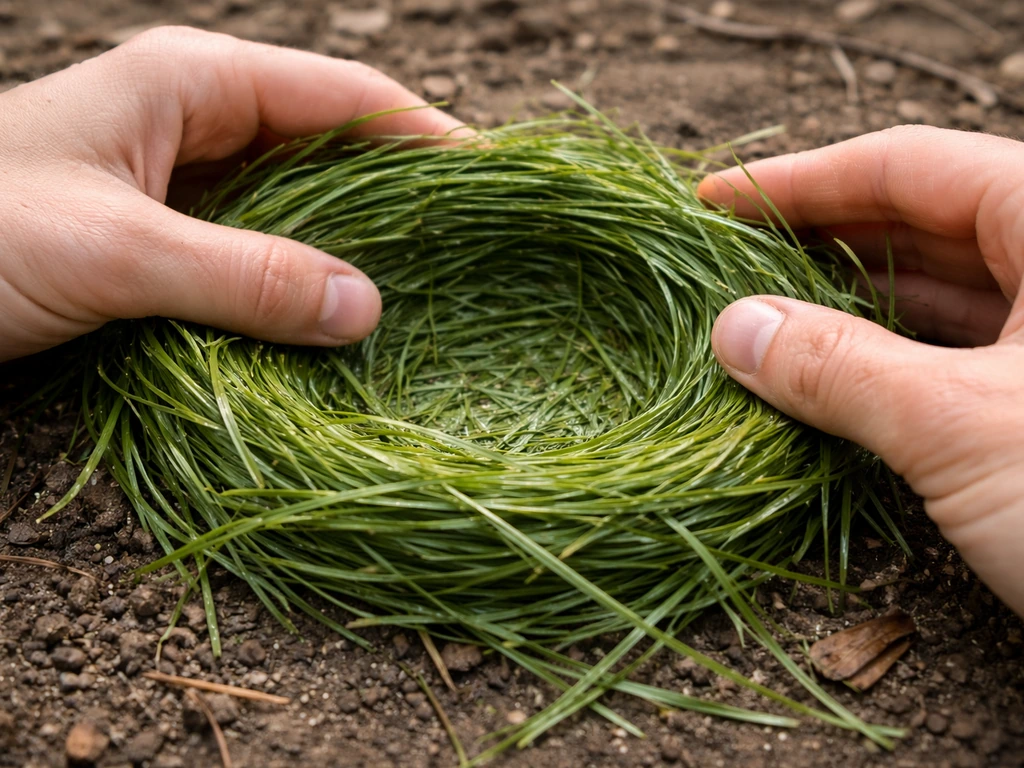
This method makes a cupped bowl nest about 5 inches in outer diameter with a 3-inch inner cup, a good general size for small to medium songbirds. If you want a human sized bird nest, you can scale the same grass-weaving bowl approach up to a much larger form while keeping drainage gaps and safe, untreated materials how to make a human sized bird nest.
Once you can make this grass bowl, you can scale it down into a mini bird nest for smaller songbirds. To learn the full process for a simple cupped grass nest, see the step-by-step instructions in this guide on how to make bird and nest. In Minecraft, you can also make a bird nest by gathering the right materials and placing them where birds can use them how to make a bird nest in minecraft.
You'll need a handful of long dry grass (at least 8 to 12 inches per stem), a small bowl or rounded object to use as a form (a baseball works perfectly), and optionally a little mud or craft glue if you want a more durable structure.
- Sort and dampen your grass slightly. Dry grass snaps when you bend it too sharply. Lay your stems in a shallow tray with a little water for 10 minutes — just enough to make them flexible, not soaking wet.
- Create a base coil. Take 8 to 10 long stems and bundle them together. Start coiling the bundle into a flat spiral, about 4 to 5 inches across. This is the floor of the nest. Weave the end of each new stem through the coil to lock it in place.
- Build the walls. Take more bundles of 5 to 6 stems and begin weaving them up and over the rim of the base coil, bending them into a curved wall. Work your way around the circle, overlapping each bundle with the previous one. The shape you're going for is a shallow bowl — not a deep cup, not completely flat.
- Use a form to shape the cup. Press the nest down gently over your baseball or rounded form and continue weaving around it. The form keeps the interior cavity consistent and stops the walls from collapsing inward while you work.
- Tuck and lock the ends. As you finish each layer, tuck the stem ends back into the weave rather than letting them stick out. Loose ends look fine but can catch wind and unravel the nest.
- Reinforce the rim. Wrap a few long stems all the way around the outside rim of the bowl in a circular bind to stiffen it. This is the part that takes the most stress when the nest is placed outdoors.
- Optional: add a mud or clay layer. Real bird nests often have a mud cup lining that stiffens the structure. Press a thin layer of slightly wet mud or clay into the interior of the bowl and let it dry completely before placing the nest. This dramatically increases durability.
Shaping for stability and drainage
The biggest structural failure I see in homemade grass nests is that they're too tightly woven with no gaps. That sounds counterintuitive, tighter should mean stronger, right? But a completely sealed grass bowl collects standing water when it rains, and sitting in moisture is one of the leading causes of nest failure and chick death. The weave should be tight enough to hold its shape but loose enough that water can drain through the bottom and walls.
For the interior cup, aim for a depth of about 1.5 to 2 inches. Shallower than that and eggs roll out; deeper than that and it gets hard for adult birds to monitor the nest and for fledglings to leave. The outer diameter for most small songbirds should be 4 to 6 inches; for larger species like robins, go up to 7 to 8 inches. The walls should angle outward slightly at the top, a flared lip rather than straight vertical sides, because that's the natural cup shape most birds prefer and it sheds rain better.
To test drainage before placing the nest, take it to a sink and pour a small cup of water into the bowl. You want to see it slowly seep through the bottom and sides within 30 to 60 seconds, not pool and sit. If it pools, gently pull a few stems apart at the base with a pencil or thin stick to open up drainage gaps.
Placing, securing, and maintaining your nest setup
Where to place it
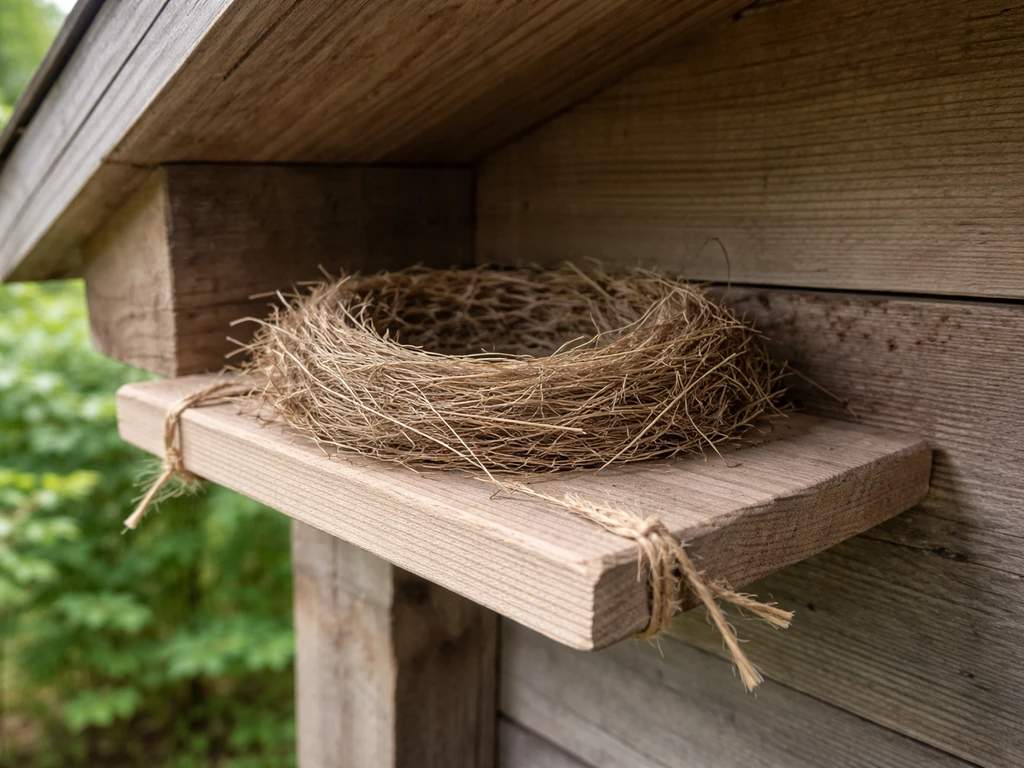
Placement makes or breaks whether birds use your nest. For an open-cup grass nest on a platform, look for a spot that offers cover from above (a branch canopy or roof overhang), protection from prevailing wind and rain, and a clear flight path in from at least one direction. A nestled fork in a dense shrub or small tree at 5 to 10 feet off the ground is ideal for most songbirds. Avoid spots in full afternoon sun, the west-facing side of a tree bakes the nest in summer.
If you're setting up a nesting platform (a flat shelf mounted to a fence post or under an eave), attach the nest to the platform with a loose twist of natural twine or a small staple at the rim, enough to keep it from blowing off, but not so tightly secured that a bird can't adjust it. Birds will rearrange materials to their liking, and if the nest is locked in place they'll often abandon it.
Keeping it safe and maintained
Check the nest every week or so during nesting season, but from a distance, you do not want to disturb an active nest or handle eggs and chicks, which is also protected under the Migratory Bird Treaty Act for most wild species. Smithsonian National Zoo and Conservation Biology Institute also advises minimizing disturbance during nest monitoring so parents are not startled and eggs or young are not knocked out of the nest Nest Monitoring Guidelines.
Visual checks from 6 to 10 feet away are enough to see if the structure is holding up. After a heavy rain, check that the cup hasn't become waterlogged. At the end of each season (typically after September in most of the U. S.
), take down and dispose of used nests, old nests can harbor mites, parasites, and bacteria that harm the next season's birds.
If you're offering loose nesting material in a suet cage or mesh holder rather than a pre-formed nest, refill it every week during peak season (April through June) and remove any material that has gotten wet and clumped together. To stay within local nesting guidance, avoid adding dryer lint to nesting materials avoid dryer lint. Fresh, dry material gets used much faster than damp or matted clumps.
Which birds will actually use a grass nest
Grass is one of the most universally used nesting materials among North American songbirds, so you have a solid list of potential occupants. The species most likely to use or build in a grass nest structure you've provided are robins (which actively seek out nest platforms), song sparrows, chipping sparrows, house finches, and American goldfinches. Barn swallows and cliff swallows prefer mud nests but will incorporate grass. In warmer climates, northern mockingbirds and Carolina wrens are enthusiastic grass nest builders.
| Bird Species | Preferred Nest Diameter | Best Placement Height | Extra Design Tips |
|---|---|---|---|
| American Robin | 7–8 inches outer | 5–15 ft on a platform or ledge | Robins love a mud cup lining; add a thin clay interior layer |
| Song Sparrow | 4–5 inches outer | 1–4 ft in dense shrubs | Place low in thick vegetation; sparrows want concealment |
| House Finch | 4–5 inches outer | 8–12 ft under eaves or in a hanging planter | Will use a pre-formed nest in a hanging basket or shelf |
| Chipping Sparrow | 3–4 inches outer | 4–10 ft in conifer or shrub | Add fine grass or hair (under 2 inches) to the cup lining |
| American Goldfinch | 3–4 inches outer | 4–20 ft in deciduous trees | Prefers plant down added to the cup; late nester (June–July) |
| Mourning Dove | 6–7 inches outer (very loose) | 10–25 ft on a platform | Doves build flimsy flat platforms; a pre-formed base helps a lot |
Tailoring the design is mostly about size and placement rather than drastic structural changes. A sparrow nest goes low and hidden in a shrub; a robin nest goes on an open platform under an overhang. If you want to attract a specific species, look up their typical nest height and habitat preference and match your placement to that. The grass construction method stays the same, it's the location that does the targeting.
Your next steps today
If you want to get something useful out there today, the fastest path is: grab a handful of dry, untreated long grass or a small bag of timothy hay, stuff it loosely into a clean suet cage, and hang it in a sheltered shrub at eye level. That takes five minutes and gives birds in your yard immediate access to prime nesting material right at the peak of the season. The National Wildlife Federation also advises that dryer lint is not suitable as nesting material How to Offer Bird-Nesting Materials in Your Garden | National Wildlife Federation Blog.
If you want to build the full formed nest, set aside an hour this weekend, gather your materials, and follow the steps above. In Minecraft, you can create a bird nest by gathering the right materials and placing the nest in the correct habitat area how to make a bird nest in Minecraft. Either way, late April is the best possible timing, you're right in the middle of prime nesting season for most North American songbirds.
If a grass nest doesn't feel like the right fit for your project, it's worth knowing there are related approaches worth exploring: nesting balls packed with fiber and material, woven structures inspired by weaver bird techniques, or even miniature nest models if you're working on a craft or display project. To get the look and approach of weaver nests right, research how weaver birds weave and then adapt that technique to safe, local nesting materials weaver bird techniques. One option to explore is making a bird nesting ball packed with fiber and nesting material nesting balls packed with fiber and material. Each of those takes the same core grass-weaving skills in a slightly different direction.
FAQ
Can I use fresh green grass if I dry it quickly after weaving?
Fresh grass usually shrinks as it dries, which can collapse the nest and leave gaps that let eggs roll or invite mold. If you must use what you have, dry it completely first (room temperature, well ventilated) before weaving, and only then shape it.
How do I know whether my grass is “untreated” if I’m not sure about past lawn chemicals?
If you cannot confirm the lawn has never been fertilized, weeded with herbicides, or sprayed with pesticides, avoid it. Instead, collect grass from a wild verge, an unmanaged area, or use a small bale of timothy hay from a pet supply store, which is typically safer than clippings.
What’s the safest way to make drainage holes or gaps without making the nest fall apart?
Keep the weave tight enough to hold a cupped shape, but ensure you have visible porosity at the base and lower walls. If water pools during a sink test, pull a few stems apart only near the bottom edges, then retest.
Do birds reuse a grass nest I make and leave out all season?
Many wild birds will abandon or rebuild rather than reuse in place, and old grass nests can collect mites, parasites, and bacteria. Take down used nests at the end of the season to protect birds in the next nesting cycle.
Should I put mud in a grass nest for strength?
A small amount of mud can help bind some stems, but it also increases drying time and can promote moisture retention if overused. If you add mud, keep the nest well drained, avoid thick mud plates on the bottom, and let it dry thoroughly before placing.
Is it okay to glue or staple the nest so it won’t blow away?
Locking it down tightly can reduce acceptance because birds may need to adjust the structure. If you secure it, use minimal attachment at the rim or base (for example, a loose natural twine twist) so the nest can be repositioned by the bird.
How often should I check the nest, and what counts as “too much disturbance”?
A weekly look from a distance is usually enough. Avoid touching the nest, handling eggs or chicks, or repeatedly visiting the exact spot, since frequent disturbance can cause adult birds to abandon the nesting attempt.
What should I do if it rains hard and the nest looks waterlogged?
After a heavy rain, inspect from 6 to 10 feet away for pooling or sagging. If the cup has become saturated, gently open drainage gaps at the base and sides, then leave it alone so the structure has time to dry.
Will grass nests attract birds if it’s not peak spring yet?
You can still have success outside peak months, but late March through August is when most species are building. If activity is late, focus on supplying dry loose nesting material in a holder, because birds often start building as soon as conditions and timing align.
Can I put a pre-formed grass nest inside a box or planter for extra shelter?
Shelter is helpful, but enclosed spaces can trap heat and block airflow and drainage. Use an open-cup style that allows water to drain, and ensure a clear entry and exit path in at least one direction.
Which is better for attracting birds, offering loose grass or a formed nest?
Loose nesting material in a clean cage often works best for most backyard songbirds because they choose shape and timing themselves. Formed nests can help for species that use platforms or for specific craft or rehabilitation contexts, but acceptance still depends heavily on size and placement.
Next Articles
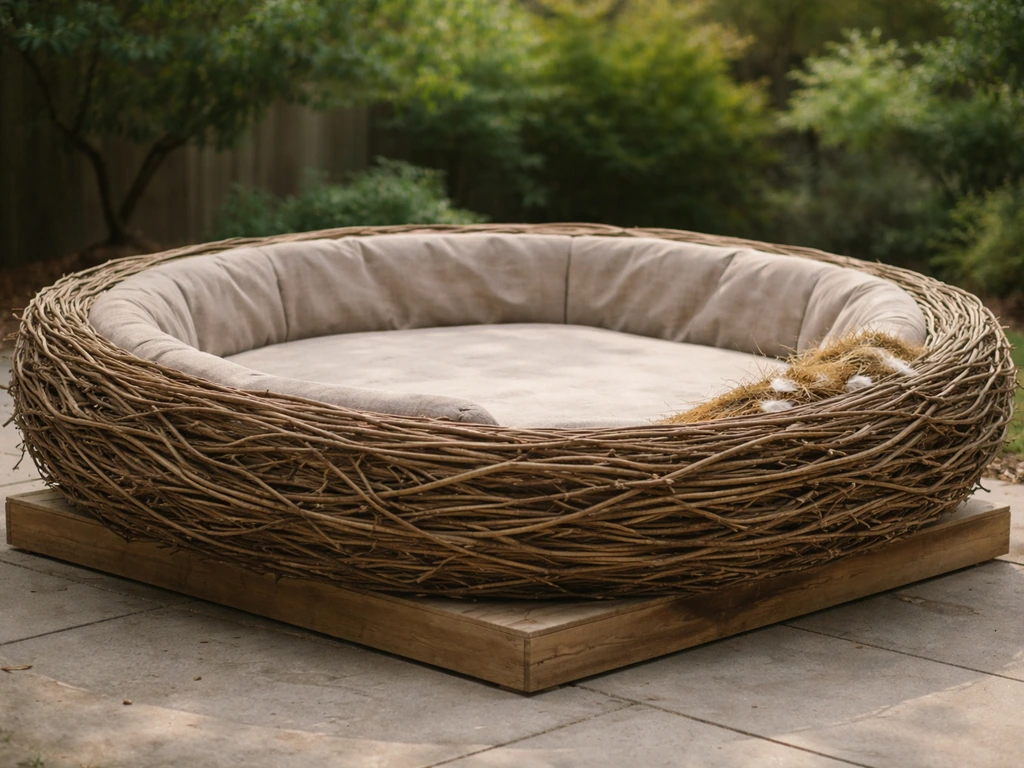
How to Make a Human-Sized Bird Nest With a Safe Bed
Step-by-step DIY guide to build a safe human-sized bird nest bed with sturdy frame, proper dimensions, and easy maintena
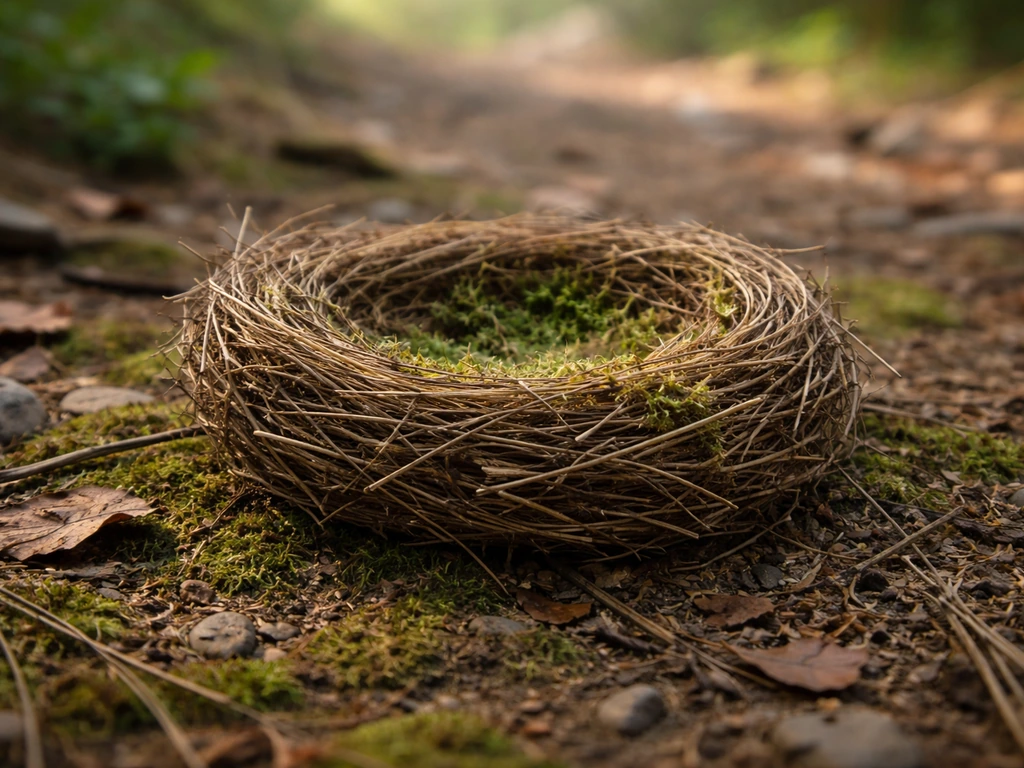
How to Make a Model of Bird Nest: DIY Step by Step
Step by step DIY guide to craft a realistic or bird safe bird nest model using natural materials, sizing and tips.
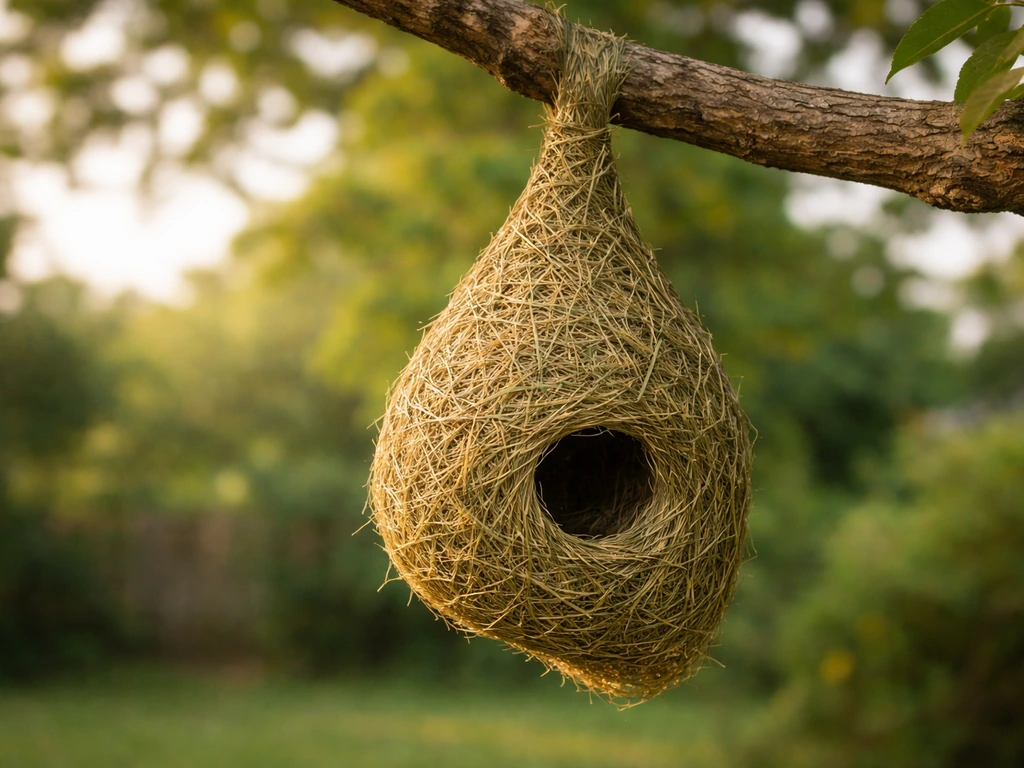
How to Make a Weaver Bird Nest at Home, Step by Step
Step-by-step guide to make a functional weaver bird nest at home using safe natural materials and proper hanging.