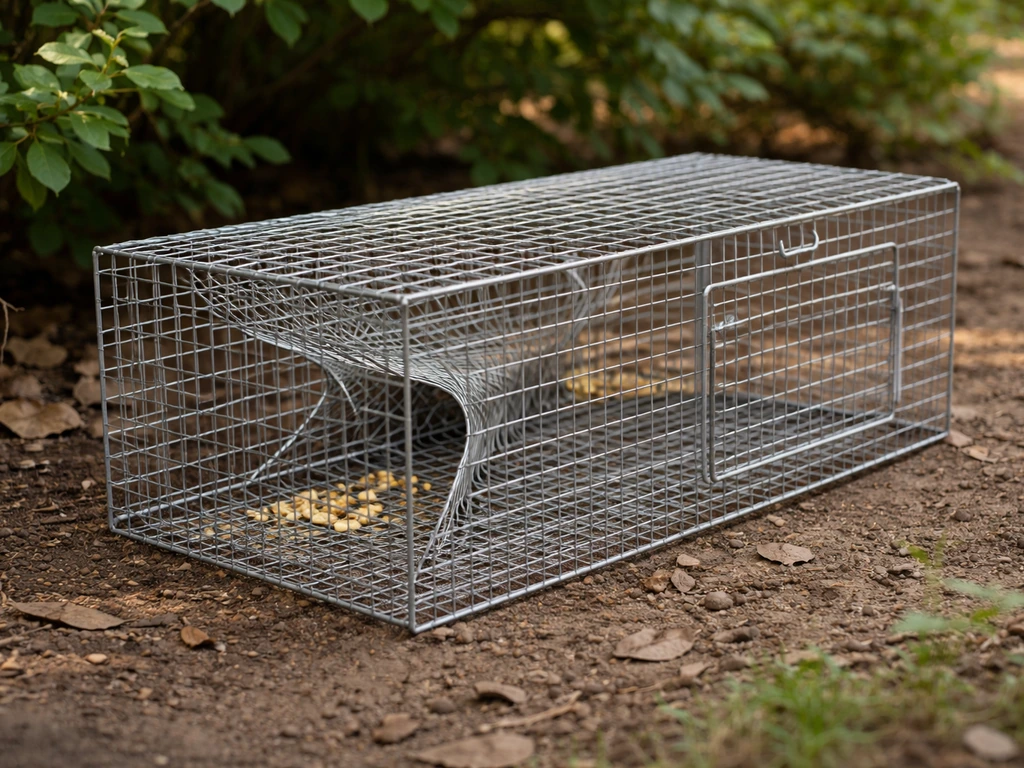
The most effective DIY live-capture bird trap a beginner can build today is a funnel-entry cage trap, sometimes called a repeating funnel trap. You build a wire mesh box, cut a cone-shaped funnel opening into one or both ends, and bait the inside. Birds walk or fly in following the bait, but can't figure out how to reverse through the funnel to get back out. It's beginner-friendly, uses basic materials, works on sparrows, starlings, grackles, and pigeons, and keeps birds unharmed so you can release or rehome them. But before you cut a single piece of wire, you need to know what bird you're dealing with and whether you're legally allowed to trap it at all.
How to Make the Best Bird Trap: DIY Live Capture Guide
Marcus Thornton
3 May 2026
Identify your target bird and check the law first
This step isn't optional. In the U.S., the Migratory Bird Treaty Act (MBTA) makes it unlawful to pursue, capture, or collect most wild birds without federal authorization. The definition of 'take' under the MBTA explicitly includes trapping. That covers a huge number of species, including mourning doves, crows, blackbirds, and most songbirds. If you trap one of these without a permit, you're looking at federal violations even if you release the bird immediately.
The three bird species where live trapping is generally permitted without a federal permit are European starlings, house sparrows, and feral pigeons (rock doves). These are non-native, invasive species not protected under the MBTA, and they're also the birds most commonly causing damage to property, feeders, and nesting boxes. If you're reading this because something is raiding your nest boxes, destroying your garden, or crowding out native birds, there's a very good chance it's one of these three. That's actually good news, because it means you can act.
Even with unprotected species, state laws layer on top of federal rules. Some states require a nuisance wildlife trapping permit even for invasive birds. Washington state, for example, has a specific special trapping permit process, and considers live trapping a last resort because of the welfare and legal complications involved. New York's guidance makes it clear you generally can't capture a bird and release it somewhere other than the property where it was caught. Colorado requires a Relocation Permit to move certain wildlife. Check your state fish and wildlife agency's website before you build anything. A quick call to your local extension office or wildlife services office can save you a lot of trouble.
- European starlings, house sparrows, and feral pigeons: not protected under the MBTA, generally trappable
- Crows, blackbirds, grackles, doves, and most native songbirds: protected federally, require permits
- Many states add their own permit requirements even for nuisance birds
- Releasing a captured bird on a different property may be restricted in your state
- Contact your state fish and wildlife agency or local USDA Wildlife Services office to confirm
Live capture vs. exclusion vs. deterrents: know what you're actually trying to do
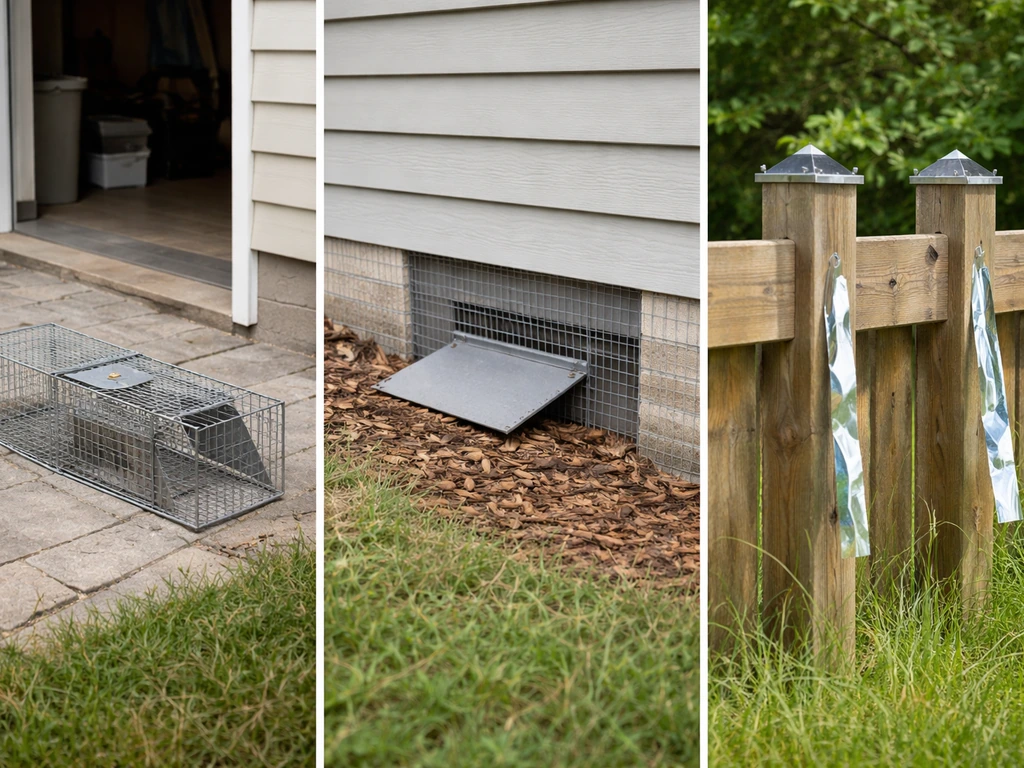
People search for 'bird trap' and mean wildly different things. Some want to catch and release a bird that got into their garage. Some want to remove a starling colony taking over their nest boxes. Some want to stop birds from landing on their roof or eating their seedlings. The method that makes sense depends entirely on what outcome you need.
| Approach | Best for | Permits usually needed | DIY difficulty |
|---|---|---|---|
| Live-capture funnel trap | Removing invasive birds (starlings, sparrows, pigeons) humanely | Check state rules; usually not for MBTA-exempt species | Beginner |
| Exclusion (netting, hardware cloth, baffles) | Keeping birds out of a specific area permanently | None | Beginner to intermediate |
| Nest-box trap (repeating) | Starlings claiming nest boxes during nesting season (late Feb through June) | Check state rules | Intermediate |
| Deterrents (visual, sonic, physical) | Reducing bird presence without capture | None | Beginner |
| Drop net or decoy cage trap | Large-scale removal of flocking species like grackles or pigeons | Often requires permits | Intermediate to advanced |
For most backyard situations, a live-capture funnel trap handles the immediate problem, and exclusion fixes it permanently. Deterrents alone rarely solve a serious bird problem, but they're a great complement to other approaches. If you're dealing with grackles specifically, USDA APHIS research notes that funnel traps with ground-level entrances outperform decoy-style cage traps for that species. If you're dealing with starlings at nest boxes, a repeating nest-box trap is worth knowing about, though it's most effective during nesting season between late February and June.
Build a DIY funnel-entry live bird trap
This is the design I recommend for beginners. You can build a functional version in an afternoon, the materials cost under $30 at most hardware stores, and it works on sparrows, starlings, and pigeons with just a few adjustments to funnel size. For a complete walkthrough, see the guide on how to build a starling bird trap. The basic idea is a rectangular wire mesh cage with a cone funnel built into one or both ends. The funnel opening faces inward, so birds can enter but not exit. I've built these from scratch and from repurposed rabbit hutch wire, and both work fine.
Materials and tools
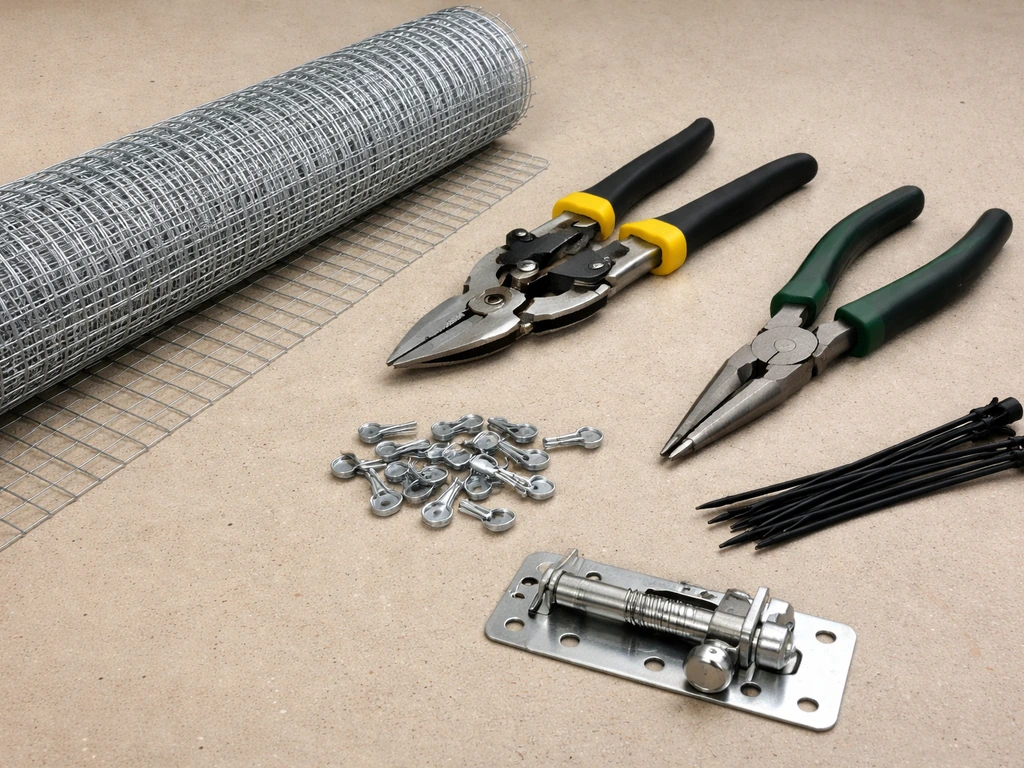
- Hardware cloth (wire mesh): 1/2-inch or 1-inch galvanized mesh, one 10-foot by 3-foot roll covers most builds
- Wire cutters or aviation snips
- Needle-nose pliers
- J-clips or zip ties (J-clips make cleaner joins, zip ties work fine for a first build)
- J-clip pliers if using J-clips
- A small piece of wooden dowel or bamboo stake for a perch inside (optional but useful)
- A flat piece of cardboard or plywood for the floor if you want to hold bait in place
- Work gloves, because cut wire edges are sharp and will remind you of this fact
Dimensions
For sparrows and small birds, build a cage roughly 10 inches tall by 16 inches wide by 24 inches long. For starlings, go bigger: 12 inches tall by 18 inches wide by 30 inches long or more. For pigeons, you want at least 18 inches in each direction. Commercial funnel traps for starlings and grackles often run 10 by 16 by 24 inches as a minimum, with the funnel openings sized for the target species. Bigger is generally better as long as you can move the trap and place it effectively.
Step-by-step build instructions
- Cut your wire mesh panels: two side panels (your chosen length by height), two end panels (width by height), a top panel (length by width), and a bottom panel (length by width). If you want a door for accessing the inside to retrieve birds and reload bait, cut one end panel 2 inches shorter on one side and attach it with a few J-clips as a hinged flap.
- Assemble the box by connecting panels at the edges with J-clips or zip ties every 2 to 3 inches. Start with the bottom, attach the two long sides, then add the short ends, and finish with the top. Leave one end open for now so you can build the funnel.
- Build the funnel insert: cut a rectangular piece of mesh about 4 inches wider and 4 inches taller than your open end. Form it into a cone or truncated pyramid shape by making cuts from each corner toward the center and bending the edges inward. The inside opening of the funnel should be 1.5 to 2 inches for sparrows, 2.5 to 3 inches for starlings, and 3 to 4 inches for pigeons. This is the most important measurement. Too large and birds back out; too small and they won't enter.
- Attach the funnel to the open end of the cage so the wide outer rim sits flush with the cage edge and the narrow interior opening points inward, hovering about 2 to 4 inches inside the cage. Secure with J-clips or zip ties all the way around the outer rim.
- Add a second funnel to the opposite end if you want a repeating or two-way entry. This doubles your catch rate and is worth the extra 20 minutes.
- Fold and smooth any sharp wire ends along the edges and interior. Run your gloved hand around every interior surface. A bird thrashing around inside will find any exposed sharp point, so take your time here.
- Add bait and a small water container (a bottle cap or jar lid works). Place the bait directly below or just inside the funnel opening on the inside so birds can see it from the entry point.
The most common first-build mistake is making the funnel opening too big. I did this on my first attempt and watched a starling walk in, eat the bait, and walk back out like it was a drive-through. Cut the opening small and test it by pushing your fist through from the outside. It should feel tight. If a bird can see the light through a wide gap, it can navigate back out.
Placement, bait, and timing: the factors that actually determine success
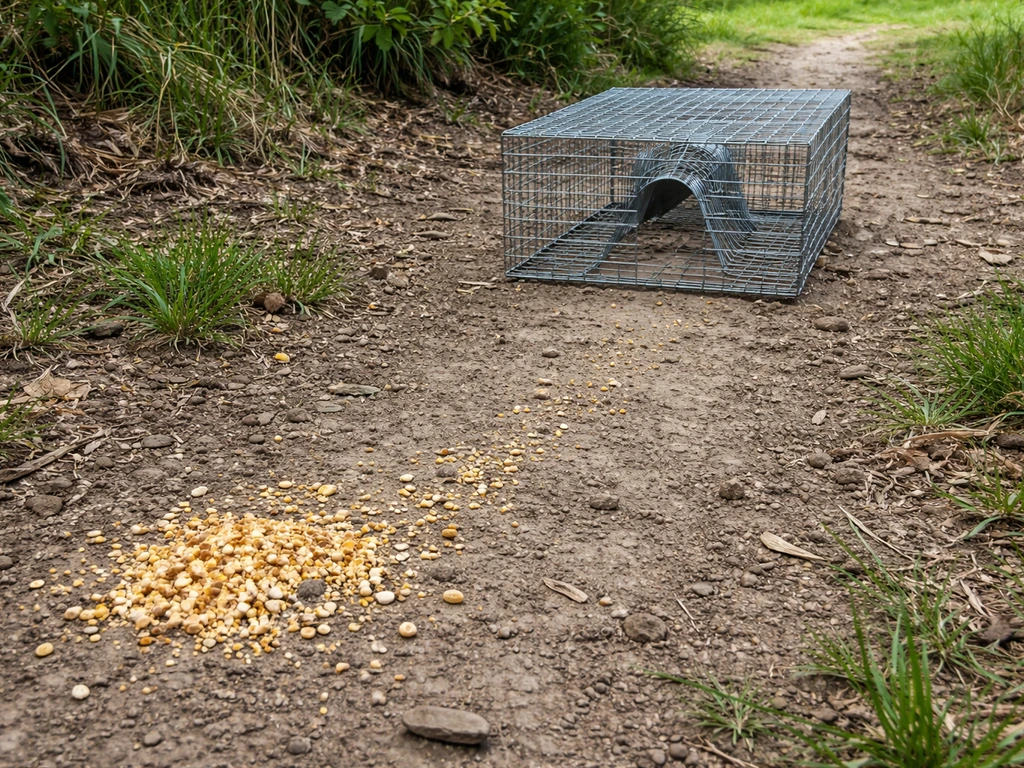
You can build a perfect trap and catch nothing if you put it in the wrong spot. Placement matters more than almost any other variable. Birds are creatures of habit. They return to the same feeding spots, the same perches, the same approach paths at the same time every day. Your job is to intercept that routine.
Where to put the trap
Place the trap exactly where you've already seen the birds feeding or congregating. If sparrows are working a specific corner of your yard, put the trap there. If starlings are hitting a particular feeder, set the trap within a few feet of it. Don't move the trap to a 'better looking' spot that the birds haven't already chosen. Trust their behavior, not your instincts about where they should be. Set the trap on a flat, stable surface so it doesn't rock or shift when a bird lands on it. Ground level works for sparrows and starlings. For pigeons, ground level is almost always right.
Prebait before you set the trap
This is the tip that separates people who catch birds from people who don't. Before you arm the funnel, spend two to four days prebaiting. Put the trap in position with the funnels propped open or removed so birds can walk in and out freely. Load it with bait. Let them eat without consequence. Once you see birds regularly visiting the open trap, seal the funnels and set it for real. USDA APHIS specifically recommends this prebaiting approach for starlings, noting it speeds up the actual trapping process significantly. The birds lose their wariness of the trap itself and walk right in on day one.
Best bait by species
| Target bird | Top bait choices | Notes |
|---|---|---|
| House sparrows | White millet, cracked corn, bread crumbs | Scatter some on the ground outside the funnel to draw them in |
| European starlings | Bread, cooked rice, dog or cat food (wet or dry) | Place bait just inside and directly below the funnel opening |
| Feral pigeons | Cracked corn, whole dried peas, popcorn (unbuttered) | Pigeons are bold; a single decoy pigeon (even a plastic one) helps |
| Grackles | Rice (preferred over corn per APHIS research), bread, seed | Funnel openings at ground level work better than elevated entries |
Timing and seasonality
Trap in the early morning when birds are most actively feeding. Late afternoon is second best. Avoid midday in summer when heat inside a wire trap can become dangerous to a captured bird. For starlings at nest boxes, the window of late February through June is when nest-box style traps are most effective, since birds are actively defending nesting sites and investigating boxes. For year-round pest species like house sparrows and pigeons, trapping can be effective in any season, though winter works particularly well because natural food sources are scarcer and bait becomes more compelling.
Humane handling: what to do the moment a bird is in the trap
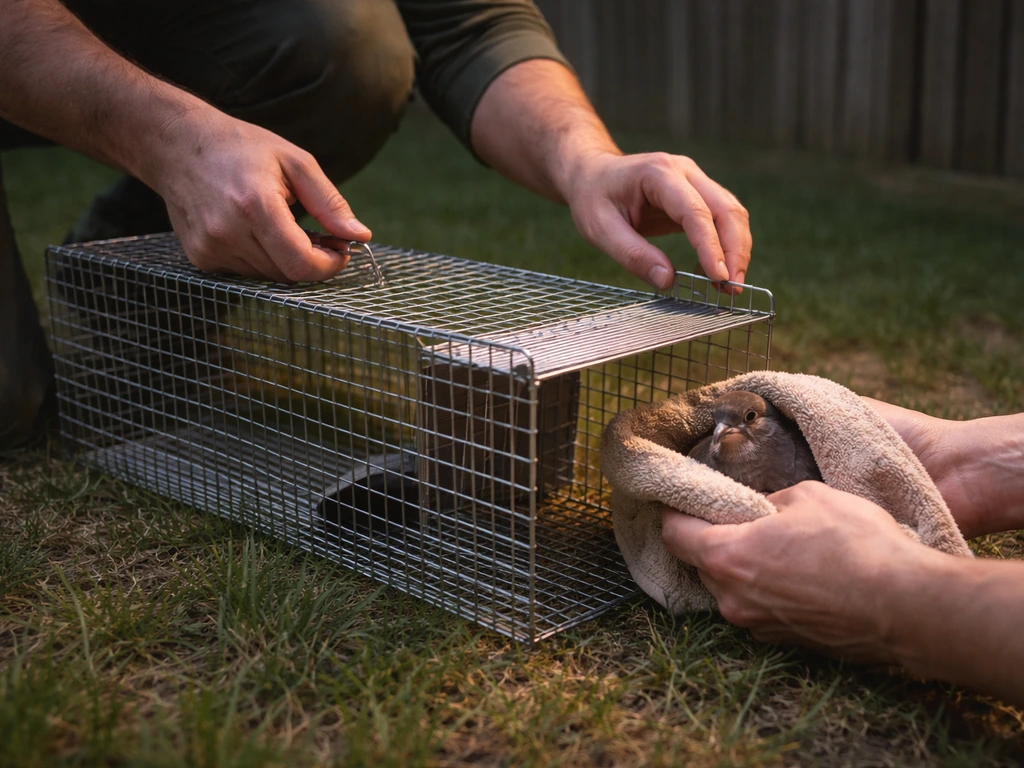
This is where a lot of DIY trap guides drop the ball, so I want to be direct. A live-captured bird can die quickly from stress, heat, dehydration, or injury if you leave it unattended. Federal humane capture guidelines recommend checking live traps at least every 12 hours at a maximum interval, and more frequently when conditions are hot, cold, or wet. In practice, you should be checking every few hours if you're home. Set a phone alarm.
When you find a bird in the trap, move the whole trap to a quiet, shaded, protected spot before you do anything else. Cover it with a cloth or tarp to reduce the bird's stress level. A covered, calm environment slows a bird's panic response significantly. Don't reach in immediately. Give it two to five minutes to settle. Have a small, clean towel ready.
Retrieving and handling the bird safely
- Open your access door slowly. Don't rush or jab your hand in, which causes the bird to thrash and risk wing or leg injury.
- Use a small towel or cloth to gently cup the bird from above, wrapping the wings against the body. Hold it firmly but without squeezing the chest, which restricts breathing.
- Check for obvious injury: look at the legs, wings, and eyes. A healthy bird will struggle calmly. A bird that's limp or unresponsive needs immediate attention from a wildlife rehabilitator.
- If releasing on site, carry the bird a short distance from the trap, open your hands at chest level, and let it go. Don't throw it upward.
Release and rehoming considerations
For non-protected invasive species like starlings, house sparrows, and pigeons, your legal options after capture include release on the property, euthanasia, or rehoming. Releasing at a distant location may be restricted in your state, as noted earlier. If you want to rehome a captured bird (to a wildlife educator, avian rescue, or someone with the right setup), contact local organizations before you trap, not after, so you have a plan in place. Don't leave a healthy bird in a trap while you figure out what to do with it. That's where welfare problems start.
Prevention and exclusion: fix the problem so you don't need a trap long-term
Trapping removes individual birds but doesn't solve the underlying reason they're there. If your yard is full of accessible food, open nest sites, and no physical barriers, new birds will replace the ones you removed within days. The long-term fix is almost always exclusion and habitat management, which aligns with what we do on the building side anyway: smart structural design that works with bird behavior instead of constantly fighting it.
Nest box modifications
If starlings or house sparrows are taking over nest boxes meant for bluebirds, wrens, or tree swallows, the single most effective fix is entrance hole sizing. A 1.5-inch entrance hole excludes starlings completely. A 1.125-inch hole (for Carolina wrens and small native birds) excludes house sparrows in many cases. If your boxes have oversize holes, you can add a hole reducer, which is a simple wooden disk with a smaller hole drilled through it. That's a 10-minute fix that outperforms any trap.
Physical exclusion for feeders and structures
- Switch to feeders with smaller perches or no perches at all: starlings and grackles struggle with cling-only feeders, while chickadees and finches handle them easily
- Use safflower seed or nyjer (thistle) in feeders: starlings and house sparrows largely ignore both, while native finches, doves, and cardinals eat them
- Install hardware cloth baffles or netting under eaves, in vents, and around any open structure where birds are nesting or roosting
- Remove standing water or open containers that attract flocking birds, especially during dry weather
- Clean up spilled seed from the ground regularly, since ground-feeding sparrows and starlings are specifically attracted to seed scatter
Habitat design that deters problem birds
Dense shrubs and low vegetation near feeders attract ground-feeding sparrows. Trimming or repositioning plantings can reduce that pressure. On the flip side, native plant species that produce small berries (like native viburnums or serviceberry) attract a diversity of native birds that naturally compete with invasive sparrows and starlings for territory and food. A yard that supports native species tends to self-regulate over time. It takes longer than building a trap, but it's the fix that lasts.
If you want to go deeper on specific trap designs for different scenarios, the related guides on making a general bird trap, building a starling-specific trap, and constructing other bird-catching methods cover those variations in more detail. If you’re looking for alternatives beyond funnel cage traps, see our guide on how to make bird snares. If you want more general guidance, use the article section on how to make bird catcher as a starting point, then choose the version that matches your target species making a general bird trap. If you're specifically looking for how to make trap for bird, focus on matching the funnel size and placement to the species you’re dealing with bird trap. Each situation is a little different, and getting the right design for your specific bird makes a real difference in how quickly you solve the problem.
FAQ
Can I use the same funnel bird trap design for different species (sparrows, starlings, pigeons), or do I need to change it?
If the bird is one you are legally allowed to trap, yes, you can still use the funnel trap, but you must match the funnel opening to the target species. Use the “tightness” test (fist through from outside should feel snug, not easy to wiggle through), because even an inch too large can let the bird exit after entering.
What should I do if I am not 100% sure which bird species is visiting the bait?
Avoid prebaiting with protected birds in mind. If you are unsure of the species, pause trapping and confirm ID first, because prebaiting increases visitations and can unintentionally result in capturing a non-target species. A safer approach is to delay funnel arming until you are confident which species is using the trap location.
How long can I leave a live-capture bird trap unattended?
Don’t rely on the trap to “hold” a bird safely overnight. If you can’t check frequently, you should not set it. Even for invasive species, heat can build up quickly in wire mesh during sunny hours, so use earlier timing and choose a shaded placement, but still plan for frequent checks.
What should I do right away if a bird is caught and I cannot decide what to do next?
If the bird is already trapped, remove it promptly and manage stress immediately by moving the whole trap to a quiet, shaded area and covering it. Have a plan for the next step (release on-site, rehoming contact, or other legal option) before you ever set the trap, because delays increase risk from heat, dehydration, and injury.
My funnel trap is letting birds walk back out, what went wrong?
If a bird keeps entering and exiting during setup, it usually means the funnel opening is too large or the funnel is not aligned so the entrance faces inward. Recheck that the cone seats firmly, the gap is tight, and there are no side gaps where birds can squeeze back out.
Can I move the trap to a different part of my yard to improve catch rates?
Yes, but it’s often counterproductive if the bird is established on a routine feeding path. Best practice is to place the trap where you already saw approach behavior, then make only small adjustments (a few feet) after a few prebait days. Moving it to a “better” visible spot can stop the visits entirely.
Does trap placement stability matter, and what kind of surface should I use?
Avoid placing a wire funnel trap where it can tip, especially on loose gravel, uneven soil, or on top of planter rocks. Use a stable flat base, and if needed, set it in a shallow depression so it cannot rock when a bird lands, because rocking increases escape attempts and can injure a captured bird.
Why is prebaiting recommended, and is there a safe way to do it?
Prebaiting should happen with funnels propped open or removed, so birds learn the site without being captured. Once birds are reliably visiting, seal and arm. This reduces skittish “trap wariness” and is especially important for starlings, where one-day results are much more likely after a short prebait period.
Is covering the trap with a cloth or tarp safe, and how much coverage is too much?
Coverage is meant to reduce stress, not to hide unsafe conditions. Keep the covered trap in shade, but do not fully enclose it so tightly that you trap heat and block airflow. After a capture, check frequently and remove the bird promptly instead of leaving it covered for extended periods.
If starlings are taking over my nest boxes, should I rely on trapping or use exclusion first?
For nest-box conflicts, exit-proofing is often more effective than trapping. If you see repeated use of an oversized entrance, add a hole reducer (or correctly size the entrance hole) as the main long-term fix, because traps remove individuals but do not prevent new birds from taking over.
What’s the biggest practical mistake people make before setting up a live bird trap?
You should prepare legally and logistically before any trap is armed, including knowing whether relocation is allowed in your state and having rehoming contacts ready. If you can’t comply with check frequency and post-capture requirements, it’s better to choose exclusion or deterrents rather than starting a live-capture plan.
Next Articles
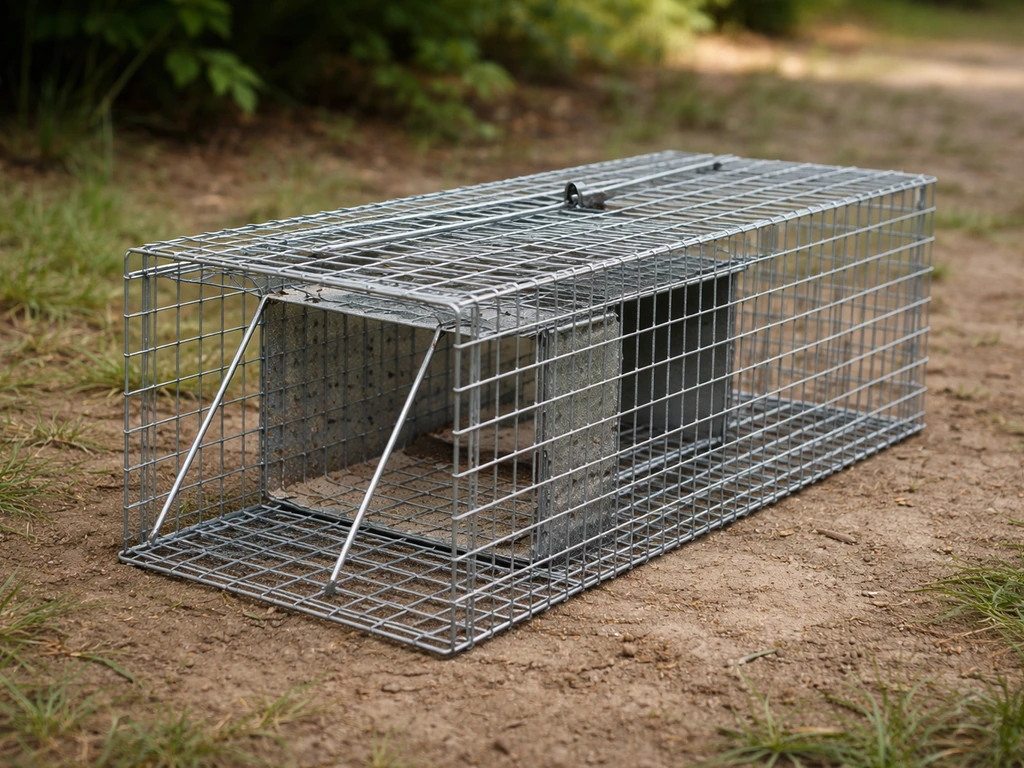
How to Make a Humane Bird Catcher DIY Guide
Step-by-step humane DIY bird catcher build, baiting, safe setup, and quick release tips for escaped pets or rehoming.
How to Make Bird Snares: DIY Snare Trap Steps
Step-by-step DIY guide to build, set, and test a bird snare trap, plus legality and humane alternatives.
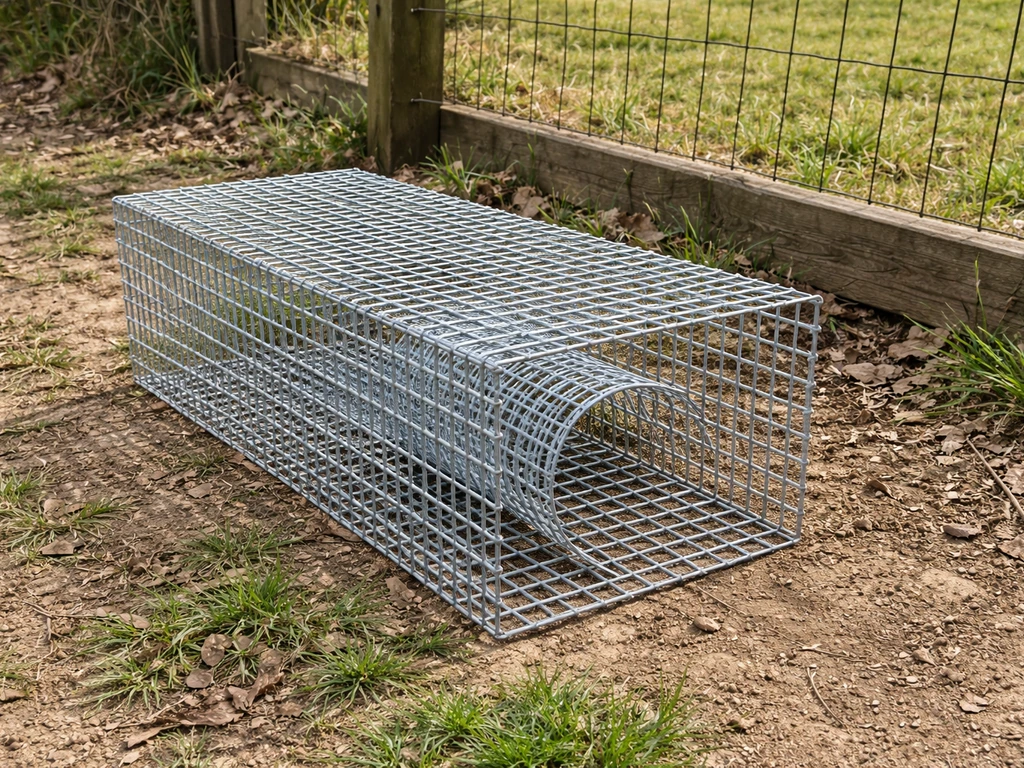
How to Build a Starling Bird Trap: DIY Step by Step
DIY step-by-step guide to build a humane one-way starling trap, set timing bait cues, and prevent repeat problems.