Yes, you can absolutely turn free pallet wood into a fully functional, bird-safe nesting box. The key is picking the right pallets (heat-treated only, no chemical treatments), cutting them down to species-specific dimensions, drilling the correct entrance hole size, and adding proper drainage, ventilation, and a way to clean it out each season. Do all of that and you'll have a birdhouse that outlasts most store-bought options and costs almost nothing to build. If you want a different style, you can also make a bird house using a coconut shell birdhouse.
How to Make Bird Houses From Pallets: Step by Step Guide
Marcus Thornton
19 May 2026
Choosing the right pallet wood and checking for safety
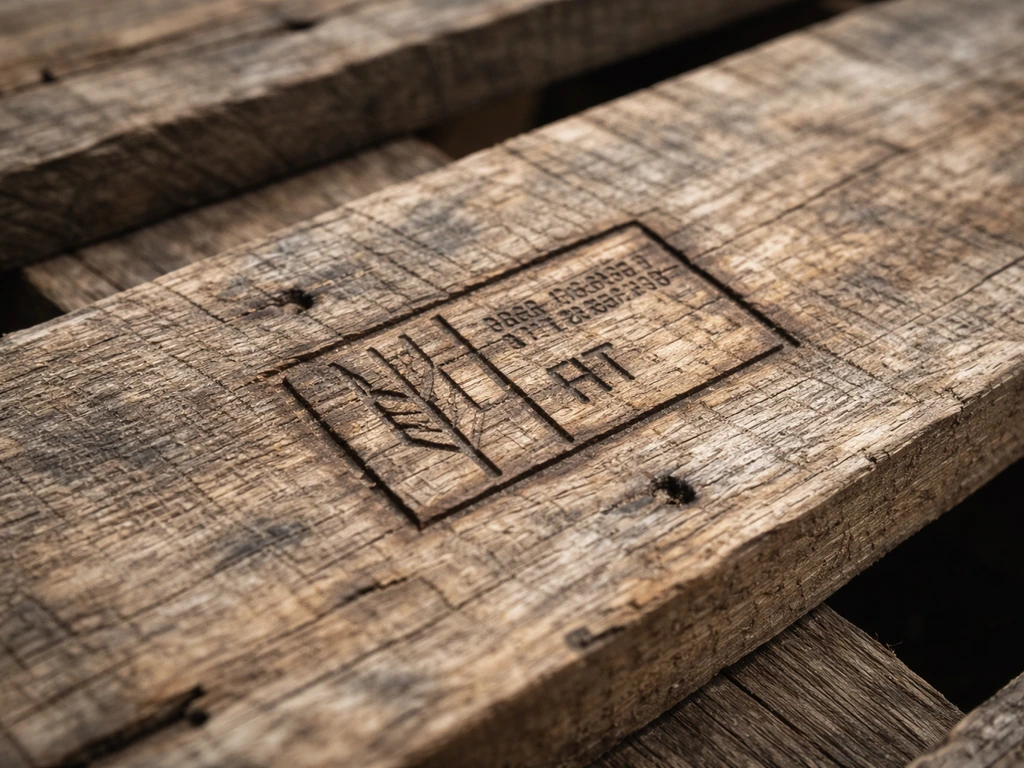
This is the most important step and the one people most often skip. Not all pallet wood is safe for birds or humans to handle. The stamp on the side of the pallet tells you everything you need to know. Look for the ISPM 15 logo (an ear-of-wheat symbol with a two-letter code) and find the treatment code. You want HT, which stands for heat treatment. That's it. The pallet was kiln-dried at high temperature to kill pests, and it leaves no chemical residue behind.
Avoid any pallet stamped MB. That stands for methyl bromide, a fumigant the USDA has flagged as environmentally harmful and a health concern. MB-treated pallets can off-gas residue into an enclosed nesting box, and that's a space a bird will be sitting inside for weeks. It's not worth the risk. If the pallet has no stamp at all, or the stamp is worn off, skip it. You just don't know what's in it.
Also check the wood visually before you start cutting. Look for dark stains, paint, oily patches, or a strong chemical smell. Any of those are red flags. Good pallet wood should look and smell like plain lumber. The boards are usually 1-inch thick pine or oak, which is perfect for a nesting box since it insulates well and is easy to work with basic tools. Avoid painted or pressure-treated boards entirely.
Tools and materials list for pallet bird houses
You don't need a fully equipped workshop. A circular saw or jigsaw, a drill, and a few bits will get you through most of this build. If you want a different style, you can also plan tools and parts for how to make bird houses out of pvc pipe. Here's what to gather before you start:
- HT-stamped pallet boards (at least 6 to 8 boards, roughly 3.5 inches wide by 40 inches long each)
- Circular saw or jigsaw for ripping boards to width and making angled cuts
- Drill with standard twist bits and a spade bit or hole saw (1-1/4" to 1-9/16" depending on target species)
- Exterior-grade screws, 1-1/4" and 1-5/8" lengths (screws hold better than nails in thin pallet wood)
- Tape measure, pencil, and square
- Sandpaper (80 and 120 grit) for smoothing the entrance hole and interior surfaces
- Wood glue (optional but adds strength at joints)
- Exterior wood stain or acrylic latex paint for outside surfaces only
- One small hinge or a pivot screw if you're adding a clean-out door
- A metal eye hook or small barrel bolt to keep the clean-out panel closed
- Hardware cloth or metal flashing (for predator guards if not using a baffle)
- Metal stovepipe or commercial pole baffle for mounting (strongly recommended)
One tool worth the investment if you're making more than one box: a hole saw set with the sizes you need. Spade bits work fine but can splinter the exit side of the wood. Drill a pilot hole first and back the board with scrap wood when drilling entrance holes to get a clean edge. A rough entrance hole can injure birds entering or exiting the box.
Design basics: entry hole size, spacing, drainage, and ventilation
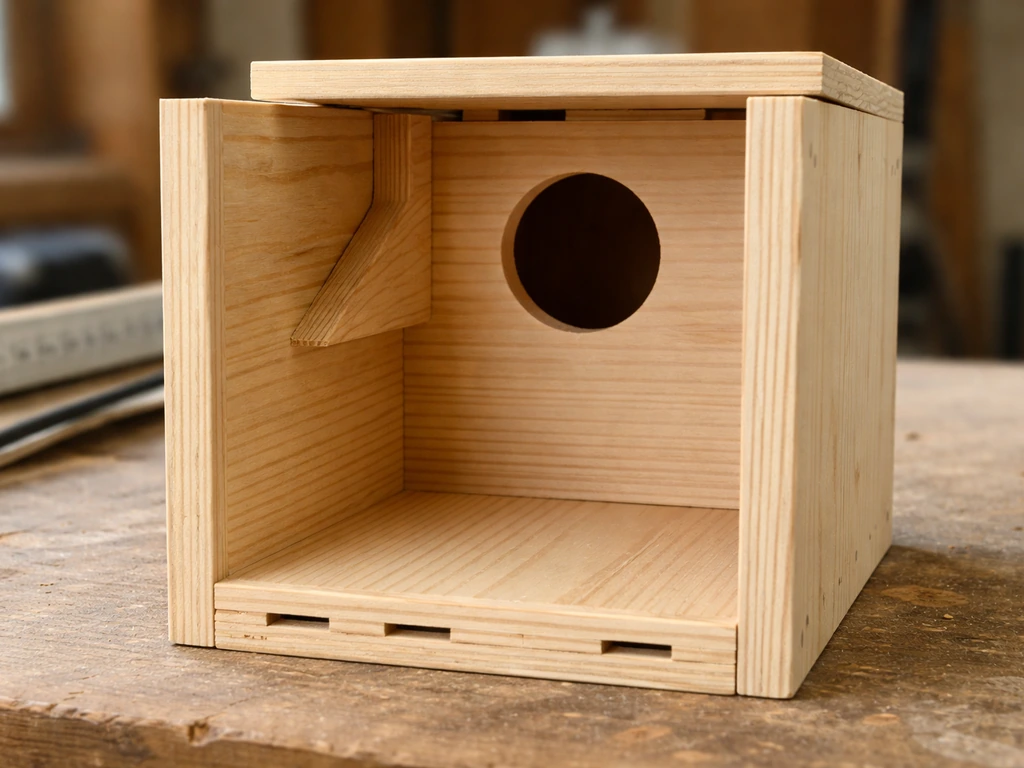
Getting these four design details right is what separates a birdhouse that actually gets used from one that just sits in the yard. Each species has specific needs, and the entrance hole diameter is the most critical dimension because it acts as a filter, inviting your target bird and excluding larger competitors.
Entrance hole sizes by species
| Species | Entrance Hole Diameter | Notes |
|---|---|---|
| Eastern Bluebird | 1-1/2" | Standard for most bluebird boxes across the eastern US |
| Western Bluebird | 1-1/2" | Same as Eastern; verified by California Bluebird Recovery Program |
| Mountain Bluebird | 1-9/16" (approx. 3.97 cm) | Slightly larger; entrance should sit about 2" below roof top |
| Chickadee (Chestnut-backed) | 1-1/4" | Smaller hole keeps out sparrows and larger competitors |
| House Wren | 1-1/8" | Tiny hole; wrens love compact, lower-mounted boxes |
| Tree Swallow | 1-1/2" | Same as bluebird; often paired on same trail |
Interior floor dimensions and cavity depth matter too. For bluebirds, a 4-by-4-inch or 5-by-5-inch floor with a cavity depth of about 8 to 10 inches from the floor to the entrance hole bottom works well. Wrens and chickadees do fine in a slightly smaller box with a 4-by-4-inch floor. Don't make the box too large for the target species since oversized cavities stay cold longer and make it easier for predators to reach inside.
Drainage
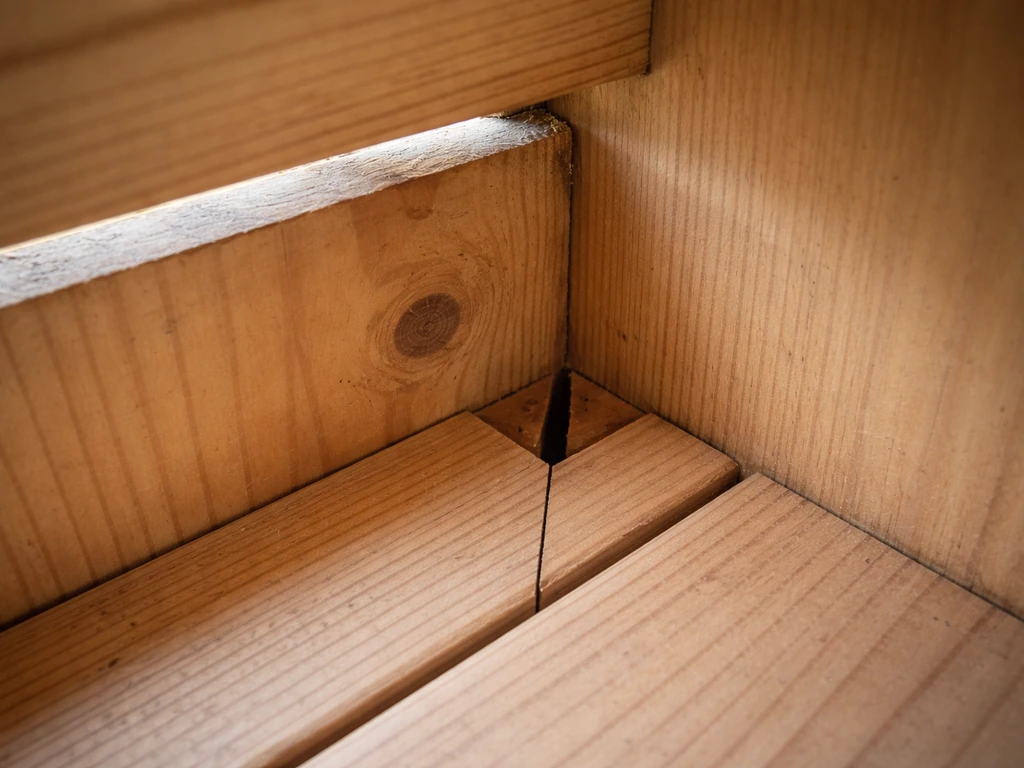
Standing water inside a nesting box will kill eggs and chicks. Cut the corners of the floor board at 45-degree angles to create small triangular drain gaps, which is what the California Bluebird Recovery Program recommends over drilling holes alone. You can combine both: cut the dog-ear corners and drill two quarter-inch holes in the center of the floor just to be safe. The cut corners drain faster and don't clog with nesting debris the way small drilled holes can.
Ventilation
Heat is as dangerous as moisture. A sealed box on a sunny afternoon can become an oven. Leave a small gap of about 1/4 inch between the roof and the top of the side walls, or drill two or three 1/4-inch holes near the top of each side wall. Do not add any gaps or holes in the floor of the roof itself because a hole through the roof exposes the nest to rain and makes it easier for predators to access, which the North American Bluebird Society specifically advises against.
Clean-out access
Build in a way to open the box. A hinged side panel or a pivot-screw side panel that swings open is the most common approach with pallet wood. You'll need this access every single season to remove old nest material and inspect for damage. A box you can't open properly is a box you can't maintain.
Step-by-step build plans for common pallet bird house styles
Pallet boards are usually 3.5 inches or 5.5 inches wide. The easiest approach is to work with those natural widths rather than fighting them with a lot of ripping. Here are two builds you can complete in an afternoon.
Build 1: Simple cavity box for bluebirds or swallows
This is a standard single-chamber nesting box with a sloped roof, side-swing clean-out, and a 1-1/2-inch entrance hole. Target dimensions: 5-inch-wide front and back, 5-inch-wide sides, 4-inch-wide floor (trimmed to fit), and a roof panel with a 2-inch overhang in front. Total interior height from floor to entrance hole bottom is about 8 inches.
- Disassemble your HT pallet carefully using a pry bar, removing nails as you go. Stack boards and let them dry for a day or two if they feel damp.
- Cut the front panel: 5 inches wide, 11 inches tall (the extra height leaves room for the sloped roof cut at the top). Rip to width if needed on a table saw or with a guide on a circular saw.
- Cut the back panel: same width as the front (5 inches) but 13 to 14 inches tall. The extra length on the back is what you'll use to mount the box to a pole or post.
- Cut two side panels: 4 inches wide, 9 inches tall on the back edge and 8 inches tall on the front edge, creating a gentle slope for water runoff. If your pallet boards are 3.5 inches, two boards side by side work fine; just screw them together first.
- Cut the floor panel: 4 inches by 4 inches. Clip each corner at 45 degrees with a saw or chisel to create drainage gaps. Drill two quarter-inch holes in the center as backup drainage.
- Drill the entrance hole in the front panel: center it horizontally, and position the bottom of the hole 8 inches above the floor panel. Use a 1-1/2-inch hole saw for bluebirds. Sand the inside of the hole smooth with folded sandpaper or a round file.
- Assemble the box: attach the floor to the bottom of the back panel first using two 1-5/8-inch screws. Then attach one side panel permanently. Leave the second side panel as your clean-out door, attached with a single screw at the top as a pivot point and a barrel bolt or hook at the bottom to keep it closed.
- Attach the front panel, screwing into the floor and the fixed side panel. Do not glue the clean-out side.
- Cut the roof panel: 6 inches wide and 7 inches long. Attach it to the top of the back panel with two screws, letting it overhang at least 2 inches over the front to shed rain away from the entrance hole.
- Check all joints for gaps. If you see any large gaps on the sides or back, a small bead of exterior wood glue or caulk on the outside only is fine. Leave the inside bare.
Build 2: Compact chickadee or wren box
This one is smaller and easier. Use the same process as Build 1 but cut everything down: 4-inch-wide front and back, 4-inch floor, 6 to 7 inches of interior depth, and a 1-1/4-inch entrance hole for chickadees or 1-1/8-inch for wrens. The back panel can be taller to allow bottom-mounting on a pole or fence post. Wrens especially like a box that can be hung from a branch with a simple wire loop through the back panel, so you can drill a pair of holes at the top and run a short length of wire through them.
A note on roof styles
The sloped single-panel roof described above is the simplest option and works perfectly well. If you want a steeper pitched roof for aesthetics, cut the front panel taller than the back and attach two roof panels meeting at a ridge. Either way, make sure the roof overhangs the entrance hole by at least 2 inches so rain doesn't blow straight in. A wider overhang of 3 to 4 inches is even better in exposed locations.
Mounting, placement, and seasonal considerations for birds
Where you put the box matters almost as much as how you build it. A perfectly constructed birdhouse in the wrong spot will sit empty all season.
Height and orientation
Bluebirds are flexible on height and will nest anywhere from 2 to 50 feet off the ground according to Audubon, but in practice a mounting height of 4 to 6 feet on a smooth metal pole is ideal because it keeps the box accessible for monitoring and makes predator baffles effective. Point the entrance hole facing east or southeast where possible. This catches the warm morning sun, which helps dry the box after rain and keeps chicks warm in the early morning hours. Avoid south-facing in hot climates since a sun-baked box facing south can overheat the nest.
Spacing between boxes
If you're putting up more than one bluebird or swallow box, keep them at least 300 feet apart, or make sure they aren't in a direct line of sight from each other. Bluebirds are territorial and won't share a close-range space with another pair of the same species. The exception is pairing a bluebird box with a tree swallow box about 5 to 15 feet apart since those two species tolerate each other well at close range.
Location and nearby features
Mount boxes in open areas with some nearby perches (a low fence, a thin branch, a stake) since bluebirds and swallows hunt from perches. Keep boxes away from dense shrubs right at ground level and away from your active bird feeders by at least 50 feet. Feeders create a lot of traffic and noise that nesting birds find stressful. Partial shade in the afternoon is a bonus, but it's not essential if your roof overhang is generous.
Seasonal timing
Get your boxes up by late winter or very early spring, well before migration and nesting begin. In most of the US, that means February or March. Bluebirds start scouting nest sites early, and having your box in place before they arrive dramatically increases your chances of occupancy in the first season.
Finishing, predator protection, and weatherproofing options
Safe exterior finishes
Raw pallet wood will weather and crack if left completely untreated, so a simple exterior finish is worth doing. Use an exterior wood stain on the outside surfaces only. Stain soaks into the wood without forming a thick film that can peel, and it's the finish most recommended by bluebird conservation groups. If you prefer paint, use opaque exterior stain or primer with acrylic latex paint, which is what UF/IFAS Extension recommends. Light or medium earth tones work best since they reflect some heat while blending into a natural setting.
The interior of the box must stay bare. Never paint, stain, or varnish the inside walls, floor, or ceiling. This is one of those rules where every major bluebird organization agrees: finishes on the inside can off-gas fumes in an enclosed space, and the rough wood texture helps nestlings grip when they're ready to fledge. A freshly painted interior can also make the box smell wrong to birds investigating it as a nest site.
Weatherproofing the structure
The roof overhang is your first line of defense against rain. A 2 to 3-inch overhang over the entrance keeps rain from driving in during storms. If your roof panel is just a flat pallet board, you can add a thin strip of exterior rubber weatherstripping along the front edge where the roof meets the front panel, sealing that joint without using anything toxic inside. Check the back panel joint where it meets the roof too since that's a common spot for leaks in DIY boxes.
Predator protection that actually works
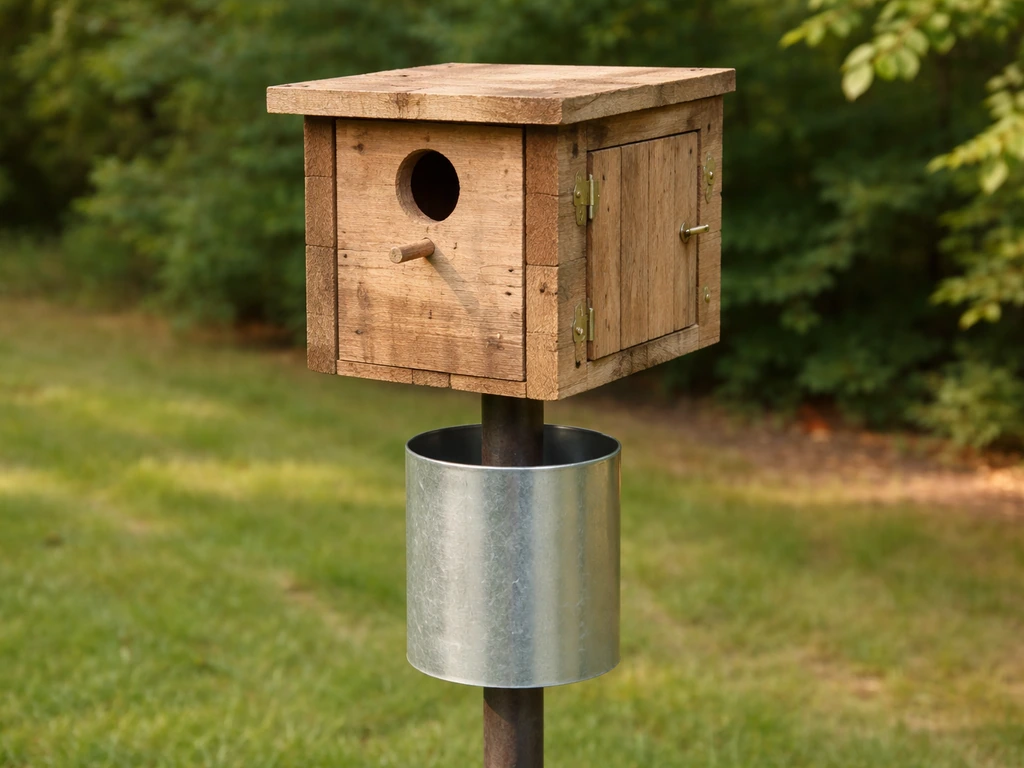
A good birdhouse on a bad mounting situation will get raided. Raccoons, snakes, cats, and squirrels are all capable of reaching into or pulling out a nest from a box mounted on a tree, wooden post, or fence. The Tennessee Wildlife Resources Agency is blunt about this: never mount a nest box on a tree or fence post if you can't also attach a proper predator guard.
The most effective predator guard is a cylindrical metal stovepipe baffle mounted on the pole below the box. The Michigan Bluebird Society calls this the easiest and best type of guard available. The Texas Bluebird Society's stovepipe plan specifies that the bottom of the nest box should sit about 6 inches above the top of the baffle. The stovepipe spins or tilts when a predator grabs it, preventing them from getting past. If you're making your own, use a section of 8-inch diameter metal stovepipe about 24 inches long, centered on the pole and positioned roughly 4 to 5 feet off the ground.
For the entrance hole itself, you can add an entrance hole extender: a short wooden block 1-1/2 to 2 inches thick with the same hole diameter, screwed to the front of the box around the entrance. This creates a tunnel that makes it harder for a predator to reach in and rake out the nest. Avoid using hardware cloth around the entrance or on any surface birds might land on since birds can catch their toes in the mesh openings, which the North American Bluebird Society specifically warns against.
Cleaning and maintenance schedule for a healthy nesting box
A birdhouse you never clean will eventually stop attracting birds. Old nest material harbors mites, bacteria, and parasites that can harm the next clutch. The good news is that cleaning a nest box takes about five minutes if you've built in a proper clean-out door.
During the nesting season
Check on your box every week or two during nesting season if you're monitoring a bluebird trail. Open the clean-out side panel gently and peek in. You're looking for signs of activity (a nest under construction, eggs, or chicks), evidence of predator damage, or signs of nest competition from house sparrows. If you spot a house sparrow nest (loose, messy, filled with grass and sometimes feathers), remove it promptly since house sparrows compete aggressively with bluebirds and other native cavity nesters.
After each brood fledges
Once you confirm the young birds have fledged (the nest is empty and the adults are no longer visiting), open the box and remove all the old nest material. Dispose of it at least 15 feet from the box since nest material close by can attract predators back to the site. Bluebirds can raise two or even three broods in a season, and they strongly prefer a clean box for the next attempt. A clean-out between broods can noticeably increase your re-nesting rate.
End-of-season cleaning
After nesting season ends, do a thorough clean-out by mid-August according to Mountain Bluebird Trails' guidance. All About Birds, which shares NestWatch-linked guidance, suggests cleaning out nest boxes or birdhouses at the end of the breeding season clean out the nest for future use. Remove all remaining nest material, then spray the interior with a solution of 1 part bleach to 9 parts water. Let it sit for a few minutes, wipe out the excess, and leave the box open for a few hours to air out completely before closing it back up. That bleach solution kills bacteria, mites, and mold without leaving a residue that would harm next season's occupants, provided you let it fully air dry.
Annual structural inspection
Every fall or early spring, before birds arrive, inspect the box for cracked or split boards, loose screws, warped roof panels, and any holes that have developed in the walls. Pallet wood is durable but it does move with humidity changes. Tighten all screws, replace any cracked boards (use the same HT pallet stock), re-apply exterior stain if the wood looks gray and dry, and confirm the predator baffle on the pole is still seated correctly. A 15-minute annual inspection keeps a pallet birdhouse in service for many seasons.
Pallet wood birdhouses are one of the most satisfying builds you can do on a weekend. The material is free, the build is straightforward, and when you see a pair of bluebirds or chickadees move in for the first season, it makes every minute of careful work completely worth it. If you enjoy building with repurposed materials, the same spirit applies to other creative approaches like birdhouses from milk cartons, wine corks, or coconut shells, but pallet wood gives you something close to full-sized, species-grade nesting boxes that last for years rather than one season. If you want to try a simpler project, you can also learn how to make a bird house out of popsicle sticks. Start with one box, get it mounted with a proper baffle, and see what shows up. If you want a simpler kid-friendly project instead, there are also easy guides for how to make a bird house with ice cream sticks how to make bird house with ice cream sticks.
FAQ
Can I use a pallet that is HT but looks dirty, stained, or weathered?
Yes, but only if the pallet is properly marked heat-treated (HT) and the boards are in good condition. Before cutting, remove any loose splinters and sand sharp edges so fledglings do not scrape themselves. Do not use epoxy or “glue fillers” inside the nesting cavity where birds will contact the surface.
What happens if my entrance hole is slightly bigger or smaller than the recommended diameter?
No. Choose a single entrance size matched to the target species, because larger holes can let in competitors and predators. If you want flexibility, build separate boxes rather than enlarging one hole, since changing the hole affects cavity conditions (heat, airflow) and can increase nest raids.
Why not use pressure-treated pallet boards if they are labeled for outdoor durability?
Avoid pressure-treated lumber entirely, even if it is for outdoor use. Pressure treatment uses preservatives that can off-gas, and sealed-in chemicals are risky in an enclosed cavity. Also avoid pallets with any chemical odor, oily residue, or faded stamping where the treatment code cannot be verified.
Do I need to drill extra ventilation holes in the sides or bottom?
For most pallet-built boxes, you do not need holes for airflow in the floor or roof. Instead, use the small ventilation gap at the top of the side walls (about 1/4 inch) or the small holes near the top as described, then rely on that controlled airflow plus the openable design for maintenance.
My pallet birdhouse design does not have a clean-out door, can I skip that?
If you cannot open the box easily, you will eventually leave debris behind, which increases mites and disease risk for the next nesting attempt. Use a hinged or pivot-screw clean-out panel, and confirm it can open while the box is mounted (or plan access from the ground).
What should I do if my finished birdhouse still smells like chemicals or the pallet after assembly?
If the box smells strong after assembly, stop and air it out in a shaded, breezy area for several days. If the odor persists, it usually means the pallet or fasteners have contamination you cannot reliably remove. In that case, replace the pallet stock rather than trying to “mask” it with interior coatings.
Is entrance direction always important, or can I put it anywhere if the roof overhang is large?
Place it so the entrance faces east or southeast when possible, and avoid heavy south exposure in hot climates. Even with the right orientation, too much direct sun can overheat eggs and chicks, so prioritize partial shade in the afternoon if your yard is intensely sunny.
Can I cover the front entrance with hardware cloth for extra protection?
Not for native cavity nesters like bluebirds and wrens. Birdhouse ventilation, drainage, and mounting are designed to exclude moisture and predators without mesh surfaces. If you want extra safety, add a proper predator baffle and an entrance tunnel, but keep the outside landing surfaces free of wire mesh.
How do I tell if my mounting spot needs a predator baffle?
Use a predator guard every time you mount within reach of animals, especially on trees, wooden posts, and fences. A baffle should be tall enough to block climbing access, and the box should sit above it (the build specifies about 6 inches above the baffle top). Position the guard so it spins freely and is not blocked by nearby branches.
Can I substitute a different kind of predator guard than a stovepipe?
Yes. Metal stovepipe guards generally do best, but whatever you use should not trap or injure animals. The key is that it must prevent access to the entrance at the exact height of the box. Also make sure the baffle is centered and unobstructed, with no shrubs or supports touching it.
When is the best time to clean a pallet birdhouse between broods or at season end?
Clean-out timing matters. Remove old nest material after fledging, then do a full clean-out by mid-August so parasites do not overwinter in the box. If you remove it too early, you may disrupt active broods, and leaving it too late can reduce the quality of the next nesting attempt.
What if my birdhouse collects water inside after rain?
If you drilled the floor as described (45-degree corner drain cuts, optional small centered holes), standing water usually is not the issue. However, puddling can happen if the box is tilted wrong or sits flush against a surface that traps runoff. Re-check leveling, ensure the roof overhang directs water away from the entrance area, and mount with slight drainage slope if needed.
Can one pallet birdhouse be used for multiple bird species?
Yes, because different species use different entrance sizes, cavity depths, and floor dimensions. If you change the box to attract a different species, treat it as a new build or modify to match that species’ dimensions closely, rather than only changing the hole size.
What if I put the birdhouse up late (after migration starts)? Will birds still use it?
If you miss the late-winter window, you can still put it up, but expect fewer first-brood nests because scouts may have already settled on sites. To improve your odds, place it early morning-facing if possible, mount it in open habitat, and do a thorough pre-season inspection and repair before birds arrive.
Next Articles
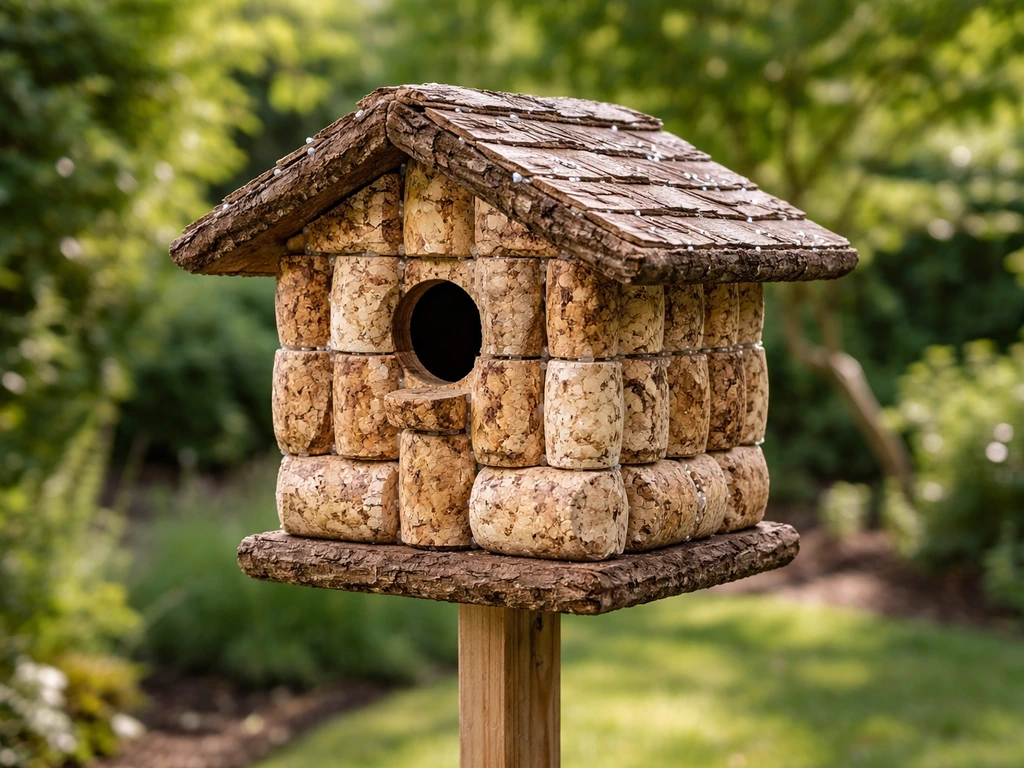
How to Make a Bird House Out of Wine Corks: DIY Guide
Step-by-step DIY wine cork bird house with bird-safe design, secure assembly, waterproofing, and placement plus care tip
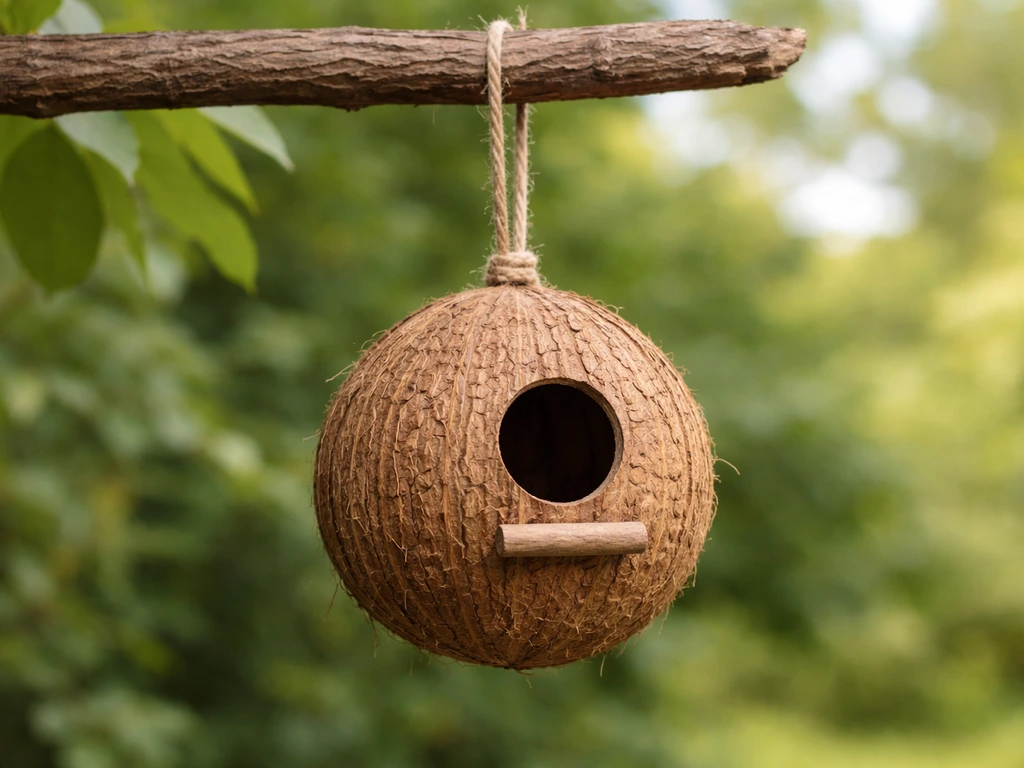
How to Make a Bird House With a Coconut Shell
Step-by-step guide to make a coconut-shell bird house, with cleaning, entry size, drainage, mounting, and safety tips.
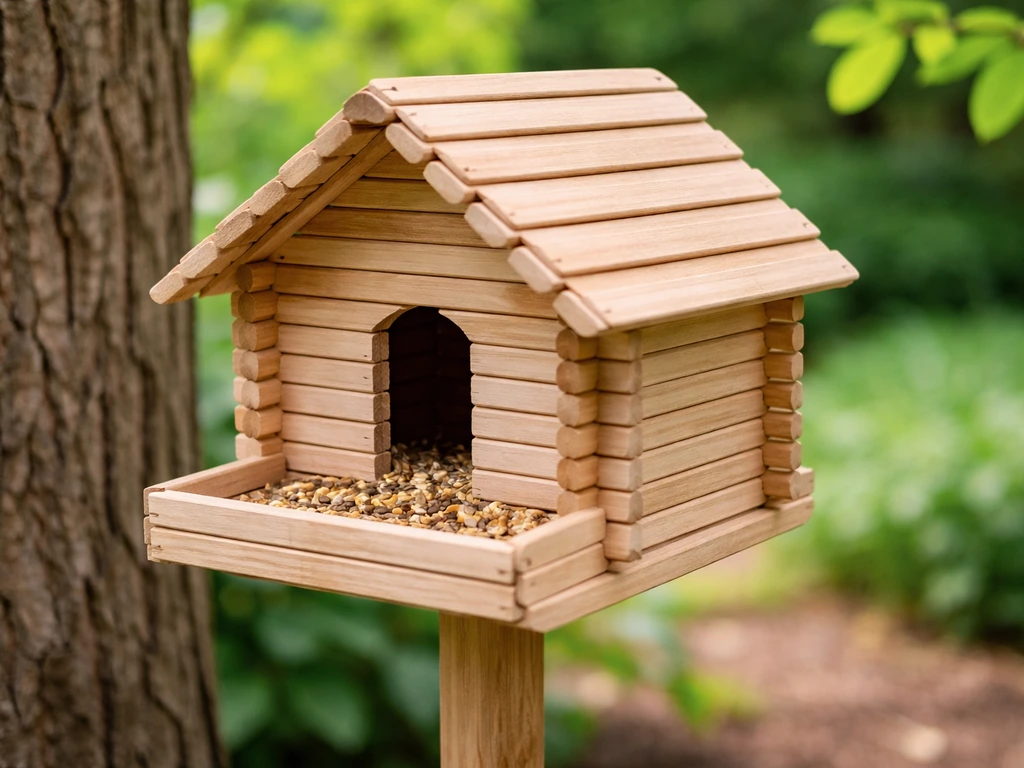
How to Make a Bird House With Ice Cream Sticks
Step-by-step guide to build a bird house or feeder from ice cream sticks, with safe weatherproofing and mounting tips.