You can build a solid, bird-safe play gym in an afternoon with basic tools, a few lengths of untreated pine or PVC, some natural-fiber rope, and whatever safe wood perches you can source or cut yourself. If you specifically want a bird tent-style enclosure, you can adapt the same safety-first materials and perch principles to build a simple, secure structure for your bird to explore bird-safe play gym. The key things to get right are size (big enough for your bird to stretch and move freely), material safety (no zinc hardware, no pressure-treated wood, no synthetic rope), varied perch diameters for foot health, and enough climbing and foraging elements to actually keep your bird busy. Everything else is just customization.
How to Make a Bird Gym: DIY Enrichment Play Stand
Marcus Thornton
15 May 2026
What a bird play gym should actually do
A bird play gym is an enrichment structure, not a cage and not a nesting box. Its whole job is to give your bird a place to climb, forage, chew, swing, and generally be a bird outside of its main housing. Boredom in parrots and other pet birds is a real welfare concern: birds that don't get enough stimulation and movement can develop screaming, feather-damaging behavior, repetitive pacing, or over-preening. A well-built gym addresses that directly.
A good gym works for any bird that spends time outside a cage, whether that's a budgie, a cockatiel, a conure, or a larger parrot. For clipped birds especially, climbing and foraging may be the primary forms of daily exercise, which makes the design of the gym even more important. The structure should support normal behaviors: moving between levels, manipulating toys, exploring textures, and retreating to a high perch when something feels uncertain. It is not meant to double as a sleeping spot or nest site, so avoid enclosed cozy spaces that could encourage breeding behaviors.
Size, location, and how to mount it
The minimum rule for sizing is simple: your bird should be able to fully stretch both wings in any direction without hitting anything. That's your starting clearance. A commercial multi-level play stand for a medium parrot typically runs around 32 inches long by 21 inches wide and 64 inches tall, which is a useful real-world target if you're building for a conure or cockatiel. For smaller birds like parakeets or finches, you can scale down significantly, but keep at least 24 inches of width so there's room to move between perch positions.
For location, indoors is usually the safer default. The RSPCA recommends that birds have access to a flight aviary or regular safe opportunities to fly in an indoor environment outside their cage, which helps with planning indoor space alongside outdoor options. Keep the gym away from drafts, air vents, and windows where direct sun will bake it for hours. Height matters too: birds feel more secure when they can reach a high perch, so position the tallest point at roughly your eye level or a little above. If you're placing it outdoors, even temporarily, you need to consider weather exposure on rope and wood (more on that in the maintenance section), predator sightlines, and whether your bird has a clear retreat path back inside.
For mounting, a weighted base is the most beginner-friendly option. A flat, heavy platform base (think a thick plywood sheet weighted with bolts or a concrete paver underneath) keeps the whole thing freestanding and easy to move for cleaning. Alternatively, you can clamp the upright post to a table edge or screw a wall-mount bracket into a stud if you want a permanent install. Whatever method you choose, test stability before your bird ever touches it: grab the top and push sideways. If it wobbles, add weight or a wider base.
Bird-safe materials and hardware
This is where most beginner mistakes happen, and I get it because the hardware store is full of cheap options that will genuinely hurt your bird. Here's what actually matters.
Wood
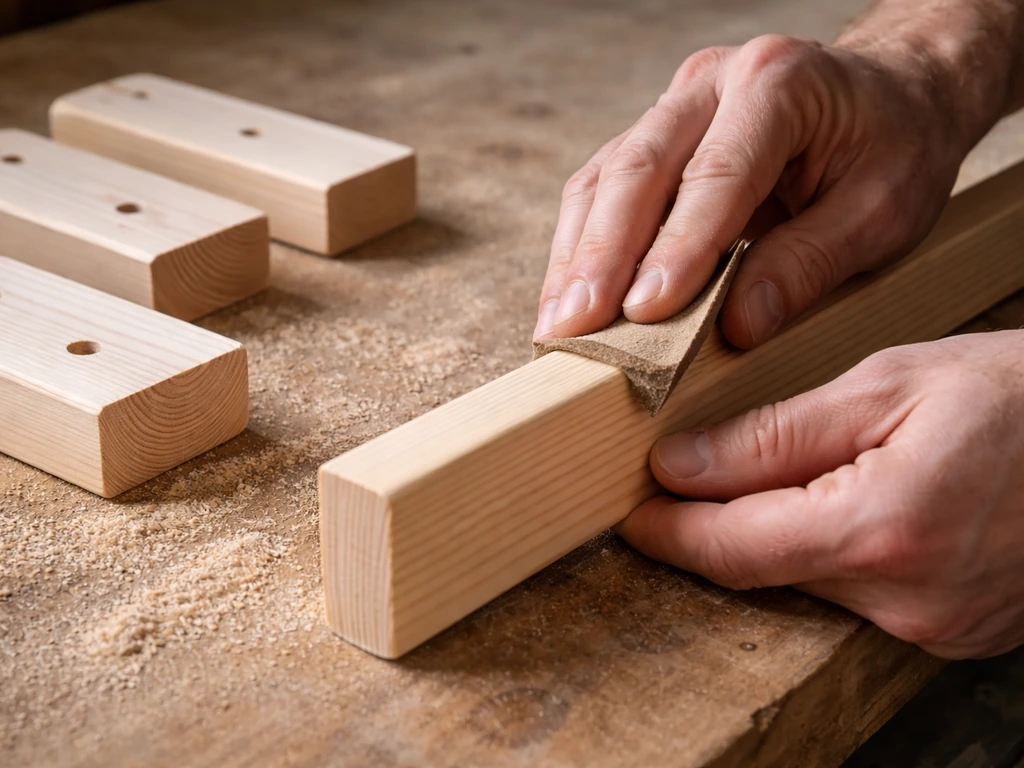
Plain, untreated pine is your most accessible and bird-safe choice for the main frame, perches, and platforms. It's cheap, easy to cut, and parrots love to chew it, which is fine. What you must avoid is pressure-treated lumber (the greenish-tinted wood at most lumber yards), which contains chemicals that are toxic to birds. Also skip MDF, plywood with formaldehyde-heavy glues, and anything stained or painted unless you're using bird-safe paint, which is a separate research project on its own. Other safe natural woods include poplar, balsa, and many fruit woods like apple or willow if you can source them from unsprayed trees.
PVC
Schedule 40 PVC pipe is a popular alternative and it has real advantages: it doesn't rust, it's easy to clean, and you don't have the zinc risk that comes with some powder-coated metals. The downside is that plain PVC is slippery, so if you use it for perches you'll want to rough up the surface with sandpaper or wrap it in natural-fiber rope. Use nuts and bolts to secure joints rather than relying solely on PVC cement, since you'll want the gym to be modular and disassemblable for cleaning.
Hardware
Every single piece of metal hardware on your gym needs to be stainless steel or nickel-plated and explicitly lead-free and zinc-free. This is non-negotiable. Zinc is a common household bird toxin and galvanized wire or hardware is one of the most frequent sources of zinc exposure. Avoid copper fittings and anything that looks like it might be plated in a shiny silver or brass finish unless you can confirm the composition. Stainless steel quick-links, eye bolts, and wing nuts are easy to find online if your local hardware store doesn't carry them. For bells and noise toys, use stainless steel bells with long clapper tubes that make it harder for your bird to break off and swallow the clapper.
Rope and fiber
Natural fiber only: hemp, sisal, or cotton in clean condition. Synthetic rope fibers can cause digestive tract obstructions if chewed and swallowed, and even natural fibers become a hazard once they start to fray. Frayed rope can tangle around toes or legs and cut off circulation surprisingly fast. Trim fraying ends immediately and replace any rope that's unraveling. Avoid creating loops large enough for your bird's head or body to pass through, since those are strangulation risks.
| Material | Best use on the gym | Key safety note |
|---|---|---|
| Untreated pine | Frame, platforms, perches | No pressure-treated or stained wood |
| Schedule 40 PVC | Frame uprights, horizontal bars | Rough up or wrap perch surfaces; bolt joints |
| Natural branch (apple, willow) | Perches, chew elements | Source from unsprayed trees only |
| Stainless steel hardware | Eye bolts, quick-links, wing nuts | Must be lead-free and zinc-free |
| Hemp/sisal/cotton rope | Climbing sections, toy hangers | Replace when frayed; no synthetic fibers |
| Stainless steel bells | Noise enrichment | Long-tube clapper design to prevent swallowing |
Designing the structure: frame, perches, ladders, and platforms
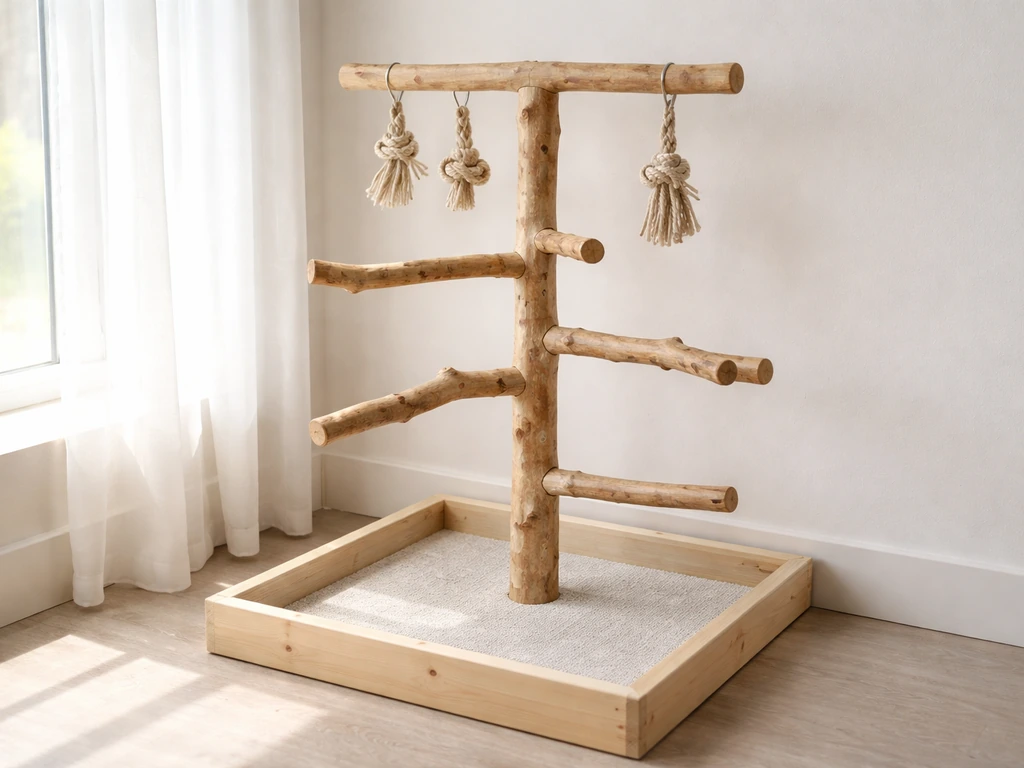
Think of the gym in three zones: a stable base, a central upright or frame, and an activity top. The base handles stability, the upright gives you height and something to attach things to, and the top is where most of the action happens. You can go vertical (a T-bar or tree shape on a pole) or horizontal (a tabletop play stand with a raised canopy), depending on how much floor space you have and what your bird prefers.
Base
For a freestanding gym, cut a base platform from 3/4-inch plywood, at least 18 by 18 inches for small birds and 24 by 24 inches for medium parrots. Drill a centered hole and glue or bolt in a 1.5-inch diameter wood dowel or PVC pipe as the main upright. For extra stability, add four short feet cut from 2x4 lumber, one at each corner, screwed up through the bottom of the plywood. The whole thing should feel rock-solid before you build up.
Perches
This is the part most people under-think. Your gym needs at least three to four perches at different heights and, critically, different diameters. Varied diameters keep foot muscles working across their full range and prevent sore spots. For parakeets and budgies, aim for perches around 3/8 inch in diameter and at least 4 inches long. For cockatiels, the sweet spot is roughly 1/2 to 1 inch in diameter. For larger parrots, scale up accordingly. Mix smooth pine dowels with rougher natural branch sections so the bird's feet get different textures and grip challenges throughout the day.
Ladders and climbing elements
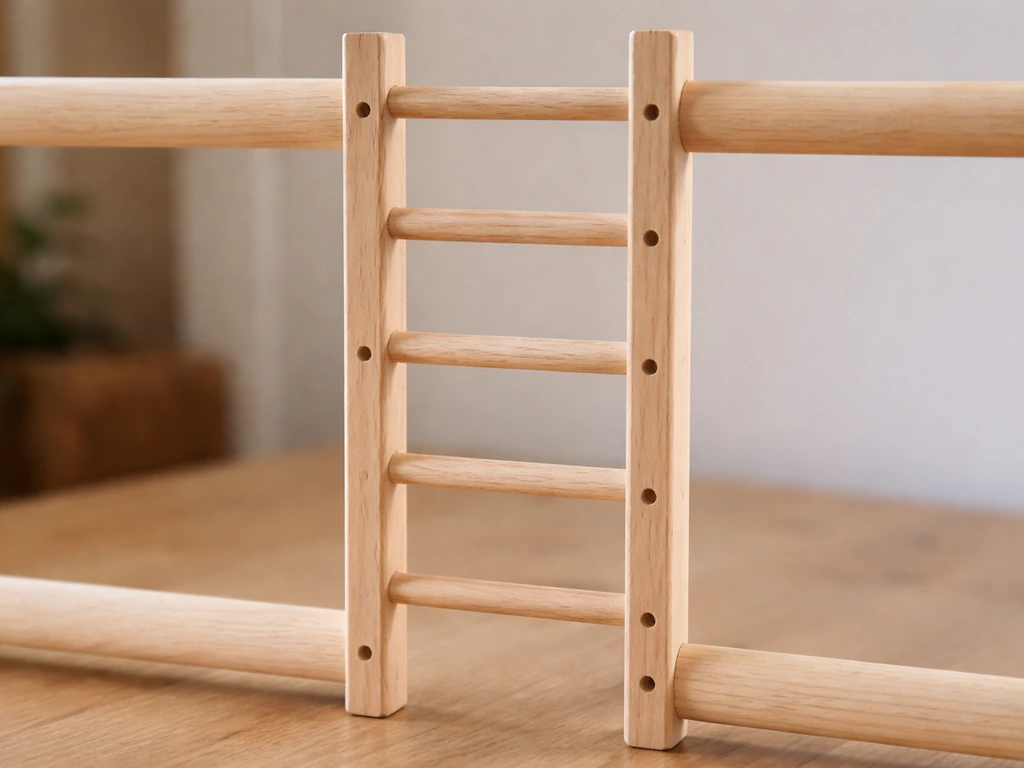
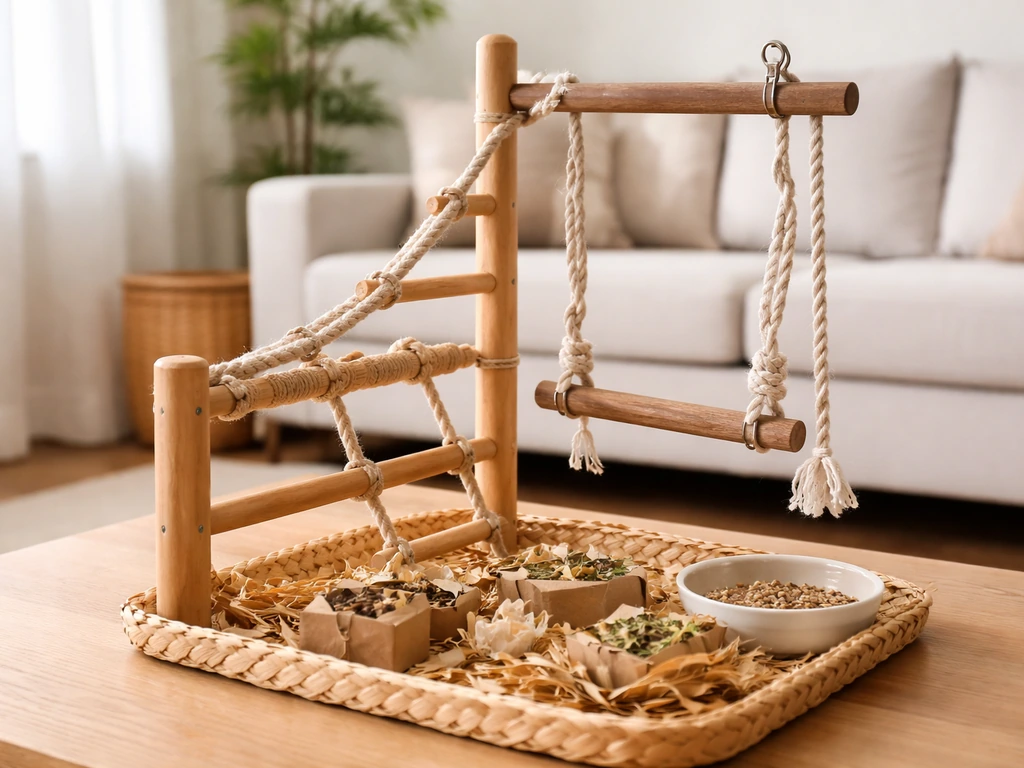
A simple ladder between two perch levels is one of the most effective enrichment additions you can build. Cut four or five rungs from 1/2-inch dowel and drill them into two parallel side rails of thinner pine. The whole thing can be 8 to 12 inches wide and as tall as the gap between your perch levels. The key design detail is making sure the bird can reach from one rung to the next in a natural climbing motion, so space rungs no more than 3 to 4 inches apart for small birds. You can also hang a rope ladder by threading thick sisal rope through pre-drilled holes in flat wood pieces, knotting it below each piece to hold the spacing.
Platforms
A flat platform near the top of the gym gives your bird a place to stand and survey the room, which they genuinely love. Cut a square or rectangle of pine board (6x6 inches works for cockatiels, 10x10 for medium parrots), sand the edges smooth, and bolt it to the upright or hang it from two chains of stainless steel quick-links. Platforms also give you a place to put foraging dishes or food puzzle elements.
Adding enrichment: toys, bells, foraging, and safe attachments
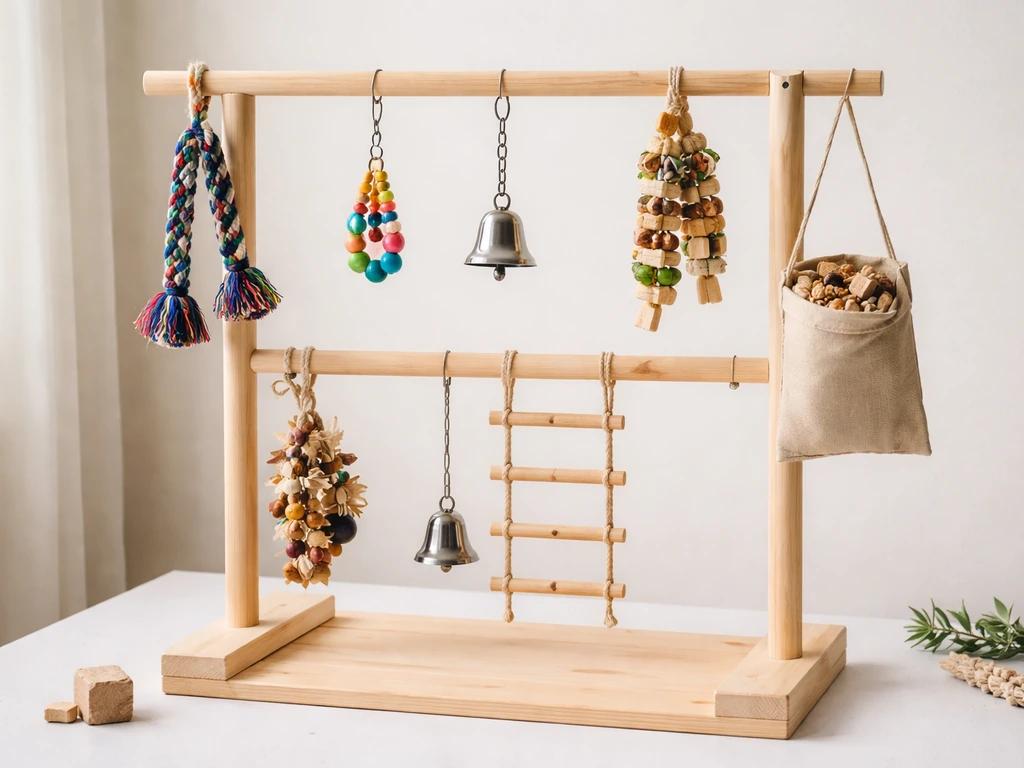
The gym frame is just the skeleton. What makes it actually engaging for your bird is the enrichment you hang from it, and the arrangement matters as much as the items themselves. The idea is to create multiple climbing pathways so the bird can travel from one toy or perch to the next rather than just sitting in one spot. Think of it like a little obstacle course where every position offers something new to investigate.
Hang toys at different heights and orientations: some at beak level when your bird is on a perch, some a little higher that require reaching or climbing to access. Rotate toys every week or two so the gym stays novel. Good options include wooden chew blocks on stainless steel quick-links, foraging cups or small stainless steel dishes stuffed with crinkled paper and hidden treats, shreddable palm leaf items, and natural wood beads. Avoid any toy with openings just large enough to trap a head, beak, or foot, and skip anything with bell designs that expose the clapper directly.
For foraging elements, drill shallow holes or notches into a wood block and stuff them with small treats or pellets. Hang it from a quick-link so the bird has to work to hold the block still while foraging. You can also wrap a section of rope around a pine block and tuck treats into the wrapping. These kinds of activities are especially valuable for clipped birds who rely on the gym for most of their daily physical and mental exercise.
When you attach anything to the gym, check that every connection point is tight and has no pinch points where a toe could get caught between a link and a wood surface. Stainless steel quick-links are the right tool for hanging toys because they open and close fully, unlike open hooks that can snag feathers or toes. If you're using rope to hang items, tie the knots tight and trim the tails short so there's nothing dangling loose for the bird to unravel quickly.
Step-by-step build instructions
Here's a straightforward build for a freestanding T-bar gym suitable for cockatiels and similar medium-small birds. Scale up materials proportionally for larger parrots.
- Cut your base platform from 3/4-inch plywood: 20 x 20 inches. Sand all edges smooth. Drill a 1.5-inch hole centered in the platform.
- Cut four 2x4 feet, each about 4 inches long. Screw them to the underside corners of the platform so the base sits elevated and stable on any surface.
- Cut the main upright from a 1.5-inch diameter pine or PVC post: 36 to 48 inches tall depending on how high you want the gym. Glue and bolt it through the base hole with a washer and nut underneath.
- Cut a T-bar crosspiece from 1-inch pine dowel or 1-inch PVC, about 18 to 24 inches wide. Drill a centered hole and bolt it to the top of the upright with a stainless steel bolt, washer, and wing nut so you can remove it later.
- Drill three to four holes along the crosspiece at 4 to 5-inch intervals and insert perch dowels of varying diameters (3/8 inch, 1/2 inch, and 3/4 inch). Secure each with a small stainless steel bolt through the crosspiece and the dowel. Sand any sharp edges around the holes.
- Attach a platform board (6x6 inches of pine) to the top of the upright using two stainless steel eye bolts and quick-links, or bolt directly through the board into the post. Make sure it sits level.
- Build a simple ladder: drill five rungs of 1/2-inch dowel into two side rails of 1/4-inch pine strip, spacing rungs 3 inches apart. Attach the top of the ladder to the crosspiece and let it hang at an angle to the base platform using two quick-links.
- Cut a section of thick sisal rope (about 3/4 inch diameter), about 24 inches long. Thread it from the crosspiece down to the base platform using stainless steel eye screws at each end. Knot it securely so it hangs taut enough to climb.
- Attach enrichment: hang two or three toys from the crosspiece using stainless steel quick-links. Add a small foraging dish to the platform with a bolt-on dish holder or a bent stainless steel clip.
- Do a full safety check before introducing your bird: wiggle everything, look for sharp edges or exposed bolt ends, check all quick-links are fully closed, and tug every rope attachment to confirm nothing pulls loose under pressure.
One honest tip from building a few of these: pre-drill every hole before driving a screw or bolt into pine. It prevents splitting and gives you much cleaner connections. And build the frame modular from the start, meaning use bolts and wing nuts rather than permanent glue wherever possible. You will want to disassemble this for cleaning, and future you will be very grateful.
Safety setup, cleaning, and keeping it in good shape
Introducing the gym to your bird
Don't just plunk the gym down in front of your bird and expect them to love it. Some birds are naturally cautious and will treat a new structure as a potential threat. The Association of Avian Veterinarians recommends placing new items across the room first and letting the bird observe from a distance over several days. Gradually move it closer. Once the bird is comfortable near it, place a favorite treat on the lowest perch and let them make the first move. Rushing this acclimation process almost always makes it take longer overall.
Regular cleaning
A bird gym gets messy fast: droppings, food debris, and chewed material accumulate on perches and platforms daily. Wipe down perches and the platform with a damp cloth every day or two. For a deeper clean weekly, remove perches and any wooden toys and scrub them with hot water and a bird-safe cleaner (diluted white vinegar works well). Hard plastic and stainless steel parts can often go in the dishwasher on a hot cycle. Wooden perches and platforms that don't come fully clean, are developing cracks that trap bacteria, or are heavily stained should be replaced rather than scrubbed harder.
Inspection and replacement schedule
Do a quick inspection every time you clean. You're looking for frayed rope (trim or replace immediately), any bolt or quick-link that has worked loose, wood that's cracking or splintering, and any toy that's been chewed down to a size that could be swallowed. Rope that has started to unravel needs to come off the gym that day, not next week. The strand hazard from fraying natural rope to a bird's toes is faster than most people expect. Hardware that's showing rust spots or discoloration needs to be replaced with fresh stainless steel pieces.
If you use the gym outdoors at all, wet rope dries slowly and becomes a harbor for mold, and wooden perches will swell and crack over repeated wet-dry cycles. Either bring the gym inside after outdoor sessions or build a separate outdoor version with PVC frame and stainless steel hardware only, skipping the rope elements entirely for a more weather-resistant setup.
When to rebuild vs. repair
The nice thing about building modular is that you almost never need to scrap the whole gym. Replace individual perches as they wear, swap in new toy configurations as your bird's preferences change, and add a second level when you want more complexity. I've had the same base and upright on one gym for years while the perches, platforms, and toys have cycled through dozens of iterations. Build the bones sturdy, and the rest is just ongoing customization.
If you want to keep expanding your bird's enrichment setup beyond the gym, there are some natural next projects: a homemade bird swing to hang from the crosspiece, a simple foraging playpen for floor-level exploration, or even a larger DIY PVC bird play gym if you want a more complex multi-station structure. If you want to include a safe resting area, also look up how to make a bird bed and choose materials that match your bird’s chewing and sleeping habits. But start with the basic T-bar gym, get your bird using it comfortably, and build from there.
FAQ
How can I tell if a wood or perch I found is truly bird-safe?
Check for pressure-treated stamps or any greenish tint, and avoid unknown stain or varnish. If you are using branches, only use wood from unsprayed sources, then sand smooth and look for lingering splinters or sap pockets (sap can encourage chewing and residue buildup).
My bird keeps chewing the rope, what should I do?
First, trim any fraying immediately and replace rope that is thinning or unraveling. If chewing is heavy, use rope only for hanging and switch the main chew surfaces to untreated pine, dowels, or purpose-made natural shreddables that you can replace on a schedule.
Can I use zip ties, cable ties, or hooks to attach toys?
Avoid most plastic ties and any unknown metal hooks because they can become sharp or break, creating entanglement or ingestion risks. Prefer stainless steel quick-links for frequent changes, and keep knot ends trimmed short so nothing dangles where a toe can snag.
What gap size is safe between perches and ladder rungs?
Use the bird’s size as the guide, and avoid spaces where a head, toe, or foot can get trapped. As a practical rule for small birds, keep ladder rung spacing around 3 to 4 inches, then do a “toe test” by inserting your finger gently to see if it could slip into a pinch point.
Should the gym be fully enclosed or have a cozy cover?
For most birds, avoid nest-like enclosures on the gym because they can cue breeding or territorial behavior. If you want partial shelter, use an open canopy or a high retreat perch rather than a boxy, enclosed tent where your bird can hide for long periods.
How do I set up the gym when my bird is clipped or has limited flight?
Place the lowest perch within easy stepping distance from your bird’s favorite outside spot, and make the main pathways climbing and foraging rather than high jumps. Use thicker lower-perch diameters for stable footing, then gradually transition to different textures higher up so feet get varied use without forced leaps.
Can I make a bird gym using only PVC, and will it be safe?
PVC frames can be safe if all hardware is zinc-free and lead-free, and perches are not slippery. Roughen the perch surface with sandpaper or wrap with natural-fiber rope, then periodically re-check texture because wear can make PVC slick again.
How often should I replace rope, perches, or worn parts?
Do a quick check every cleaning, but replace on condition, not a calendar. Replace rope the same day it starts to unravel, replace perches when cracks develop or diameter changes from wear, and swap toys when chewing reduces them to swallowable fragments.
Is it okay to put the gym near windows or in direct sun?
Safer placement is away from direct sun and heat sources because warm wood and metal can become uncomfortable fast and rope can degrade unevenly. If you must place near a window, rotate and monitor, and never use direct sun exposure for extended periods without checking the surfaces.
What are the safest options for hanging food puzzles or foraging cups?
Use stainless steel dishes or small cups attached with quick-links, then keep openings oriented so beaks work the task but feet cannot reach into pinch points. Also ensure the food pieces cannot fall into gaps where toes could get stuck, and remove leftover wet food daily to prevent spoilage.
Next Articles
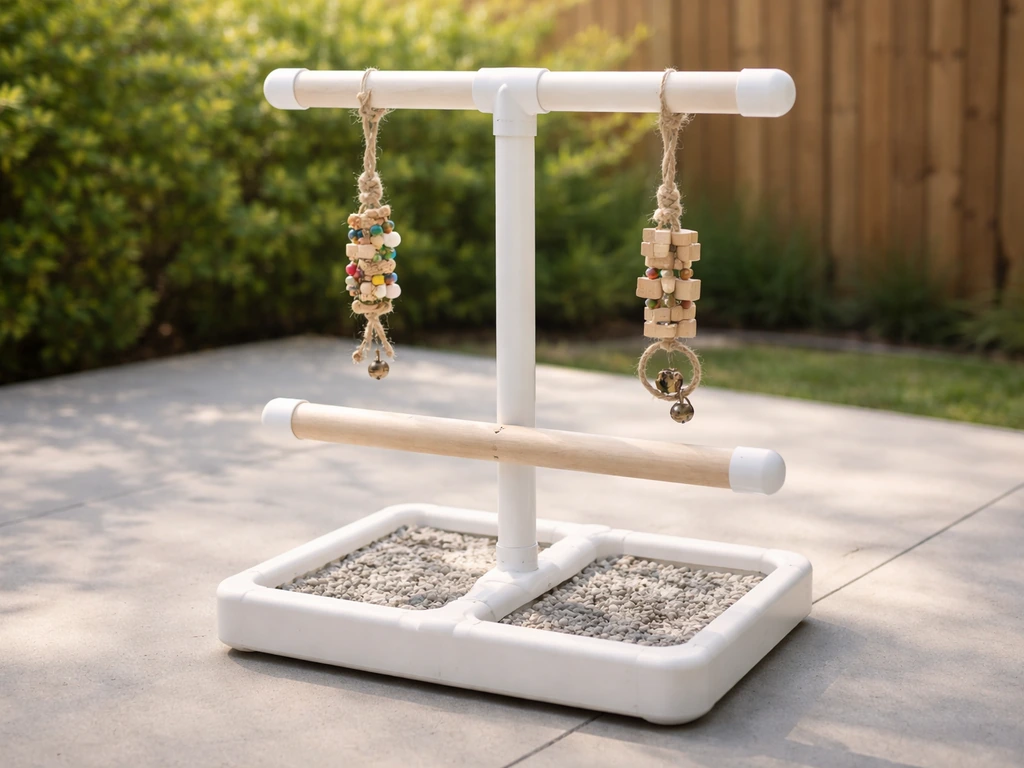
DIY PVC Bird Play Gyms Instructions: Step-by-Step Guide
Step-by-step DIY PVC bird play gym instructions, with sizing, stable base, safe edges, assembly tips, and maintenance.
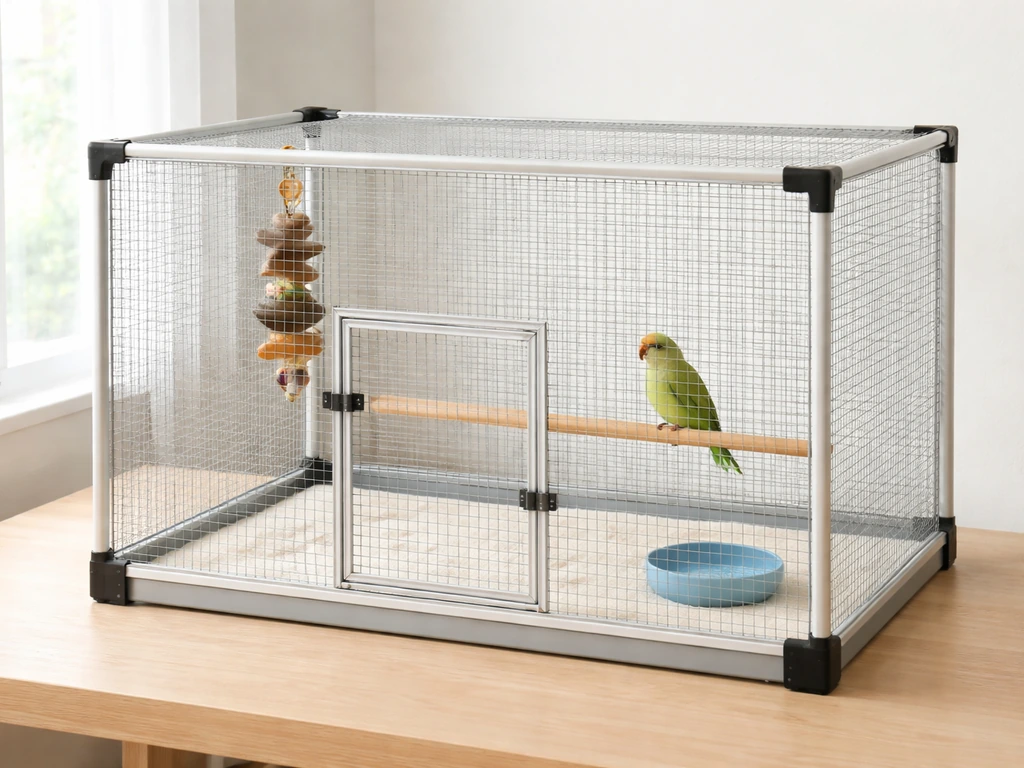
How to Make a Bird Playpen: DIY Safe Build Guide
Step-by-step guide to build a safe DIY bird playpen with size planning, escape-proof materials, setup, and enrichment.
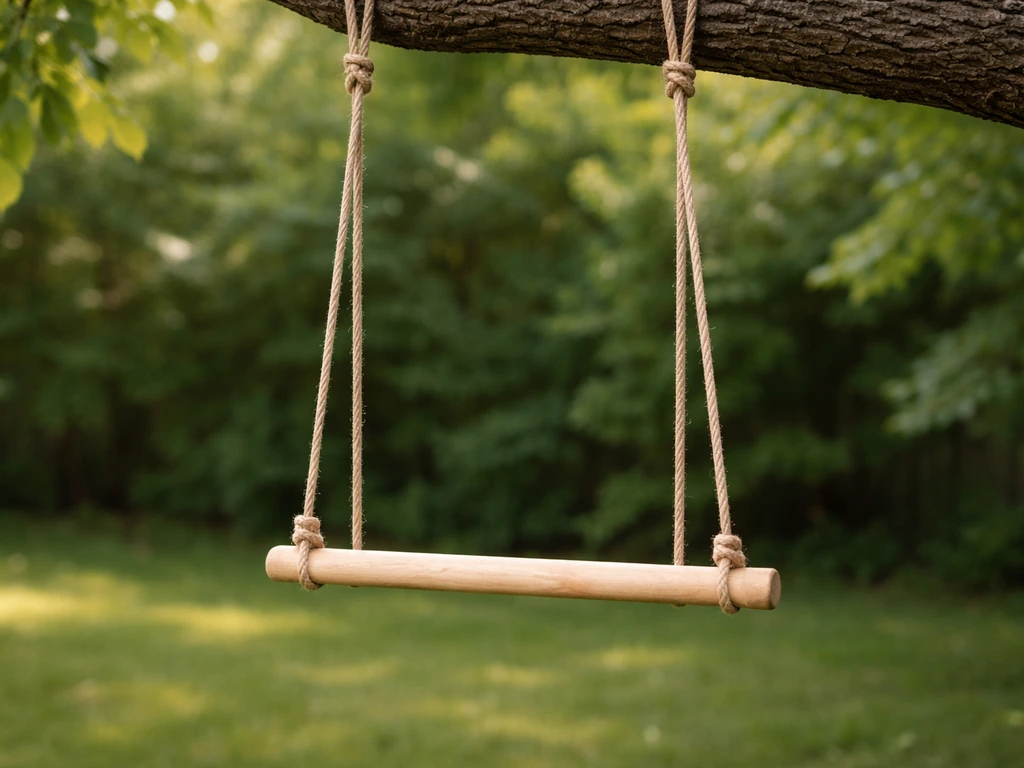
How to Make a Homemade Bird Swing: DIY Guide
Build a safe backyard bird swing with step-by-step DIY plans, sizing for bird types, and mounting and maintenance tips.