Here is the honest truth most birdhouse guides skip: Baltimore Orioles and most other oriole species do not use traditional enclosed cavity birdhouses at all. They build blank" rel="noopener noreferrer">hanging, pouch-like nests suspended from high branches, woven from grass, plant fibers, and sometimes even fishing line or twine.
How to Build an Oriole Bird House: Step-by-Step DIY
Marcus Thornton
26 Apr 2026
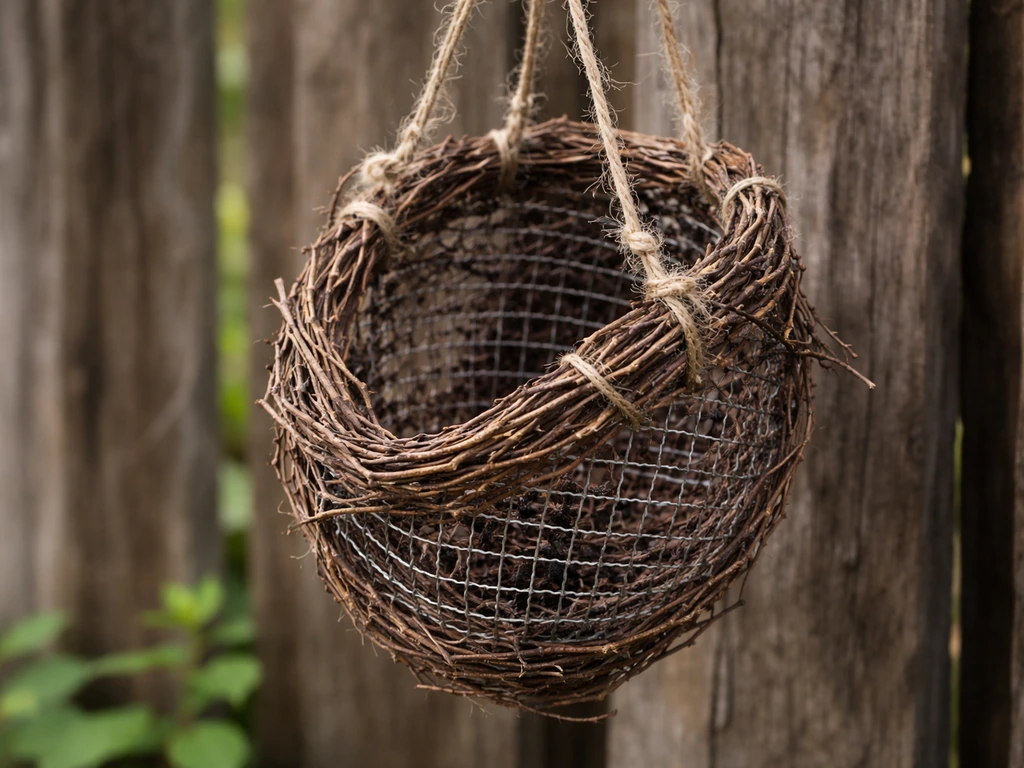
So if you want to build something that actually attracts orioles, the most effective DIY project is a hanging nest basket or nest support structure, not a wooden box with a round hole cut in it. That said, you can absolutely build something today that gives orioles a ready-made framework to build on or nest inside, and this guide walks you through exactly how to do that, with dimensions, steps, materials, and placement advice included.
If you specifically want to learn how to build a starling bird house, the steps and openings you need are different, so follow that species-focused guide next.
What Orioles Actually Need from a Nest Structure
Orioles are cavity-avoiders by nature. A Baltimore Oriole nest looks like a woven sock or basket, typically 3 to 4 inches deep and about 4 inches wide at the opening, suspended from a forked branch tip using plant fibers, grapevine bark, horsehair, wool, and increasingly modern materials like cellophane or twine. The female does most of the weaving, and the whole process can take a week or more. What she is looking for is a secure anchor point high up in a deciduous canopy, usually 20 to 30 feet above the ground, with good exposure and a clear flight path in and out.
This is important because it completely changes what you should build. A closed wooden box will almost certainly be ignored. What works is either a pre-formed hanging basket (a nest support structure) that the female can weave into and around, or an open-cup framework that mimics the branch-fork anchor point she instinctively looks for. You can also dramatically increase your chances by offering nesting materials nearby, which I will cover later.
For habitat, orioles gravitate toward forest edges and openings where tall deciduous trees (elms, maples, cottonwoods, and willows are favorites) meet open lawn or meadow. If your yard has a mix of tall trees, some shrubs, and open space, you are already in good shape. The structure you build should be placed to match those conditions as closely as possible.
Choosing the Right Oriole House Design
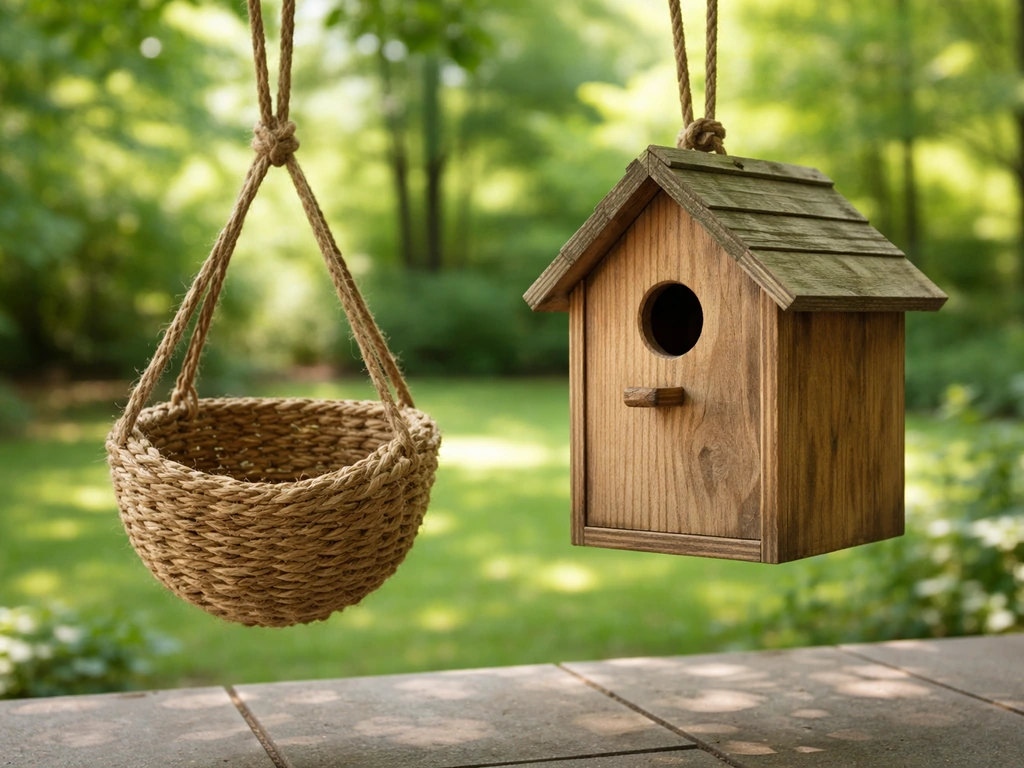
You have two main approaches when building for orioles, and choosing between them comes down to your skill level, your yard setup, and how hands-on you want to get.
Option 1: The Hanging Nest Basket (Best Choice)
This is the design that most closely matches how orioles actually nest. You build or adapt a small open-weave basket frame, roughly 4 to 5 inches in diameter and 3 to 4 inches deep, from natural or coated wire, grapevine, or thin wooden slats. The basket hangs from a branch tip on a length of natural cord or thin wire. The female can anchor her nest to the basket frame exactly the way she would anchor it to real branch forks. This is the approach I recommend for most builders, and the steps in this guide are focused here.
Option 2: A Traditional Enclosed Box (Limited Use)
A few sources still describe enclosed wooden birdhouses for orioles, and while Baltimore Orioles will almost never use them, some Bullock's Orioles or Orchard Orioles may occasionally investigate an open-fronted shelter in warmer climates. If you are determined to build a wooden structure, make it open-fronted rather than cavity-style, with a floor of about 4 by 4 inches, a depth of 6 inches, and no entrance hole at all, just an open face. Even then, treat it more as a decorative accent and focus your real effort on the basket design and nesting material station.
| Feature | Hanging Nest Basket | Enclosed Wooden Box |
|---|---|---|
| Oriole appeal | High, matches natural nesting behavior | Very low for most species |
| Build difficulty | Beginner-friendly | Moderate |
| Materials needed | Wire, grapevine, cord | Cedar or pine boards, screws, drill |
| Best for | Baltimore, Orchard, Bullock's Orioles | Possibly Bullock's in some regions |
| Placement height | 20–30 ft on branch tip | 10–15 ft on post or tree |
| Recommended? | Yes, build this one | Only as a secondary option |
Tools and Materials List
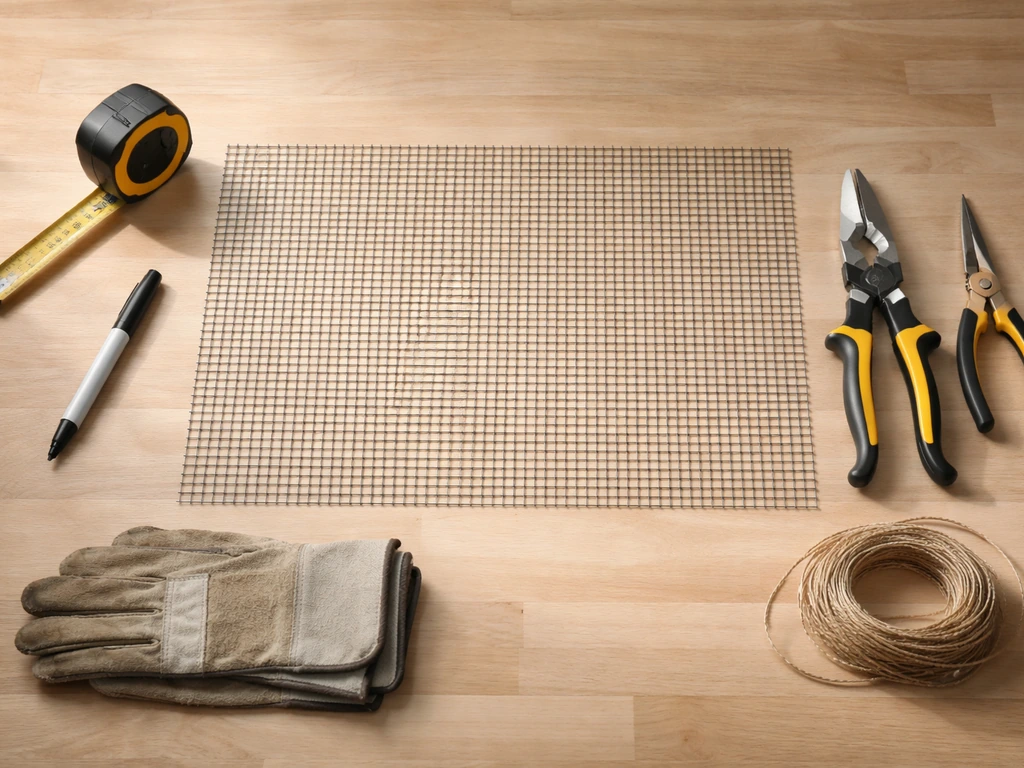
You do not need a fully equipped workshop for this project. Most of what you need can be found at a hardware store, a craft supply shop, or even around your yard. Here is everything for the hanging nest basket build.
Materials
- Galvanized or vinyl-coated wire mesh (hardware cloth, 1/2-inch openings), one 12-by-12-inch piece
- Natural jute twine or sisal rope (about 4 feet) for hanging
- Grapevine stems, willow withies, or thin flexible branches (optional, for a more natural basket frame)
- Thin-gauge galvanized wire (22 or 24 gauge) for binding basket edges
- A small forked branch or Y-shaped twig (about 6 inches long) to act as an anchor peg inside the basket
- Zip ties or small S-hooks for hanging attachment
- A small mesh or suet-cage style holder (optional, for a quicker shortcut build)
- Nesting material offerings: short lengths of natural yarn (6 inches max), pet fur, dried grass, strips of grapevine bark, wool fibers (avoid synthetic fibers longer than 6 inches and never use dryer lint)
Tools
- Wire cutters or tin snips
- Needle-nose pliers
- Tape measure or ruler
- Work gloves (wire edges are sharp)
- Marker or chalk for measuring cuts
- Optional: round-nose pliers for shaping smooth curves
If you want to build the optional open-fronted wooden box as a secondary structure, add: a small piece of untreated cedar or pine board (1x6, about 2 feet long), a handsaw or circular saw, a drill, 1.5-inch exterior screws, and medium-grit sandpaper.
Step-by-Step Build Instructions
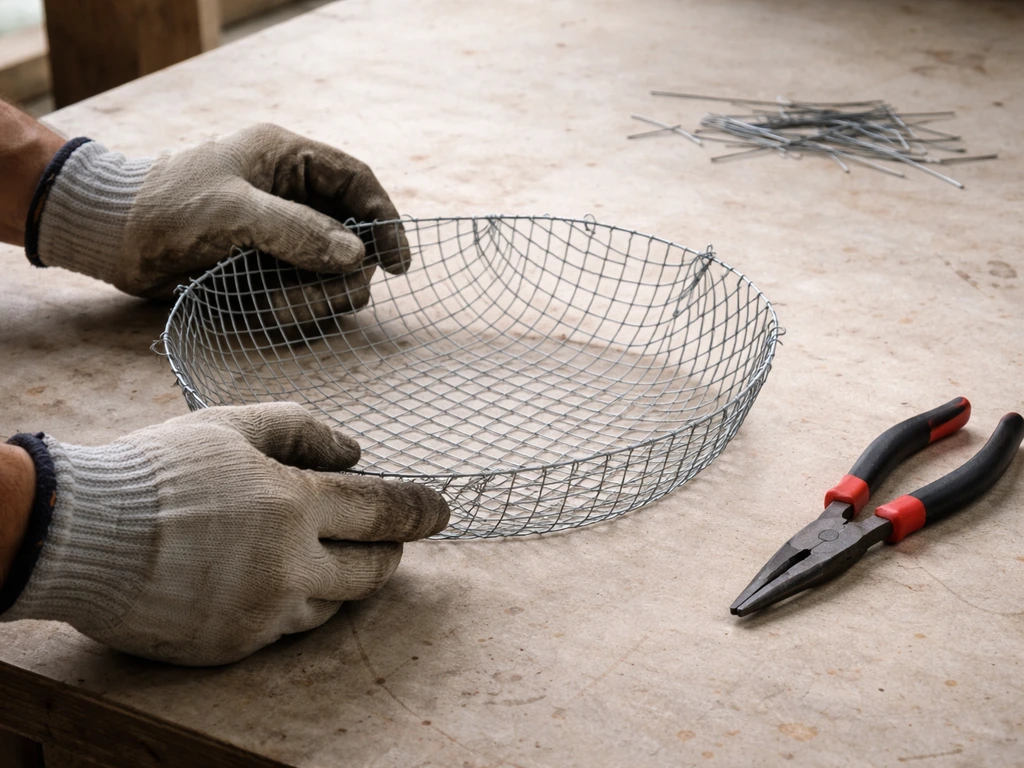
These instructions are for the hanging wire nest basket, which is what I recommend building. The whole project takes about an hour once you have your materials ready, and you can adjust dimensions slightly without compromising the result.
Step 1: Cut the Wire Mesh Base
Cut a circle of 1/2-inch galvanized or vinyl-coated wire mesh about 10 inches in diameter. This will form the bottom and sides of your basket. Wear gloves, the cut edges are genuinely sharp. Use your wire cutters to snip around the circle shape, then use needle-nose pliers to fold back any exposed wire tips so they do not stick out and potentially snag a bird.
Step 2: Shape the Basket
Hold the center of the mesh circle against a round object about 4 inches in diameter (a large tin can or a baseball works perfectly) and gently press the outer edges up and around it to form a cup shape. You want the finished basket to be roughly 4 to 5 inches wide at the top opening and 3 to 4 inches deep. The wire mesh is flexible enough to hold this shape once bent, but if you want to lock it in place, thread a length of thin-gauge galvanized wire around the top rim and twist it closed with pliers to create a reinforced edge.
Step 3: Add Grapevine or Branch Weaving (Optional but Recommended)
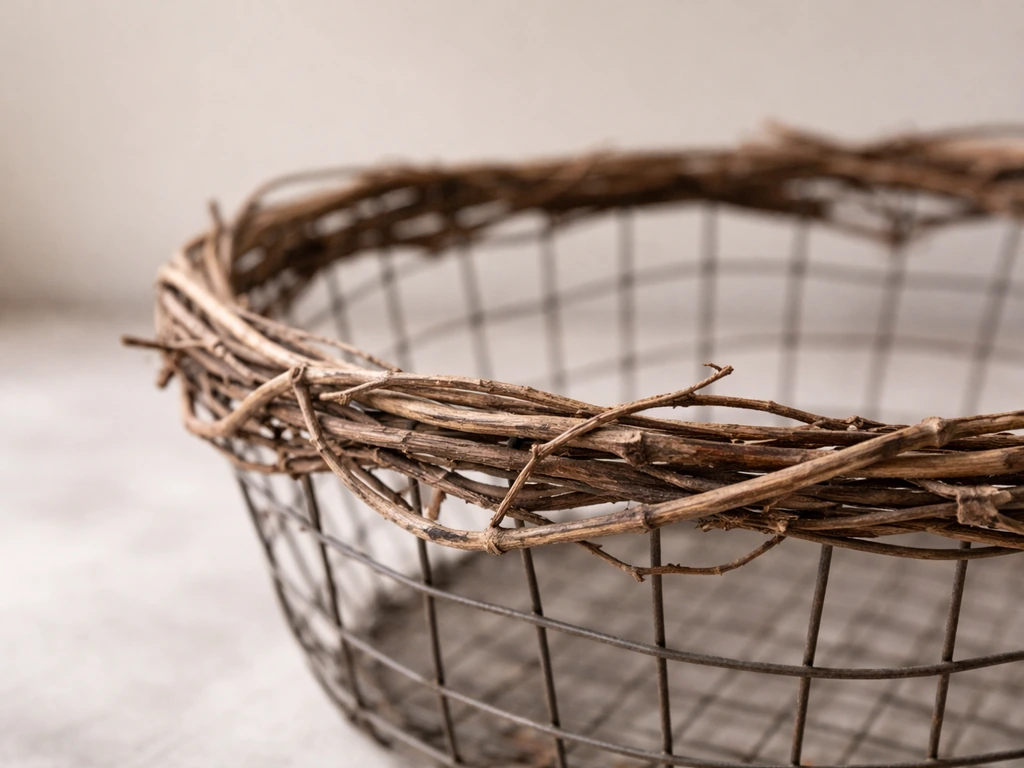
Weaving a few lengths of thin grapevine stem or flexible willow around the outside of the wire basket makes it look far more natural, adds insulation, and gives the female oriole better anchor points to start her own weaving. Soak the grapevine briefly in water to make it pliable, then weave it in and out of the wire mesh openings around the body of the basket. Three or four wraps are enough. Leave the top rim open so the bird has clear access. This step is optional, but every time I have included natural weaving in a basket, it has been more quickly investigated by birds.
Step 4: Install the Interior Anchor Peg
Take your small forked twig or Y-shaped branch and wire it horizontally across the inside of the basket, about halfway down. Use short lengths of thin galvanized wire or zip ties to secure both ends to the basket sides. This peg gives the female a starting anchor point to weave her nest fibers around, mimicking the branch forks she would use in the wild. Make sure the peg does not block the full interior of the basket, it just needs to be a central cross-support.
Step 5: Create the Hanging Attachment
Cut three equal lengths of jute twine, each about 18 inches long. Evenly space these around the rim of the basket (at roughly the 12 o'clock, 4 o'clock, and 8 o'clock positions) and tie each one securely to the wire rim with a double knot. Gather all three free ends together and tie them into a single knot about 6 inches above the basket. From that knot, attach another 12 to 18 inches of twine or a small S-hook that will slip over a branch. The three-point suspension keeps the basket level and stable in wind, which orioles need since they build to withstand wind by design.
Step 6: Set Up a Nesting Material Station Nearby
This step is not part of the basket itself, but it is probably the single biggest thing you can do to actually get orioles to use your structure. Push short lengths of natural yarn, strips of grapevine bark, dried grass, and pet fur through the openings of the wire mesh on the outside of the basket, leaving them loosely hanging so the female can pull them free. You can also hang a separate small mesh cage (a repurposed suet feeder works perfectly) nearby loaded with the same materials. Keep fibers under 6 inches long to prevent entanglement, and avoid synthetic fibers, dryer lint, or anything with chemical treatment.
Ventilation, Drainage, Predator Protection, and Durability
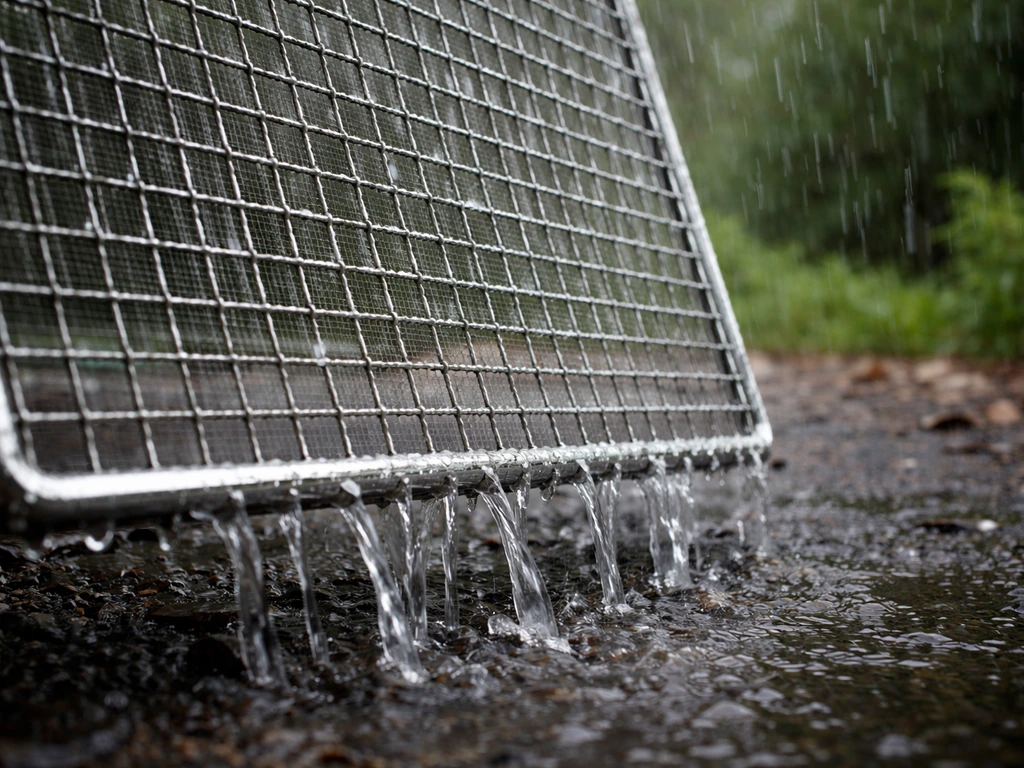
The open-weave wire design naturally solves the ventilation and drainage problems that plague solid wooden birdhouses. Rain passes straight through the mesh, and airflow is unrestricted on all sides. This is actually one big advantage of the basket design over an enclosed wooden box, where you would need to drill drainage holes in the floor and ventilation slots near the roofline. If you added grapevine weaving to your basket, it provides some wind and rain shelter without trapping moisture.
Predator Protection
Height is your primary predator deterrent. At 20 to 30 feet up in a tree canopy, most ground predators are not a factor. The real threats at that height are squirrels and snakes, and the best protection is placement: hang the basket from a branch tip rather than against the trunk, at the end of a long limb where squirrels have to cross a lot of exposed branch to reach it. Avoid placing the basket anywhere that another branch, a fence, or a structure runs within jumping distance above or beside it. Do not add a perch rod to the basket; orioles do not need one and it just gives predators a foothold.
Hardware and Finish Safety
Use galvanized or vinyl-coated wire only, never bare steel (which rusts quickly and can injure birds) or copper (toxic to many species over time). Jute and sisal twine are safe and biodegradable. If you build the optional wooden open-front box, use untreated cedar or pine with no paint, stain, or sealant on the interior.
NestWatch recommends using untreated wood and avoiding outside perches on birdhouses to reduce predator access and other hazards for birds untreated cedar or pine with no paint, stain, or sealant on the interior. If you want to treat the exterior wood for weather protection, linseed oil or a water-based exterior finish is fine on outside surfaces only, fully dried before installation.
Never use creosote, lead-based paint, or any wood preservative with pesticide ingredients.
Where and When to Mount Your Oriole Nest Basket
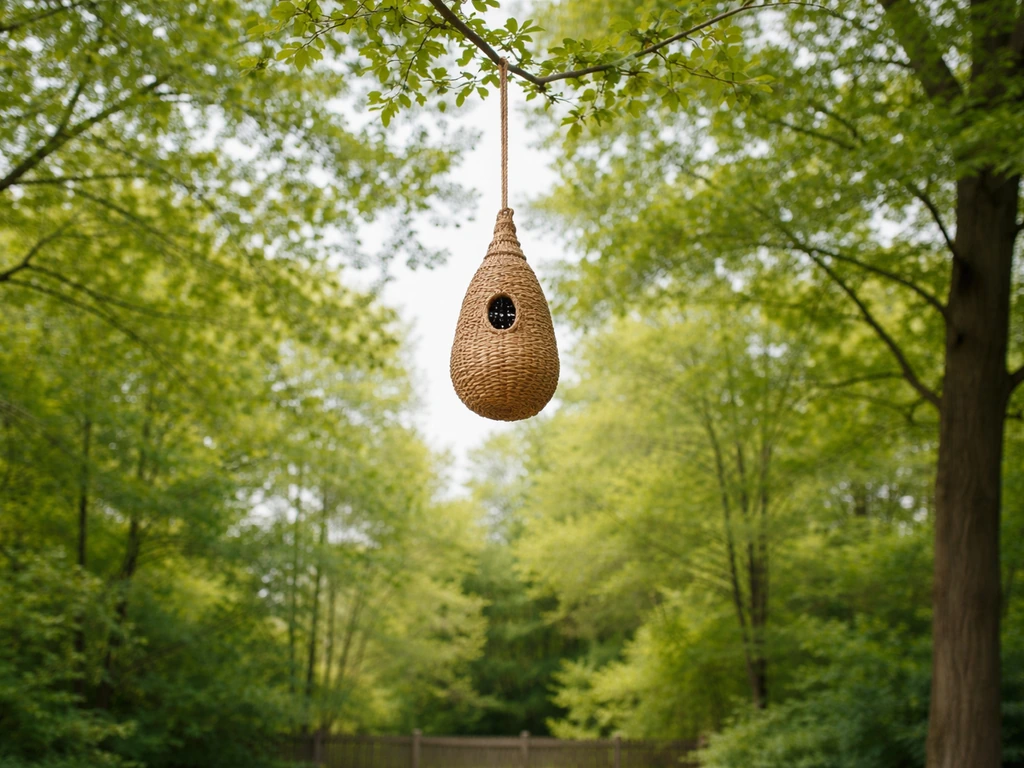
Height and Location
Aim for 20 to 30 feet high if at all possible, hung from the tip of a long branch of a tall deciduous tree: elm, maple, cottonwood, sycamore, and willow are all great choices. Orioles strongly prefer branch tips over trunk-adjacent spots because it gives them a clear, unobstructed flight path in from below and on the sides. If your trees are not that tall, 10 to 15 feet is a workable compromise, but your success rate will be lower. Face the basket opening toward the east or southeast if you can manage it, which gives morning sun and protection from prevailing afternoon wind in most of the US.
Habitat Positioning
Orioles like edges, the transition zone where a stand of tall trees meets open lawn, meadow, or a yard. They are not deep-forest birds. So the ideal tree is one at the edge of your property or at the boundary of a tree line rather than deep in a wooded area. Having shrubs and lower plantings nearby is a bonus since they use those for foraging. If you also put out a feeder with fresh orange halves and grape jelly nearby (within 50 feet of the basket), you dramatically increase the likelihood of orioles investigating the whole area.
Timing Your Installation
Baltimore Orioles arrive in the eastern US from late April through mid-May depending on your latitude, which means right now, late April 2026, is the ideal window to get your basket up. Do not wait. Females begin scouting nest sites within days of arrival, and early detection of a well-placed basket with nesting materials available is your best shot. In the central and western US, Bullock's Orioles and Orchard Orioles arrive on a similar spring timeline. Get the basket up immediately and keep the nesting material station stocked for the first three to four weeks of their arrival.
Season-to-Season Maintenance
At the end of each nesting season (late July or August after fledglings have left), take the basket down and remove any old nest material. Orioles almost never reuse the same nest in the same spot, but a clean basket gives you a better chance next year. Inspect the wire for rust or damage, replace any twine that has degraded, and re-hang it by early the following May. The galvanized wire construction means you should get several seasons out of a well-maintained basket before needing to rebuild. While you are at it, clean your oriole feeders with hot soapy water, since mold in grape jelly feeders is a real hazard and checking them is a good late-season habit.
Your Next Steps to Actually Attract Orioles
Building the basket is the first piece. If you are also interested in finches, you can follow a similar step-by-step approach with a finch-focused bird house design how to make a finch bird house. If you are specifically looking for the right small, easy-to-build setup, this guide to how to build chickadee bird house will walk you through the key measurements and placement.
Pairing it with the right habitat, food offerings, and a stocked nesting material station is what actually closes the deal. Put out orange halves and grape jelly in a purpose-made oriole feeder at the same time you hang the basket, position it within sight of the nesting basket, and refresh the food every two to three days. Keep a small water source (a shallow bird bath works) nearby since orioles drink and bathe regularly.
Then give it two to three weeks before drawing any conclusions. Orioles are scouting a wide area when they arrive, and sometimes it takes a season for them to discover and accept a new spot.
If you enjoy this kind of species-specific nest structure project, the same design thinking applies to other birds that have very particular housing needs. Swallows, for example, want a very specific cavity size and open flight path, doves prefer open platform nests rather than cavity boxes, and chimney swifts need purpose-built chimney towers completely unlike anything else.
For chimney swifts, you can set up a purpose-built chimney swift bird house (chimney tower) with the right entry dimensions and safe placement to match their unique roosting needs. If you are curious about how to build a dove bird house, you will want to focus on an open platform design and the right placement for doves.
If you are also wondering how to build a swallow bird house, focus on the exact cavity dimensions and proper placement they require Swallows, for example. To get the best results, use the swallow’s specific cavity dimensions and mount it at the correct height and placement build a swallow bird house. Each species rewards the builder who takes the time to understand how they actually nest rather than reaching for a generic plan.
FAQ
How long should I wait after installing the oriole nest basket before deciding it is not working?
Orioles can be cautious about a new, unnatural structure, so hang the basket with nesting materials already in place, then leave it untouched for at least 2 to 3 weeks. Avoid repeatedly moving it or adding perches after you install it, since changes can make the site feel unsafe. If nothing happens by mid to late spring, re-check height (ideally 20 to 30 feet) and branch-tip placement before assuming orioles will not use it.
Can I turn the basket design into a normal wooden birdhouse with a hole or a floor?
Do not add a wooden floor, enclosed sides, or a round entrance hole. Even if the box is “open-fronted,” if it becomes a cavity-style shelter with an entrance, orioles typically ignore it. If you want a secondary wooden option, keep the interior unsealed and focus on an open cup or open face that does not funnel airflow the way a cavity box does.
What wire or hardware is safest if I want the basket to last for multiple seasons?
Use only galvanized or vinyl-coated wire for the basket frame, and keep all cut edges contained, with any wire tips folded back so they cannot poke. Replace any rust spots immediately, since deteriorated wire can snag fibers and injure birds. Also keep the basket from contacting rough surfaces where the birds might wedge themselves or tear fibers.
How do I add nesting material correctly without causing tangles or refusal?
Orioles are drawn to nesting material and will investigate more when fibers are loose and retrievable. Aim for natural fibers under 6 inches long, push them through the outside openings so they hang freely, and avoid anything treated with dye, chemicals, or coatings. If you use a separate nearby fiber station, refresh it regularly so the fibers smell fresh and remain easy to pull.
Can I use synthetic yarn or fishing line as nesting material to strengthen the basket?
Yes, you can use coated wire and natural fibers, but avoid synthetic “craft” fibers and anything that behaves like filament thread (it tangles easily). Also skip fishing line, despite it being mentioned as a novelty material in the wild, because it can form hard-to-remove loops around birds. Stick to jute or sisal twine, grapevine bark strips, dried grass, and natural yarn.
How should I store and maintain the basket between nesting seasons?
A clean, open-weave basket is best, but you should still do a light inspection after storms. After the nesting season, remove old material and check for rust, broken knots, or weakened twine. Before re-hanging in spring, confirm the basket still forms a cup shape (not flattened) and that the suspension points keep it level in wind.
Does it matter which direction the basket opening faces, and what if my best tree spot points the wrong way?
Place the basket so the opening faces east or southeast when possible, but do not force orientation if it requires moving the basket off a true branch tip. Branch-tip placement matters more than exact compass direction, because it gives the clearest side and downward approach paths while reducing predator access. If you must choose, prioritize height and branch-tip location first.
My yard only supports 10 to 15 feet, will orioles still use the basket?
If your trees are shorter, 10 to 15 feet can work, but success rates drop because predators can reach more easily. Compensate by using a truly long, exposed limb (not near trunks, fences, or overhangs), and keep anything a predator could jump from away from the approach zone. Even at lower heights, do not add a perch rod.
Why do you say not to add a perch, and what should I do instead?
Do not attach “landing” features or perches. Oriole nest sites are chosen for weaving access and open flight paths, and extra hardware can create a predator foothold. If you are thinking of adding a twig crossbar, limit it to the internal starting peg only (about halfway down) and keep the exterior clear for safe approach.
How close should I put an oriole feeder to the nest basket, and how often should I refresh food?
Feeders can help orioles discover the area, but they do not replace correct nesting structure. Put out orange halves and grape jelly within about 50 feet of the basket, and refresh every 2 to 3 days so the food does not ferment. Keep the feeder in sight of the basket, but avoid placing it so close that predators are attracted directly under the basket.
Next Articles
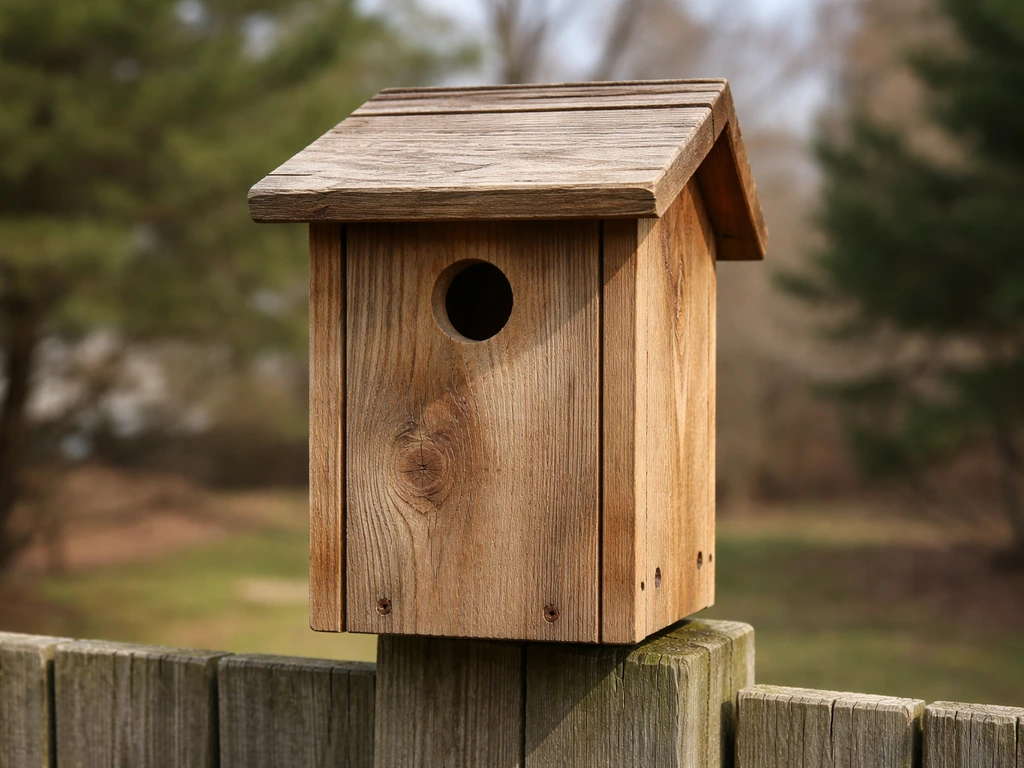
How to Build a Chickadee Bird House Step by Step
Step-by-step DIY chickadee bird house with cut list, chickadee entry sizing, ventilation, drainage, and mounting tips.
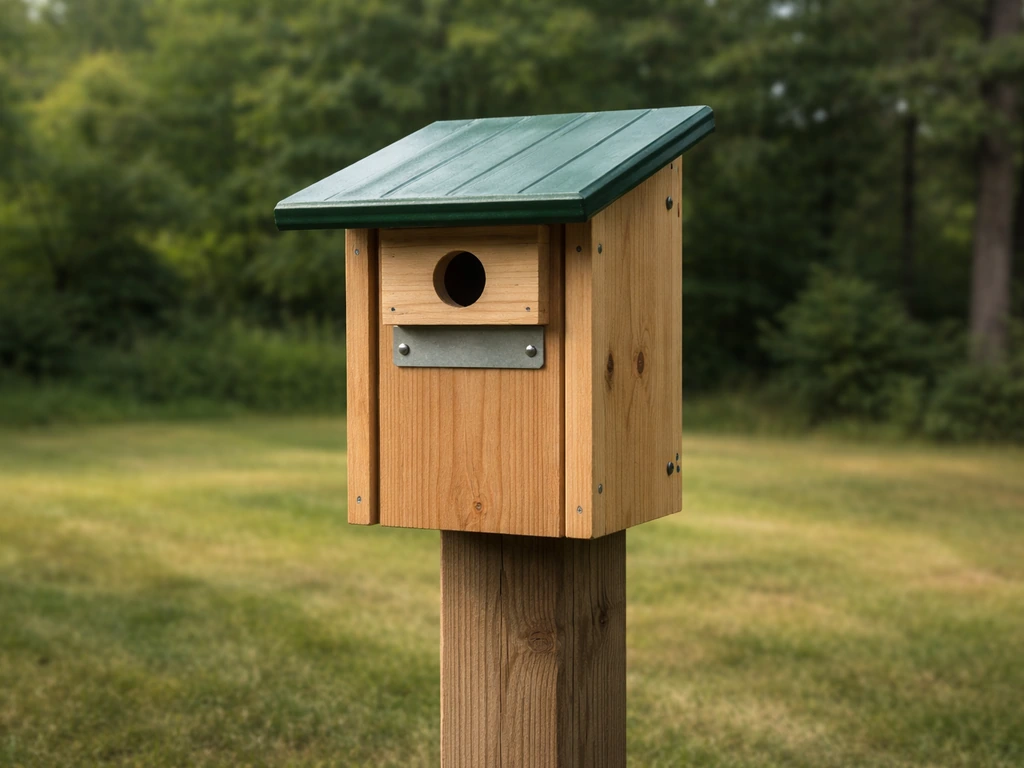
How to Build a Starling Bird House Step by Step
Step-by-step DIY guide to build a predator-resistant starling nesting box with correct hole size, ventilation, drainage,
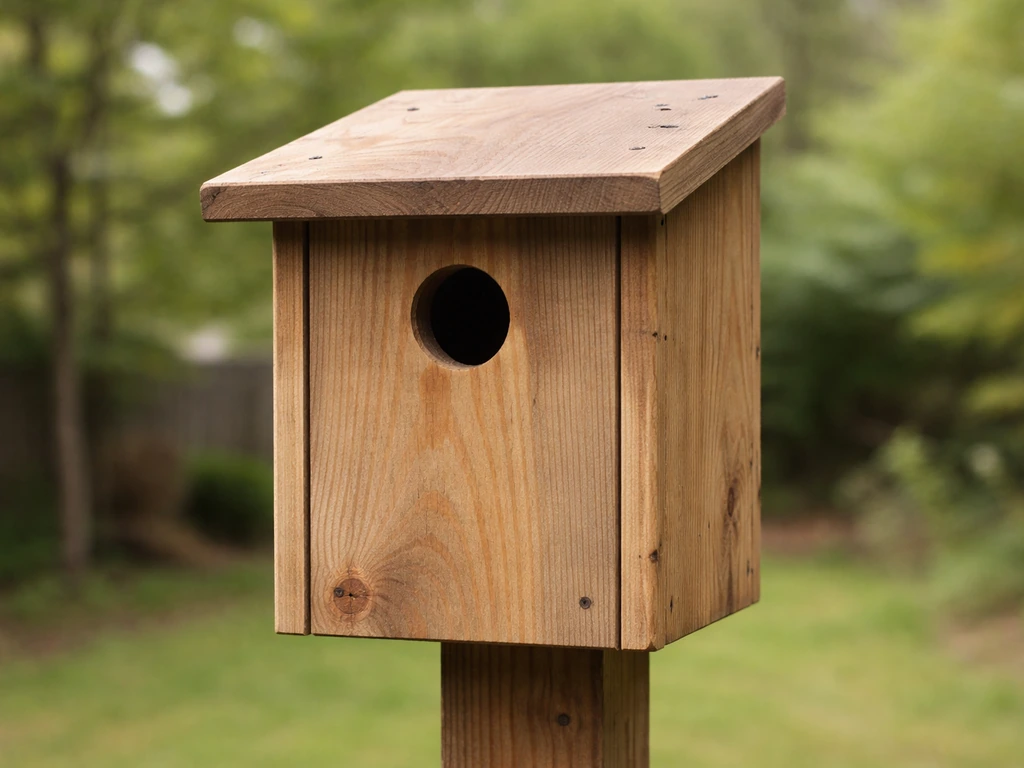
How to Make a Finch Bird House: DIY Build Guide
Step-by-step DIY finch bird house build with correct entry hole size, cut list, mount tips, and maintenance troubleshoot