Building a swallow bird house is one of the most rewarding backyard projects you can tackle, but only if you build the right kind for the right species. Get the design wrong and you will have a beautifully crafted box that no swallow ever touches. Get it right and you could have a pair nesting just a few feet from your garden every spring. Here is exactly what you need to know to build and install a swallow house that birds will actually use. Cornell Lab of Ornithology’s All About Birds notes that if you live in the breeding range, tree swallows can be attracted to yards by putting up a nest box and providing nest-box plans blank" rel="noopener noreferrer">attract tree swallows to yards by putting up a nest box.
How to Build a Swallow Bird House for Barn and Tree Swallows

Marcus Thornton
5 Apr 2026
Barn swallow vs. tree swallow: which one actually uses a bird house?
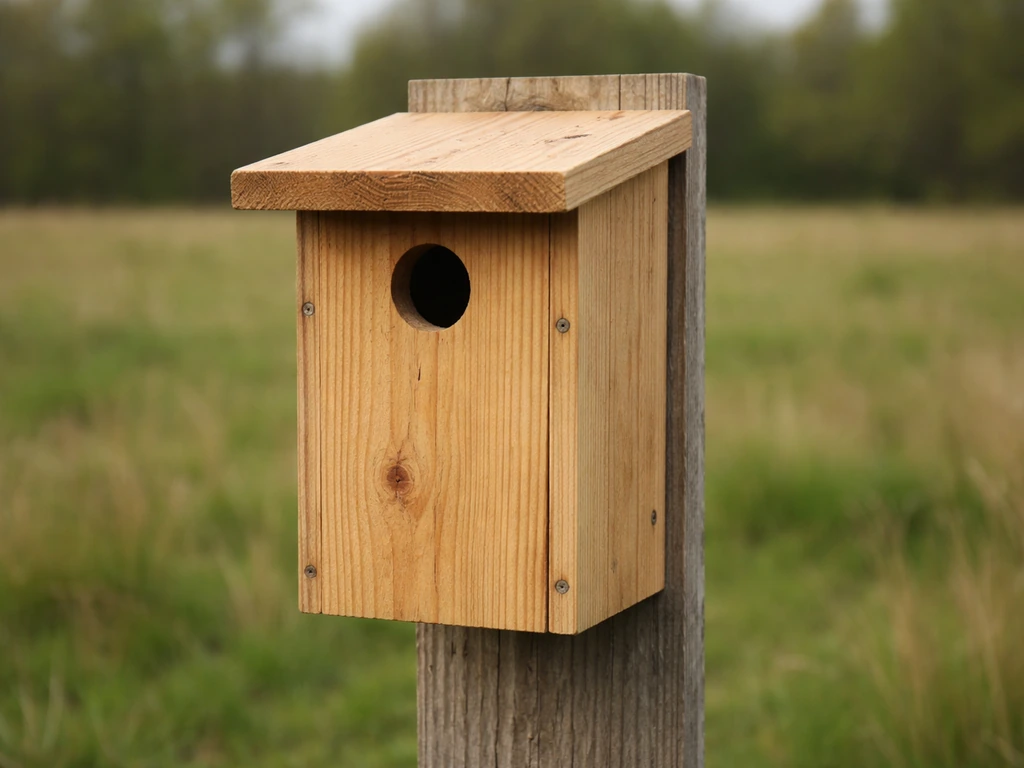
This is the first thing to sort out, because it changes your entire build plan. Tree swallows are true cavity nesters, which means they will readily move into a purpose-built nest box with an entrance hole, just like a chickadee or bluebird would. Barn swallows, on the other hand, build open mud cup nests on ledges, beams, and sheltered overhangs. Texas Parks and Wildlife puts it plainly: nest boxes do not work for barn swallows the way they do for tree swallows. Barn swallows are not looking for a hole in a box; they want a platform or a sheltered shelf under a structure.
So if you searched for a barn swallow bird house, what you actually want to build is a nest shelf or cone attached to a wall, eave, or outbuilding. If you searched for a tree swallow bird house, you want a cavity-style nest box with a specific entrance hole. Both are doable DIY projects, but they are fundamentally different builds. This guide covers the tree swallow nest box in detail first, then walks you through the barn swallow nest shelf separately. Pick the one that matches the species you are trying to attract and follow that plan.
Site selection and entrance dimensions: getting these right matters more than the wood you use
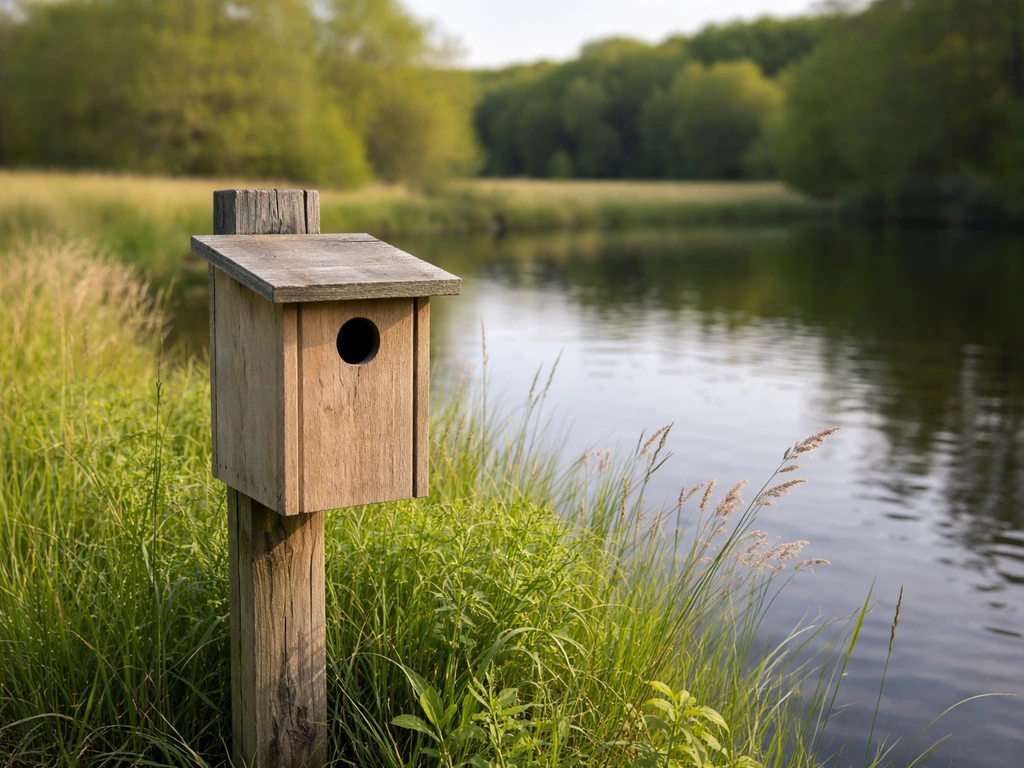
Tree swallows are birds of open space. They nest near water, meadows, and fields where they can hunt insects on the wing. If your yard backs up to a marsh, a pond, or even a large grassy area, you are already in good territory. The box should be placed in an open spot, not tucked into dense shrubs or under a tree canopy. NestWatch recommends mounting tree swallow boxes with the entrance facing east, and a Maine nest box monitoring program backs this up, recommending south or east-facing openings to catch morning warmth and avoid driving rain.
The entrance hole is the single most important dimension you will cut. For tree swallows, the correct entrance hole diameter is 1 3/8 inches (about 35mm). Some sources list 1 1/4 to 1 1/2 inches as an acceptable range, and a 1 1/2 inch hole will also work in a pinch, but 1 3/8 inches is the sweet spot backed by the most reliable guidance. This is not an arbitrary number. As Birds Canada explains, the entrance hole size and interior box dimensions are the primary factors that determine which species will actually occupy your box. Too large and you invite starlings and house sparrows. Too small and the swallows cannot get in. A 1 3/8 inch hole is large enough for a tree swallow and small enough to exclude most problem species.
For barn swallows, there is no entrance hole because the nest shelf is open. Instead, what matters is providing a sheltered location with something to anchor the mud nest to. A small wooden cone or a rough-surfaced shelf bracket under an eave works well. Barn swallows prefer structures near open water and farmland, and they are more tolerant of human activity than most birds, often nesting inside barns, garages, and covered porches.
Materials and tools you will need
For a tree swallow nest box, 3/4 inch red cedar is the best lumber choice. Cedar is naturally rot-resistant, weathers beautifully without paint or stain, and holds up for many nesting seasons. If cedar is hard to find or out of budget, untreated pine at 3/4 inch thickness works fine and is what a lot of commercial boxes use. Avoid treated lumber, plywood with exterior glues, or MDF. Those materials off-gas chemicals that are not safe for nesting birds. If you are repurposing scrap wood from another project, plain pine or fir boards are perfectly acceptable as long as they are untreated.
Keep in mind that when your lumber supplier says 1x6 board, the actual thickness is 3/4 inch (about 19mm). This matters when you are cutting your floor piece, because the interior floor dimensions need to hit 4 x 4 inches minimum, with 5 x 5 inches being ideal. If your lumber is slightly thinner or thicker than nominal, adjust your cuts so the interior space, not the exterior, hits those target dimensions.
- 3/4 inch red cedar or untreated pine boards (one 6-foot length of 1x6 is usually enough for one box)
- Exterior wood glue
- 1 1/4 inch or 1 5/8 inch exterior screws (galvanized or stainless steel)
- 1 3/8 inch drill bit or spade bit for the entrance hole
- 1/2 inch drill bit for drainage and ventilation holes
- Jigsaw or circular saw for cutting panels
- Drill/driver
- Sandpaper (80 and 120 grit)
- Tape measure and pencil
- A piano hinge or stainless steel screw for the cleanout panel (optional but recommended)
- Metal pole or wooden post for mounting
- Predator baffle (cone-style or stovepipe style)
For a barn swallow nest shelf, you will need much less material: a small piece of 3/4 inch board (roughly 6 x 6 inches), a few inches of scrap trim board to form a lip, exterior screws, and wall anchors or lag bolts depending on where you are mounting it. Some people glue a small rough-textured cone of hardware cloth or natural twine inside a recessed shelf to give barn swallows something to anchor their mud nest against. That small detail can make the difference between birds that investigate and birds that actually build.
Step-by-step build plan for a tree swallow nest box
This plan is based on the Henderson nest box dimensions, which are the most widely used and tested specs for tree swallows. The finished box has blank" rel="noopener noreferrer">an interior floor of 4 x 5 1/2 inches, a box height of 9 inches, and an entrance hole positioned 6 inches above the floor. These proportions give tree swallows the interior space they need while keeping the entrance high enough to protect eggs and chicks from weather and reaching paws.
Cut your panels
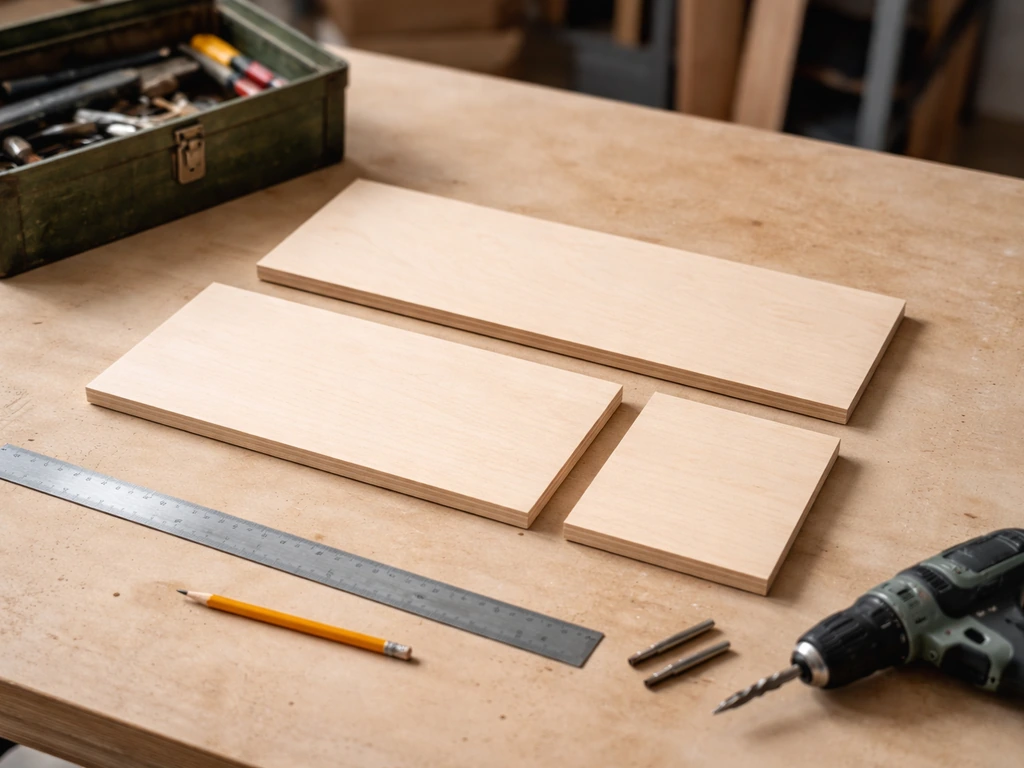
- Floor: 4 inches x 5 1/2 inches
- Front panel: 5 1/2 inches wide x 9 inches tall
- Back panel: 5 1/2 inches wide x 12 inches tall (the extra length lets you attach it to a post)
- Two side panels: 4 inches wide x 9 inches tall, with the top cut at a slight angle if you want a pitched roof (not required but helps with drainage)
- Roof: 6 inches x 7 inches (slightly oversized to overhang the front and sides)
Drill the entrance hole and add drainage
On the front panel, mark the center of the entrance hole so that its bottom edge sits exactly 6 inches above the interior floor. Drill a 1 3/8 inch round hole using a spade bit or Forstner bit. Take your time with this one, go slow, and back a scrap board behind the panel to prevent blowout on the exit side. If you want to add a predator guard (highly recommended), drill the same 1 3/8 inch hole through a second piece of 3/4 inch wood and screw it flush to the front of the panel so the entrance tunnel becomes 1 1/2 inches deep. This extra thickness makes it much harder for a raccoon to reach in and hook eggs or chicks.
On the floor panel, drill four 1/2 inch diameter holes near each corner. These drain any water that gets inside and also provide a small amount of ground-level ventilation. On each side panel near the top, drill two more 1/2 inch holes for upper ventilation. A well-ventilated box on a hot afternoon can mean the difference between a successful nest and overheated eggs. Do not skip this step.
Assemble the box
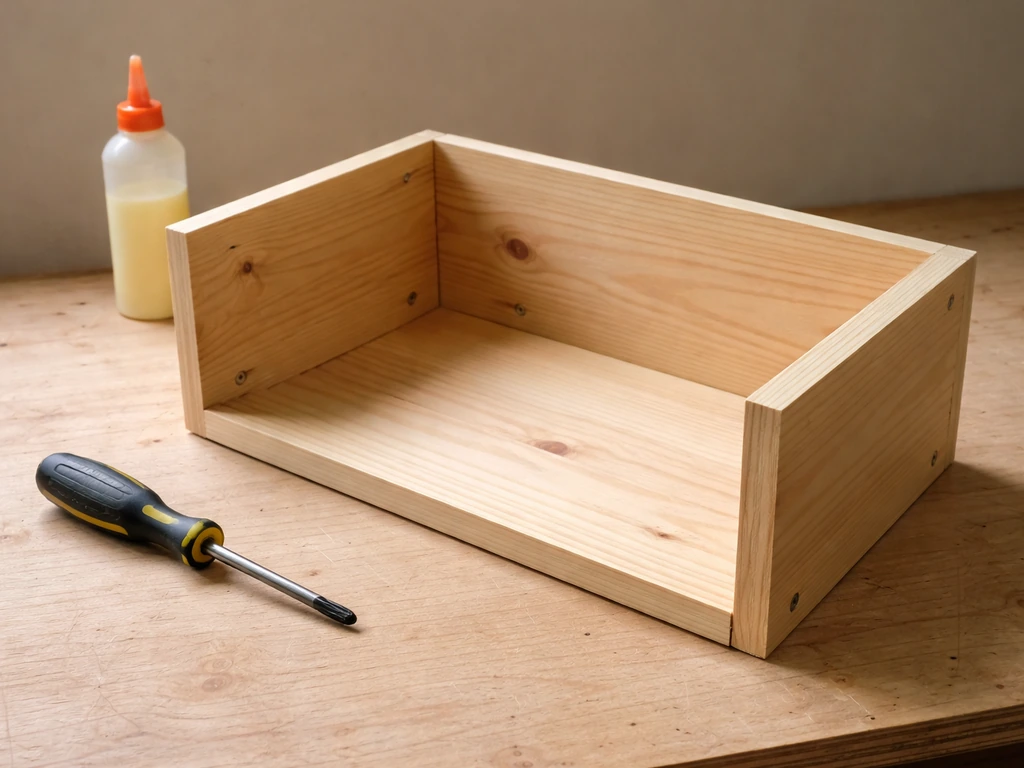
Attach the floor to the back panel first using exterior glue and two screws. Then attach the side panels to the floor and back. Attach the front panel last. If you want a cleanout panel (and you should, it makes annual cleaning much easier), attach one side panel with a single pivot screw at the top rather than gluing and screwing it all the way around. It will swing open for cleaning and snap shut for security. Attach the roof with a small overhang at the front and sides to keep rain off the entrance. Do not caulk or seal the interior. Leave it raw and rough-textured inside so birds can grip the walls and nestlings can climb toward the entrance when they are ready to fledge.
What about a barn swallow nest shelf?
A barn swallow shelf does not need a box at all. Cut a 6 x 6 inch flat platform from 3/4 inch board and attach a 1 1/2 inch lip along the front and sides to keep the nest from sliding off. Mount it under an eave, inside a garage or shed opening, or on a sheltered wall bracket at least 8 feet off the ground. The rougher the surface, the better the mud sticks. You can score the top of the platform with a saw blade or staple a small square of hardware cloth to the surface to give the birds something to work with. Unlike tree swallows, barn swallows are not particularly picky about the shelf design as long as it is sheltered from above and offers a clear flight path in and out.
Mounting, height, and placement
For tree swallow nest boxes, mount them 5 to 6 feet above the ground on a metal pole or a smooth wooden post. This height is easy for you to monitor and clean, and it puts the entrance hole right in the tree swallow's comfort zone. If you are mounting on a wooden post, attach a downward-facing cone-style baffle directly below the box, which is the mounting method Birds Canada specifically recommends to block climbing predators. A metal pole with a smooth surface works even better as a standalone deterrent. Avoid mounting tree swallow boxes on trees or fence posts, where squirrels and raccoons already have a highway directly to your box.
If you are putting up multiple tree swallow boxes (which is a great idea since they will compete for territory), space them at least 35 feet apart. This is the minimum spacing NestWatch lists for tree swallows in their placement guidance. Put boxes closer together and you will find that one dominant pair drives the others away and you end up with fewer nesting pairs overall, not more.
Orient the entrance hole to face east or south. This gives the box morning sun to warm the nest early in the day and keeps the worst driving rain (which usually comes from the west or north in most of North America) from blowing directly into the opening. Do not face the entrance toward the prevailing wind.
For barn swallow nest shelves, height matters more than pole mounting. Barn swallows build in existing structures, so you are really giving them an anchor point inside or under something they already want to use. Eight to twelve feet off the ground inside a barn, shed, or covered porch is a common and effective placement. The flight path to and from the nest should be clear of obstructions and ideally open to the outside without requiring the bird to navigate around walls or doors.
Swallow house comparison: tree swallow box vs. barn swallow shelf
| Feature | Tree Swallow Nest Box | Barn Swallow Nest Shelf |
|---|---|---|
| Nest style | Cavity (enclosed box with entrance hole) | Open cup (mud nest on open platform) |
| Entrance hole | 1 3/8 inch round hole | None (open shelf) |
| Interior floor | 4 x 5.5 inches (minimum 4 x 4 inches) | 6 x 6 inch platform with lip |
| Box/shelf height | 9 inches total height | Small flat shelf, no enclosure needed |
| Mounting height | 5 to 6 feet above ground | 8 to 12 feet, inside or under structure |
| Best location | Open field or meadow near water | Under eaves, inside barns, covered porches |
| Predator baffle | Essential on pole below box | Less critical (height provides protection) |
| Facing direction | East or south | Open flight path, no specific orientation |
| Spacing (multiple units) | Minimum 35 feet apart | Pairs will nest close together naturally |
| DIY difficulty | Moderate (box joinery, precise hole) | Easy (flat shelf build) |
If you are only going to build one thing, and you want the most reliable chance of a nesting pair using it this season, build the tree swallow nest box. Tree swallows are cavity-nesters by instinct and actively search for available boxes in late winter and early spring. A correctly built and mounted box in good habitat can attract a pair within the first season. Barn swallow shelves work beautifully but rely more on the birds already frequenting your property or nearby structures.
Cleaning, maintenance, and what to do when swallows do not show up
Clean your tree swallow nest box once a year, after the nesting season is completely over in late summer or early fall. Open the cleanout panel, remove the old nest material, and scrub the inside with hot water and a mild soap solution using a stiff brush. Rinse thoroughly and leave the box open to dry completely before closing it up for winter. For barn swallow shelves, the same basic approach applies: after the nesting season, scrub the shelf with hot water and mild soap, rinse well, and let it dry. Getting into the habit of a thorough annual clean is the single best thing you can do to prevent parasites and mites from building up between seasons.
Inspect the box each spring before the birds arrive, usually in February or March depending on your location. Check for cracked panels, loose screws, and any gaps that might let in rain or predators. Tighten everything up and check that the entrance hole has not been chewed larger by squirrels (it happens more than you would think). If you want to track nesting progress systematically, Cornell Lab of Ornithology's NestWatch program gives you a structured way to monitor nesting stages and record outcomes over multiple seasons, which is genuinely useful for spotting patterns in failed or successful years.
Troubleshooting: swallows are not moving in
If you have had a box up for a full season with no takers, run through this checklist before you give up or rebuild from scratch. The most common problems are almost always location and predator pressure, not the box itself.
- Is the box in genuinely open habitat? Tree swallows will not nest in wooded or heavily planted areas. Move the box to a more open spot if needed.
- Is there a predator baffle on the pole? A box without a baffle in areas with raccoons or cats will be raided, and once that happens swallows will not return to the same site.
- Is the entrance hole the right size? Measure it again. A hole that has been enlarged by squirrels or weathered slightly larger than 1 3/8 inches may be letting in competitors.
- Are house sparrows or starlings taking over? Remove their nests promptly. Tree swallows will not compete with established sparrow pairs for the same box.
- Is the box facing the right direction? Try reorienting to face east or south if you had it pointing west or north.
- Are you in tree swallow range and habitat? Near open water, marshes, and meadows is ideal. If your yard is in dense suburban development with no open water nearby, tree swallows may simply not pass through.
- Did you install the box too late? Tree swallows scout for nest sites as early as late February in warmer climates. Get boxes up by late winter for the best chance.
One thing that often surprises people is that a box can sit empty for a year or two before swallows discover it. Do not pull it down after one empty season. Leave it up, keep it clean, and give the birds time to find it. Once a pair nests successfully, they will often return to the same box the following year.
A few more species worth building for
If you enjoy this kind of project, it is worth knowing that the same basic cavity box design opens the door to several other species with only small adjustments to hole size and interior dimensions. If you have doves around your property, you can adapt the open-shelf concept into a dove bird house using a similar platform design. For smaller cavity nesters, you might enjoy tackling a finch bird house, which uses a narrower entrance hole and a more compact interior. House sparrows are everywhere, and if you want to support native sparrows instead, the guide on how to build a sparrow bird house covers the right specs to attract them specifically.
If starlings are already competing for boxes in your yard, it is useful to understand their nesting habits too. The article on how to build a starling bird house explains their preferred dimensions, which can help you design your swallow box to exclude them by keeping the entrance hole at the right size. For aerial insect hunters in a similar niche to swallows, building a chimney swift bird house (actually a tower) is a fascinating next project. Chickadees are another great candidate for the same open field habitat: take a look at the details on how to build a chickadee bird house if you want to put up a second box for a different species. And if you want to go all-in on the most colorful tenant possible, building an oriole bird house is a rewarding challenge with its own specific design requirements.
The bottom line: pick your species, cut your panels to the right dimensions, drill a 1 3/8 inch entrance hole, add drainage and ventilation, mount it on a baffled pole in open habitat facing east or south, and keep it clean every fall. That is genuinely all it takes to give swallows a home they will want to use. You can absolutely do this in an afternoon with basic tools and a single board of cedar.
FAQ
How can I tell if my birds are actually tree swallows or something else before they start using the box?
Watch for the entrance behavior and nest material. Tree swallows typically bring small feathers and fine nesting material into the cavity and land directly at the entrance, while house sparrows often show up repeatedly on nearby surfaces and may carry bulky material. Also check the entrance size, if it is close to 1 3/8 inches and correctly positioned, it reduces the odds of the wrong species moving in, but monitoring for the first week or two helps confirm what you have.
What should I do if starlings or house sparrows start trying to use the box?
If they are actively visiting and you suspect competition, confirm the entrance hole diameter is truly 1 3/8 inches (not enlarged by rough drilling or sanding). Then inspect for any internal gaps that allow other birds access around the entrance tunnel. In the meantime, avoid making the opening larger “to help” swallows, that usually worsens the problem. If you find a non-target nest inside, remove it after the season ends as part of your annual cleaning schedule.
Is it okay to paint or stain the outside of a swallow nest box?
Yes for the exterior, but keep the inside bare. Exterior coatings can help with weathering, as long as they are fully cured before mounting and you never seal or coat the interior cavity or entrance tunnel. Paint can also make the inside smoother, which removes the gripping surface that helps nestlings climb and can reduce comfort for adults coming and going.
Do I need to add a “floor” bedding or nesting material inside the cavity?
No. Swallows typically bring their own nesting material, and the correct interior texture and drainage are more important than adding bedding. If you want to change something, focus on interior grip (left rough-textured) rather than adding manufactured liners that might trap moisture or prevent proper clinging.
How do I adjust the build if my board thickness is not exactly 3/4 inch?
Measure your actual lumber thickness with a tape measure, then rework the cuts so the interior floor lands at least 4 x 4 inches, with 5 x 5 inches being ideal. It is the interior space that matters, not the nominal board size. After cutting, dry-fit the panels and verify the interior dimensions before drilling the entrance and drain holes.
What is the best way to protect the box from rain while still keeping good airflow?
Use the front and side roof overhang as designed, and keep drainage and ventilation holes unobstructed. Avoid caulking the interior seams, but you can ensure the exterior joints shed water by aligning panels tightly and using an exterior screw or glue that is weather-rated. If you live in a very windy wet area, recheck that the entrance faces east or south and not into the prevailing storm direction.
How often should I clean, and what’s the safest time to do it?
Clean once per year after nesting is fully done, typically late summer or early fall. The key is to avoid disturbing an active nest, so do not clean in spring while birds are likely breeding. Open the cleanout panel, remove debris, scrub with hot water and mild soap, and let everything dry completely before closing for the next season.
Do I need to cover the entrance with mesh or predator guards besides the deeper tunnel?
A deeper entrance tunnel built by adding a predator guard plate (making the tunnel about 1 1/2 inches deep) is usually enough. If predators like raccoons are common at your site, also ensure the mounting method includes a baffle for tree swallows. For barn swallow shelves, focus on shelter and anchor points, then monitor because predators often exploit gaps or nearby climbing routes rather than the shelf surface itself.
Can I mount the tree swallow box to a fence or directly onto a tree instead of a pole?
It is generally not recommended. The article’s rationale matters because trees and fences can act like a climbing highway for squirrels and raccoons. If you cannot use a pole, use a smooth mounting post or a predator-deterrent setup that prevents climbing to the entrance, and keep the box in open habitat rather than under dense cover.
How much spacing is really necessary if I put up multiple tree swallow boxes?
Space them at least 35 feet apart. Closer placement can trigger “dominant pair” behavior where one pair defends territory and others move away. If you want to increase total nesting chances, add more habitat-supporting factors (open hunting area near water, correct orientation, and consistent maintenance) rather than packing boxes closer together.
What should I check in spring if no swallows move in, even though the box is built correctly?
Start with location and mounting security. Inspect for gaps, loose screws, or a slightly enlarged entrance. Then check whether the box is truly in open habitat and correctly oriented (east or south). Finally, look for predator pressure nearby, such as easy climbing routes, because a “perfect build” can still sit empty if access is too risky for birds.
How long should I wait after putting up the box before assuming it is not working?
Give it more than one season. Boxes can sit unused for a year or two while swallows discover and evaluate the site. Keep the box clean and mounted, and re-inspect in spring. If a pair nests successfully, they often return in subsequent years, so persistence usually pays off.
For barn swallow shelves, how rough should the surface be and do I need to add hardware cloth?
You do not need hardware cloth, but you do need grip. Scoring the surface with a saw blade or adding a small rough-textured piece of hardware cloth can improve how well mud adheres, especially in slick or painted areas. The goal is stable, anchored mud nesting that does not slide, so prioritize a rough, non-slick top and a sturdy lip on the front and sides.
What height is best for barn swallow shelves, and what matters more than height?
A common effective placement is 8 to 12 feet inside a barn, shed, or covered porch. Height matters, but the bigger driver is that the nest anchor point is sheltered from above and has a clear flight path to and from the structure. Avoid locations with obstacles that force birds to navigate around doors, walls, or tight corners near the shelf.
Next Articles
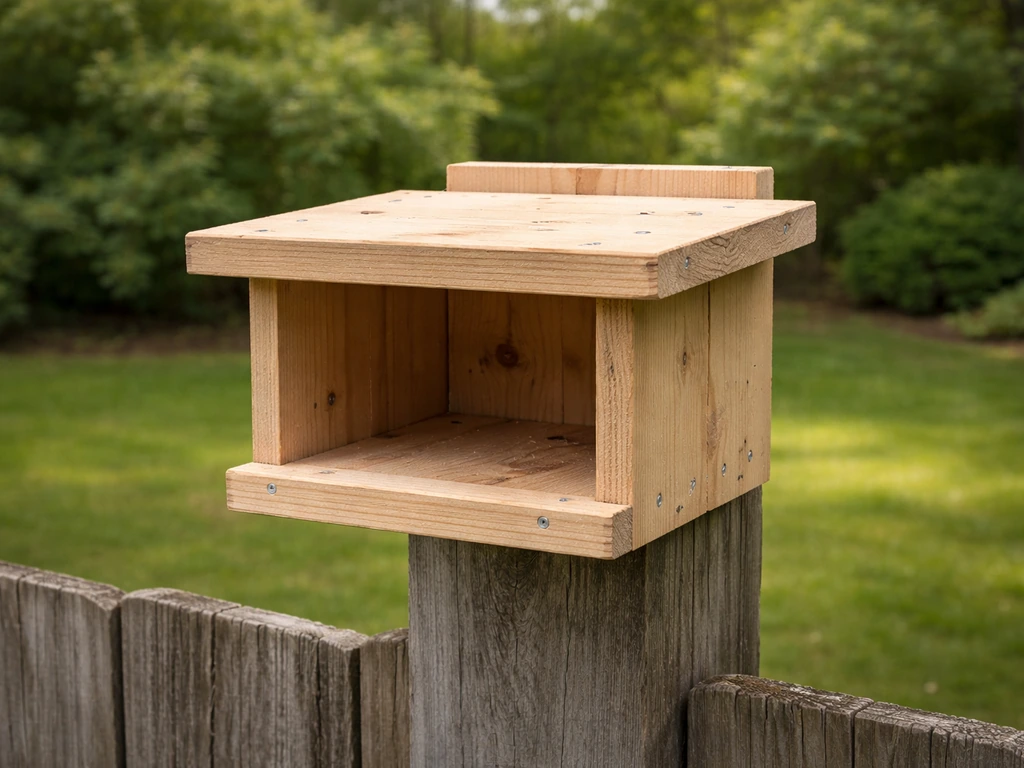
How to Make a Blue Jay Bird House Step by Step
Step-by-step DIY blue jay bird house build with exact hole size, dimensions, materials, assembly, and placement tips.
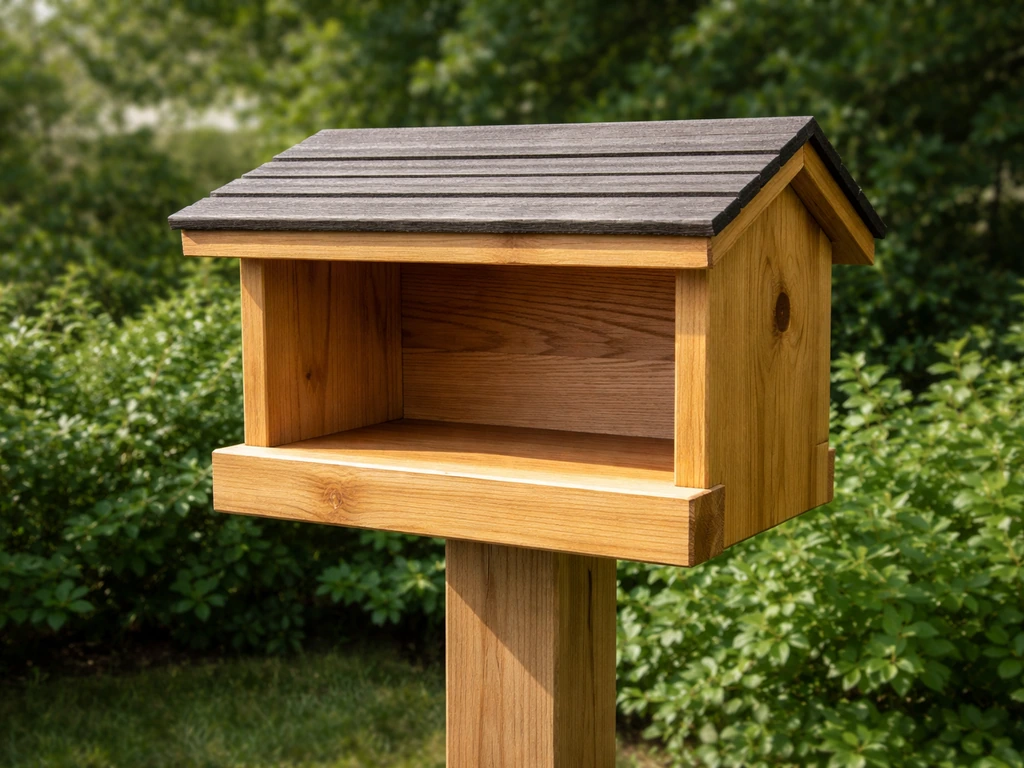
How to Make a Cardinal Bird House Step by Step
Step-by-step plans, measurements, and placement tips to build a weatherproof cardinal bird house that attracts red cardi
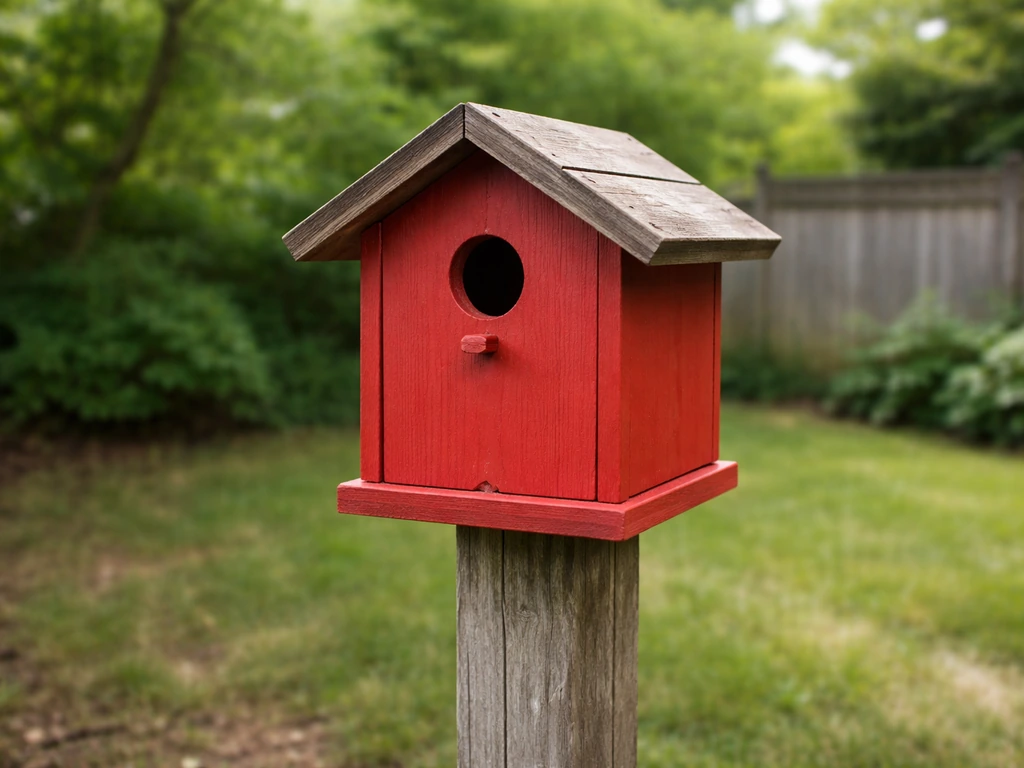
How to Build a Red Bird House: Step-by-Step DIY Guide
Step-by-step DIY guide to build a bird-safe red birdhouse with correct dimensions, ventilation, drainage, paint, and mou