You can absolutely build a bluebird house that bluebirds will actually use, and you can do it this weekend with basic tools and a single board of lumber. The trick is knowing that bluebird houses are not generic birdhouses. The entrance hole size, interior dimensions, and placement all need to match what bluebirds actually want, and getting those details right is the difference between a box that sits empty for years and one that has a nesting pair in it by spring. This guide walks you through every decision, from picking your design to hammering in your last screw to watching a bluebird scout poke its head inside.
How to Make Bluebird Houses: Step-by-Step DIY Guide
Marcus Thornton
23 Mar 2026
Why a bluebird house is not just any birdhouse
Generic birdhouses from the craft store are often built with sparrows and wrens in mind, not bluebirds. If you are also wondering how to make a pigeon bird house, the basic building approach is similar, but the entrance and placement needs change to fit pigeons’ nesting habits how to make pigeon bird house. Bluebirds are cavity nesters, meaning they naturally nest in hollow tree cavities. They are also picky: they want a specific floor size, a specific entrance hole, and absolutely no perch on the front of the box. That last one surprises a lot of people. Perches look cute, but they actually help predators and aggressive sparrows access the nest. Leave them off entirely.
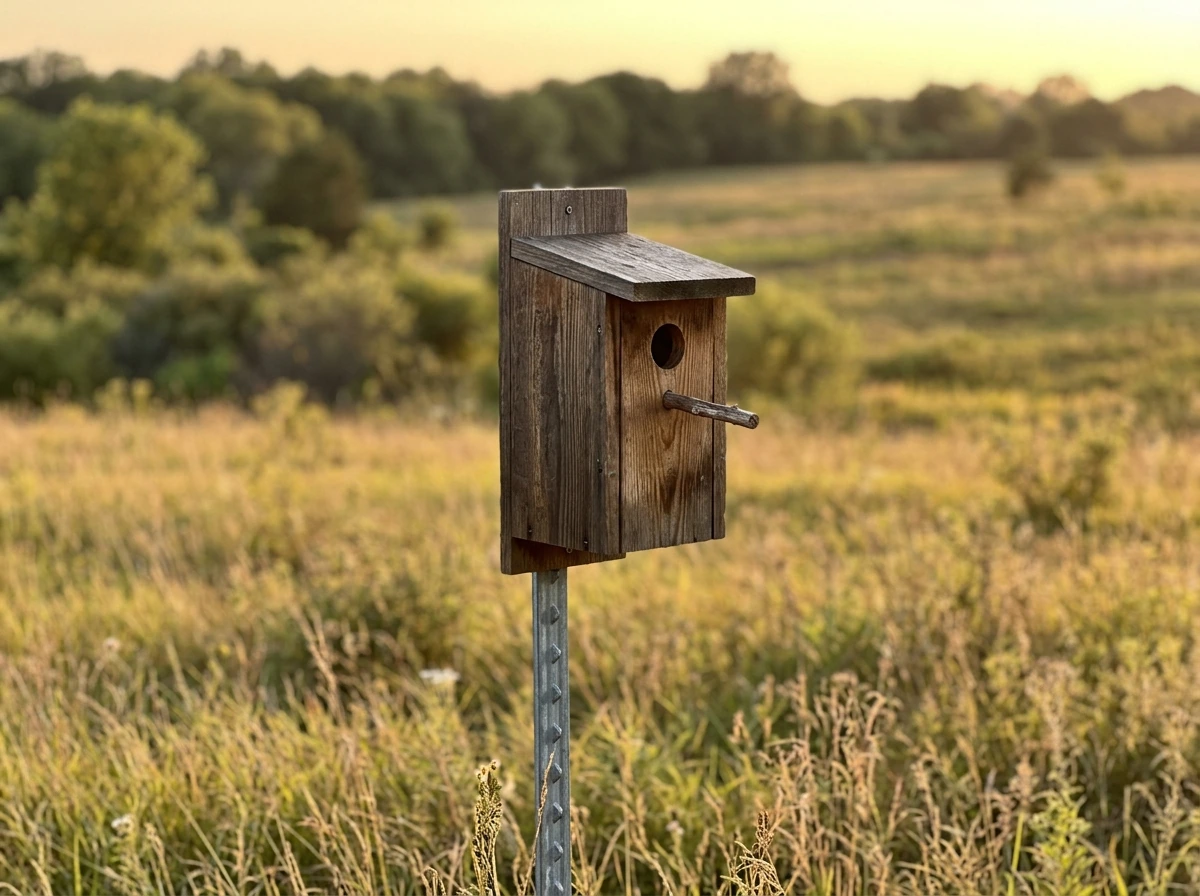
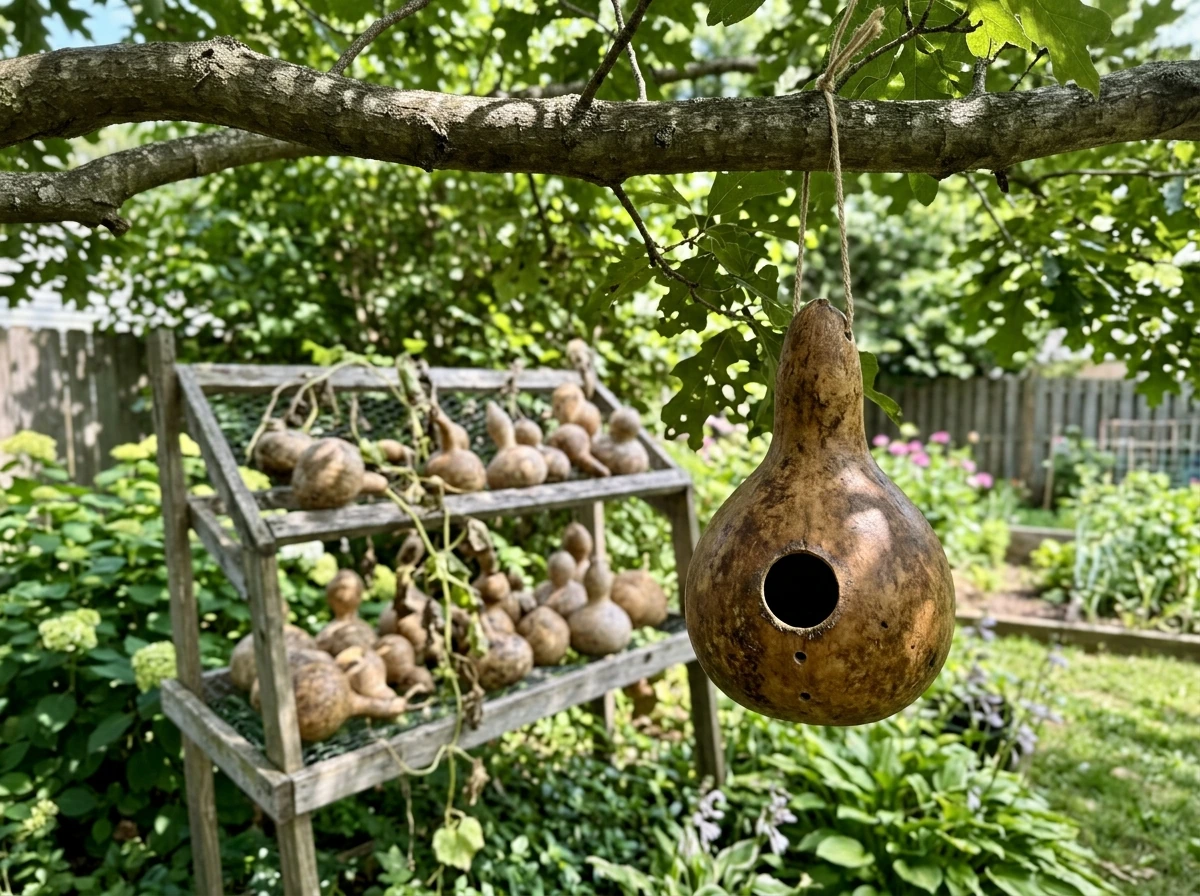
Bluebirds also need open habitat around the box. They hunt insects by dropping from a low perch to the ground, so they need clear sightlines and short grass nearby. A box hung in a wooded area or on a fence post surrounded by brush will almost never attract a bluebird, no matter how well it is built. Getting the build right and the placement right are equally important, and this guide covers both. Gourd bird houses are a fun alternative, and the same core principles for fit, drainage, and predator protection still apply. how to make homemade bird houses
Pick the right design for your bluebird species and region
North America has three bluebird species: Eastern, Western, and Mountain. The Eastern bluebird is the most common target for backyard nest boxes in the eastern US, but if you are in the Mountain West or Pacific Coast regions, the dimensions shift slightly. The entrance hole size is the most important variable to get right by species. Sialis.org provides a bluebird nest box specification guide with entrance hole dimension targets, including the 1.5 inch versus 1 9/16 inch entrance hole concept across bluebird species The entrance hole size is the most important variable to get right by species..
| Species | Entrance Hole Diameter | Interior Floor Size | Entrance to Floor Distance |
|---|---|---|---|
| Eastern Bluebird | 1.5 inches | 4.5 to 5.5 inches square | 6 to 8 inches |
| Western Bluebird | 1.5 inches | 4.5 to 5.5 inches square | 6 to 8 inches |
| Mountain Bluebird | 1 9/16 inches | 5 to 5.5 inches square | 8 inches |
The Mountain Bluebird is slightly larger than its Eastern and Western cousins, which is why it needs a slightly bigger entrance hole, around 1 9/16 inches. That extra sixteenth of an inch matters. An entrance hole that is too small keeps the bird out; one that is too large lets in European Starlings, which are aggressive nest competitors. If you are in Colorado, Montana, or other parts of the Mountain West, double-check which species is local to your area before you drill that hole.
For Eastern and Western bluebirds, the 1.5-inch entrance hole is the well-established standard. Some programs recommend 1 9/16 inches as a universal size that works across all three species without letting in starlings, so that is a solid choice if you are unsure or want one design to work in multiple regions.
Climate also affects your design choices. In hot southern climates, ventilation gaps and drainage holes are even more critical. In cold northern climates, a slightly deeper box helps insulate the nest. We will get into those details in the ventilation and drainage section.
Materials, tools, and safe build practices
Best wood for a bluebird box
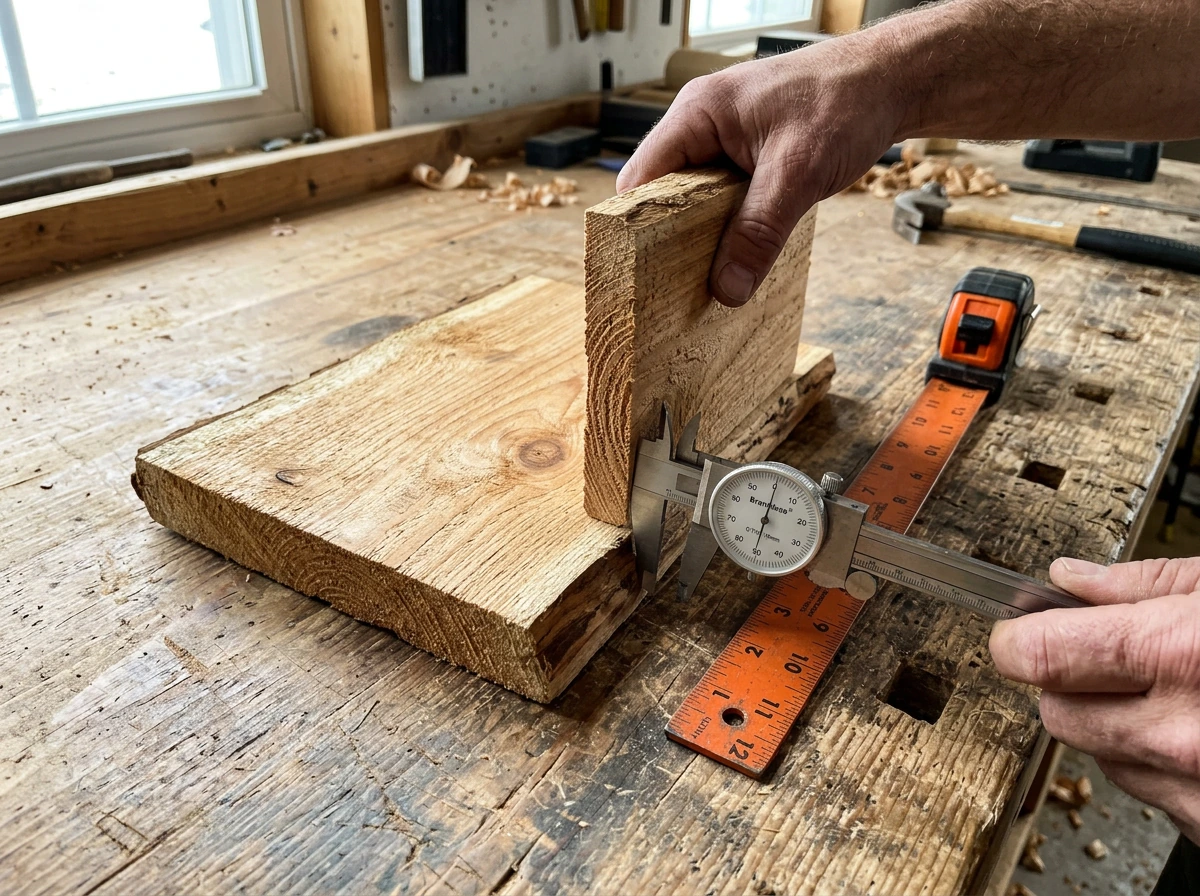
The single most important material rule is this: use untreated, unpainted, natural wood on the interior of the box. Pressure-treated lumber contains chemicals that are harmful to nesting birds and their eggs. Cedar is the gold standard because it is naturally rot-resistant, durable through freeze-thaw cycles, and it does not warp as badly as pine over time. White pine works well too and is cheaper and easier to find at most lumber yards. Rough-cut lumber is even better than smooth because it gives the birds something to grip on the inside walls when fledglings are climbing toward the entrance hole.
Use 3/4-inch thick boards. Thinner wood does not insulate well and splits too easily when you drill the entrance hole. If you have scrap cedar fence boards lying around, those are perfect and cost nothing. I have built some of my best boxes from a single 6-foot cedar fence picket.
On the outside of the box, you can leave the wood bare to weather naturally, or apply one coat of a light exterior latex paint in a neutral color like light gray, tan, or light green. Avoid dark colors, which absorb heat and can overheat the nest cavity. Never paint or stain the interior, and never use oil-based finishes inside the box.
Tools you will need
- Circular saw or hand saw for cutting boards to length
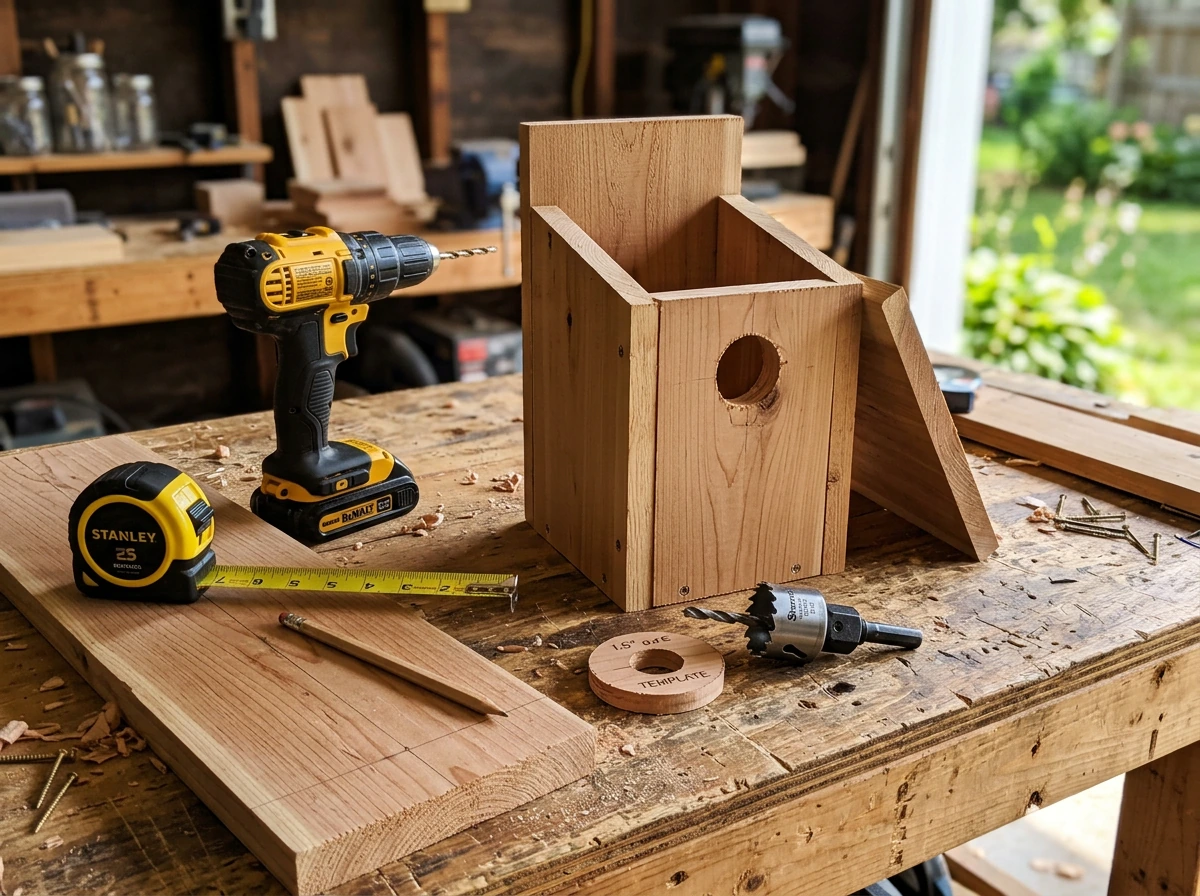
- Drill with a 1.5-inch (or 1 9/16-inch) spade bit or hole saw for the entrance hole
- Drill bit set for pilot holes and ventilation/drainage holes
- Hammer or screwdriver (or a drill/driver for screws)
- Exterior-rated wood screws (1.25 to 1.5 inch, galvanized or stainless)
- Measuring tape and pencil
- Sandpaper (optional, for smoothing cut edges)
If you do not have a spade bit the right size, a hole saw attachment is a reliable alternative and gives a cleaner cut. A jigsaw works well if you are cutting a slot-style entrance. Most of these tools can be borrowed or rented if you do not own them, and the entire project can be completed with hand tools if needed. This is not a complicated woodworking job.
Step-by-step build instructions
Cut list (for an Eastern or Western bluebird box)
Start with a single piece of 3/4-inch thick lumber, 5.5 inches wide and about 5 to 6 feet long. Cedar fence boards often come in this width, which makes them ideal. Here is the cut list for a standard Eastern bluebird box with a 5.5 x 5.5 inch floor and 9-inch interior depth.
| Piece | Dimensions | Notes |
|---|---|---|
| Front wall | 5.5 in wide x 10 in tall | Drill 1.5 in entrance hole, centered, 8 in above floor |
| Back wall | 5.5 in wide x 12 in tall | Taller than front to angle the roof slightly |
| Two side walls | 5.5 in wide x 9 in tall | Bevel or trim top edge to match roof angle if desired |
| Floor/bottom | 4 x 4 in to 5.5 x 5.5 in | Cut corners off (approx. 3/8 in) for drainage |
| Roof | 7 to 8 in wide x 8 in deep | Should overhang front by at least 2 inches |
These dimensions give you an interior floor of 5.5 x 5.5 inches and an interior depth of 9 inches, which lines up with the NC State Extension spec for Eastern bluebirds. The entrance hole center sits approximately 8 inches above the floor, which is on the higher end and helps protect the nest from reach-in predators.
Assembly step by step
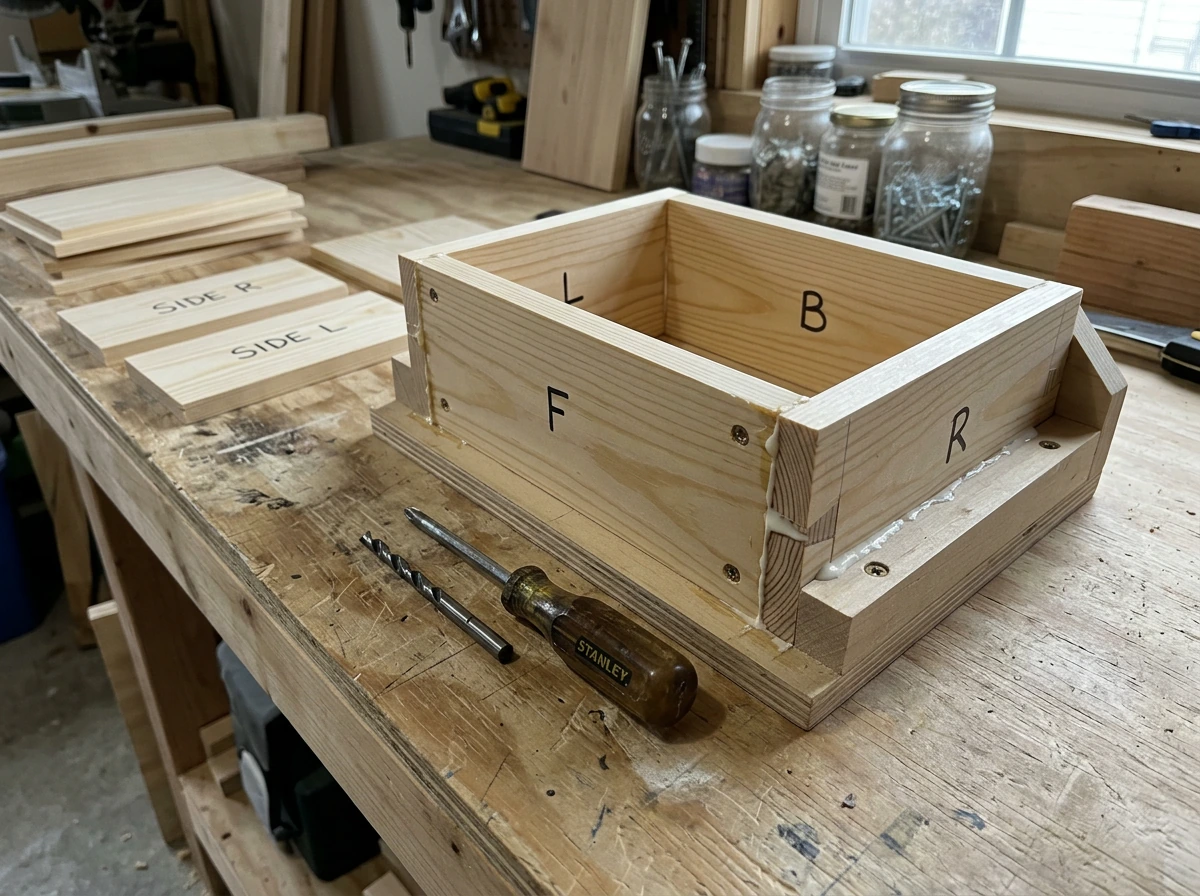
- Cut all your pieces to size. Mark them clearly so you do not mix up front and back walls.
- Drill the entrance hole in the front wall first, before assembly. Center it horizontally, and position it so the bottom of the hole is 8 inches above the floor. Use a spade bit or hole saw. Drill from the outside face through to the inside to minimize tear-out on the visible surface.
- Score or roughen the interior of the front wall below the entrance hole with a saw or chisel. This gives fledglings a grip when climbing out. Do not sand this area smooth.
- Cut the corners off the floor piece at about a 45-degree angle, roughly 3/8 inch per corner. This creates drainage gaps when the floor sits inside the box walls.
- Assemble the sides to the back wall first using two screws per joint. Pre-drill pilot holes to prevent splitting, especially near the ends of boards.
- Drop the floor into the box so it sits recessed about 1/4 inch up from the bottom edges of the side walls. This allows water to drain out below the floor. Secure with screws from the sides.
- Attach the front wall. Make one side of the front wall hinge open (or hinge at the top) for future monitoring and cleaning. Use a single screw at the top as a pivot point and a hook-and-eye or screw latch at the bottom to secure it shut.
- Attach the roof with screws through the top into the back and side walls. Make sure it overhangs the front by at least 2 inches to keep rain out of the entrance hole.
- Do not add a perch. Do not add a perch. I will say it once more because it is tempting and it is wrong for bluebirds.
Entrance hole, predator protection, ventilation, drainage, and cleaning access
Getting the entrance hole right
The entrance hole is the most critical dimension on the entire box. For Eastern and Western bluebirds, cut a 1. 5-inch round hole. For Mountain bluebirds, cut 1 9/16 inches.
These sizes are designed to allow bluebirds in while excluding European Starlings, which are a serious nest competitor. Clemson Extension guidance for South Carolina also recommends limiting the bluebird nest box entrance hole to no more than 1. 5 inches in diameter to help prevent access by predators and competitors such as European Starlings [excluding European Starlings](https://hgic. clemson.
edu/factsheet/providing-for-bluebirds-guidance-for-bluebird-nest-box-establishment-in-south-carolina/). If your hole ends up slightly too large because of bit slippage, you can purchase a pre-drilled metal entrance hole guard and screw it over the existing hole. These cost just a few dollars and solve the problem cleanly.
Some builders add a wooden block on the front face around the entrance hole, called an entrance extender, that makes the tunnel deeper. This makes it harder for a predator to reach in and grab eggs or nestlings. Cut a 3/4-inch block with a matching hole and glue or screw it flush around the entrance. It is a simple addition that meaningfully improves safety.
Predator protection
The box design alone is not enough to stop predators. Raccoons, snakes, cats, and squirrels will all investigate a bluebird box if they can reach it. The single most effective predator protection is a stovepipe baffle mounted on the pole below the box. A cylindrical metal baffle about 8 inches in diameter and 24 inches long, centered on the pole below the box, prevents climbing predators from getting past it. This is not optional in areas with raccoons or snakes. It genuinely is the difference between a bluebird family thriving and being wiped out overnight.
Do not mount the box on a tree or wooden fence post if you can avoid it. Trees give climbing predators direct access. A smooth metal conduit or EMT pipe, around half an inch diameter, topped with a stovepipe baffle, is the recommended mounting setup for most bluebird trail operators. Avoid placing the box where cats regularly patrol.
Ventilation and drainage
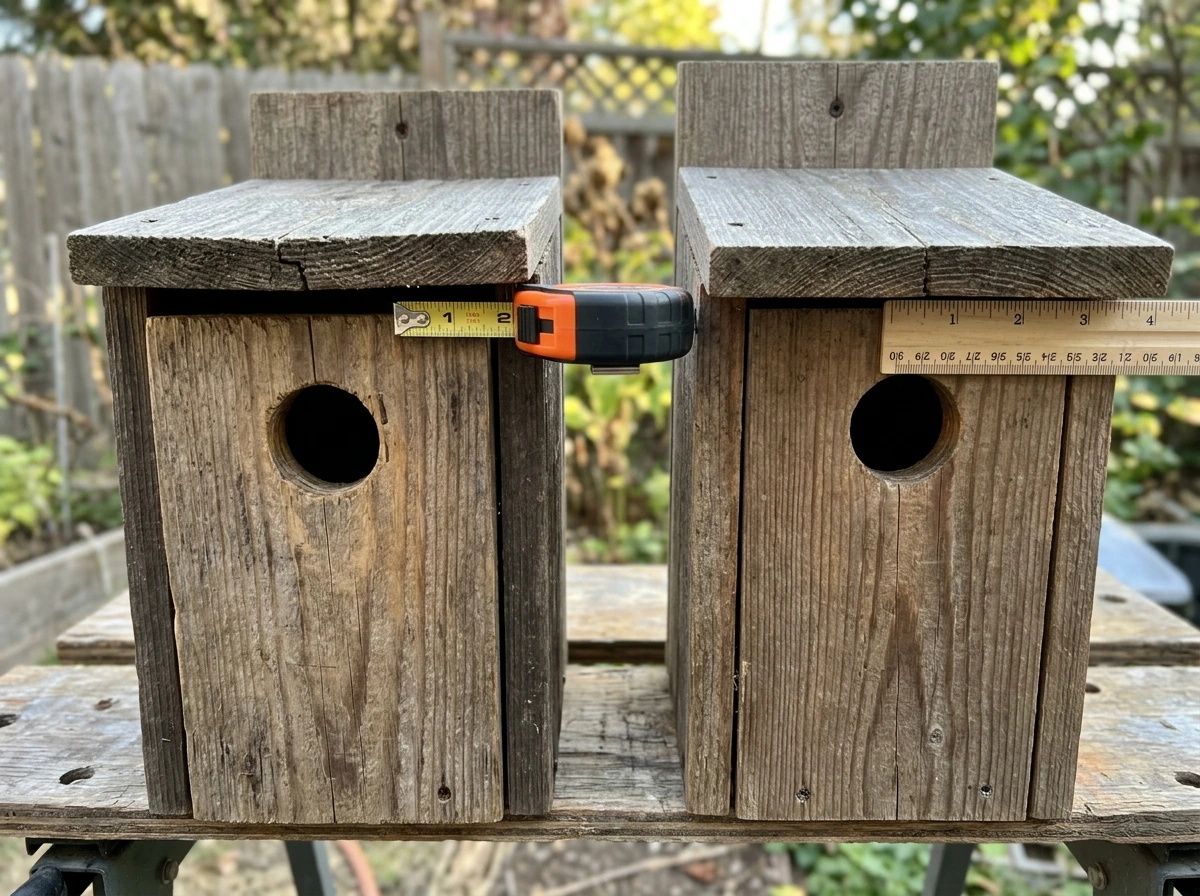
Ventilation prevents the box from overheating on hot days, which can be fatal to nestlings. You have two options: leave a small gap of about 3/8 inch between the top of the side walls and the underside of the roof, or drill one or two 5/16-inch holes on each side wall about an inch below the roofline. The gap method is simpler and very effective. Cross-ventilation from opposing side holes is slightly more efficient in very hot climates. Either approach works well.
Drainage is handled by the corner cuts on the floor you made earlier. Those small cutouts let any water that gets in drain out without pooling under the nest. Do not drill drainage holes in the floor itself unless the floor is recessed, because water can wick back up through small holes. The corner cutout method is cleaner and more reliable.
Make cleaning easy from the start
Build your box so one panel opens easily. A hinged front panel or a pivoting side panel are both popular designs. I prefer a front panel that pivots on a single screw at the top and latches with a simple hook-and-eye at the bottom. It swings open in seconds, lets you inspect the nest without sticking your hand in blindly, and closes securely enough that weather and predators cannot pry it open. Whatever system you use, test it before you mount the box. You will be opening it regularly during nesting season.
How to install and place the house for maximum use
Height and orientation
Bluebirds are adaptable about height and will nest anywhere from about 2 feet off the ground up to 50 feet in natural cavities. For a mounted nest box, aim for 4 to 6 feet off the ground. This height makes monitoring and cleaning easy for you while still being acceptable for the birds. Higher is fine if predator pressure is low, but lower boxes are easier to manage and bluebirds do not seem to prefer one height over another within that range.
Orient the entrance hole facing away from prevailing winds and away from the afternoon sun. In most of North America that means facing the entrance east or southeast. This keeps the interior cooler in afternoon heat and keeps rain from blowing directly into the hole. If your prevailing winds come from a different direction, adjust accordingly. The birds are more sensitive to hot afternoon sun baking the box than they are about compass direction.
Habitat: where to put it
Location matters as much as any dimension in the box. Bluebirds need open habitat: grassy fields, meadows, large lawns, golf course edges, pastures, and orchards are all ideal. They hunt from low perches like fence posts, then drop to the ground to catch insects. They need a clear view of the ground around the box and short grass or bare ground nearby. Placing a box at the edge of a field with a few trees or shrubs nearby gives them hunting perches without creating a dense canopy that they avoid.
Keep the box away from dense tree cover, shrubby thickets, and areas where House Sparrows are heavily concentrated. House Sparrows are aggressive competitors and will take over a bluebird box, destroy eggs, and kill adult bluebirds. Monitoring your box weekly during nesting season is the best way to manage sparrow competition.
Spacing between boxes
Bluebirds are territorial and will not tolerate another bluebird pair nesting too close. The general guidance is to space boxes at least 100 yards (about 300 feet) apart, and ideally out of the line of sight from the nearest bluebird box. For Mountain Bluebirds in open western terrain, spacing of 200 to 300 yards is recommended because their territories are larger. If you want to put up multiple boxes in a smaller yard, a useful trick is to pair them: place two boxes about 5 to 10 feet apart. Bluebirds will use one and Tree Swallows, which are harmless and beneficial neighbors, will often take the other.
Mounting the pole
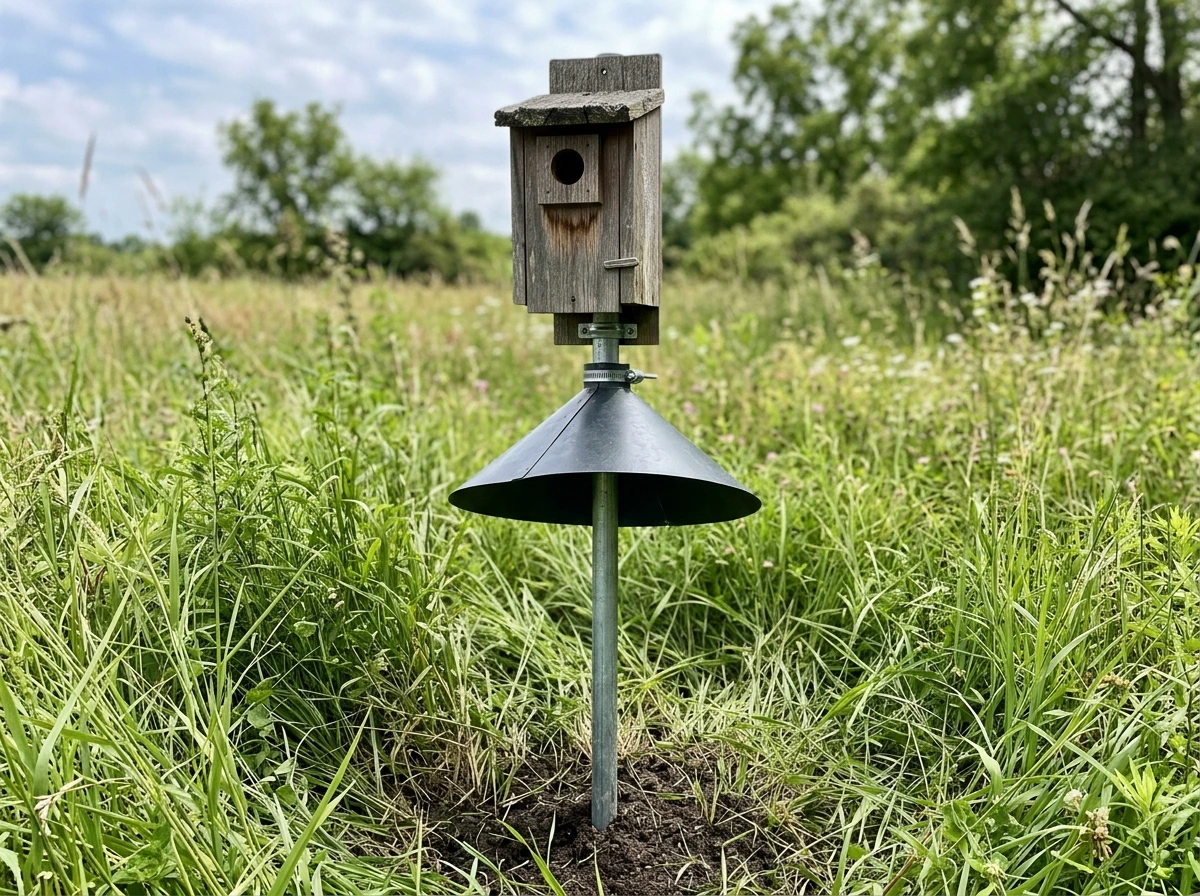
Drive a half-inch metal conduit pipe or EMT pipe about 18 inches into the ground. Use a fence post driver or a heavy mallet. Top the conduit with your stovepipe baffle, then mount the box on top. Screw through the back wall of the box into a small wooden mounting block that is fastened to the top of the pipe, or use a pipe flange and screws. The box should be stable with no wobble. A slightly forward tilt of the box, a few degrees so the entrance faces slightly downward, helps keep rain from driving into the hole during storms.
Maintenance, monitoring, and what to do if no bluebirds show up
Monitoring during nesting season
Once bluebirds move in, monitor the box once a week. Open the panel, take a quick look, note what you see (nest material type, number of eggs, age of nestlings), and close it up. The whole thing should take under a minute. Bluebirds are tolerant of brief weekly inspections and the data you collect helps you spot problems early, like a wasp nest taking over, or a House Sparrow nest replacing the bluebird nest.
Stop opening the box once the nestlings are about 12 to 14 days old. At that age, the chicks are large enough that a sudden disturbance can cause them to fledge prematurely, which is dangerous for them. After day 14, watch from a distance. Fledging usually happens around day 16 to 21 after hatching.
Cleaning the box between broods and at season end
After each brood fledges, remove the old nest material completely. Bluebirds will often build a fresh nest on top of an old one, but removing the old nest reduces parasites like mites and blowfly larvae. Take the old nest material at least 15 feet away from the box before discarding it, so residual scent does not attract predators back to the site.
At the end of nesting season (typically late summer or early fall depending on your region), do a thorough cleaning: remove all nest material, brush out any debris or wasp residue, and inspect the box for damage. Make any repairs now so the box is ready early next spring. Leave the box up through fall and winter. Bluebirds and other songbirds use nest boxes for overnight roosting during cold weather, so a clean box left in place provides real value year-round.
What to do if bluebirds do not move in
Give it at least one full season before concluding something is wrong. Bluebirds scout territories early in the year, and if you put your box up after pairs have already established territories, you may wait until the following spring. That said, here is a checklist of things to evaluate if the box stays empty:
- Is the habitat right? Open grassy area with perching spots nearby? If the box is near dense shrubs or trees, move it.
- Is the entrance hole the correct size? A hole that is too large or has been chewed larger by squirrels can deter bluebirds.
- Is there a predator guard on the mounting pole? Bluebirds may scout a box and reject it if they sense predator activity around it.
- Are House Sparrows dominating the area? Remove any House Sparrow nests promptly (they are an invasive species and not protected in the US), or consider relocating the box away from dense sparrow activity.
- Is the box getting too hot? A dark-painted box in full afternoon sun may be overheating. Add ventilation or reposition the box.
- Are there bluebirds in your area at all? Check local birding reports or eBird to confirm bluebirds are present in your region before assuming the box is the problem.
- Is the box close to another nest box? If a neighbor has a bluebird box within 100 yards and bluebirds are already using it, you may be in that pair's territory. Move your box or pair it with a second box 5 to 10 feet away to offer a swallow alternative.
Most empty-box problems come down to habitat or predator pressure, not the box itself. Once you rule those out and the build is solid, patience is usually the answer. Bluebird populations have recovered dramatically over the past few decades largely because of nest box programs like this one, and a well-placed, well-maintained box will almost always find occupants eventually.
If you want to keep building while you wait, our guides on general DIY birdhouses and step-by-step construction of do it yourself bird houses cover other species that can keep you busy and further enrich your backyard habitat in the meantime. If you want to keep building while you wait, our guide on do it yourself bird houses can keep your backyard projects moving with related, DIY nest box options for other species.
FAQ
What if my bluebird house doesn’t get used the first season, even though the entrance hole is the right size?
Give it at least a full season, because bluebirds often scout and pair up early. If it stays empty, reassess nearby habitat (short grass or bare ground within a clear sightline), predator pressure (baffle working and box mounted on a pole), and House Sparrow presence, since sparrows are a common cause even when the build is correct.
How can I tell whether European starlings or House sparrows are the ones taking over my box?
Look for behavior and timing differences during your weekly checks. Sparrows typically enter aggressively and may bring nest material and eggs quickly, while starlings can use boxes that are slightly too large at the entrance. If you see persistent non-bluebird occupancy or repeated nest destruction, remove the occupants’ nest materials and increase exclusion measures, like an entrance hole guard and better baffle setup.
Do bluebirds need an interior floor at all, and should I include drainage holes in it?
Use the standard floor design with corner cutouts for drainage, as pooling water inside can harm eggs and nestlings. Avoid adding drainage holes through the floor itself unless the floor is recessed, because water can wick back up through those holes and re-wet the nest.
Can I paint the whole bluebird house to make it blend in, including the inside?
Paint or leave bare only on the exterior. Do not paint, stain, or apply finishes on the interior, because coatings can introduce fumes and residues harmful to nesting birds. If you paint, keep colors light to prevent overheating and use exterior latex only.
Is a rough interior surface really necessary, or can I use smooth boards to save time?
Rough-cut wood helps fledglings grip the interior while they climb toward the entrance, which can reduce injuries and failed exits. If your lumber is very smooth, consider lightly roughening the interior surfaces with sandpaper before assembly, without leaving dust that could clog the nest box.
My yard is mostly wooded, what’s the best placement if I can’t create open habitat?
Bluebirds need open hunting space, so choose the most open edge you have, like a field boundary, meadow margin, or a large lawn with short grass near the box. Mounting in dense cover or on a fence post surrounded by brush usually fails because predators and sparrows can reach more easily and bluebirds have limited sightlines.
How much downward tilt should I use, and will it hurt the birds?
A slight tilt, just a few degrees so the entrance faces downward, is enough to reduce rain blowing into the hole. Excessive tilt can change how water and debris shed inside the box, so avoid steep angles and verify the box still opens and closes squarely without wobble.
Can I put multiple bluebird boxes close together in the same yard?
Bluebirds are territorial and generally need wide spacing for nesting pairs. In smaller areas, the common workaround is to “pair” boxes by placing two boxes 5 to 10 feet apart, expecting one to be used by bluebirds and the other often to be taken by Tree Swallows. Avoid placing boxes so close that bluebird territories overlap directly, especially if you see repeated conflicts at the entrance.
When is the latest I should open the box during nesting, and what should I do after the 12 to 14 day mark?
Once nestlings reach about 12 to 14 days old, stop opening the box to prevent premature fledge. After that point, watch from a distance and only intervene if there is an urgent safety issue (for example, active predator access), then resume minimal disturbance.
How do I clean out the box without attracting predators back to it?
Remove all old nest material after fledging, but take it at least 15 feet away before discarding so lingering scent doesn’t draw predators back. Brush out debris and check for damage, then close the box securely since partial openings or loose panels can make predation easier.
What if I don’t have the tools for a perfectly sized round hole, can I fix mistakes?
You can correct a slightly oversized entrance by installing a pre-drilled metal entrance hole guard centered over the hole. For cleaner cuts, a hole saw attachment is often more consistent than freehand drilling, and a jigsaw can work for certain entrance styles, but for bluebirds stick to the correct round-hole sizes.
Next Articles
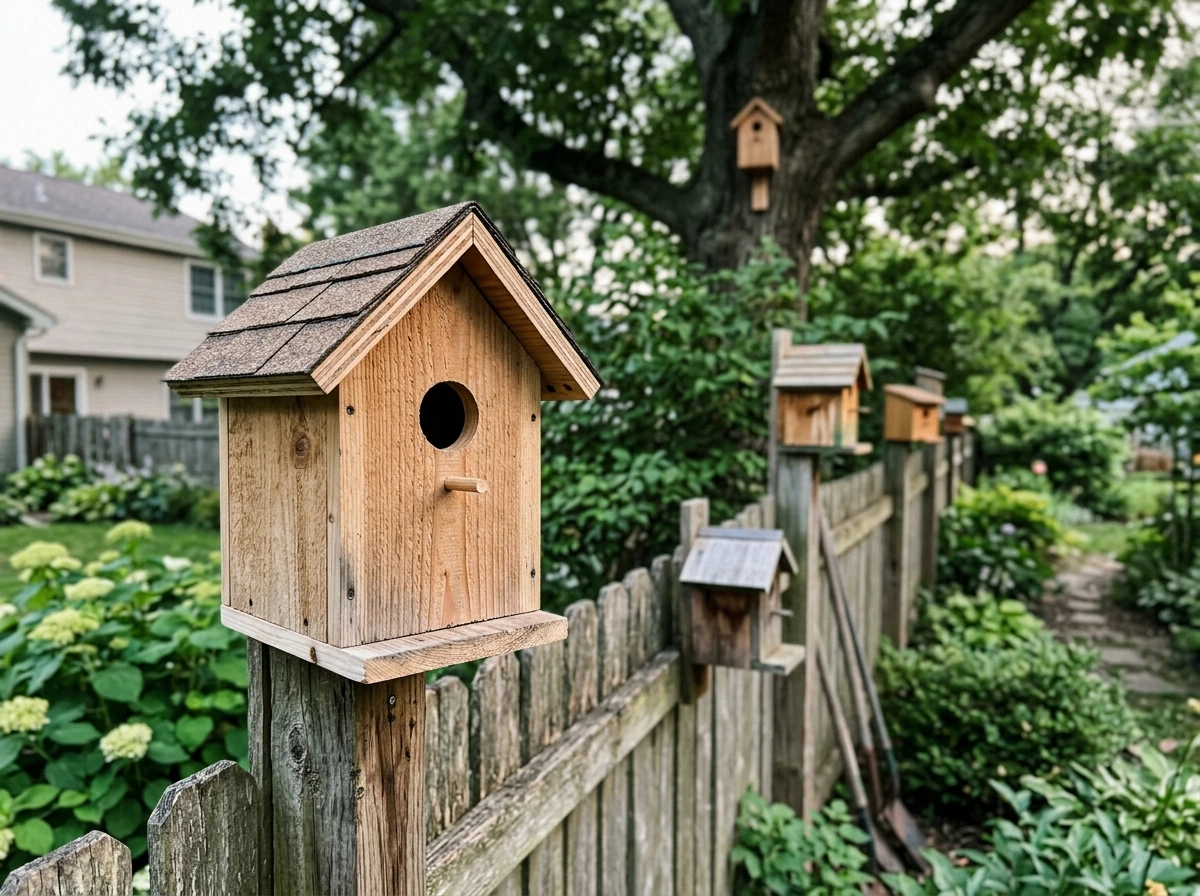
Do It Yourself Bird Houses: Plans, Kits, and Build Steps
DIY bird house plans and kits with build steps, hole sizing, ventilation, safe materials, installation and maintenance t
How to Make Gourd Bird Houses: Drying to Mounting
Step by step gourd bird house DIY: dry and cure gourds, cut openings, add drainage, mount safely, finish for outdoors.
How to Build Bird Houses Step-by-Step: Simple DIY Plans
Beginner-friendly DIY guide with wood cut list, step-by-step build, design tips, placement, and clean-out for nesting