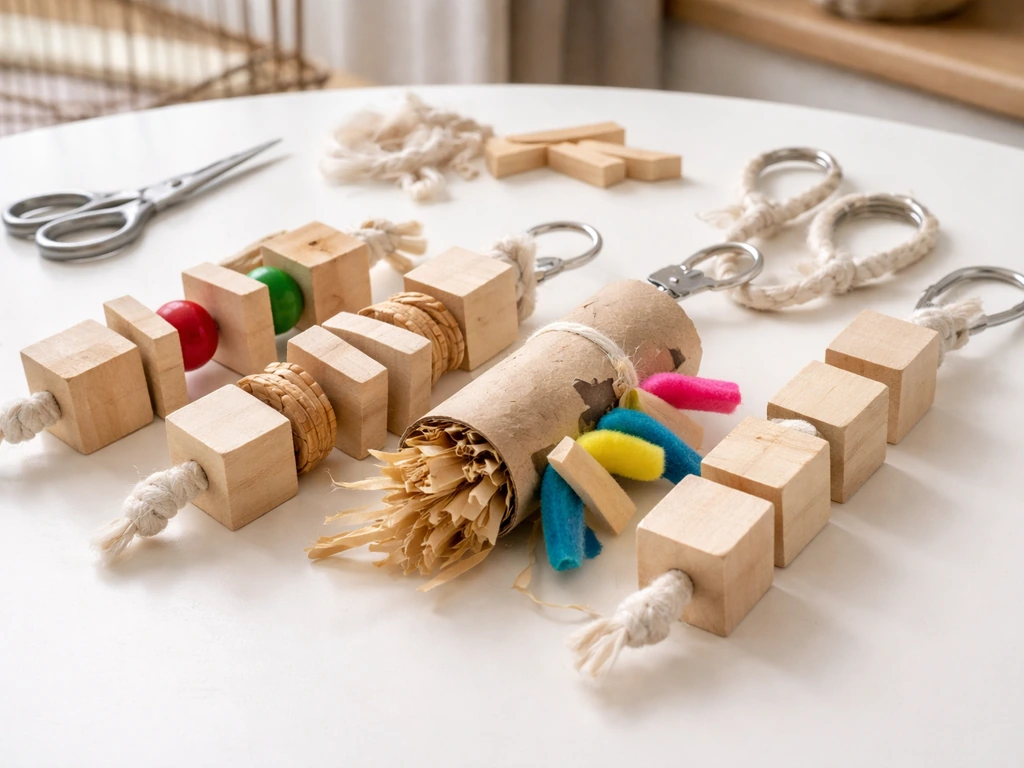
You can make safe, parrot-appropriate DIY toys at home today using materials you probably already have: untreated wood scraps, cardboard tubes, plain paper, and a few stainless steel quick links from the hardware store. The key is matching the toy's size and texture to your bird's beak strength, and knowing which materials to avoid entirely. This guide walks you through everything, from picking the right wood to hanging the finished toy securely inside the cage.
How to Make Bird Toys for Parrots and Parakeets

Marcus Thornton
10 Apr 2026
Choosing safe materials for parrot toys
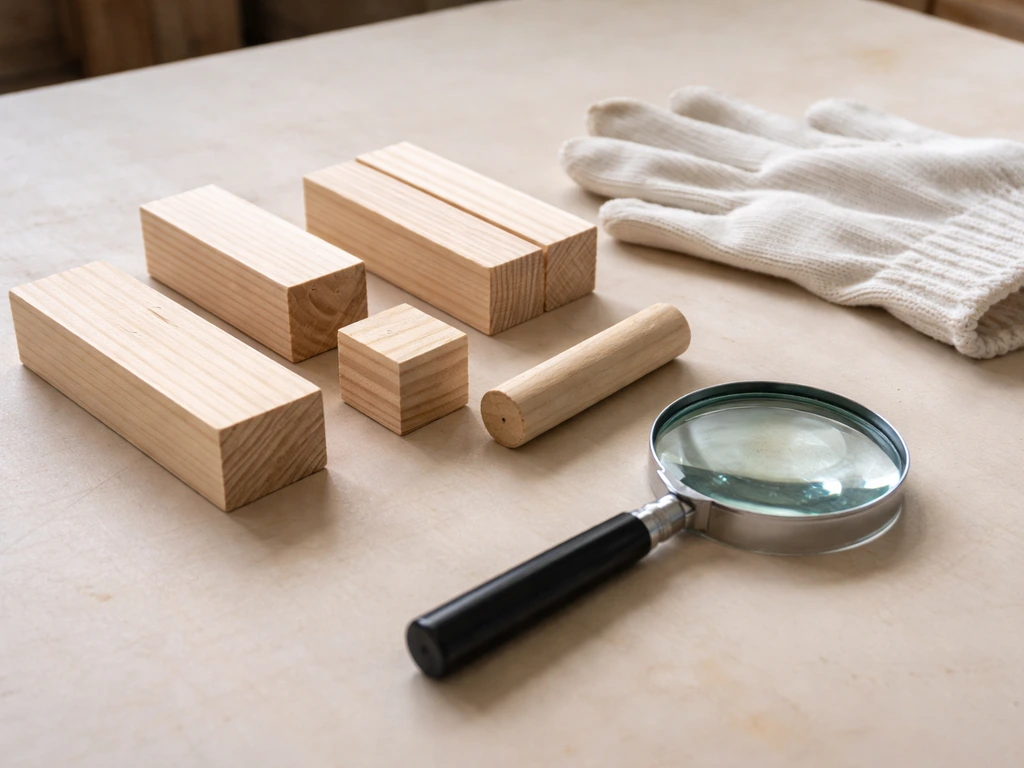
Material safety is the foundation of every toy you build. Get this wrong and even a beautifully constructed toy can hurt your bird. The safest choices are untreated wood, plain cardboard, paper (including toilet-roll inners), and hard plastic pieces that are large enough that they cannot be swallowed. Untreated wood blocks, popsicle sticks, and tree rounds with the bark still on are all excellent starting points, and they double as great chewing material.
When you're sourcing wood, make sure it has never been stained, painted, varnished, or treated with any preservative. Hardware-store timber is often pressure-treated, which makes it toxic for parrots. Stick to pet-safe species like pine, balsa, willow, birch, and apple wood. If you want to add color, dyeing wood for bird toys safely is possible using bird-safe food coloring diluted in water, but plain natural wood is always the simplest and safest option.
Rope is the material that causes the most confusion. Cotton rope is widely sold as a 'bird toy' material, but both synthetic and natural rope fibers carry real risks. Best Friends Animal Society also advises avoiding rope hazards because fibers can tangle or injure birds, including toe injuries and choking concerns cotton rope is widely sold as a 'bird toy' material, but both synthetic and natural rope fibers carry real risks.
Nylon and polyester fibers can wrap around a toe so tightly they cut off circulation, and there are documented cases of toe injuries severe enough to require amputation. Even cotton rope becomes dangerous once it frays, because loose fibers can cause crop and gut blockages if swallowed.
The RSPCA Knowledgebase similarly warns that rope fibres can cause stomach, crop, or gut blockages, and that longer rope can also create a tangle hazard [Even cotton rope becomes dangerous once it frays, because loose fibers can cause crop and gut blockages if swallowed. ](https://kb. rspca. org.
au/categories/companion-animals/other-pets/birds/how-will-i-keep-my-bird-safe-against-household-hazards). If you use rope at all, use thick, tightly twisted cotton rope and inspect it every single day. The moment it frays, it goes in the bin.
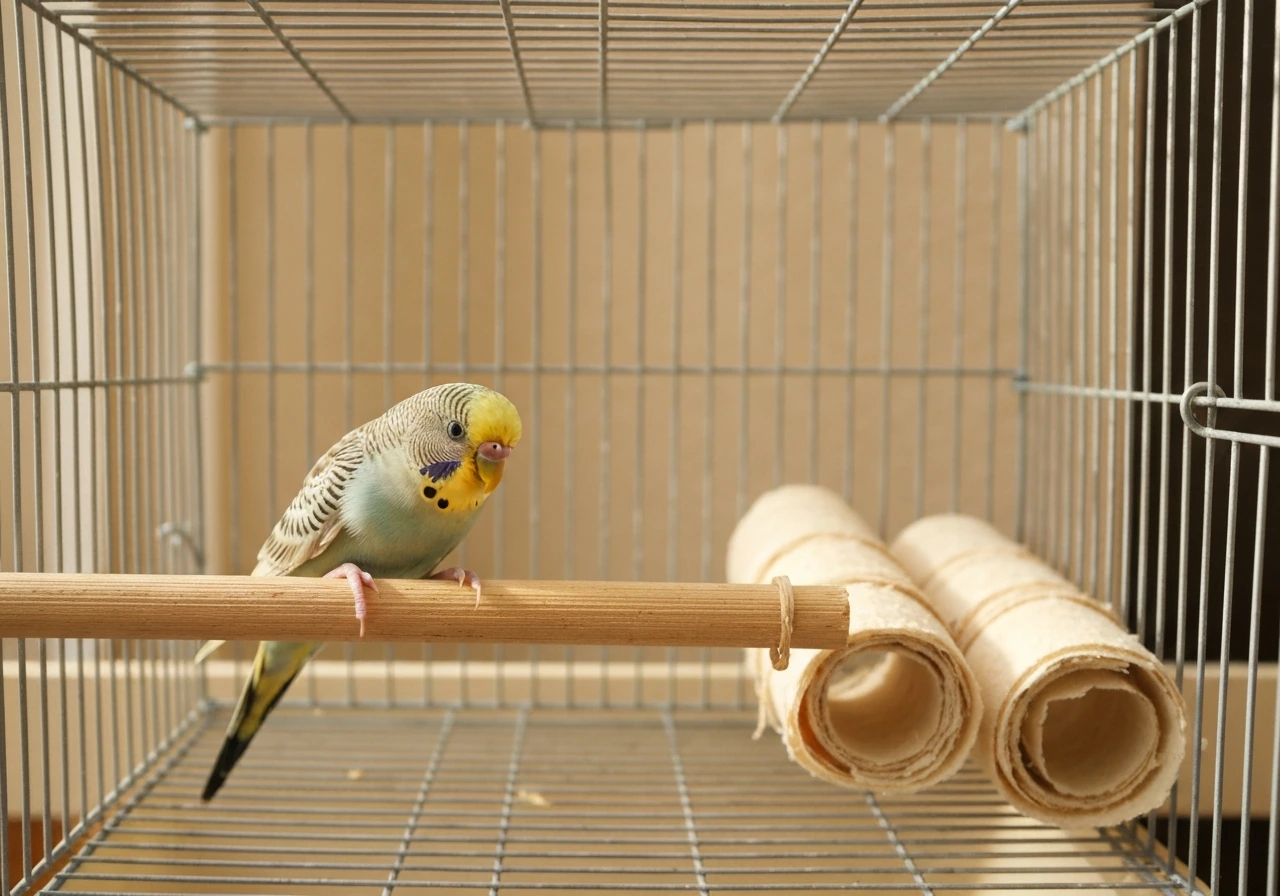
Paper and cardboard are genuinely underrated. Plain cardboard boxes, paper bags, newspaper (with soy-based ink), and toilet-roll inners are all safe and parrots love destroying them. The World Parrot Trust specifically recommends using paper towel rolls after removing any glue residue. Avoid paper products with plastic coatings, metallic inks, or heavy adhesive residue. Very fibrous materials like coconut husk and wood shavings should be avoided entirely because the fibers can cause stomach and crop blockages.
| Material | Safe? | Notes |
|---|---|---|
| Untreated pine, balsa, willow, birch, apple wood | Yes | Best all-round chew and building material |
| Popsicle sticks (plain, unfinished) | Yes | Great for foot toys and stacking projects |
| Cardboard / toilet-roll inners | Yes | Remove any glue residue before use |
| Plain paper / newspaper (soy ink) | Yes | Excellent shredding material |
| Thick cotton rope (tightly twisted) | Use with caution | Inspect daily; discard immediately when frayed |
| Nylon or polyester rope | No | Toe entanglement and digestive blockage risk |
| Coconut husk / wood shavings | No | Fibrous material causes crop and gut blockages |
| Treated, painted, or varnished wood | No | Chemical toxicity risk |
| Small plastic parts (beads, clips) | No | Choking and ingestion hazard |
| Zinc or lead hardware | No | Heavy metal toxicity; use stainless steel only |
Sizing and design basics for different species
A toy that's perfect for a macaw will terrify a budgie and a toy sized for a budgie will bore a cockatoo in thirty seconds. Sizing matters for two reasons: physical safety (beaks and feet getting caught in gaps) and enrichment value (a toy too hard to destroy isn't enriching). The general rule is that any gap, loop, or opening in a toy should be either smaller than the bird's head or large enough for the whole body to pass through freely. Nothing in between.
For small parakeets and budgies, wood pieces should be thin enough to chew through with a small beak, around 6 to 12 mm thick. Holes and openings in forage toys should be roughly 2 to 3 cm wide. For a more detailed approach to budgie-specific sizing, making bird toys for budgies covers the proportions that work best for that species. For cockatiels and conures, aim for wood that's 12 to 20 mm thick, with forage openings around 3 to 4 cm. For larger parrots like Amazons, African Greys, and cockatoos, wood blocks can be 25 mm or thicker, and you want robust construction because these birds will test every joint.
Keep the overall toy dimensions proportional to the cage. A toy that takes up more than one-third of the cage interior reduces flying and movement space. Hang multiple smaller toys rather than one large one. For climbing structures and gyms, make sure perch diameters match the bird's foot size: small parakeets need perches around 8 to 12 mm in diameter, medium birds like cockatiels do well at 15 to 20 mm, and large parrots need 25 to 35 mm. Getting perch diameter right reduces foot strain and prevents birds from gripping so tightly they can't let go.
Simple DIY toy ideas: chew, shred, swing, and forage
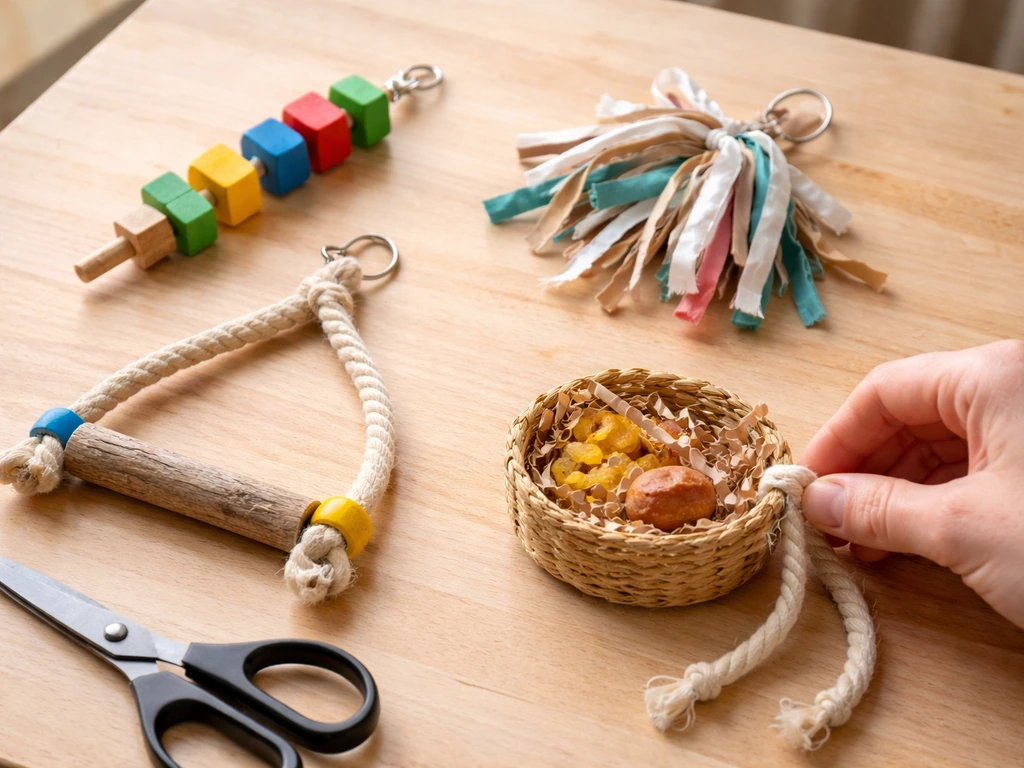
Once you know your materials and sizing, it's time to actually build something. Here are the four core toy types that cover the main parrot behaviors you want to support, with practical project ideas for each.
Chew toys
Chewing is how parrots maintain their beaks and stay mentally occupied. The simplest chew toy is a skewer of untreated wood blocks threaded on a stainless steel wire or sturdy natural fiber cord. Cut blocks of pine or balsa into rough 2 to 5 cm cubes (exact size depends on your species), drill a hole through the center of each, and thread them onto a length of stainless steel wire with a quick link at each end. You can also add popsicle sticks layered between the blocks for texture variety. The bird chews through the softer bits first, which is exactly what you want.
Shred toys
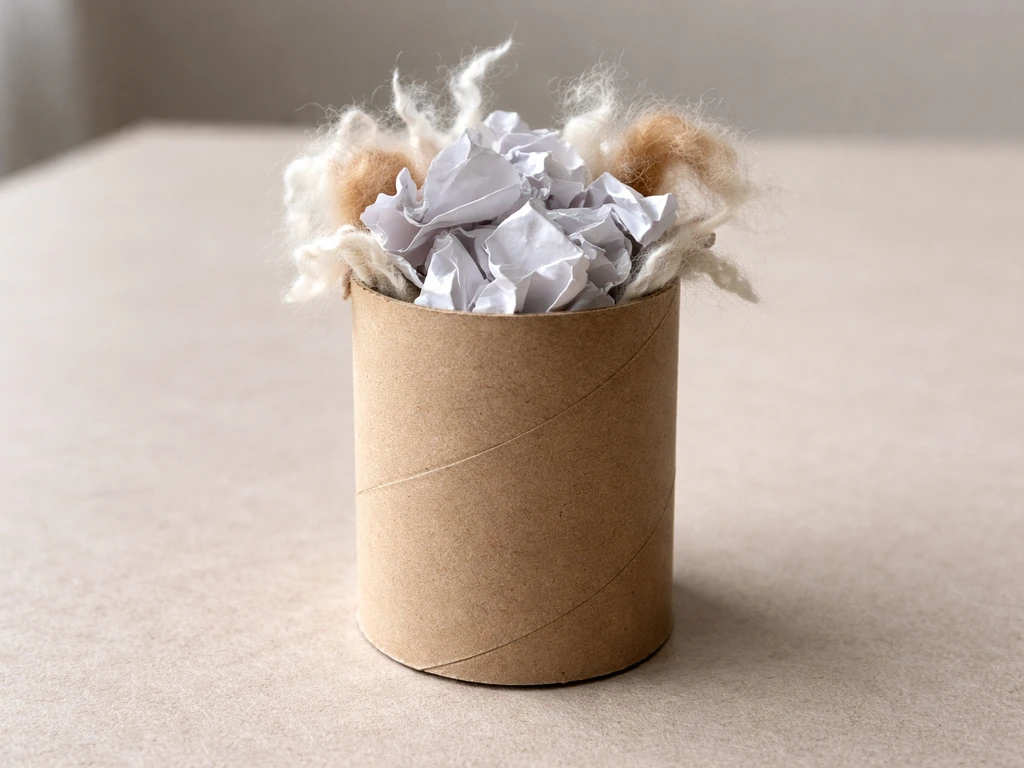
Shredding satisfies a different instinct: it mimics foraging through vegetation and gives birds something to tear apart completely. A toilet-roll inner stuffed with crumpled newspaper and a few treat pieces hidden inside is about as simple as it gets. You can also fold strips of plain cardboard into accordions and tie them in a bundle with a short length of untied palm leaf (which is also safe to chew). For a longer-lasting shred toy, weave strips of plain paper through the bars of a small piece of untreated wooden lattice. Bird toys you can make at home have a surprising range of difficulty levels, but shred toys are genuinely beginner-friendly because nothing needs to be perfect.
Swing toys
A simple perch swing is one of the most used toys in most cages. Cut a straight branch or dowel to a width slightly wider than your bird's cage interior, drill a hole at each end, and run stainless steel wire or thick cotton rope (again, inspect daily) through each hole, connecting both ends to a single quick link at the top. The motion gives birds a form of vestibular stimulation they seem to genuinely enjoy. For larger parrots, add a few wood blocks or wooden beads to the hanging wires to increase the chewing and batting opportunities.
Forage toys
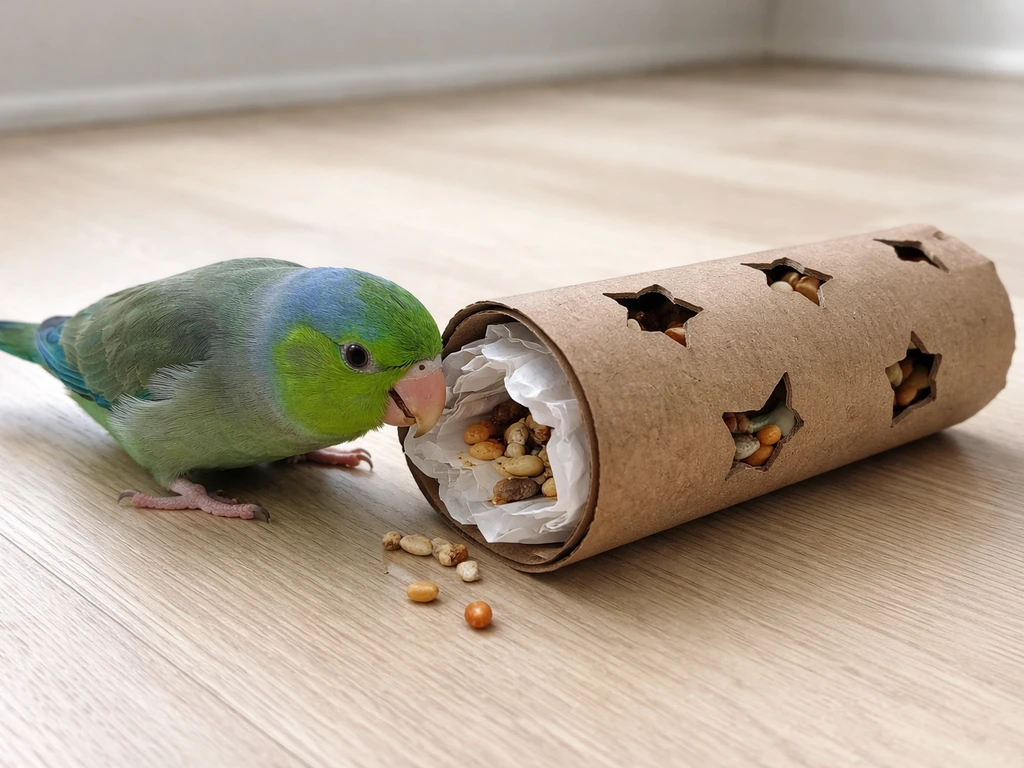
Foraging is the most cognitively stimulating toy category and also one of the easiest to DIY. The concept is simple: hide food inside something the bird has to manipulate to access it. A folded paper cup with a pellet inside, a cardboard box taped shut with a treat inside, or a toilet-roll crimped at both ends around some seeds all work well.
For a more durable version, drill a series of 2 to 4 cm holes into a piece of untreated wood block, fill the holes with a soft treat, and let the bird dig it out. You can scale up to a full foraging board: a flat piece of wood with multiple drilled holes, hung horizontally in the cage. Do it yourself bird toys like foraging boards tend to become a long-term cage fixture because you can refill them indefinitely.
Step-by-step construction: no or low tools required
You do not need a workshop to build good parrot toys. A hand drill (or even a power drill borrowed for an afternoon), a small saw or wood-cutting hand tool, stainless steel wire, and quick links are all you really need. Here are three specific builds at different complexity levels.
Project 1: Cardboard foraging roll (no tools)
- Take a clean toilet-roll inner or paper towel roll. Check for any glue residue around the seams and scrape it off.
- Crumple a small piece of plain paper and push it loosely into one end to partially seal it.
- Drop 5 to 10 small treat pieces (pellets, dried fruit, seed) into the roll.
- Crumple another paper piece and push it into the other end.
- Optionally, wrap a strip of plain cardboard around the outside and secure with a small torn strip of plain paper (no tape, no glue).
- Hang using a quick link through a small hole poked near the top, or simply rest it on a flat play surface for a floor forage toy.
Project 2: Wood block chew skewer (basic drill needed)
- Cut untreated pine or balsa into 2 to 4 cm cubes. Sand any sharp edges lightly with 80-grit sandpaper.
- Drill a 4 to 5 mm hole through the center of each block.
- Cut a length of stainless steel wire (or thick natural cotton cord for smaller birds) about 30 cm long.
- Thread a quick link onto one end and crimp or tie it securely so blocks cannot slide off the bottom.
- Thread the blocks onto the wire, alternating with popsicle sticks or thin balsa slices for texture.
- Add a quick link to the top end for cage attachment. Make sure both end closures are tight and cannot be pried open by the bird's beak.
Project 3: Simple perch swing (basic drill and saw)
- Select a natural branch (apple, willow, or birch) or an untreated dowel of the right diameter for your species.
- Cut to a length slightly shorter than the cage interior width, typically 15 to 35 cm depending on bird size.
- Drill a 4 mm hole about 1 cm in from each end, angled slightly upward so the rope or wire sits in a gentle V shape.
- Cut two equal lengths of stainless steel wire or thick cotton rope, thread one through each hole, and knot or crimp the underside so they cannot pull through.
- Join both upper ends to a single quick link, ensuring the swing hangs level.
- Before placing in the cage, check that there are no sharp wire ends exposed and that the perch surface is smooth enough to prevent foot abrasion.
If you want to push further with materials like craft sticks, making bird toys with popsicle sticks opens up a lot of interesting modular designs that require almost no cutting at all, just stacking and tying.
Attaching toys safely and rotating enrichment
How you hang a toy matters almost as much as what the toy is made of. The World Parrot Trust recommends stainless steel quick links with a screw-clasp closure for attaching hanging toys. These are inexpensive, available at most hardware stores, and critically, they require two movements to open (unscrew plus pull), which means a clever parrot cannot undo them accidentally. Avoid split rings, shower rings, or any clip that springs open with a single motion because parrots will figure those out and the toy will drop.
Before hanging any new toy, hold it up and look through every gap, loop, and opening. Ask yourself: could a toe, nail, or beak get lodged in that space? Could the bird's head fit in but not out? Any gap that could trap a limb needs to be closed, enlarged, or removed. This check takes thirty seconds and it is worth doing every single time, including with toys you have made before, because they change as they are chewed and worn.
Rotation is the secret to toys actually getting used. Parrots habituate quickly to the same cage setup, and a toy that gets ignored after two days is not a bad toy, it's just a familiar one. Aim to rotate at least one toy every five to seven days. Keep a small box of 'resting' toys and cycle them back in after a few weeks. Birds often treat returning toys as if they are brand new. Keeping three or four toys in active rotation at any time gives you enough variety without overwhelming the bird or cluttering the cage.
Safety checks, maintenance, and when to replace
Daily inspection is non-negotiable. This does not mean a ten-minute audit every morning, it means a quick scan each time you interact with the cage. Look for frayed rope or string fibers, cracked plastic with sharp edges, loose hardware, and any toy that has been chewed to the point where small pieces can break off and be swallowed. Lafeber's veterinary guidance is clear on this: toys are meant to be destroyed, but that means the inspection schedule needs to be consistent.
For cleaning, plain untreated wood toys can be scrubbed with hot water and a stiff brush. Do not use soap or chemical cleaners unless they are specifically labeled as bird-safe, and rinse thoroughly even then. Cardboard and paper toys are single-use by design: when they are destroyed, they go in the compost. Metal hardware (quick links, wire) can be washed with hot water and dried immediately to prevent rust.
Replacement timelines depend on the bird's chewing intensity, but some hard rules apply regardless. Replace rope toys the moment they fray, no exceptions. Replace any toy with exposed metal that is not stainless steel. Replace toys where the structural integrity has been compromised enough that pieces can break off into swallowable sizes. For a broader reference on what makes a toy safe versus when it needs to go, how to make safe bird toys covers the safety design principles in detail that carry through the whole lifecycle of a toy, from building to disposal.
Troubleshooting: boring toys, fast destruction, and picky behavior
The bird ignores every toy you make
This is the most common complaint, and it almost always comes down to one of three things: the toy is introduced too abruptly, it is placed in the wrong location, or the bird needs to see it as safe before engaging with it. Parrots are naturally neophobic (fearful of new things). Try placing a new toy near the cage but outside it for a day or two so the bird can observe it from a safe distance. Then move it to the outside of the cage bars before placing it inside. Some birds also need to see you interact with the toy first, picking it up, tapping it, pretending to eat from a forage toy.
The bird destroys everything in minutes
This is actually good enrichment, just expensive if you are buying commercial toys. With DIY toys the cost drops dramatically. If your bird obliterates toys very quickly, lean into it: make more of them, make them slightly harder to access (wrap foraging treats in more layers of paper, drill treat holes slightly smaller, add more components to chew through before reaching the reward). The destruction itself is the enrichment, so a toy that gets demolished in twenty minutes has done its job well. Just make sure you have a fresh one ready.
Rope and fiber toys causing wear concerns
If you notice fraying on any rope toy, the most important thing is to remove it immediately and not put it back. If your bird specifically targets rope and cuts or unravels it very quickly, rope may simply not be the right toy type for that bird. Some parrots will snip rope fibers methodically and swallow them without any obvious signs until there is a problem.
In that case, transition fully to wood, cardboard, and paper toys and do not use rope in that bird's cage. Many parrots live their whole lives without rope toys and are completely enriched. For a broader look at general toy design approaches and which formats suit which birds, how to make bird toys is a good companion reference for branching into new formats as your bird's preferences become clearer.
The bird seems bored even with variety
If you are rotating toys regularly and the bird still seems disengaged, the issue is often that the toys are not matched to what that specific bird finds rewarding. Some parrots are primarily foragers and need the challenge of finding food. Others are primarily chewers and just want to destroy things. Observe your bird for a week without adding anything new and note which natural behaviors it repeats most often.
Then design your next round of toys specifically around that behavior. A bird that spends most of its time shredding paper on the cage floor is telling you it wants more shred-based enrichment. One that bobs and moves around a lot probably wants more swing and climbing options. Building toward observed behavior is the fastest way to crack what your individual bird actually enjoys.
FAQ
Can I use rope at all if my parrot loves it?
You can, but only if you commit to daily checks and remove it the moment any fiber loosens or frays. If your bird methodically unravels rope quickly, switch fully to wood, paper, and cardboard rope-free toys for that cage. Rope can also be more likely to wrap around toes, even when it looks intact.
What thickness of wood is safest if I am not sure of my bird’s beak strength?
Start with the thinner end for your species range (so your bird can chew it), then observe how quickly it destroys the toy. If the toy is breaking into small chunks, move to thicker, longer-lasting pieces and increase the number of components the bird must work through to reach the reward.
How do I choose between a chew toy and a foraging toy for the same bird?
If your bird repeatedly chews cage bars or perches, prioritize chew toys. If it is food motivated and spends time investigating objects, use foraging toys with hidden treats. Many birds benefit from a mix, but keep the foraging toys slightly harder to access, so the bird stays engaged instead of finishing in seconds.
Are paper and cardboard toys really safe if my bird eats them?
They are intended to be destroyed. Use plain, uncoated paper or cardboard, avoid plastics or metallic inks, and do not use products with heavy adhesive residues. When the toy is demolished beyond usefulness, discard it promptly rather than letting loose bits accumulate.
What should I do about glue, tape, or labels on DIY materials?
Avoid toys made with glue residue that transfers to the bird’s mouth. If you use recycled items, remove stickers and labels and rinse off any leftover adhesive. For paper-tube toys, ensure any tape is not exposed inside where the bird will chew and pick at it.
How can I prevent birds from getting trapped in the loops and openings as the toy wears down?
Do a quick “gap test” each time you interact with the cage, not just when you build it. Chewing can enlarge loops, thin cardboard can collapse, and rope can fray into new snag points. If a toe, nail, or beak can get lodged, replace or redesign immediately.
Is there a safe way to add more color to wooden toys?
Use bird-safe food coloring diluted in water only on natural wood, and let it fully dry before offering. Skip stains, varnishes, and any preservative-treated wood entirely. If your bird is a heavy chewer, keep coloring minimal since repeated chewing can grind off dyed fibers.
Can I reuse hardware like quick links and wire after a toy is destroyed?
Yes, if the metal is stainless steel and remains intact. Wash with hot water, rinse, dry quickly to prevent rust, and inspect for sharp edges or loosening wire. Replace quick links if the screw-clasp no longer tightens securely or if any coating gets compromised.
How do I introduce a new toy without triggering fear or avoidance?
Let the bird observe it first outside the cage for a day or two, then move it to the outside of the bars before final placement inside. Also try a “safe cue” routine, you interacting calmly with the toy, tapping it, or showing the bird a foraging treat near it, so the toy becomes associated with you and food.
My bird ignores toys even though they are safe. What’s the next step?
Match the toy type to your bird’s dominant behavior. Watch for several days and note whether the bird is mainly shredding, chewing, climbing, or foraging. Then adjust the next batch so it targets that behavior, for example more shred-based paper toys for heavy shredders, or more digging-style foraging for food seekers.
What cleaning method should I use for paper, cardboard, and compostable toys?
Do not try to sanitize paper-and-cardboard toys like you would wood. Treat them as single-use, remove them when they are destroyed or soiled, and compost them. For lingering odors, replace rather than washing, since glue, food residue, and soft pulp can stay trapped.
How often should I rotate toys, and what rotation pattern works best?
Rotate at least one toy every five to seven days, and keep a small box of “resting” toys to cycle back in after a few weeks. If your cage gets cluttered, rotate fewer toys but use smaller, distinct categories (one chew, one shred, one foraging) so variety stays meaningful without overcrowding.
Next Articles
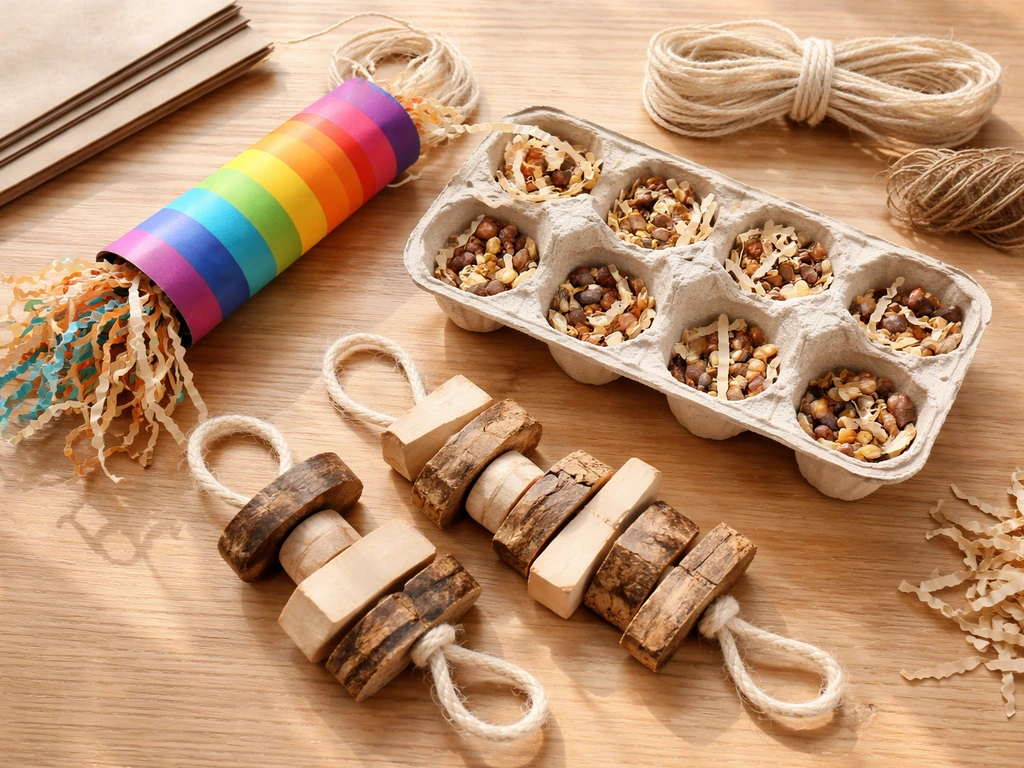
How to Make Bird Toys: Easy DIY Chewing, Climbing, Foraging
Step-by-step DIY bird toys for chewing, climbing, and foraging with safe materials, mounting, and cleaning tips.
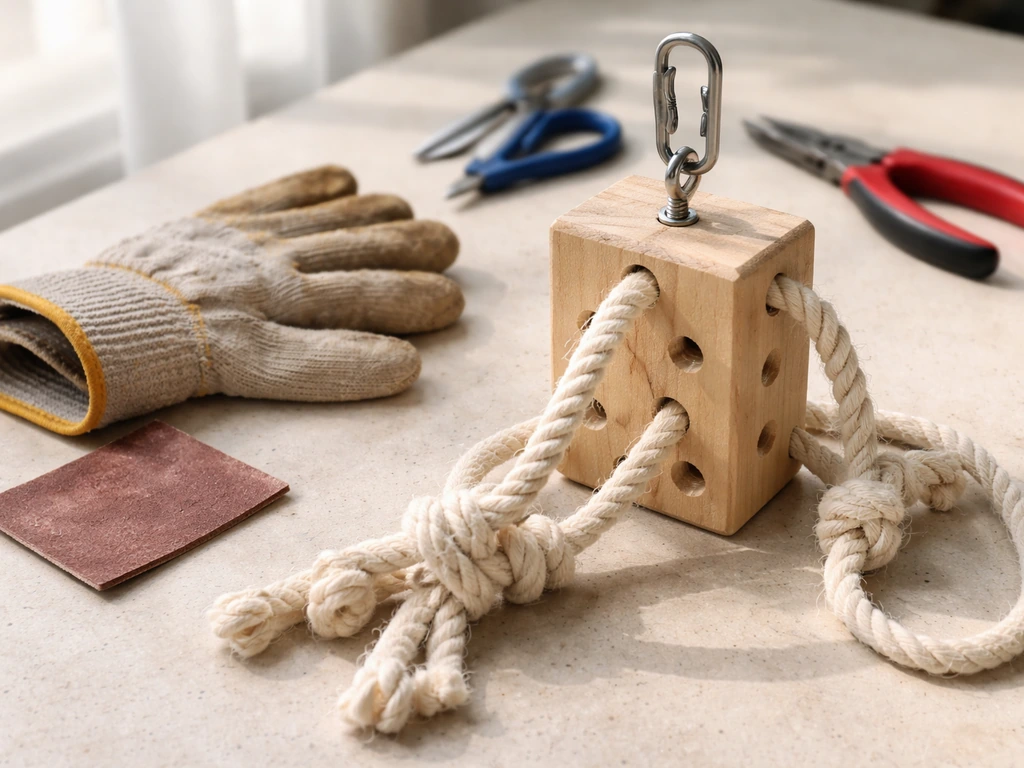
Do It Yourself Bird Toys: Step-by-Step Safe Plans
Step-by-step DIY bird toy plans with safety rules, toy types by species, and how to attach, rotate, clean, and troublesh
How to Make Bird Toys for Budgies: DIY Safe Builds
DIY step-by-step budgie toy guide: safe materials, 5+ builds for chewing, shredding, climbing, foraging, and cage fit.