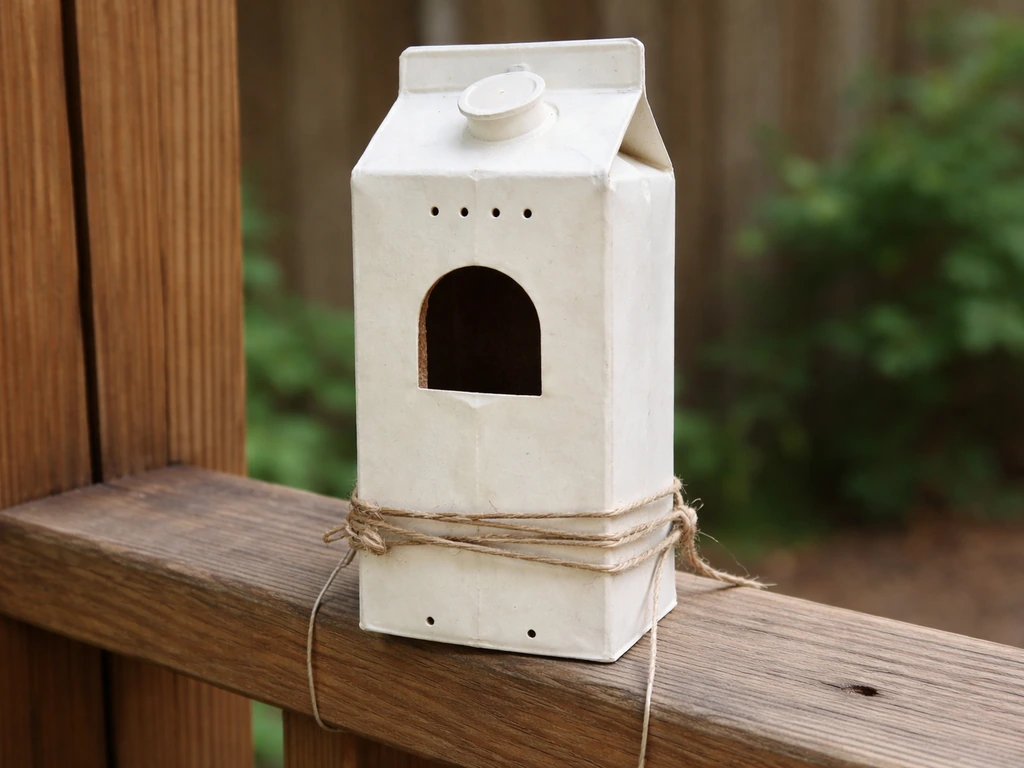
You can absolutely make a functional bird house from a milk carton, and it can genuinely attract small cavity-nesting birds like house wrens or chickadees. It is not a forever home, cardboard and wax-coated cartons break down in a season or two, but as a low-cost, beginner-friendly project you can finish in an afternoon with scissors and a hole punch, it is a real option. The key is knowing how to set it up correctly so it helps birds rather than putting them at risk.
How to Make Bird Houses From Milk Cartons

Marcus Thornton
24 May 2026
Why milk-carton bird houses can work (and what their limits are)
Milk cartons are insulating, easy to cut, and free. The waxy coating on standard cartons gives them some moisture resistance, and half-gallon or gallon sizes offer interior dimensions that are in the right ballpark for small cavity-nesting species. That is genuinely enough to get a bird to inspect the box and sometimes nest in it, especially in yards where natural cavities and proper wooden nest boxes are scarce.
The honest limits: cardboard softens, sags, and molds. A milk carton will not survive a second full breeding season in a wet climate. The walls give birds less insulation than wood on cold nights, and if the carton gets waterlogged, it can trap moisture inside the nest and put eggs or chicks at risk. Think of it as a starter box or a supplemental option while you build something more durable, not a replacement for a proper wooden nest box. Projects like building from pallets or PVC pipe are worth exploring once you catch the birdhouse-building bug, but there is nothing wrong with starting here. If you want to graduate to something tougher, learn how to make bird houses from pallets for a longer-lasting design.
- Good for: house wrens, chickadees, small sparrows — species that will try low-budget options
- Not ideal for: bluebirds, woodpeckers, or any species that needs a sturdier or very specific box dimension
- Expected lifespan: one full nesting season, possibly two if you reinforce and store the carton over winter
- Safe for birds if: built correctly, mounted safely, and cleaned out at the end of the season
Choosing the right carton and preparing it
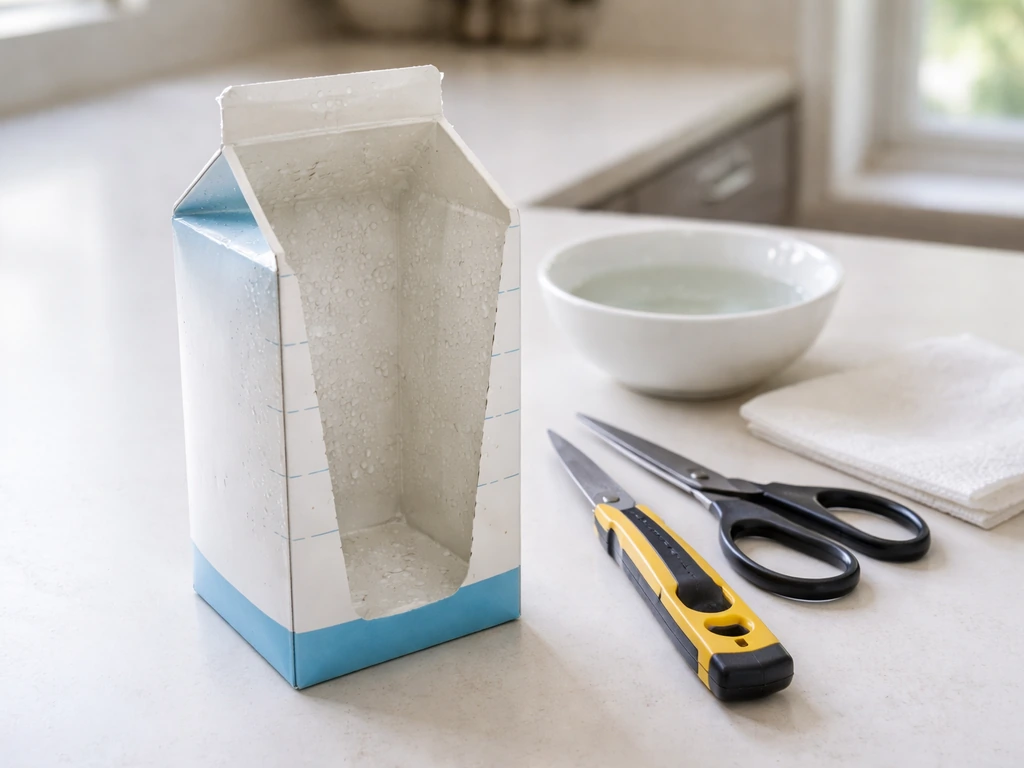
Go for a half-gallon or gallon wax-coated cardboard carton, the classic milk jug shape, not a plastic bottle. Half-gallon cartons give you interior floor dimensions of roughly 3.5 by 3.5 inches, which works for wrens and chickadees. A full gallon carton pushes that to about 4 by 4 inches, slightly roomier and better if you want to keep your options open for other small species. Avoid thin juice boxes or pouches, they are too flimsy and too small.
Rinse the carton thoroughly with warm water immediately after it is empty. Any milk residue will mold fast and create a toxic environment inside the box before a bird even shows up. Rinse it two or three times, then stand it open-top-down to drain, and leave it somewhere with good airflow for at least 24 to 48 hours until it is completely dry inside. I have rushed this step before and ended up with a faintly sour-smelling box, birds noticed and skipped it entirely. Do not skip the drying.
Once dry, reseal the top of the carton by folding and taping it flat. Use waterproof tape, packing tape or gaffer tape both work. This closes off the peak and creates a sloped roof that sheds rain rather than collecting it. If you want extra weather protection, wrap the outside of the carton in a single layer of duct tape or use outdoor-rated spray paint (see the paint note below). Do not paint or seal the inside, birds are sensitive to fumes and VOCs.
Cutting holes, entrances, and ventilation openings
This is where most people either get it right or accidentally make a box that attracts the wrong species or lets in predators. Entrance hole size matters more than almost anything else. Cavity-nesting birds are specific about it: too large and you invite house sparrows or starlings that will out-compete and harm native birds; too small and the birds you want cannot get in. For a milk-carton box, aim for these target species and hole sizes:
| Target species | Entrance hole diameter | Hole height from floor |
|---|---|---|
| House wren | 1 to 1 1/8 inches | 4 to 6 inches |
| Black-capped or Carolina chickadee | 1 1/8 inches | 6 to 8 inches |
| Eastern bluebird (gallon carton only) | 1 1/2 inches | 6 inches |
| House sparrow (avoid attracting) | Over 1 3/4 inches — do not go this large | — |
To cut the entrance hole, use a sharp box cutter or a sturdy craft knife. Mark your circle in pencil first. A bottle cap or a large coin makes a useful tracing template for the smaller sizes. If you have a spade bit or hole saw that fits in a hand drill, it cuts a cleaner circle, but a steady craft knife works fine. Position the hole on one of the flat panels, centered left to right, and at the right height up from the sealed bottom of the carton. Texas Parks & Wildlife also provides entrance height guidance for common cavity-nesting birds, including house wrens, to help you set the hole at the correct elevation the right height up from the sealed bottom of the carton.
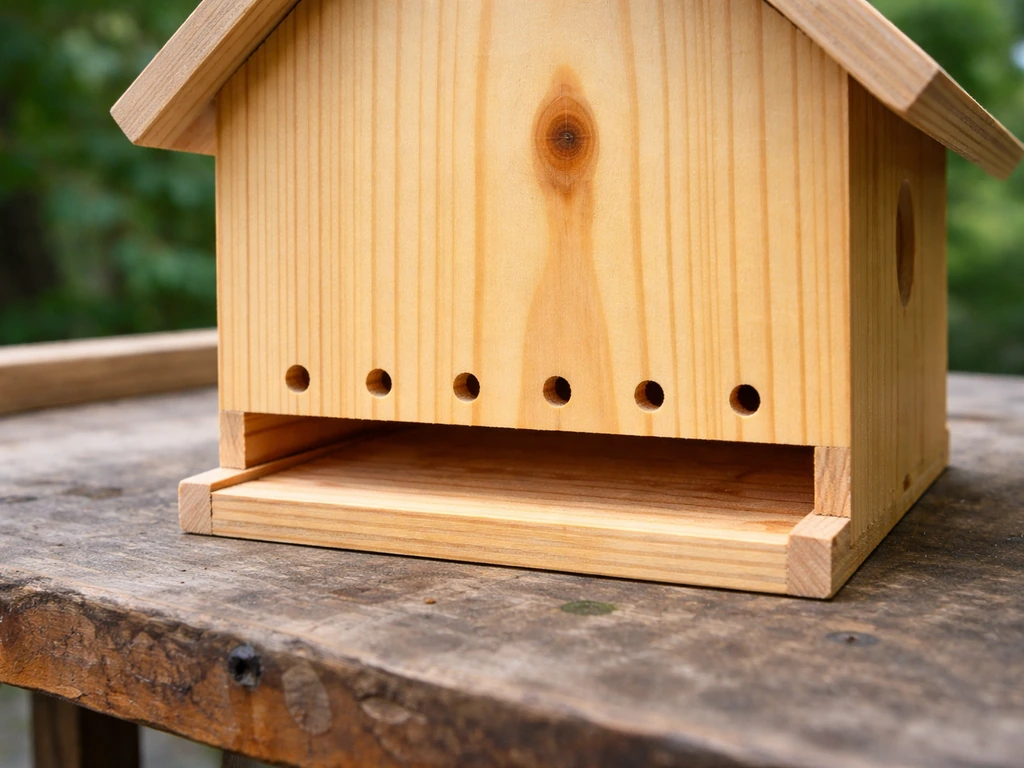
Ventilation is non-negotiable. Without it, the interior gets hot enough on summer days to kill eggs and chicks. Punch or cut at least two small holes (roughly 5/8 inch diameter, or as large as you can comfortably make with a hole punch) near the top of the carton on each side, so four holes total near the upper walls. These let hot air escape and fresh air circulate. NestWatch recommends this same approach for wooden boxes: two 5/8-inch holes on each side near the top.
Drainage holes in the floor are just as important. Water will get in during rain, and standing water in the nest will kill chicks quickly. Punch four holes in the bottom of the carton, each about 3/8 to 1/2 inch wide, spread evenly across the floor. If your carton sits flat when mounted and the bottom is sealed, these holes ensure any moisture drains straight out. NestWatch specifically recommends at least four drainage holes at this size for all nest boxes, and the guidance translates directly to carton builds.
Cleaning, mounting, and placement for safety
How and where you mount this matters as much as how you build it. A carton hung in the wrong spot will either go unused or, worse, attract nesting birds and then expose them to predators or harsh conditions.
Mounting methods
The simplest approach is a wire loop. Thread a length of galvanized wire through two small holes punched near the top of the carton (above the ventilation holes) and twist it into a hanging loop. This lets you hang the box from a tree branch or a shepherd's hook pole. Keep the wire long enough to allow the box to hang freely rather than pressing flat against a branch, which would block ventilation and make it easier for squirrels to reach.
For a more stable mount, push a wooden dowel or a short garden stake through two opposing sides of the carton just below the bottom, forming a crossbar, and zip-tie or wire the carton to a pole or post. This keeps it level and reduces swinging in wind, which birds prefer for active nesting. If you want to mount it on a wooden fence post or a building wall, tape or staple a strip of cardboard to the back of the carton and screw or tack that reinforced back panel to the surface.
Height and orientation
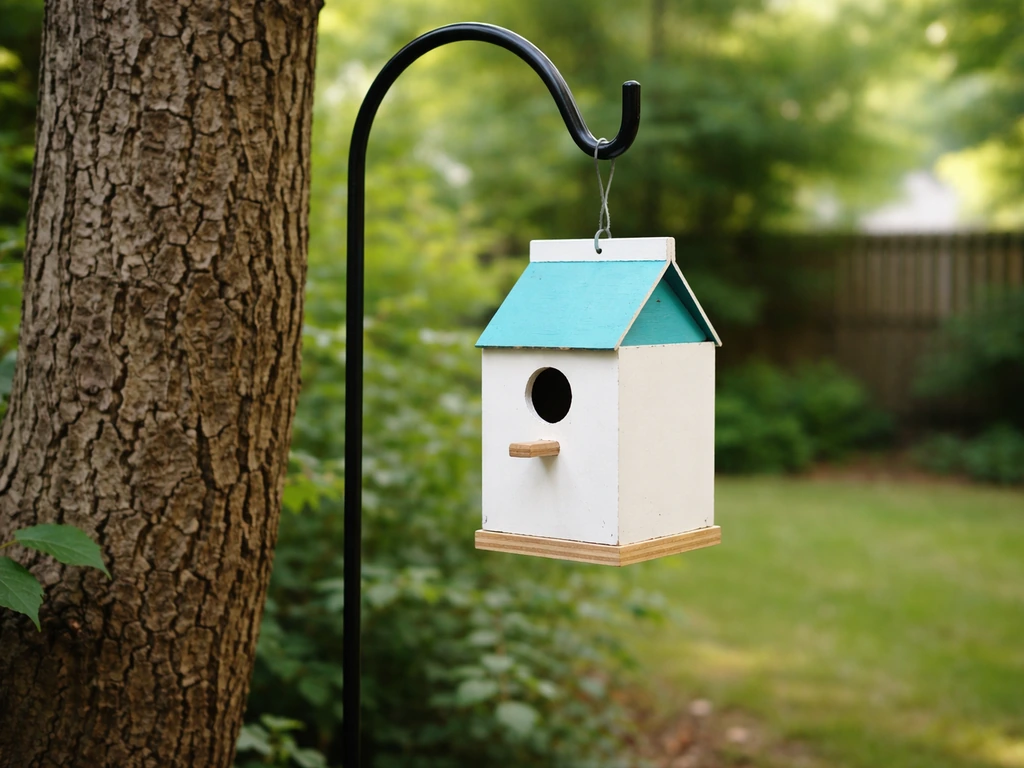
For house wrens, 5 to 10 feet off the ground is ideal. Chickadees prefer 4 to 15 feet. These are achievable on a fence post, a low tree branch, or a shepherd's hook. Avoid mounting the box in full direct afternoon sun, a south-facing or west-facing box in summer will overheat fast. East-facing is the classic recommendation because it catches gentle morning sun, which warms the box after cold nights without cooking it by midday. Keep it away from bird feeders too; feeder traffic and competition stress nesting birds.
Predator protection is the step most beginners skip. A carton hung from a thin wire near a tree trunk is accessible to raccoons, cats, and squirrels. If you can, mount the carton on a metal pole and add a baffle below it, a simple cone of sheet metal or a plastic slinky wrapped around the pole creates a barrier. At minimum, make sure the carton is at least 6 to 8 feet from any structure a cat can climb or jump from.
Optional tweaks to attract specific birds
You cannot guarantee any particular species will use a milk-carton box, but you can tilt the odds. The entrance hole size is your most powerful lever, stick to 1 to 1 1/8 inches and you are signaling specifically to wrens and chickadees while blocking most house sparrows and starlings. House sparrows are an invasive species and known to destroy the eggs and kill the nestlings of native birds, so keeping that entrance hole small is not just a suggestion.
Location matters too. Wrens prefer boxes placed near shrubby, brushy edges, near a hedgerow, a brush pile, or a garden border. They are not fussy about the box itself but they love having dense cover nearby for foraging. Chickadees are more comfortable near woodland edges and will use boxes mounted on or near deciduous trees. If you want to attract bluebirds, a gallon-sized carton with a 1 1/2-inch hole is the minimum setup, but honestly, bluebirds strongly prefer sturdy wooden boxes (a standard bluebird box build specifies a 1 1/2-inch hole with specific floor dimensions and mounting height of 4 to 6 feet on an open pole). A carton can work as a placeholder while you build something more permanent.
Do not add a perch below the entrance hole. It seems helpful but it actually gives predators and house sparrows a foothold. Native cavity-nesting birds do not need a perch to enter a box, they land directly at the hole. Leave it off.
If you want to add nesting material to attract birds faster, a small handful of wood shavings (not cedar, which has aromatic oils that can irritate birds) placed on the floor of the box is fine. Do not use dryer lint, it compacts and holds moisture. Coarse wood chips or dried grass are better options.
Maintenance, seasonal care, and when to replace
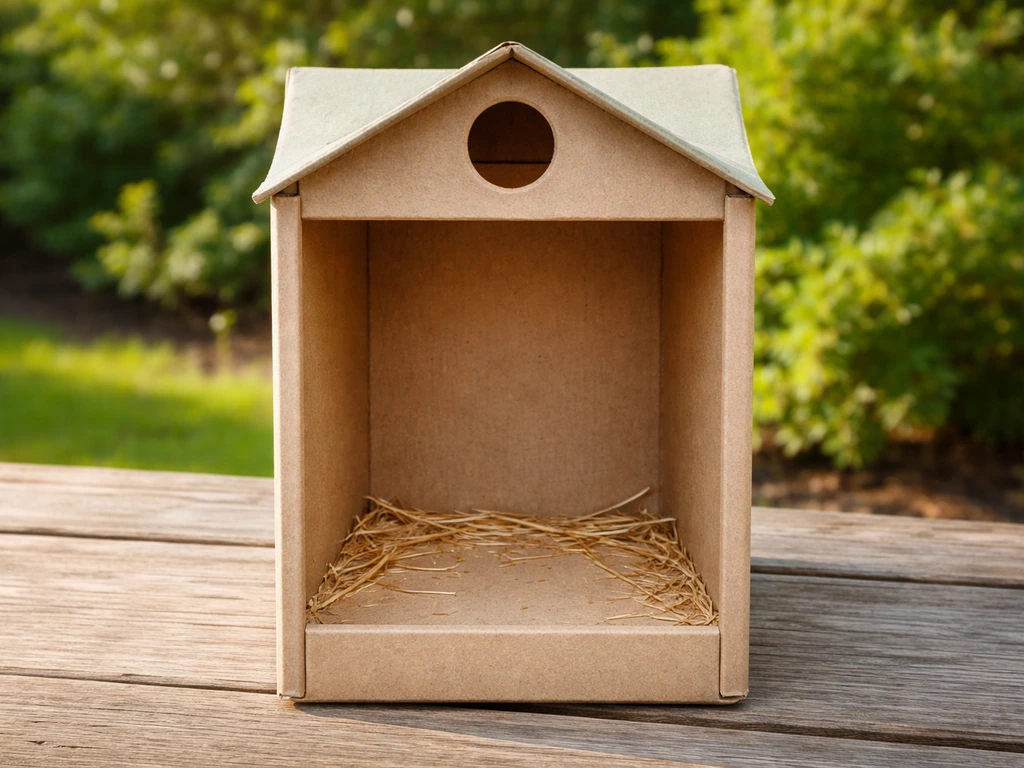
Once birds start using the box, leave it alone during active nesting. Checking too often disturbs the parents and can cause nest abandonment. After the chicks have fledged and the adults have stopped visiting, typically by mid-August for most species in the US, that is your window to clean out the box.
Remove all the old nesting material. If the inside is soiled with fecal matter, wipe it down with a solution of 1 part bleach to 10 parts water, then let it air dry completely before putting the box back up. This is the same protocol NestWatch recommends for all nest boxes. For species that raise multiple broods in a season (bluebirds, for example, often raise two or three), it is worth cleaning out the old nest between broods to reduce parasites and improve conditions for the next clutch.
Inspect the carton carefully each time you clean it. Look for softening walls, water staining that goes deep into the cardboard layers, mold inside the box, or a bottom that is starting to sag. Any of those signs mean the carton is done. Retire it, compost it, and replace it with a fresh one. A carton that has held up through one full season in a dry climate might survive a second year if you bring it inside over winter, let it dry out completely, and re-tape any soft seams. But in wet or humid climates, plan to replace it every season.
If you find you enjoy setting up and maintaining bird housing, a milk-carton box is a great starting point but not a stopping point. Building from more durable repurposed materials, wood pallets, PVC pipe, even wine corks and ice cream sticks for novelty decorative builds, gives birds a safer, longer-lasting home and gives you a more satisfying project. After you master a carton-style starter, you can also learn how to make a bird house with ice cream sticks for a fun decorative build. If you are curious about cork birdhouses too, you can follow the same basic principles for entrance size, ventilation, and drainage wine corks. If you want a longer-lasting option, you can also learn how to make bird houses out of PVC pipe using similar planning for entry size, ventilation, and drainage. If you want a different style, you can also learn how to make a bird house out of popsicle sticks with similar entrance, ventilation, and placement considerations. The skills you practice cutting entrance holes and thinking about placement here transfer directly to any other birdhouse build you tackle next. If you want to try a different craft, the same basics also apply when learning how to make a bird house with a coconut shell.
FAQ
How do I know the carton’s entrance hole size is right for the birds I want?
Do a quick compatibility check by measuring the actual finished opening diameter (not the template you traced). If you are targeting wrens, keep it in the small range you set for them (about 1 to 1 1/8 inches). If you widen the hole even slightly, you can unintentionally invite house sparrows, which can block nesting and kill nestlings.
Should I add a predator guard if I do not have access to a metal pole baffle?
Yes, even with simpler setups. Make sure the box is mounted where nothing can climb to the entrance (no nearby branches, railings, or fence tops within reach). If cats are a concern, place it higher and farther from climbing surfaces than you think you need, and use a pole that is smooth enough that squirrels cannot get traction.
Can I mount the milk-carton bird house on its side instead of hanging it?
It is usually better to keep the carton in an orientation that allows the drainage holes to be at the true bottom. Side mounting can work if the floor is still level and all drainage holes function, but angle changes can trap water and defeat drainage, increasing the risk of wet nests.
What should I do if the carton starts to smell sour or looks moldy before birds move in?
Remove it immediately and do not wait for birds to inspect it. Rinse again with warm water, then dry thoroughly with strong airflow until there is no odor. If mold has penetrated or the cardboard has softened, replace the carton rather than trying to salvage it.
Is it safe to use different carton types, like organic cartons or cartons with paper labels?
Choose cartons that are sturdy and mostly wax-coated or similarly moisture-resistant, avoid very thin juice boxes and pouches. If the carton has heavy printed coatings or lots of layered label materials, keep those areas on the outside and do not rely on adhesives for water sealing, because peeling can expose moisture-prone cardboard.
Can I paint the outside to make it last longer, and will any paint hurt birds?
Outside painting is okay if it is fully cured before hanging, and it should not be applied inside. Use outdoor-rated paint and allow extra drying time in a ventilated area, because fresh coatings can release odors or fumes that may deter birds.
Do I need to clean the box every time I notice birds visiting, or only after nesting ends?
Only clean when nesting is complete. Frequent disturbance can cause adults to abandon the nest. Wait until chicks have fledged, then clean out old material and fully dry the carton before putting it back.
If I cleaned the box with bleach, how long should I wait before rehanging it?
Let it air dry completely with good airflow before rehanging, and ensure there is no lingering bleach odor. Moisture and residual chemicals can contribute to mold or irritation, so the goal is fully dry interior walls and no strong smell.
What nesting materials can I add, and what should I avoid?
A small amount of untreated wood shavings is acceptable. Avoid cedar and aromatic softwoods, avoid dryer lint, and avoid anything that compacts tightly or holds water. Dryer lint is a common problem because it can clump and trap moisture against the nest.
Why might birds ignore the box even if the hole size and ventilation seem correct?
Placement is often the deciding factor. Check that it is in the preferred height range for the species you want, not in full harsh afternoon sun, and not near active feeders that increase competition. Also ensure nearby cover exists for wrens (brushy edges) or for chickadees (woodland edge conditions).
Can a milk-carton box raise more than one brood, or should I expect it to fail after the first?
Many milk cartons are only suitable as a one-season starter, but in dry climates they can sometimes handle a second breeding cycle if the cardboard stays firm and does not sag. If you see deep water staining, softness, or mold after the first use, retire it rather than gambling on a second brood.
What should I do if I find house sparrows trying to nest in the carton?
Do not let them complete nesting. If you see evidence of sparrow occupancy, remove the nest material and consider replacing the box with one that has a smaller entrance that matches your target species. Continue to remove sparrow nests because they can rapidly expand control and harm native cavity nesters.
Next Articles
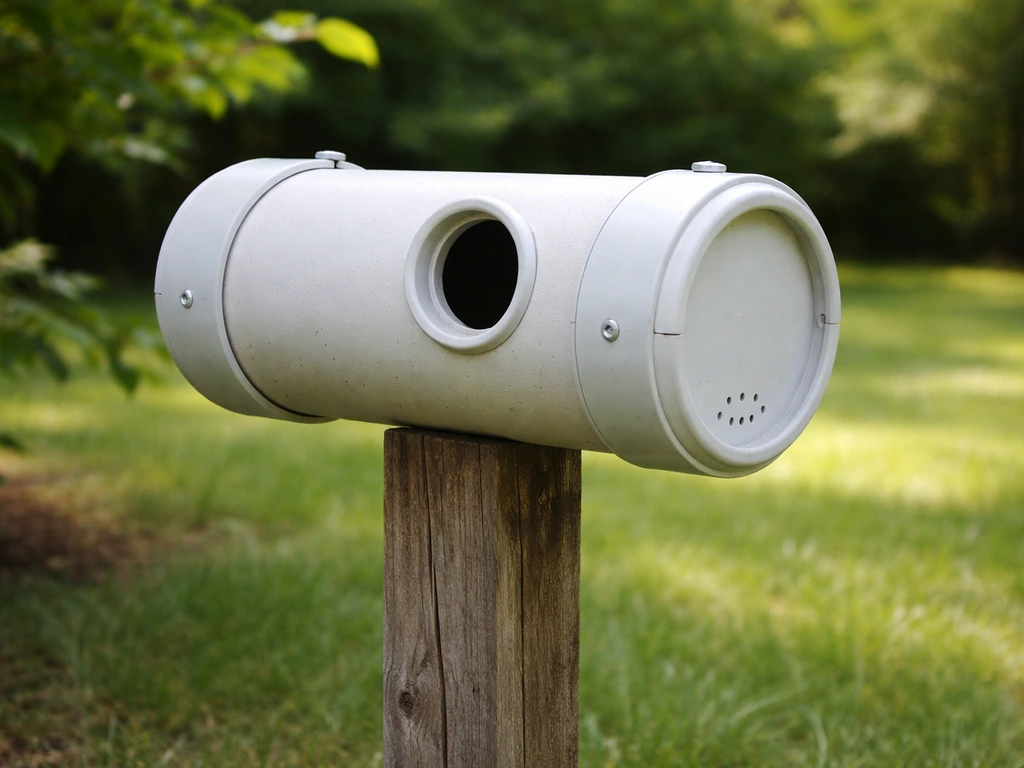
How to Make Bird Houses Out of PVC Pipe: Step by Step
Step-by-step guide to build PVC bird houses with correct sizes, drainage, ventilation, safe mounting, and troubleshootin
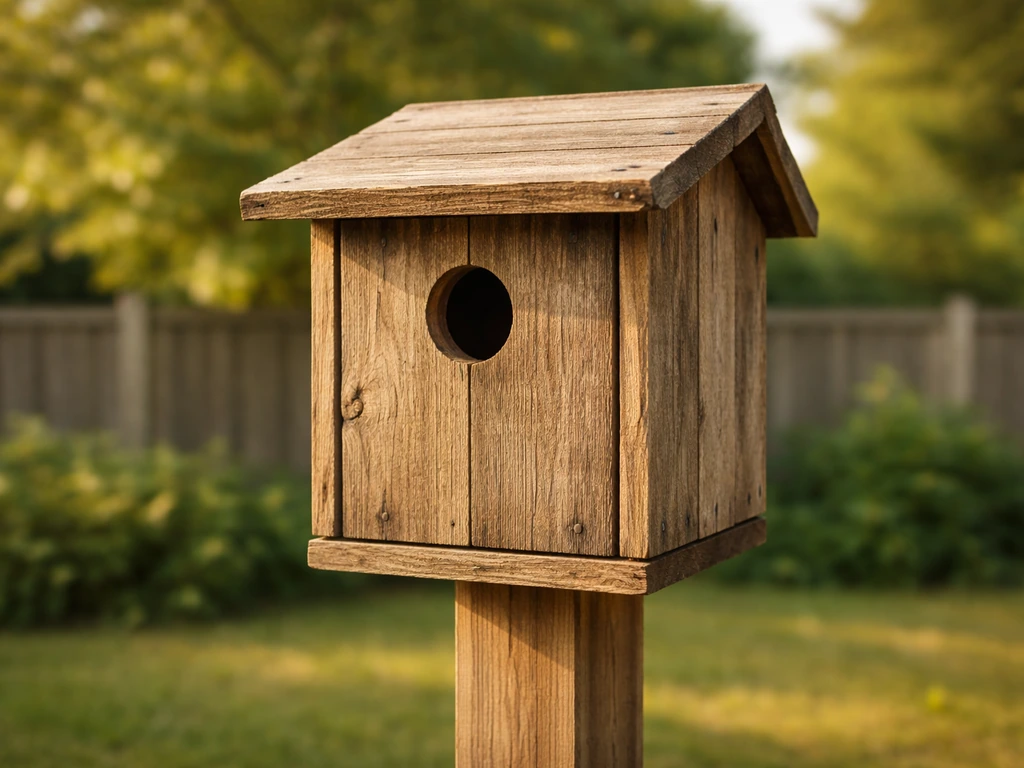
How to Make Bird Houses From Pallets: Step by Step Guide
Step-by-step pallet birdhouse DIY: safe wood checks, right hole specs, build measurements, weatherproofing, predator gua
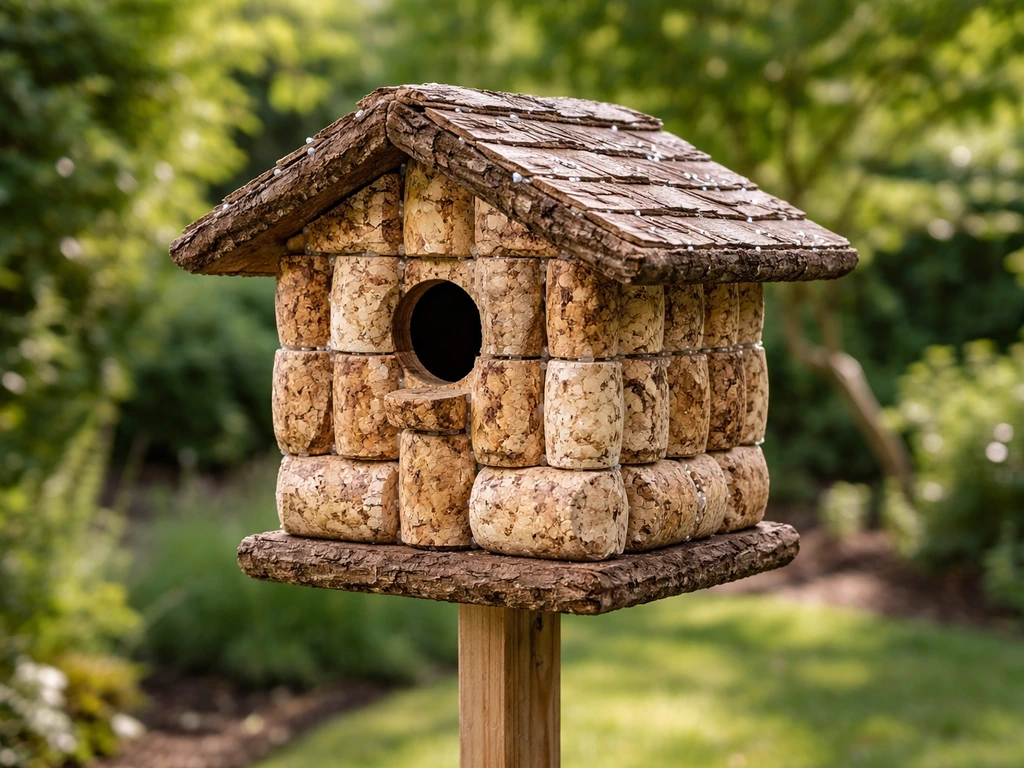
How to Make a Bird House Out of Wine Corks: DIY Guide
Step-by-step DIY wine cork bird house with bird-safe design, secure assembly, waterproofing, and placement plus care tip