You can make a functional hanging bird nest this weekend using untreated cedar or pine, basic hand tools, and a few feet of natural-fiber cord. If you are making a craft version for a preschool group, focus on child-friendly materials and a simple design that matches the age and attention span hanging bird nest. The key is matching the nest style and dimensions to a specific target species, because wrens, robins, and orioles all need very different setups.
How to Make a Hanging Bird Nest: DIY Steps for Beginners
Marcus Thornton
22 May 2026
If you specifically want a parakeet nest, see how to make a parakeet bird nest for the species-appropriate nest style and setup. Get that match right, hang it at the correct height in a sheltered spot, and you have a real shot at watching birds move in within a single season.
Follow the steps above to plan the right nest style, cut the pieces to size, assemble it safely, and hang it for your target species how to make a bird nest step by step. Once you have the right design, measurements, and safe materials, you can focus on placement and maintenance so your bird will actually use the nest how to make a nest for a bird. If you want to customize the build for your target species, the next section on materials and safe design requirements is worth reviewing.
Choosing the right hanging bird nest type and target species
"Hanging bird nest" covers a few distinct designs, and which one you build depends entirely on who you are building it for. If you want the most direct, full walkthrough for the hanging enclosed box plan, see how to build a bird nest for step-by-step dimensions and setup tips. Choosing the wrong type is the most common reason a nest goes unused, so it is worth spending five minutes on this before you cut a single board.
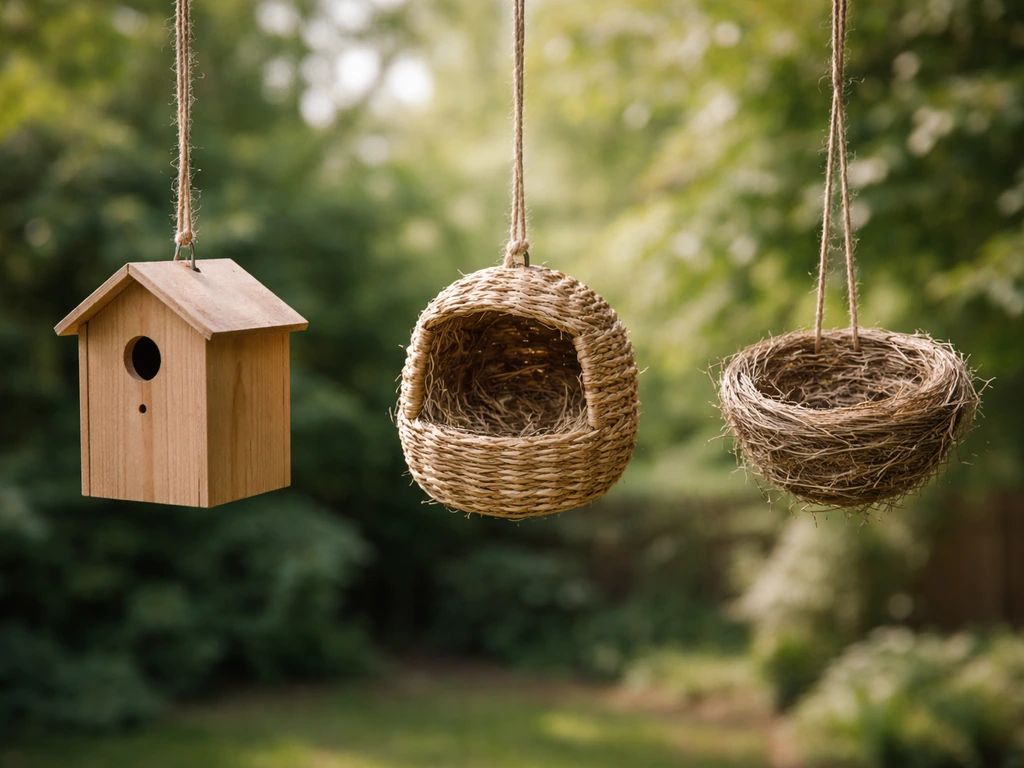
There are three practical options for a DIY hanging nest in a backyard setting. If you want the simplest walkthrough, follow the step by step approach in how to make a bird nest step by step and then choose the hanging style that matches your target species. First, a hanging enclosed box, which is a small enclosed house suspended from a single point rather than mounted to a post or tree. This suits cavity-nesting species like house wrens and chickadees that want a snug, enclosed space with a small entrance hole.
Second, a hanging open platform or shelf, which is essentially a tray with a partial roof or open front, suspended from a branch or beam. Robins and phoebes use these since they never nest in fully enclosed boxes. Third, a woven fiber pouch or basket, which mimics the hanging sock-style nest that Baltimore orioles and similar species weave from plant fibers.
To make a bird nest out of twigs, focus on building a sturdy basket-like cup from small flexible branches and reinforce it with natural fibers or moss where needed woben fiber pouch. This is more of a nesting material support structure than a box, giving the birds a framework to build inside.
| Nest Style | Target Species | Key Feature |
|---|---|---|
| Hanging enclosed box | House wren, chickadee | Small entrance hole (1.25 in for wrens), fully enclosed interior, suspended from single cord or chain |
| Hanging open platform | American robin, eastern phoebe | Open or partially open front, roof overhang for rain shelter, mounted 5 to 25 feet high |
| Woven pouch/basket frame | Baltimore oriole | Open mesh or woven frame, hung from canopy branch, birds complete the nest using their own fibers |
For most beginners, the hanging enclosed box for house wrens is the best starting project. Wrens are bold, plentiful across North America, and genuinely seek out small hanging houses close to shrubby cover. If you are more ambitious or already have orioles in your yard, the woven pouch project is incredibly satisfying, though it requires more material prep. The hanging open platform for robins is straightforward to build but needs a specific sheltered location to succeed. This guide covers the hanging enclosed box in full detail, with notes along the way for adapting to the other styles.
Materials, tools, and safe design requirements
Before anything else: never use pressure-treated wood for any part of a bird nest structure. Pressure-treated lumber contains pesticides and fungicides that are toxic to nestlings. Multiple wildlife authorities including NestWatch, OSU Extension, and Hinterland Who's Who all flag this as a hard rule. Similarly, avoid painted, stained, or varnished surfaces inside the nest chamber. The exterior of a hanging box can have a thin coat of exterior linseed oil or a water-based non-toxic finish if you want weather protection, but the inside stays raw.
Cedar is the best material choice because it naturally resists moisture and rot without any chemical treatment. Pine works fine and is cheaper and easier to find at most hardware stores. Avoid MDF, OSB, plywood with formaldehyde-based glues on interior surfaces, or any composite sheet materials inside the nest box. If you use glue at any point, use non-toxic wood glue and let it cure completely before assembly, as NestWatch specifically recommends this to avoid off-gassing near eggs and nestlings.
What you need for the hanging enclosed box
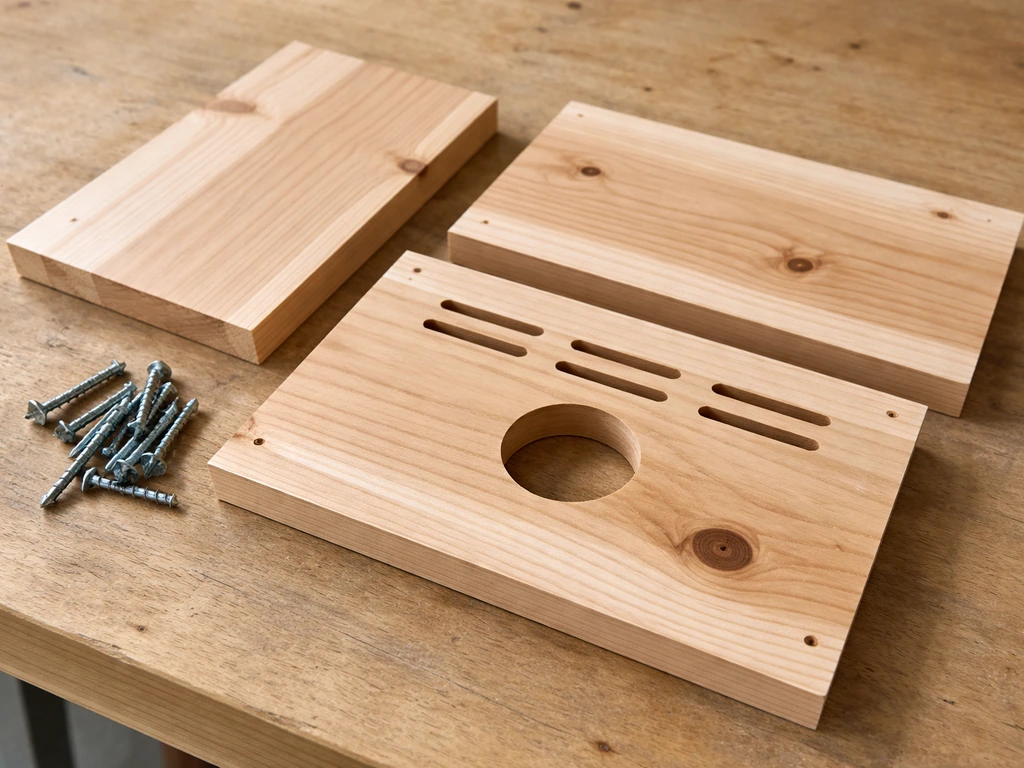
- One 6-foot length of 1x6 cedar or pine board (actual dimensions roughly 0.75 in thick by 5.5 in wide)
- Non-toxic exterior wood glue
- 1.5-inch galvanized screws or stainless exterior screws (16 to 20 screws total)
- A 1.25-inch spade bit or hole saw for the entrance hole (house wrens need exactly 1.25 inches)
- Jigsaw or handsaw
- Drill and driver
- Sandpaper (80 grit and 120 grit)
- Tape measure and pencil
- Heavy-duty screw eye (two, rated for at least 10 lbs)
- Natural-fiber rope, braided nylon, or a length of galvanized chain for hanging
- A metal or wooden perch-free design (do not add a perch rod below the entrance hole, as perches help predators more than birds)
One thing I skipped on my first build was drilling ventilation holes, and the box got so hot in summer that no wren would touch it. Add four 0.25-inch drainage holes in the floor and two 0.25-inch ventilation holes near the top of each side panel. These small details matter a lot for bird welfare in warm weather.
Step-by-step build instructions
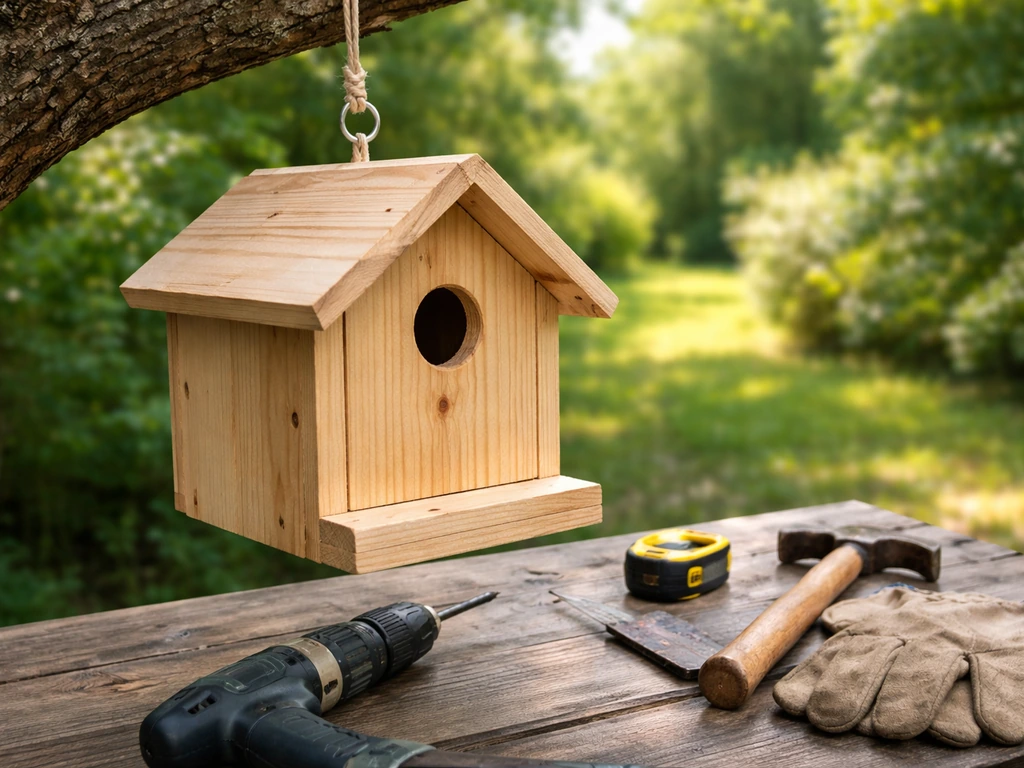
These dimensions are sized for house wrens, which is the ideal beginner target species for a hanging enclosed box. A commercial hanging wren nest-house listing like the Woodlink Coppertop hanging chickadee and wren house is an example of this same small cavity-nesting hanging design commercial wren hanging houses. The interior floor should be 4 inches by 4 inches, and the interior height (floor to the bottom of the entrance hole) should be around 6 inches. Total exterior box height ends up around 8 to 9 inches with the roof panel. This matches the scale used in commercial wren hanging houses and is backed by species-specific guidance from sources like New Jersey Audubon.
- Cut your panels. From a 1x6 board, cut: two side panels at 9 inches tall, one front panel at 9 inches tall, one back panel at 11 inches tall (the extra height gives you a flange to attach the hanging hardware), one floor panel at 4 inches by 4 inches, and one roof panel at 6 inches by 7 inches (the overhang sheds rain).
- Drill the entrance hole. Mark the center of the front panel about 6.5 inches up from what will be the bottom edge. Use your 1.25-inch spade bit and drill cleanly. Sand the inside edge of the hole smooth with rolled sandpaper to remove any splinters that could injure entering birds.
- Score the interior floor. Use a saw or chisel to cut shallow horizontal grooves into the inside of the floor panel in a cross-hatch pattern. This gives nestlings grip so they can claw their way to the entrance when it is time to fledge.
- Assemble the box. Attach the two side panels to the back panel using glue and screws, keeping the back panel flush at the rear. Add the floor panel between the side panels, recessing it about 0.25 inches from the front edge so water cannot pool inside. Attach the front panel last. Leave one side panel on a piano hinge or attach it with two screws at the top only so you can swing it open for cleaning.
- Add the roof. Attach the roof panel to the top of the back and side panels, angled slightly forward so rain runs off the front. A 10 to 15 degree angle is enough. Secure with screws and glue.
- Drill ventilation and drainage. Four 0.25-inch holes in the floor corners, two 0.25-inch holes near the top of each side panel.
- Install hanging hardware. Pre-drill two holes through the extended back panel flange (the extra 2 inches above the roof line), insert screw eyes, and run your rope or chain through both for a balanced two-point hang. A single center-point hang tends to swing and spin in the wind, which birds find stressful.
- Sand all exterior edges smooth and let any glue cure for at least 24 hours before hanging outdoors.
For a robin hanging open platform instead, skip the front panel and entrance hole entirely, keep the floor at around 6 by 6 inches, add a partial front rail about 1.5 inches tall to keep eggs from rolling, and attach a solid roof overhang. The back panel flange hanging method works exactly the same. For an oriole woven pouch frame, stretch natural burlap or an open-weave cotton mesh across a circular wire ring (roughly 5 to 6 inches in diameter) and hang it by three cords from a branch. Leave the top open so the birds can access it and weave their own fibers into the mesh base.
Hanging setup: placement, height, orientation, and stability
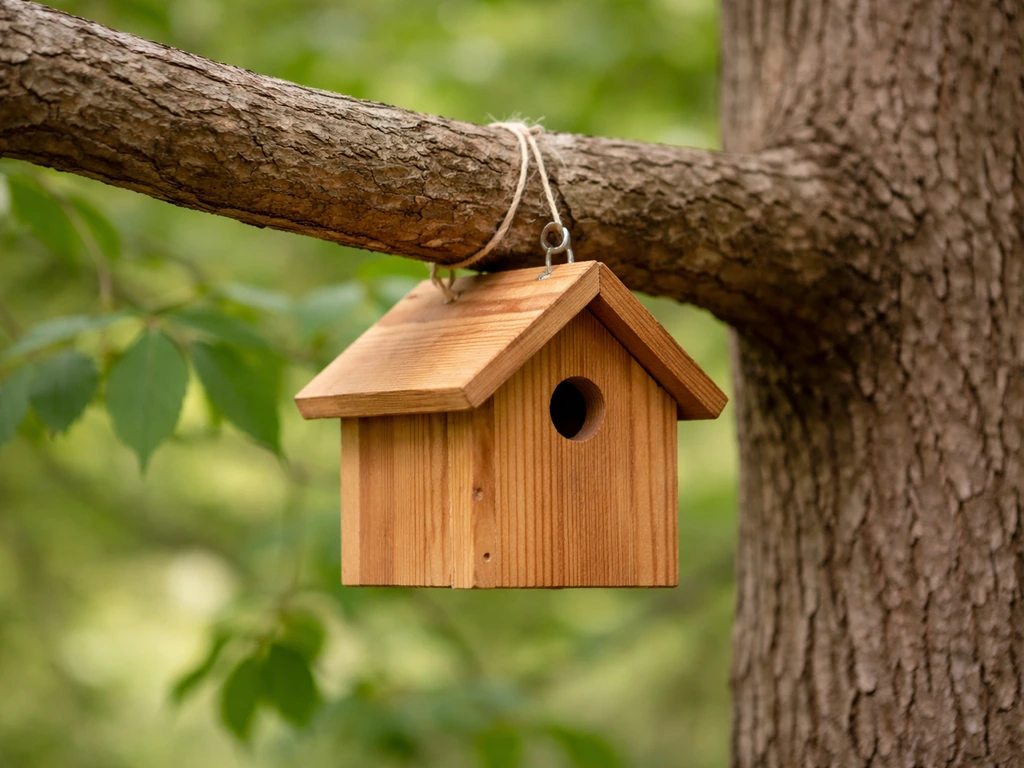
Height matters more than most people expect. For house wrens, hang the box between 5 and 10 feet off the ground, ideally from a tree branch or the eave of a shed that is close to shrubby cover. Wrens are low-foraging birds and feel safest at lower heights with nearby brush. For a robin open platform, the recommended range is 5 to 25 feet, with mid-range heights like 8 to 12 feet working well on the side of a building or under a porch roof overhang where rain protection is built in.
Orientation is often overlooked. Face the entrance hole away from prevailing wind and afternoon sun. In most of North America, pointing the entrance roughly northeast or east keeps it sheltered from the hot afternoon west sun and from rain-bearing southwest winds. This is not a rigid rule, but it gives you a sensible starting point.
Stability is critical. A box that spins and swings in the wind looks like a threat to a nesting bird, not a safe home. Use a two-point hang from the back panel flange with the two cords or chains separated by at least 4 to 5 inches. Tie or clip both ends to a fixed branch or beam so the box hangs level and does not rotate. If you are hanging from a smooth branch, wrap the branch with a small piece of rubber (a cut bicycle inner tube works great) so the cords do not slide and shift.
Keep the box at least 6 to 10 feet away from climbing-predator routes. Avoid hanging it directly against a tree trunk where squirrels and raccoons can reach it with ease. A branch location where the nest hangs out over open space is much safer. If you are worried about predators, a cone-shaped baffle threaded onto the rope above the box adds meaningful protection.
Weather-proofing, cleaning, and maintenance over the season
Cedar handles weather well on its own, but a thin coat of raw linseed oil on the exterior surfaces before first use extends the life of the box considerably. Apply it to all exterior faces, let it soak in for 24 hours, wipe off any excess, and let it cure for another 48 hours before hanging. Do not apply anything to the interior. Reapply once a year at the start of the season.
Check the roof attachment screws each spring before birds arrive. Moisture cycling through freeze-thaw over winter works screws loose over time. A loose roof panel in a windstorm can destroy an active nest in seconds, and I have lost at least one clutch of wren eggs that way before I started doing a spring hardware check as a habit.
During the active nesting season, minimize disturbance. NestWatch recommends keeping any nest checks to well under a minute or two. Do not check more than once every few days, and stop checking entirely once you see nestlings that look nearly ready to fledge, as disturbing them at that point can cause premature fledging before they are ready.
After the last brood of the season fledges, take the box down and clean it out. The RSPB, Kent Wildlife Trust, and Ausable Valley Audubon all recommend the same method: remove the old nest material, then scrub the interior with boiling water. No soap or detergent is necessary and most chemical cleaners leave residues that can harm the next occupants. Wear gloves during this process since old nests can harbor mites, lice, and other parasites. Let the box dry completely in the sun before storing it or re-hanging it for the following season. Skipping end-of-season cleaning lets parasite populations build up inside the box and reduces the chances of birds returning.
Safety, legality, and common mistakes to avoid
Once a native bird is actively nesting in your hanging structure with eggs or dependent chicks present, that nest is legally protected under the Migratory Bird Treaty Act in the United States. It is illegal to disturb, move, or destroy an active nest of a native bird species without a federal permit. This applies even if the nest is in a structure you built and own. The Maryland DNR and USFWS are both clear on this point. The practical takeaway: if you need to relocate or remove the box, do it before birds start building, not after.
On the safety side, the mistakes I see repeated most often are using the wrong materials, adding a perch, and hanging in the wrong location. Here is a quick rundown of the ones that actually cost birds their lives or guarantee the nest goes unused.
- Using pressure-treated, painted, or stained wood anywhere inside the nest. This is the single most harmful material mistake and it is completely avoidable.
- Adding a perch rod below the entrance hole. Perches do nothing for the target species and give predators like European starlings a convenient foothold to harass nesting birds.
- Making the entrance hole too large. For house wrens it must be 1.25 inches. A 1.5-inch hole lets starlings in and the nest will be taken over or abandoned.
- Hanging in direct full sun with no shade or overhang. Interior temperatures in a dark enclosed box in full afternoon sun can exceed safe limits for eggs and chicks.
- Single-point center hanging that allows the box to spin freely. Birds will investigate and leave.
- Hanging too close to a tree trunk or fence where climbing predators have easy access.
- Using synthetic rope materials like polypropylene inside or around a woven pouch nest. Birds can get toes or beaks tangled in loose synthetic fibers. Use natural cotton, jute, or sisal cord only.
- Checking the nest too frequently or for too long. Even well-intentioned monitoring causes stress and can lead to nest abandonment during the early incubation period.
- Never cleaning between seasons, allowing mite and parasite loads to build up to levels that deter future occupants.
One last thing worth saying: your first hanging nest probably will not be perfect, and that is fine. My first wren box had a slightly off-center entrance hole and a roof that leaked at one corner. A pair of wrens used it anyway for two straight seasons. Birds are practical.
Give them the right size, a safe location, clean natural materials, and a stable hang, and you are most of the way there. The project is genuinely achievable in a single afternoon, and there is nothing quite like watching a bird disappear through an entrance hole you drilled yourself.
If you want a simpler build, this article’s hanging nest designs can show you how to make a love bird house that fits the right dimensions and location for the birds you’re targeting how to make love bird house.
FAQ
Can I use a rope swing, chain, or metal eyelets instead of natural-fiber cord for a hanging bird nest?
Use cord for the drop line, but metal hardware for attachment is fine if the nest itself stays fully non-toxic. Avoid putting anything rough or sharp where birds can contact it, and leave slack so the nest cannot yank or rotate. Also, if you use chain, check frequently for snag points and heat buildup in sun, since metal can get much hotter than wood.
What should I do if birds ignore my hanging enclosed box after I hang it?
First, confirm the species match. If the entrance hole size, box interior dimensions, and height are off even slightly, birds may reject it. Next, check placement for sheltered, shrub-adjacent cover and wind protection, then wait at least a few days before changing anything. Reorienting the entrance toward away-from-afternoon-sun can help, but avoid moving it repeatedly during active nesting.
Can I add a small “landing perch” to make it easier for birds to enter?
For many cavity nesters, adding a perch can increase predator access and can also make the entrance area less secure. If you are building a wren-style enclosed box, skip perches and rely on the surrounding vegetation for approach cover. If you want to adjust access, change the hang height and placement near brush rather than adding a perch.
How can I tell whether ventilation holes are enough, especially in hot weather?
A simple check is whether the box interior feels noticeably hotter than the outside after a sunny afternoon. If it does, increase airflow via slightly larger or additional ventilation holes near the top of side panels, but keep drainage holes in the floor small and unobstructed. Don’t enlarge entrance openings to “improve airflow,” since that can also change who uses the nest.
Is it okay to use a nest material like dryer lint, human hair, or string inside the nest?
Avoid anything synthetic or treated. Dryer lint can hold moisture and is often mixed with chemicals from laundry detergents and fabric softeners. Stick to natural, local fibers the birds can work with, or leave the interior raw so the birds bring their own nesting material.
How long can I leave the nest box up if no birds ever move in?
You can leave it up through the nesting season, but plan to remove and clean it at season end anyway. If no one uses it after the first several weeks, consider whether the target species is present and whether your entrance orientation and hang location are providing real shelter. Only adjust one variable at a time, since constant changes can reduce acceptance.
Do I need to clean the nest box every year even if it looks clean?
Yes. Small amounts of nesting debris can still harbor mites, lice, and other parasites. Follow the end-of-season approach of removing old material, scrubbing with boiling water, then drying fully in sun before storage. This annual routine is what helps improve odds of reuse.
What if I find eggs or nestlings after I already installed the box, and I need to fix something?
Do not open the box, reposition the structure, or attempt repairs while the nest is active. If relocation or removal is absolutely necessary, it needs to happen before birds start building, and any disturbance of an active nest can trigger legal protections. For urgent repairs, wait until the nesting attempt is over, or contact the appropriate wildlife agency for guidance.
Can I paint or seal the exterior to make the wood last longer?
Yes on the exterior, but choose a thin, non-toxic finish and avoid any coating on interior surfaces and the entrance area. Apply exterior linseed oil as described, allow full cure time, and never seal or varnish the inside. Even “low odor” finishes can off-gas near eggs.
How do I prevent the nest from swaying or rotating in wind?
Use a two-point hang with cord or chains spaced at least a few inches apart so the box stays level, then secure both ends to fixed points. If you attach to a smooth branch, add a rubber wrap so cords do not slide. After hanging, observe it during a breezy period and adjust the tie lengths until rotation stops.
Next Articles
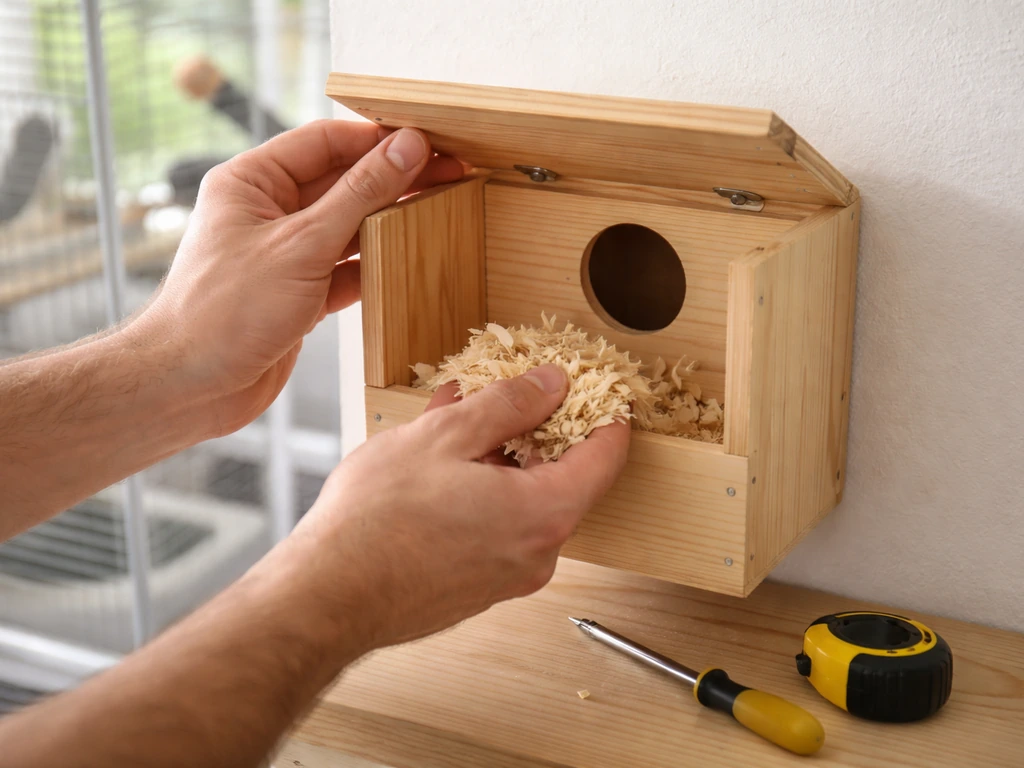
How to Make a Parakeet Bird Nest: DIY Steps
DIY guide to build a safe parakeet nesting box with size, materials, placement, lining, and maintenance tips.
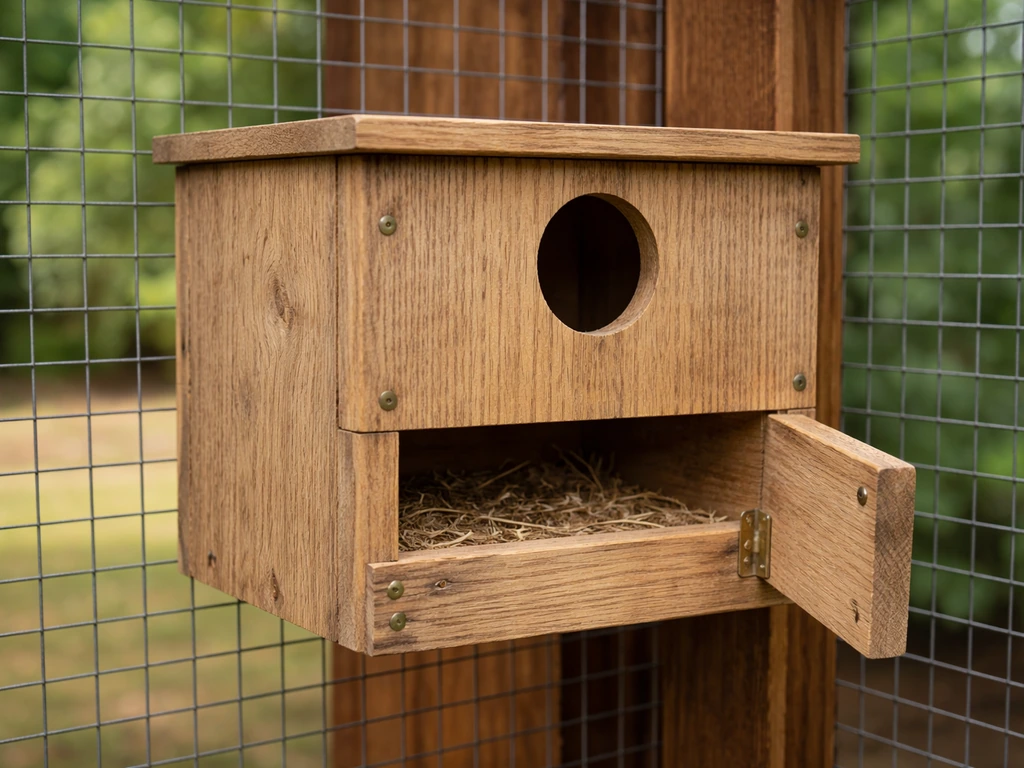
How to Make a Love Bird House Step by Step DIY
Step-by-step DIY lovebird house build with safe wood, size cut list, ventilation, cleanout access, and placement tips.
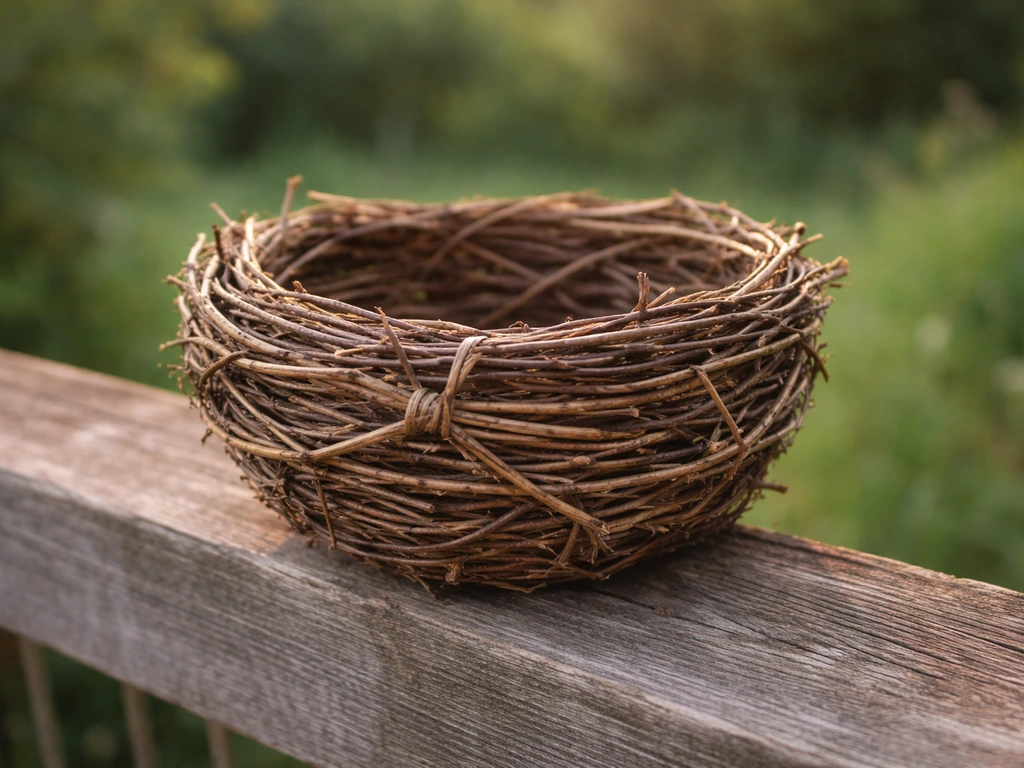
How to Make a Bird Nest Out of Twigs: DIY Steps
Step-by-step DIY for a twig nest bowl, from safe twig choice and weaving to placement, sizing, and bird-safe stability.